Cognitive decline does not announce itself — it accumulates. For executives and founders operating under sustained professional load, reduced working memory, fragmented attention, and persistent brain fog are not personality traits or aging inevitabilities. Instead, they are measurable consequences of chronic sympathetic nervous system dominance and dysregulated cortisol output. Clinical evidence increasingly positions consistent breathwork and mindfulness practice as direct interventions on these pathways, providing what could be described as a mindful advantage. As a result, this approach drives documented improvements in prefrontal cortex function, HPA axis regulation, and cognitive performance under pressure.
The Cognitive Cost of Chronic Stress in High-Performing Professionals

Sustained professional pressure does not merely feel exhausting — it produces measurable neurological change. Chronic stress activates the hypothalamic-pituitary-adrenal axis repeatedly. It floods the system with cortisol at levels the brain cannot sustain without consequence. Over time, this dysregulation associates with hippocampal structural changes and impaired executive function, based on stress neuroscience research including foundational work by Bruce McEwen at Rockefeller University.
These are not distant, theoretical outcomes. Professionals experiencing sustained cognitive load often report functional symptoms years before clinical thresholds appear. The erosion is gradual. That gradual quality makes it easy to attribute to aging or workload rather than to addressable physiological mechanisms.
The compounding nature of the deficit makes this especially relevant for the executive population. Impaired working memory reduces decision quality. Reduced attentional bandwidth narrows strategic thinking. These deficits reinforce each other, creating a downward performance spiral that cortisol dysregulation quietly accelerates over months and years.
What Brain Fog Actually Represents Physiologically

Brain fog is not a clinical diagnosis. It is, however, a recognizable cluster of symptoms with identifiable physiological correlates. Difficulty concentrating, slowed processing speed, word retrieval failure, and mental fatigue all signal disruption across overlapping neurological systems. These symptoms reflect, in part, the downstream effects of chronic sympathetic nervous system activation on prefrontal cortex performance.
The prefrontal cortex governs judgment, planning, and impulse regulation. Sustained cortisol elevation associates with suppressed prefrontal activity and amplified amygdala reactivity. The result is a brain that responds faster to threat and slower to nuance. This profile directly undermines complex reasoning under sustained professional load.
Inflammatory markers compound this picture further. Elevated interleukin-6 and C-reactive protein both associate with chronic psychological stress. Preclinical and observational research links these markers to disrupted synaptic signaling and cognitive fatigue. The National Institutes of Health identifies neuroinflammation as a plausible contributor to processing inefficiency, though the human clinical evidence continues to develop.
The Neuroscience of Breathwork

Breathwork refers to deliberate, structured manipulation of breathing rate, rhythm, and depth. It functions as a direct physiological intervention on the autonomic nervous system. Slow, paced breathing at approximately five to six cycles per minute engages vagal afferents through the baroreflex pathway. This increases parasympathetic tone and measurably reduces sympathetic activation in controlled settings.
This shift produces documented downstream effects. Heart rate variability increases. Cortisol output declines in the short term. These changes register on clinical and biometric assessments of autonomic function. The mechanism is well-characterized in the autonomic physiology literature and does not depend on expectation or belief to produce measurable effect.
Emerging research suggests that breathing rhythm may also influence neural oscillations in memory and attention-related brain regions. This area of investigation remains relatively early-stage. Firm causal conclusions would outrun the current evidence base. The directional signal, however, is consistent and warrants ongoing clinical attention.
READ ALSO: Mindfulness Practices for Mental Well-Being You Need
Mindfulness Practice and Prefrontal Cortex Function

Mindfulness — defined here as sustained, non-reactive attentional focus on present-moment experience — engages the prefrontal cortex directly and repeatedly. Consistent engagement hypothetically strengthens associated neural circuitry over time. This parallels how physical training produces muscular adaptation, though the analogy has important limits.
Sara Lazar and colleagues at Harvard Medical School published neuroimaging findings in NeuroReport showing greater cortical thickness in the prefrontal cortex and insula among long-term meditators than non-meditating controls. These structural differences correlated with measures of attention and emotional regulation. As a cross-sectional study, however, the findings cannot establish causation. Pre-existing neurological traits or other lifestyle factors may contribute.
Despite this methodological constraint, the findings point in a clinically plausible direction consistent with the broader mindfulness neuroscience literature. The relevant practical question is whether consistent practice produces functional improvements in attention and decision quality. The evidence suggests it may — particularly when practice is sustained over weeks to months rather than practiced sporadically.
The Default Mode Network and Rumination

The default mode network activates during mind-wandering, self-referential thought, and unstructured cognitive states. In healthy brains, it cycles efficiently. In chronically stressed brains, it tends toward hyperactivation. This produces persistent rumination, repetitive anxious thought patterns, and difficulty disengaging from unproductive mental loops.
This hyperactivity consumes cognitive resources. It reduces available bandwidth for focused work, creative processing, and present-moment engagement. Mindfulness practice targets this pattern by training deliberate attentional redirection. It builds the capacity to disengage from ruminative loops rather than remain captured by them.
Neuroimaging studies document reduced default mode network activity in experienced meditators during meditation. Whether this reduction persists as a resting-state baseline across all practitioners remains an active research question. The signal is directionally consistent, but individual variability is significant. The literature has not yet produced a uniform picture.
HPA Axis Regulation and Cognitive Longevity

The HPA axis drives the primary stress response. Chronic activation produces cortisol patterns that disrupt circadian rhythm and degrade sleep architecture. It also associates with markers of accelerated cellular aging including telomere attrition. These consequences compound cognitive decline over sustained periods. HPA dysregulation functions as both a performance variable and a longevity variable simultaneously.
Consistent mindfulness and breathwork practice modulates HPA axis activity through overlapping pathways. Parasympathetic activation shortens the cortisol response cycle. Vagal engagement reduces perceived threat sensitivity. The NIH's National Center for Complementary and Integrative Health has reviewed multiple trial designs and identified consistent directional support for cortisol reduction through these practices. Effect sizes vary across populations and protocols.
For professionals focused on biological age and long-term cognitive resilience, HPA regulation represents one of the more accessible behavioral targets. Breathwork and mindfulness produce both acute physiological effects and longer-term autonomic adaptation with consistent practice. The magnitude of these effects depends significantly on baseline stress load, practice consistency, and individual response.
READ ALSO: Mindfulness Practices for Burnout: Simple Ways to Recover
Sleep Architecture and the Cognitive Recovery Cycle

Sleep provides the brain's primary restoration window. During slow-wave and REM sleep, the glymphatic system clears metabolic byproducts including amyloid beta. Animal models characterize this system well. Human research increasingly supports its sleep dependence, though the full extent of glymphatic function in living humans remains under active investigation.
Chronic stress and HPA dysregulation directly disrupt sleep architecture. Elevated evening cortisol delays sleep onset, reduces slow-wave depth, and fragments REM continuity. Professionals who maintain high daytime output often carry a compounding sleep debt. This progressively erodes neurological performance infrastructure without registering as acute fatigue until deficits are established.
Mindfulness and breathwork interventions associate with improved subjective sleep quality across multiple trial designs. Much of this evidence relies on self-reported outcomes. Objective polysomnographic data in this area remains more limited. The directional signal supports pre-sleep breathwork as a practical protocol for cortisol reduction and sleep onset support, while acknowledging that individual response varies.
Inflammatory Markers as a Cognitive Performance Variable

Systemic inflammation increasingly appears as a contributor to cognitive decline — not merely a cardiovascular risk factor. Elevated CRP and interleukin-6 associate with reduced processing speed and impaired memory function in observational research. These markers respond to behavioral intervention. Mindfulness practice has emerged as one candidate worth examining in this context.
J. David Creswell and colleagues at Carnegie Mellon University found that mindfulness training associated with reduced interleukin-6 levels in high-stress adults compared to an active control group. The biological mechanism is plausible: reduced sympathetic activation lowers pro-inflammatory cytokine output. Effect sizes were modest. The findings have not replicated uniformly across all study populations.
Professionals who monitor CRP as part of executive health assessments should treat mindfulness as one evidence-adjacent behavioral lever among several. It is not a primary anti-inflammatory intervention. Its value lies in its low cost, accessibility, and the convergence of multiple physiological mechanisms that collectively support cognitive and inflammatory health over time.
READ ALSO: Mindfulness Practices for Couples: Strengthen Your Bond
Heart Rate Variability as a Real-Time Cognitive Readiness Signal
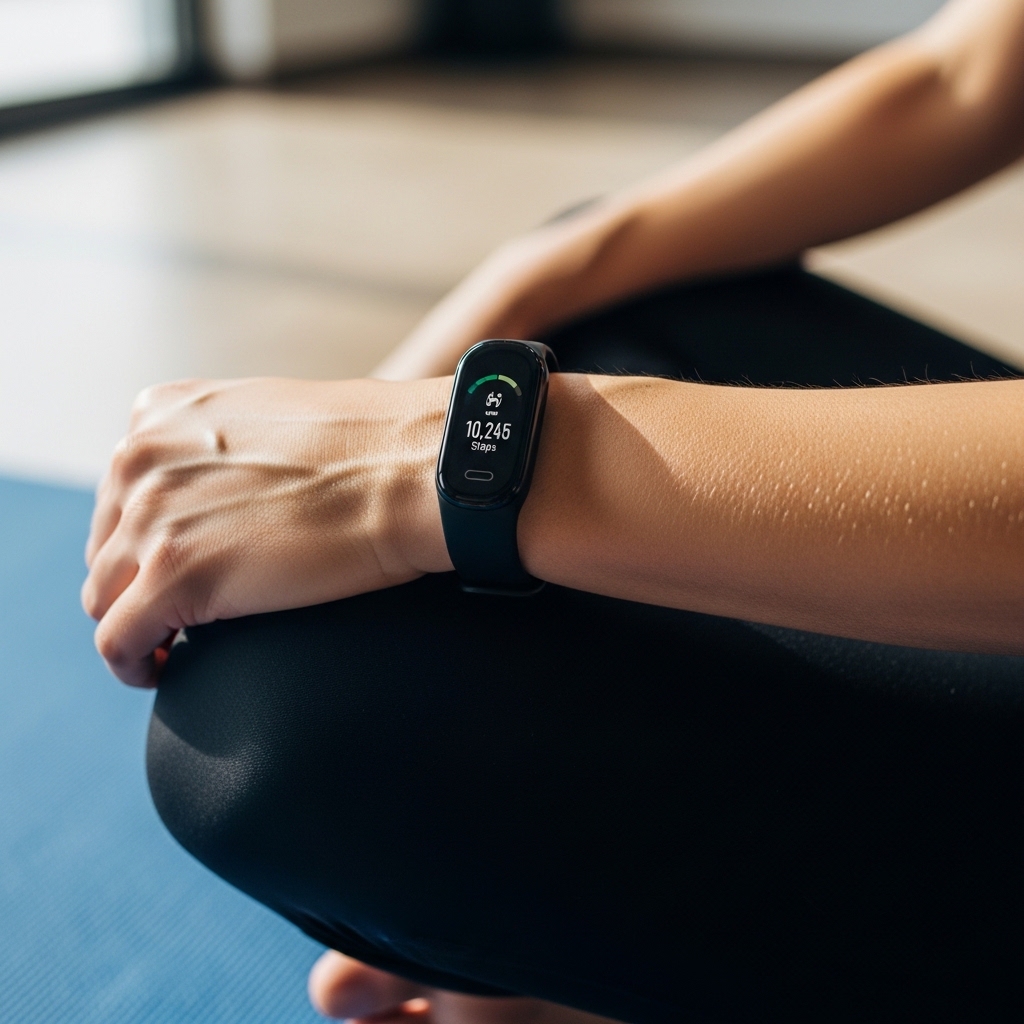
Heart rate variability measures variation in time between successive heartbeats. Higher HRV reflects stronger parasympathetic tone and greater autonomic flexibility. These serve as markers of cardiovascular resilience and stress recovery capacity. Lower HRV consistently associates with impaired executive function and higher perceived cognitive load, making it a practical biometric proxy for cognitive readiness.
Paced breathwork at five to six cycles per minute produces the strongest acute vagal engagement. It also produces the most pronounced short-term HRV elevation documented in controlled studies. Professionals tracking HRV through wearable devices gain a quantifiable, real-time signal for evaluating the autonomic effects of a breathwork session. This grounds the practice in measurable physiological data rather than subjective perception alone.
Consistent mindfulness practice also associates with elevated resting HRV over time. This occurs independently of acute breathwork sessions, suggesting cumulative autonomic adaptation with sustained practice. The evidence base here is growing but not yet definitive. Professionals should treat HRV as a useful directional signal rather than a precise outcome measure.
The Dose-Response Relationship: Frequency, Duration, and Effect

Not all mindfulness and breathwork practice produces equivalent results. The clinical literature points consistently toward regular, sustained practice as necessary for structural neurological change. Sporadic sessions may produce acute autonomic relief. They do not appear to generate the cumulative adaptations documented in neuroimaging studies of experienced practitioners.
Duration thresholds are more flexible than many professionals assume. Mindfulness-Based Stress Reduction — an eight-week protocol developed at the University of Massachusetts Medical School — uses weekly group sessions of two to two-and-a-half hours combined with daily home practice of approximately forty-five minutes. Studies using this protocol demonstrate meaningful cognitive and physiological changes. Outcomes vary based on adherence levels.
Shorter daily protocols of ten to twenty minutes show measurable but generally more modest effects. The precise dose-response relationship for cognitive outcomes remains an active research question. Current evidence suggests frequency matters. Whether shorter daily practice consistently outperforms longer irregular practice has not yet been definitively resolved in the literature.
Evidence-Based Steps for the High-Performing Professional

The clinical literature supports several practical directions for professionals seeking to address cognitive performance and brain fog. Daily paced breathing at five to six cycles per minute — practiced for ten to twenty minutes before high-stakes cognitive work or before sleep — produces documented autonomic effects including HRV elevation and parasympathetic activation. Structured protocols such as MBSR offer a validated eight-week framework with a documented evidence base. Professionals tracking HRV through wearables can use that metric to assess autonomic response over time. Where cognitive symptoms are significant, persistent, or worsening, evaluation by a licensed clinician remains the appropriate first step before attributing them to stress physiology alone.
UP NEXT: Mental Clarity Techniques for a More Focused You
Chronic HPA axis dysregulation — the same physiological pathway that mindfulness and breathwork directly modulate — associates with accelerated telomere attrition and elevated inflammatory markers, two measurable drivers of biological age advancement in longitudinal stress research. WholeLiving's Biological Age Estimation Model incorporates this factor directly — your assessment takes under five minutes.
Ready to understand how these factors are influencing your biological age right now? [Take the Biological Age Assessment →]