
For executives and founders, poorly framed relationship questions can impair decision quality, sustain cortisol elevation, and contribute to fragmented sleep and reduced cognitive performance under relational stress. This article is written for high-performing professionals whose interpersonal dynamics directly affect leadership stability, not for a general audience. In clinical terms, the structure and intent of relationship questions influence emotional regulation, threat perception, and conflict resolution patterns. When questioning patterns reinforce ambiguity, defensiveness, or misalignment, they can increase stress load and degrade both mental clarity and long-term relational function, with measurable implications for performance and recovery.
Relationship Questions Act as Cognitive Filters Under Stress
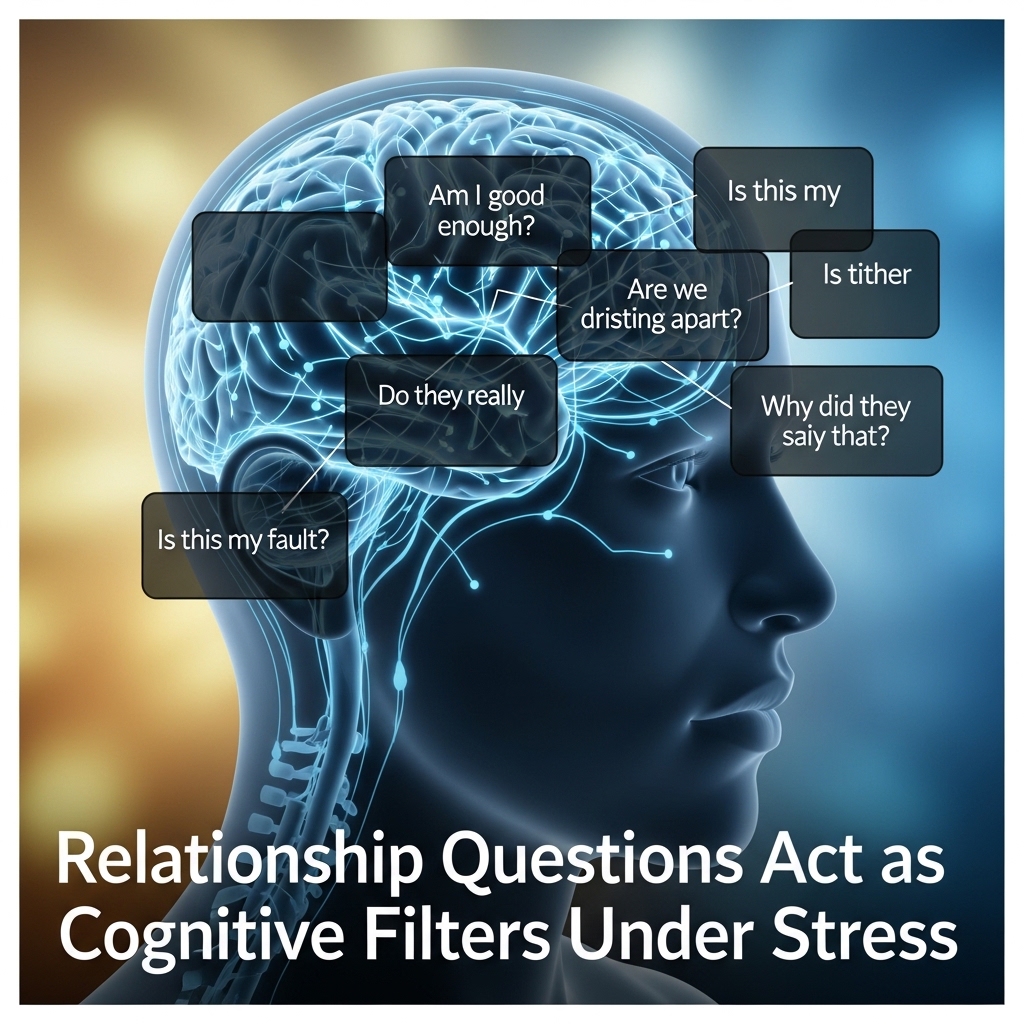
Relationship questions function as cognitive filters. They determine what information is noticed, how it is interpreted, and how responses are formed. In high-performing professionals, these filters directly affect cognitive performance, especially under emotional strain.
The brain prioritizes efficiency under pressure. Research from the National Institutes of Health shows that stress alters attention and reduces working memory capacity. When questions are vague, accusatory, or emotionally loaded, they increase processing demand and reduce clarity.
This shift has practical consequences. Poorly structured questioning can lead to misinterpretation, slower decision cycles, and reduced strategic thinking. Over time, repeated exposure to this pattern can degrade overall mental performance.
Cortisol response and relational questioning patterns

The structure of relationship questions influences cortisol and stress physiology. Questions that trigger uncertainty, threat, or defensiveness can activate the stress response. The American Heart Association notes that chronic stress contributes to elevated cortisol, higher blood pressure, and increased cardiovascular risk.
In relational dynamics, repeated activation of this response creates a sustained stress state. The body does not distinguish between interpersonal threat and physical threat. As a result, poorly framed questioning can maintain elevated stress hormones across extended periods.
This has implications beyond mood. Persistent cortisol elevation can impair sleep, increase inflammation, and reduce recovery capacity. For professionals, this translates into reduced resilience and lower long-term performance output.
READ ALSO: Relationship Stages: Navigate Connection With Ease
Relationship questions and sleep quality disruption

Relational stress often extends into rest cycles. Poorly timed or unresolved relationship questions can lead to rumination, which affects sleep quality. The National Institutes of Health has identified stress and cognitive overactivation as key contributors to insomnia and fragmented sleep.
When the brain continues processing unresolved interpersonal dynamics, it remains in a semi-alert state. This prevents full recovery during sleep. Even when total sleep duration appears adequate, sleep efficiency and depth may decline.
For high-output individuals, this creates a compounding effect. Reduced sleep quality impairs attention, emotional regulation, and memory consolidation. The next day’s performance begins from a lower baseline.
The role of question framing in emotional regulation
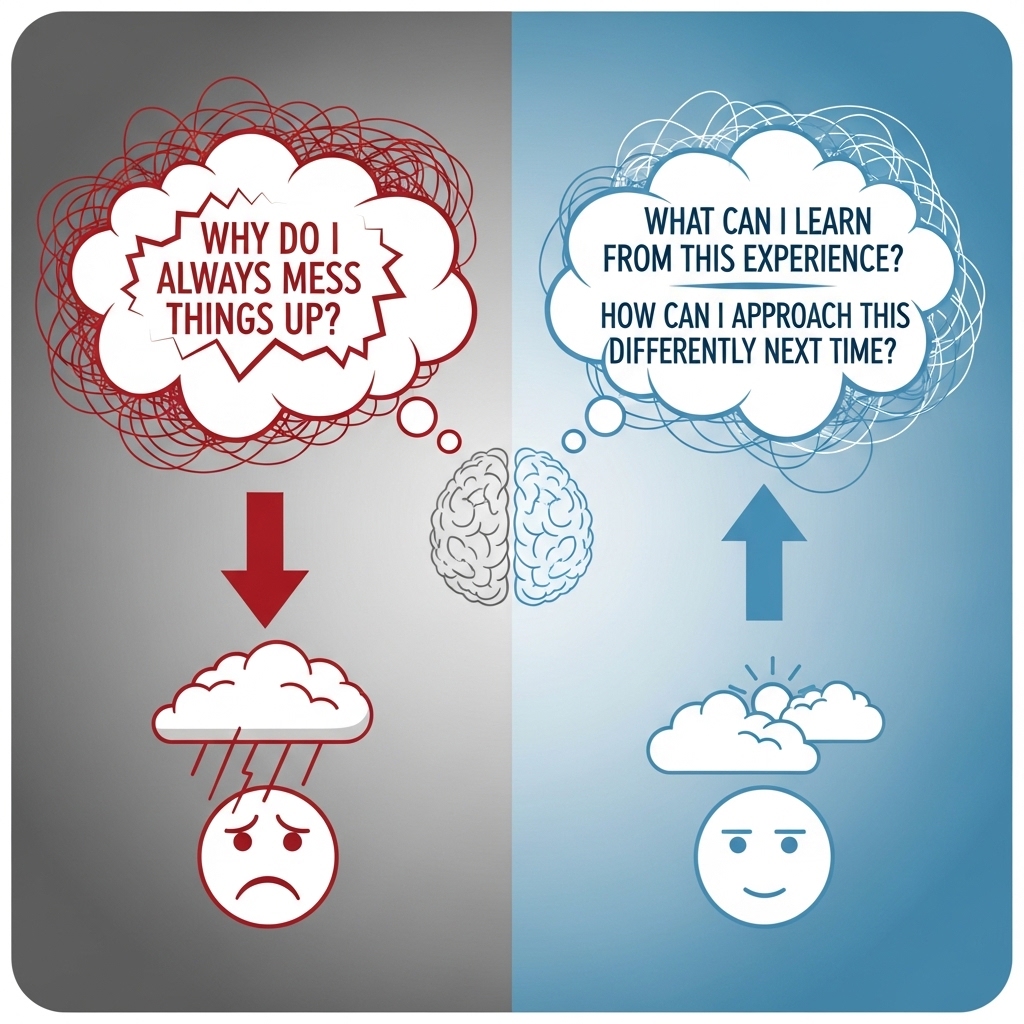
The framing of relationship questions determines emotional tone. Direct, structured questions reduce ambiguity. In contrast, indirect or emotionally charged questions increase defensive responses and escalate conflict.
Harvard Health research highlights that chronic emotional stress can impair brain function, particularly in areas linked to decision-making and impulse control. When questions amplify emotional volatility, they reduce the brain’s ability to regulate responses.
In professional contexts, this extends into leadership behavior. Poor emotional regulation can affect negotiation, communication, and team dynamics. The origin may not be work-related but rooted in unresolved relational patterns.
READ ALSO: Relationship Scriptures: Wisdom for Stronger Bonds
Long-term health implications of relational stress patterns

Chronic relational stress linked to relationship questions can influence long-term health outcomes. The Framingham Heart Study has contributed to understanding how stress-related factors affect cardiovascular health over time.
Repeated exposure to interpersonal stress can increase inflammatory markers and contribute to cardiovascular strain. The body maintains a heightened stress response, which affects metabolic and vascular systems.
This connection extends to biological age. Chronic stress, poor sleep, and inflammation are associated with accelerated aging processes. Over time, the cumulative effect of unresolved relational stress can impact both lifespan and healthspan.
READ ALSO: Healing Relationship OCD: Mindfulness Techniques That Work
Relationship questions as a tool for performance stability
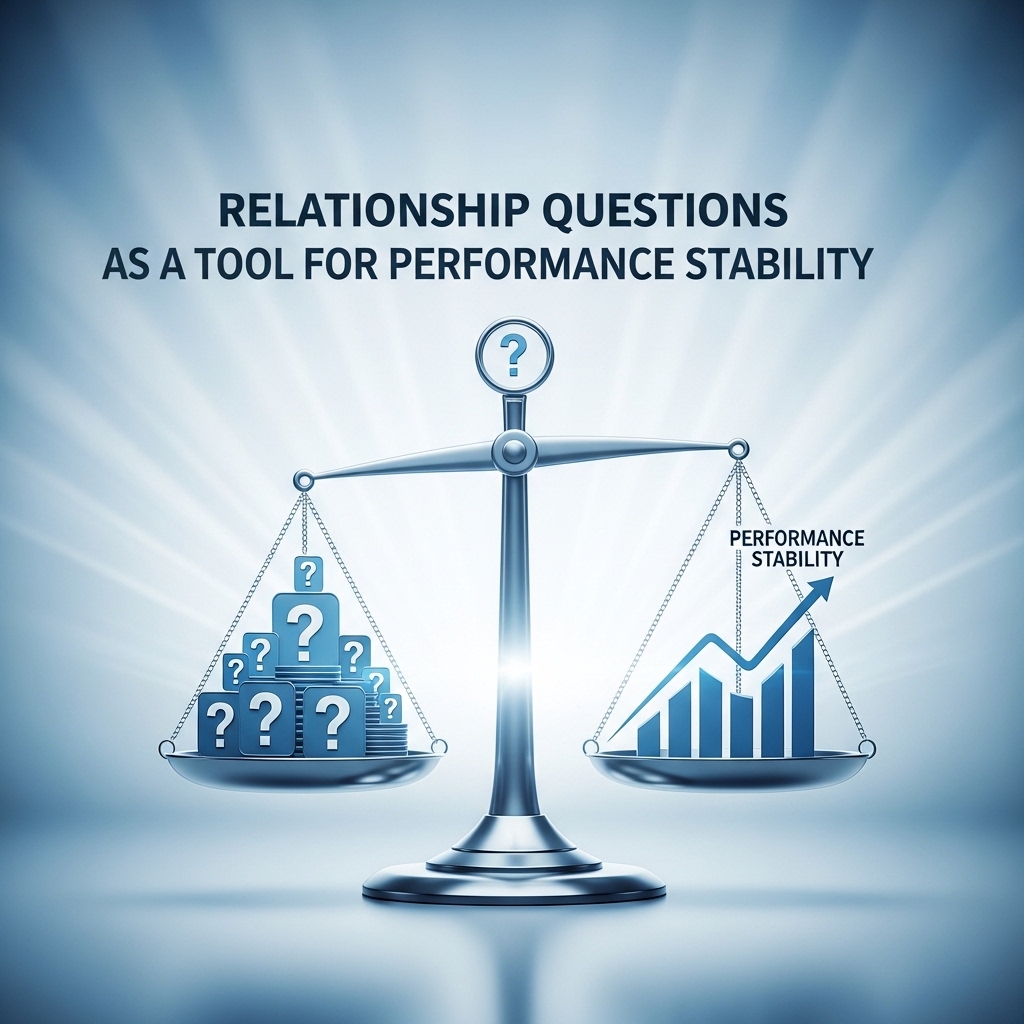
Not all relationship questions increase stress. Structured and clear questions can reduce uncertainty and improve communication efficiency. They can also lower emotional reactivity by creating predictable interaction patterns.
In clinical communication models, clarity reduces cognitive load. When both parties understand intent and expectations, the brain processes information more efficiently. This supports better decision-making and emotional stability.
For high-performing professionals, this has measurable value. Clear relational dynamics reduce background stress, improve sleep quality, and support sustained cognitive output. The quality of questioning becomes a performance variable rather than a soft skill.
A practical interpretation of the evidence focuses on structure rather than intensity. Evidence-based options include observing whether certain relationship questions increase stress, identifying patterns that trigger rumination or sleep disruption, and shifting toward direct, neutral phrasing that reduces ambiguity. In parallel, monitoring sleep quality, stress levels, and cognitive clarity can help determine whether relational dynamics are affecting performance. When persistent stress, insomnia, or reduced mental capacity appears, structured communication strategies and clinical support provide a more reliable path than relying on instinct or emotional reaction alone.
UP NEXT: Emotional Intimacy in Relationships: Building Deeper Bonds
Poorly framed relationship questions can sustain chronic relational stress, elevate cortisol, disrupt sleep quality, and increase inflammatory burden, all of which are associated with faster biological age acceleration and reduced long-term cognitive resilience. WholeLiving's Biological Age Estimation Model incorporates this factor directly — your assessment takes under five minutes.
Ready to understand how these factors are influencing your biological age right now? [Take the Biological Age Assessment →]