


Thiamine deficiency rarely announces itself with urgency. Yet its neurological consequences accumulate silently in professionals operating at sustained cognitive intensity. Subclinical insufficiency impairs mitochondrial energy production and disrupts central nervous system signaling. It accelerates measurable cognitive decline well before clinical thresholds trigger a diagnosis. For executives and founders, decision-making capacity is the primary professional asset. This deficiency is an untracked variable — one with direct consequences for cognitive output, neurological resilience, and long-term performance trajectory.
What Thiamine Actually Does in the Brain and Body
Thiamine — also called vitamin B1 — functions as a coenzyme in several critical metabolic pathways. Its primary role involves converting carbohydrates into usable cellular energy through a process called oxidative decarboxylation. Without adequate thiamine, this conversion breaks down at the mitochondrial level.
The brain consumes roughly 20 percent of the body's total energy output. It depends almost entirely on glucose metabolism to sustain neurological function. When thiamine insufficiency disrupts this process, the brain registers the deficit faster than most other organ systems.
Beyond energy metabolism, thiamine supports myelin sheath integrity — the protective coating around nerve fibers that enables rapid signal transmission. Degraded myelin slows cognitive processing speed and impairs motor coordination. Both consequences register directly in professional performance under pressure.
Additionally, thiamine participates in the synthesis of acetylcholine, a neurotransmitter central to memory encoding and executive function. Research published by the National Institutes of Health confirms that acetylcholine disruption correlates with measurable working memory decline. This biochemical link makes thiamine status a direct variable in cognitive performance.
Why High-Performing Professionals Face Elevated Risk

Most discussions of thiamine deficiency focus on clinical populations — patients with chronic alcohol use disorder, severe malnutrition, or post-bariatric surgery complications. This framing obscures a significant risk profile that applies directly to high-functioning professionals.
Sustained cognitive output accelerates thiamine depletion. The brain's energy demands increase substantially during periods of prolonged concentration, high-stakes decision-making, and emotional regulation under pressure. Executives operating at this intensity for extended periods draw down thiamine reserves faster than a sedentary individual.
High carbohydrate intake compounds the risk further. Thiamine consumption rises proportionally with glucose metabolism. Professionals who rely on high-carbohydrate diets — common in frequent travelers and those with irregular meal schedules — require more thiamine than standard dietary reference intakes anticipate.
Chronic psychological stress also plays a role. Elevated cortisol accelerates nutrient turnover across multiple micronutrient categories. Thiamine falls within this group. A professional managing sustained cortisol elevation is simultaneously increasing thiamine demand while often reducing the dietary consistency needed to meet it.
The Subclinical Gap: Where Most Professionals Actually Sit

Clinical thiamine deficiency — characterized by overt neurological conditions such as Wernicke encephalopathy — represents the severe end of a broader spectrum. Most professionals at risk do not approach this threshold. Instead, they operate in a subclinical insufficiency range that conventional blood panels rarely detect.
Standard serum thiamine testing measures total blood thiamine, which does not reliably reflect intracellular stores or functional enzyme activity. More precise measurement requires erythrocyte transketolase activity testing — a marker that reflects how effectively thiamine-dependent enzymes are actually functioning within cells.
The subclinical range produces no dramatic symptoms. It produces gradual performance erosion — slower processing speed, reduced cognitive flexibility, earlier-onset mental fatigue, and reduced capacity to sustain attention across long decision-making periods. These changes accumulate slowly enough that they rarely trigger clinical investigation.
This gap matters because subclinical insufficiency is functionally significant well before it becomes clinically diagnosable. Waiting for overt symptoms to appear means waiting for measurable neurological damage that has already progressed through months or years of undetected depletion.
READ ALSO: Best Vitamins and Minerals for Immunity: What You Need
Mitochondrial Energy Production and Cognitive Load

The relationship between thiamine and mitochondrial function is direct and well-established. Thiamine diphosphate — the active coenzyme form — drives two critical mitochondrial enzyme complexes: pyruvate dehydrogenase and alpha-ketoglutarate dehydrogenase. Both regulate how efficiently cells convert nutrients into ATP.
When these complexes underperform due to thiamine insufficiency, cells shift toward less efficient anaerobic energy pathways. The brain, which cannot sustain anaerobic metabolism effectively, responds with measurable functional decline. Cognitive load capacity drops. Recovery between high-demand periods lengthens.
Research from Harvard T.H. Chan School of Public Health on micronutrient metabolism and neurological function consistently identifies B-vitamin insufficiency — including thiamine — as a driver of mitochondrial inefficiency in aging adults. The implications extend beyond energy levels into the quality of sustained cognitive output.
For professionals whose value depends on sustained high-quality reasoning across long days, mitochondrial inefficiency translates directly into performance cost. This is not a peripheral health concern. It is a central variable in cognitive performance architecture.
Neurological Decline Markers Connected to Thiamine Insufficiency

Prolonged subclinical thiamine insufficiency produces identifiable changes in neurological function. Reduced nerve conduction velocity — the speed at which signals travel along peripheral nerves — represents one measurable early marker. Slowed conduction affects both motor precision and sensory processing.
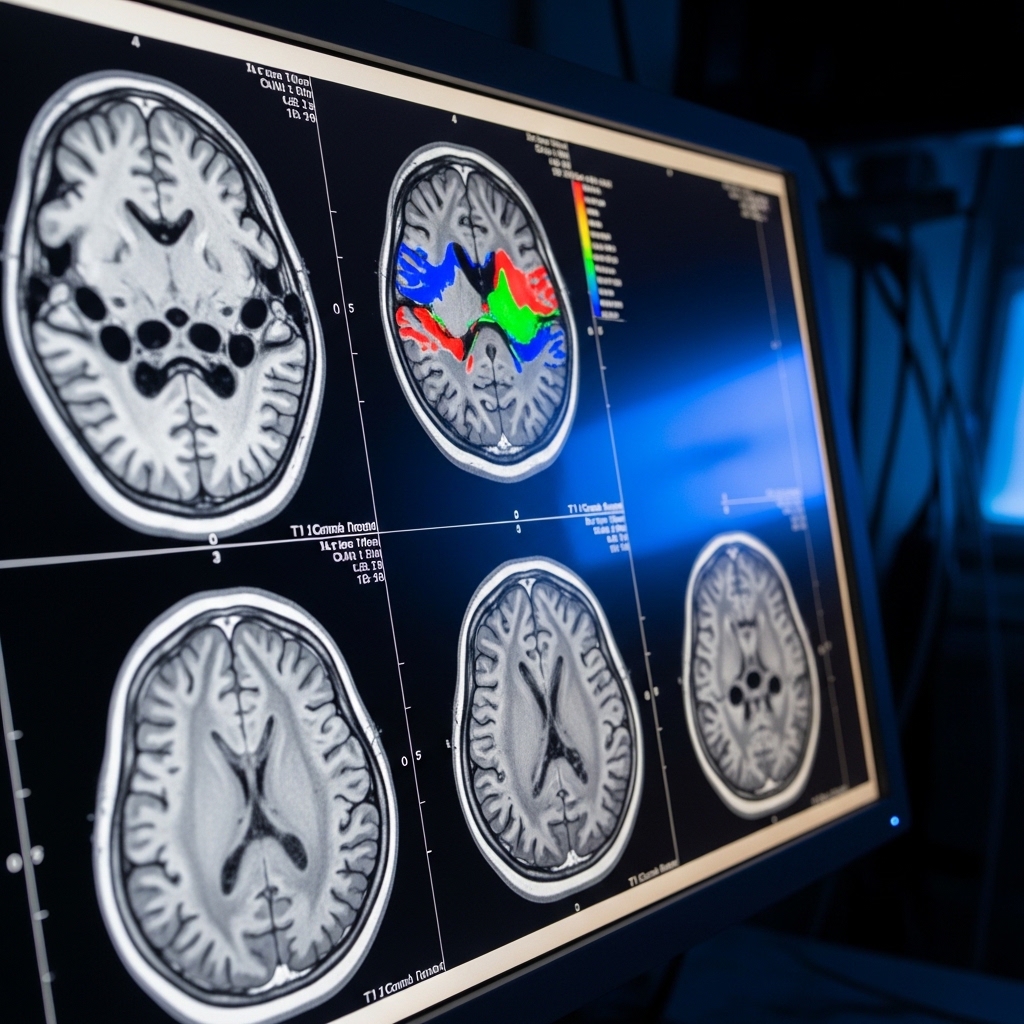
Structural changes follow over longer depletion periods. Imaging studies document reductions in gray matter density in regions governing executive function, memory consolidation, and emotional regulation. These changes mirror patterns observed in accelerated cognitive aging — a category of biological age advancement that standard health screenings rarely capture.
Inflammatory marker elevation also accompanies thiamine insufficiency. Elevated interleukin-6 and C-reactive protein — two biomarkers the NIH consistently associates with neuroinflammation — appear at higher levels in populations with documented B-vitamin deficiencies. Neuroinflammation accelerates cognitive decline and disrupts sleep architecture simultaneously.
Taken together, these markers position thiamine insufficiency not as an isolated nutritional gap but as a systemic driver of accelerated neurological aging. The performance consequences and the longevity consequences share the same biological mechanism.
READ ALSO: The Benefits of B Vitamins
The Connection to Cardiovascular and Metabolic Health

Thiamine's influence extends beyond the nervous system into cardiovascular and metabolic function. The heart — like the brain — depends on aerobic glucose metabolism to sustain its energy demands. Thiamine-dependent enzyme activity directly supports cardiac muscle efficiency.
Research documented in the American Heart Association's publications on micronutrient status and cardiac function identifies thiamine insufficiency as a contributing variable in heart failure progression. Specifically, reduced thiamine availability impairs left ventricular function — a measurable consequence that affects cardiovascular output and exercise tolerance.
Metabolic function faces parallel disruption. Thiamine-deficient glucose metabolism produces lactate accumulation — a byproduct of incomplete cellular energy conversion. Elevated lactate contributes to fatigue onset, reduces VO2 max efficiency, and impairs the body's recovery capacity after physical exertion.
For professionals who combine high cognitive output with regular physical training — a common profile in this demographic — thiamine insufficiency undermines both pillars simultaneously. The metabolic cost compounds across physical and cognitive domains rather than remaining isolated in either one.
Sleep Quality as a Downstream Indicator

Disrupted sleep architecture represents one of the more diagnostically useful downstream indicators of thiamine insufficiency. Thiamine supports the synthesis of gamma-aminobutyric acid (GABA) — the primary inhibitory neurotransmitter that drives the nervous system's transition into restorative sleep states.
When GABA synthesis declines due to thiamine insufficiency, the autonomic nervous system struggles to downshift from sympathetic activation into the parasympathetic dominance that deep sleep requires. The result is fragmented sleep — reduced slow-wave stages and disrupted REM cycling — that leaves the brain neurologically unrestored.
This pattern mirrors the sleep disruption documented in HPA axis dysregulation research. Cortisol remains elevated longer into the evening. Sleep onset delays. Total restorative sleep time decreases. Each night of compromised sleep architecture compounds the neurological debt that thiamine insufficiency has already begun accumulating.
Tracking sleep quality as a functional proxy for thiamine status gives high-performing professionals an accessible, non-invasive indicator that something in their nutritional or metabolic architecture warrants closer examination.
Dietary Sources and the Limits of Food-First Approaches

Whole grains, legumes, sunflower seeds, and lean pork represent the primary dietary sources of thiamine. Under stable conditions with consistent, varied nutrition, a food-first approach can maintain adequate thiamine status for most adults.
The professional demographic this article addresses, however, rarely operates under stable nutritional conditions. Frequent travel, irregular meal timing, high reliance on processed or refined foods, and sustained caloric restriction during high-pressure periods all reduce thiamine intake below recommended thresholds. Refined grain products — common in business travel and corporate dining environments — are stripped of naturally occurring thiamine during processing.
Cooking also degrades thiamine content. Heat exposure, alkaline cooking environments, and prolonged food storage reduce bioavailability in ways that standard dietary reference intake calculations do not account for. A professional who believes their diet is nutritionally adequate may be receiving significantly less functional thiamine than their intake records suggest.
This gap between apparent intake and functional availability is where subclinical insufficiency silently develops — often across months or years before any measurable symptom registers.
READ ALSO: Nutrition Facts in an Egg for Health and Wellness
Alcohol Consumption, Absorption, and the Compounding Effect

Moderate to high alcohol consumption represents a significant and frequently overlooked thiamine risk factor within high-performing professional populations. Alcohol directly impairs thiamine absorption in the small intestine by disrupting active transport mechanisms. It simultaneously accelerates urinary thiamine excretion.
The result is a compound depletion dynamic that operates independently of dietary intake. A professional consuming adequate dietary thiamine while maintaining regular alcohol intake may still develop functional insufficiency — not because they are eating poorly, but because alcohol systematically undermines both absorption and retention.
Chronic alcohol consumption also damages intestinal epithelial cells, further reducing the gut's capacity to absorb thiamine and other water-soluble vitamins over time. This structural damage persists even during periods of reduced alcohol consumption, creating extended windows of impaired thiamine uptake.
The combination of high cognitive demand, elevated cortisol, irregular nutrition, and moderate alcohol use creates a convergence of depletion mechanisms that significantly raises insufficiency risk in this professional profile — a risk that remains largely invisible without targeted nutritional assessment.
Biological Age Acceleration and the Long-Term Trajectory

Thiamine insufficiency does not produce its most significant damage acutely. It produces it through cumulative neurological and metabolic degradation across years of undetected depletion. This trajectory aligns directly with biological age acceleration — the divergence between chronological age and the measurable functional age of tissues and organ systems.
Epigenetic research published through the NIH on biological aging markers identifies mitochondrial dysfunction, chronic neuroinflammation, and oxidative stress as three primary drivers of biological age advancement. Thiamine insufficiency contributes to all three through the same metabolic pathways it disrupts in the short term.
A professional who manages subclinical thiamine insufficiency for five to ten years is not simply fatigued — they are compounding neurological wear at a rate that exceeds what their chronological age would predict. The cognitive performance decline, the sleep disruption, and the metabolic inefficiency are not separate problems. They are the cumulative expression of a single, addressable nutritional gap.
Addressing that gap before overt symptoms appear is the difference between maintaining neurological capital and spending it down unknowingly.
Evidence-Based Steps for High-Performing Professionals

The evidence supports several practical directions for professionals concerned about thiamine status and neurological resilience. Requesting erythrocyte transketolase activity testing — rather than standard serum thiamine — provides a more functionally accurate picture of intracellular thiamine status. Reviewing dietary patterns for reliance on refined grains, irregular meal timing, or frequent alcohol consumption identifies the most common depletion pathways. Exploring high-quality thiamine supplementation in consultation with a physician offers a direct and well-tolerated intervention with a strong safety profile, given thiamine's water-soluble nature. Regular sleep quality tracking serves as an accessible proxy indicator for downstream neurological stress. Each of these steps addresses the biological mechanism — not just the surface symptom.
UP NEXT: Nutrient Dense Vegan Meals for Mindful Eating and Health
Subclinical thiamine insufficiency drives mitochondrial dysfunction, chronic neuroinflammation, and oxidative stress simultaneously — three of the most well-documented biological mechanisms behind accelerated aging, collectively associated with measurable advances in biological age that can exceed chronological age by five or more years in professionals operating under sustained cognitive and physical demand. WholeLiving's Biological Age Estimation Model incorporates this factor directly — your assessment takes under five minutes.
Ready to understand how these factors are influencing your biological age right now? [Take the Biological Age Assessment →]