Severe depression does not exempt high performers. Among executives and founders, major depressive disorder demonstrably impairs working memory, executive function, and sustained attention — the cognitive outputs most critical to high-stakes decision-making. Concurrently, it elevates inflammatory markers, disrupts cortisol rhythm, and accelerates biological aging at the cellular level. These are not incidental side effects. They are compounding performance and longevity liabilities. Understanding the clinical mechanisms behind severe depression is the first step toward evidence-based recovery.
What Severe Depression Actually Is

Major depressive disorder is a clinical diagnosis. It is not a spectrum of low mood. The Diagnostic and Statistical Manual of Mental Disorders defines it by at least five specific symptoms persisting for two or more weeks. These include depressed mood, loss of interest or pleasure, sleep disturbance, fatigue, cognitive impairment, and in severe cases, recurrent thoughts of death. Severity classifications — mild, moderate, and severe — reflect symptom intensity, functional impairment, and occupational and interpersonal disruption.
Severe depression represents the highest clinical threshold within this diagnostic category. At this level, the disorder does not merely reduce quality of life. It systematically dismantles the cognitive and physiological systems that high-performing professionals depend on most. Executive function, sustained attention, processing speed, and working memory all show measurable deterioration. These are not subjective experiences. Neuroimaging and neuropsychological testing document them consistently across clinical populations.
The distinction between severe depression and less intense episodes matters clinically. Severe presentations associate with greater biological disruption, longer episode duration, and higher recurrence rates. They also respond less reliably to single-modality treatment. Understanding the severity threshold helps professionals contextualize their own experience — or that of colleagues — with clinical precision rather than minimizing symptoms as situational stress.
The Neurobiological Mechanism
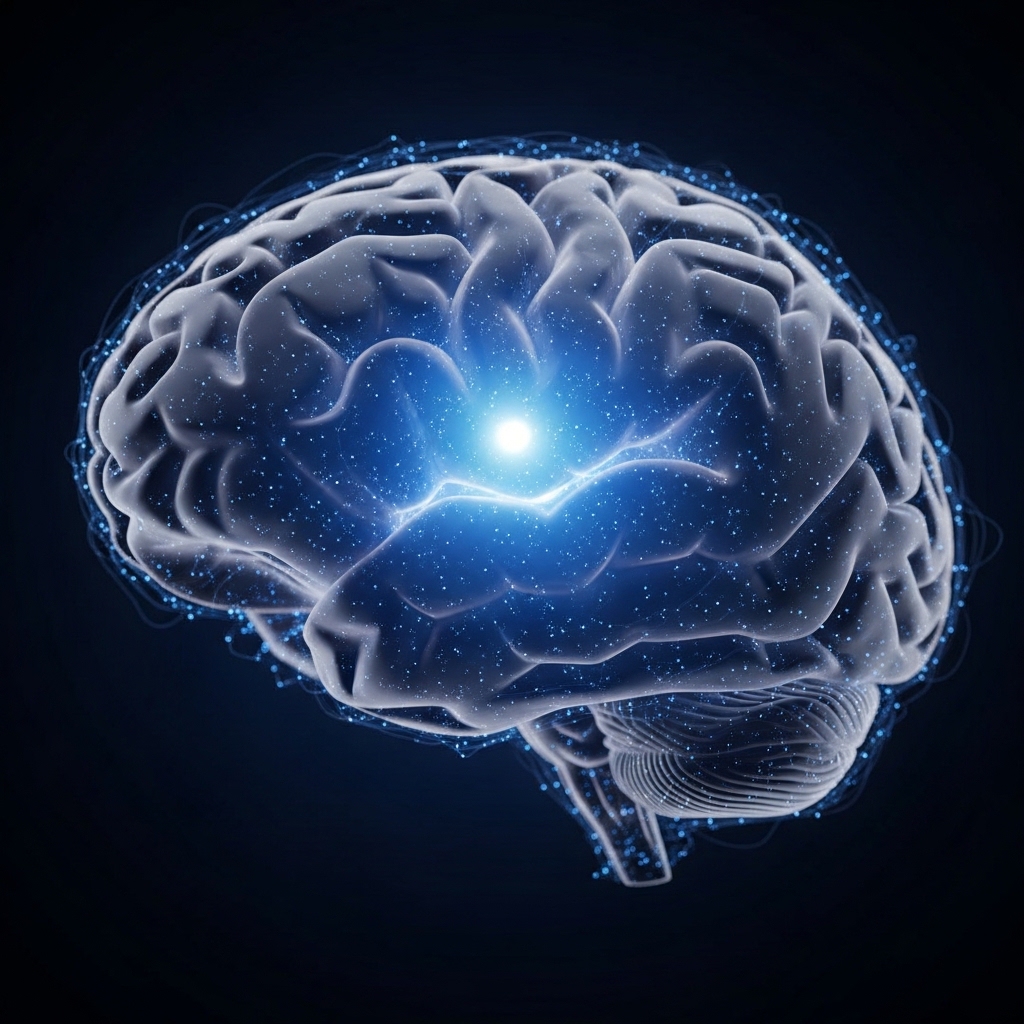
Severe depression involves measurable changes in brain structure and function. The prefrontal cortex governs executive function, decision-making, and emotional regulation. In major depressive disorder, it shows reduced activity and grey matter volume. The hippocampus governs memory consolidation and stress regulation. It also demonstrates volume reduction in proportion to episode duration. These are structural findings documented across neuroimaging studies — not functional metaphors.
The hypothalamic-pituitary-adrenal axis drives much of this damage. Severe depression dysregulates cortisol secretion, producing elevated and poorly regulated cortisol output across the day. Chronically elevated cortisol suppresses neurogenesis in the hippocampus and disrupts sleep architecture. It also impairs immune function and elevates systemic inflammatory tone. For professionals already operating under sustained stress, severe depression adds a separate and additive biological burden.
Inflammatory pathways also contribute directly. Research published in JAMA Psychiatry has documented elevated pro-inflammatory cytokines — including interleukin-6 and tumor necrosis factor-alpha — in individuals with major depressive disorder. These markers do not merely correlate with depression. Evidence suggests they actively maintain it by disrupting serotonergic and dopaminergic transmission. This inflammatory dimension partly explains why severe depression can persist despite standard antidepressant treatment.
The neurobiological profile of severe depression has direct implications for recovery timelines. Structural brain changes take time to reverse, even with effective treatment. Hippocampal neurogenesis proceeds over weeks to months rather than days. Both antidepressant pharmacotherapy and aerobic exercise support this process. This biological reality argues against expecting rapid functional restoration. It also underscores the clinical value of sustained, multi-modal treatment approaches.
Cognitive Impairment as a Core Symptom

Cognitive dysfunction in severe depression extends well beyond low mood. Clinicians now recognize cognitive impairment as a core symptom domain, not a secondary feature. Working memory, cognitive flexibility, attentional control, and processing speed all deteriorate measurably during a severe depressive episode. For executives and founders whose performance depends directly on these capacities, this impairment carries immediate operational consequences.
The cognitive costs of severe depression often persist beyond mood remission. Research published in Psychological Medicine has documented residual cognitive deficits in a substantial proportion of individuals who achieve symptomatic recovery from major depressive disorder. This phenomenon — sometimes termed cognitive residual symptoms — is a clinically underrecognized barrier to full functional recovery. Professionals who return to work after mood remission may still experience significant deficits in the cognitive domains most critical to high-performance roles.
Rumination drives a significant portion of this cognitive burden. Severe depression generates sustained, repetitive negative thought patterns. These consume working memory capacity and reduce attentional resources available for complex tasks. This is not a motivational deficit. It reflects a measurable allocation of cognitive resources toward internally directed negative processing at the expense of executive function.
Recognizing cognitive impairment as a distinct treatment target — rather than assuming it resolves with mood improvement — represents an important clinical shift. Certain antidepressant classes carry procognitive profiles. Structured cognitive remediation programs also target this domain specifically. These approaches produce outcomes meaningfully different from those targeting mood symptoms alone.
READ ALSO: Unipolar Depression and How It Feels
Sleep Disruption and Biological Aging

Sleep architecture deteriorates severely in major depressive disorder. Severe depression reduces slow-wave sleep, shortens REM latency, and fragments the overall sleep cycle. These disruptions do not merely produce daytime fatigue. They drive measurable consequences for cortisol regulation, inflammatory tone, cognitive consolidation, and cellular repair — all directly relevant to biological aging.
The relationship between depression and sleep is bidirectional. Sleep disruption worsens depressive symptom severity. Depressive neurobiological changes further impair sleep quality. This creates a reinforcing cycle that amplifies both conditions simultaneously. For professionals already managing sleep debt from demanding schedules, severe depression introduces a second and more biologically disruptive layer of sleep impairment.
Research consistently links chronic sleep disruption to accelerated biological aging. Shortened telomere length, elevated inflammatory markers, and impaired immune function all associate with sustained poor sleep quality in population studies. Severe depression operates partly through sleep architecture disruption. It therefore contributes to biological aging through mechanisms that extend beyond its direct neurobiological effects. This positions effective depression treatment as a longevity intervention, not merely a mental health one.
Addressing sleep specifically within depression treatment — rather than waiting for it to resolve as mood improves — improves both depression outcomes and biological aging variables. Cognitive behavioral therapy for insomnia is endorsed by the American College of Physicians as a first-line treatment for chronic insomnia. It produces improvements in sleep architecture that support depression recovery independent of its effects on mood.
Cardiovascular Consequences of Untreated Depression

Severe depression carries independent cardiovascular risk. The American Heart Association recognizes depression as a risk factor for adverse cardiovascular outcomes, particularly in individuals with existing cardiac disease. Researchers have documented this association across multiple large-scale epidemiological studies. The mechanisms include sustained HPA axis dysregulation, elevated inflammatory markers, autonomic nervous system dysfunction, physical inactivity, and poor dietary adherence.
The cardiovascular consequences of severe depression are not confined to those with pre-existing cardiac conditions. In otherwise healthy adults, major depressive disorder associates with measurable reductions in heart rate variability. This is a marker of autonomic cardiac regulation and an independent predictor of cardiovascular risk. Reduced heart rate variability reflects impaired parasympathetic tone and sustained sympathetic activation. Over time, this autonomic profile contributes to endothelial dysfunction and elevated cardiovascular event risk.
For high-performing professionals aged 35 to 60, this cardiovascular dimension represents a longevity liability well beyond occupational functioning. A professional who treats depression exclusively as a productivity problem accumulates cardiovascular risk silently across the episode duration. The longer a severe depressive episode persists without effective treatment, the greater the cumulative cardiovascular burden.
Effective depression treatment reduces cardiovascular risk through multiple pathways simultaneously. It restores autonomic balance and reduces inflammatory load. It also improves sleep architecture and supports behavioral recovery, including physical activity and dietary adherence. These effects operate independently of mood improvement. They represent a compelling case for early and aggressive clinical intervention in severe presentations.
READ ALSO: Psychotherapy for Postpartum Depression, Explained
Metabolic Function and Physical Health

Severe depression disrupts metabolic function through several converging mechanisms. Elevated cortisol output promotes insulin resistance and increases visceral fat deposition. It also dysregulates appetite and energy balance. Combined with the physical inactivity that severe depression reliably produces, these hormonal disruptions generate a metabolic environment associated with increased risk of type 2 diabetes and metabolic syndrome.
Physical inactivity during severe depressive episodes compounds these metabolic consequences. Skeletal muscle is the primary site of glucose disposal. Reduced physical activity decreases muscle glucose uptake and contributes to progressive insulin resistance. Over weeks and months of reduced activity during a severe episode, professionals can experience measurable deterioration in fasting glucose, triglycerides, and HDL cholesterol.
Muscle mass loss is an underrecognized consequence of severe depression in working-age adults. Reduced activity, disrupted sleep, elevated cortisol, and altered appetite collectively create a catabolic physiological environment. Severe sarcopenia is more commonly associated with aging, but the conditions that severe depression generates accelerate this trajectory. The long-term metabolic and functional risks compound accordingly.
These metabolic consequences strengthen the case for physical activity as a clinical component of depression treatment — not an adjunctive lifestyle recommendation. Aerobic exercise produces antidepressant effects through multiple mechanisms. These include hippocampal neurogenesis, BDNF upregulation, and inflammatory marker reduction. It simultaneously addresses the metabolic deterioration that severe depression generates.
The Evidence Base for Pharmacological Treatment

Antidepressant pharmacotherapy remains a cornerstone of severe depression treatment. For moderate-to-severe presentations, clinical guidelines from NICE and the American Psychiatric Association both support antidepressant medication as a first-line intervention. This applies whether used alone or in combination with psychotherapy. The evidence base for pharmacotherapy in severe depression is substantially stronger than for mild presentations, where the benefit-to-risk ratio is more debated.
Antidepressants do not produce uniform outcomes. Response rates to a first antidepressant trial approximate 50 to 60 percent. Remission rates are lower. The Sequenced Treatment Alternatives to Relieve Depression trial — a large NIMH-funded study — documented that approximately one-third of participants achieved remission on their first antidepressant trial. Sequential treatment adjustments improved outcomes. A significant proportion of participants still required multiple modifications before achieving remission.
Treatment-resistant depression is typically defined as failure to respond to two adequate antidepressant trials. It affects a clinically significant minority of individuals with major depressive disorder. For this population, evidence supports augmentation strategies and treatment switching. In select cases, neuromodulation approaches — including transcranial magnetic stimulation and electroconvulsive therapy — are also supported. The evidence base for these approaches has strengthened considerably over the past decade.
Professionals navigating pharmacological treatment benefit from working with psychiatrists rather than general practitioners for severe presentations. Psychiatrists bring specific expertise in treatment sequencing, augmentation strategies, and the management of complex presentations. This distinction in prescriber expertise associates with meaningfully different treatment outcomes in severe and treatment-resistant cases.
Psychotherapy as a Clinical Intervention

Psychotherapy produces measurable neurobiological changes in major depressive disorder — not merely symptomatic relief. Neuroimaging studies have documented normalization of prefrontal and limbic activity following successful cognitive behavioral therapy. The pattern is distinct from but overlapping with that produced by pharmacotherapy. This evidence repositions psychotherapy from a supportive add-on to a treatment with its own biological mechanism of action.
Cognitive behavioral therapy carries the strongest evidence base among psychotherapeutic approaches for major depressive disorder. Multiple meta-analyses, including research synthesized by the Cochrane Collaboration, support its efficacy across severity levels. For severe presentations, the evidence most strongly supports combining CBT with pharmacotherapy. Combined treatment consistently outperforms monotherapy on both response and remission outcomes.
Behavioral activation is a specific component of CBT. It targets the withdrawal and inactivity cycle that severe depression generates. It works by systematically reintroducing rewarding activities to restore dopaminergic reward pathway function. This mechanism directly addresses anhedonia — one of the most functionally disabling symptoms of severe depression. Pure pharmacotherapy often addresses anhedonia incompletely.
For professionals with demanding schedules, intensive outpatient programs offer a structured psychotherapeutic intervention without requiring inpatient admission. These programs typically deliver multiple hours of therapy per week across several weeks. This level of intensity matches the clinical severity of the presentation more appropriately than weekly outpatient sessions alone.
READ ALSO: Natural Remedies for Depression: A Gentle, Holistic Approach
The Role of Exercise in Clinical Recovery

Exercise produces antidepressant effects through mechanisms that are now well-characterized. Aerobic exercise upregulates brain-derived neurotrophic factor, supporting hippocampal neurogenesis. It partially reverses the structural brain changes associated with major depressive disorder. It also reduces pro-inflammatory cytokines, normalizes HPA axis activity, and improves sleep architecture. These effects complement — rather than duplicate — those of pharmacotherapy and psychotherapy.
Research published in JAMA Internal Medicine and synthesized across multiple meta-analyses supports aerobic exercise as an effective adjunctive treatment for major depressive disorder. Effect sizes in supervised exercise trials are clinically meaningful, particularly for individuals who have not achieved full remission through pharmacotherapy alone. Exercise also addresses the metabolic and cardiovascular consequences of severe depression simultaneously with its antidepressant effects.
The initiating challenge for severely depressed individuals is the anhedonia and fatigue that make exercise difficult to begin. Behavioral activation frameworks — derived from CBT — provide a structured approach to overcoming this barrier. They work by scheduling activity at low intensity and gradually increasing it. This bypasses the motivational deficit rather than waiting for motivation to return spontaneously.
For professionals in recovery, exercise also serves a secondary function. Beyond its neurobiological effects, it restores a sense of physical agency and competence during a period when depression systematically undermines both. This psychological dimension contributes to recovery trajectories in ways that purely pharmacological approaches do not replicate.
Lifestyle Variables That Modify Recovery Trajectories

Several lifestyle variables modify the trajectory of recovery from severe depression independently of formal treatment. Sleep quality is the most clinically significant of these. Persistent sleep disruption during a depressive episode prolongs episode duration and reduces antidepressant response rates. It also increases recurrence risk. Addressing sleep as a primary clinical target — rather than waiting for it to improve as mood recovers — accelerates overall recovery.
Dietary pattern influences inflammatory load, which in turn affects depressive symptom severity and treatment response. Research published in journals including BMC Medicine has examined the relationship between dietary quality and depression outcomes. Higher-quality dietary patterns — characterized by whole foods, adequate omega-3 fatty acid intake, and low ultra-processed food consumption — associate with better depression outcomes. The effect sizes are modest but consistent across populations.
Social connection modulates recovery through neurobiological pathways that complement formal treatment. Social engagement activates oxytocin and endorphin systems, reduces inflammatory tone, and buffers HPA axis reactivity. Severe depression generates powerful withdrawal impulses. These work against social engagement at precisely the moment it would be most beneficial. Structured social scheduling — analogous to behavioral activation for physical activity — addresses this barrier more effectively than relying on natural motivation.
Alcohol consumption warrants specific attention in professional populations. Alcohol disrupts sleep architecture and increases HPA axis dysregulation. It also interacts adversely with multiple antidepressant medications. Many high-performing professionals use alcohol as a stress management tool without recognizing its direct contribution to depressive symptom severity. Reducing or eliminating alcohol during active treatment removes a modifiable variable that otherwise undermines recovery across multiple biological pathways simultaneously.
Evidence-Based Options for High-Performing Professionals

The evidence supports a multi-modal approach to severe depression in high-performing professionals. Psychiatric evaluation provides the diagnostic precision and treatment expertise that severe presentations require. Combined pharmacotherapy and cognitive behavioral therapy consistently outperforms either modality alone on remission outcomes. Supervised aerobic exercise functions as a clinically validated adjunct. It addresses both neurobiological and metabolic consequences simultaneously. Cognitive behavioral therapy for insomnia directly targets sleep architecture disruption as an independent treatment variable. Dietary quality improvements reduce inflammatory load in ways that complement pharmacological treatment. Alcohol reduction removes a modifiable variable that undermines treatment response across multiple pathways. Each of these options carries peer-reviewed support. None replaces individualized clinical assessment. The appropriate combination depends on symptom severity, episode duration, treatment history, and the guidance of qualified clinicians.
UP NEXT: Fighting Depression with Natural Remedies
Severe depression accelerates biological aging through chronic inflammation, HPA axis dysregulation, and telomere shortening — with research showing that untreated major depressive disorder can add an estimated two to five years to biological age, while evidence-based interventions such as structured psychotherapy, regular aerobic exercise, and consistent sleep hygiene have been shown to partially reverse these markers. WholeLiving's Biological Age Estimation Model incorporates this factor directly — your assessment takes under five minutes.
Ready to understand how these factors are influencing your biological age right now? [Take the Biological Age Assessment →]