
Executives and founders who dismiss mindfulness as a soft practice are making a measurable physiological error. Sustained unmanaged psychological stress drives chronic cortisol elevation, suppresses heart rate variability, accelerates telomere shortening, and produces inflammatory profiles associated with biological age markers running five or more years ahead of chronological age. The clinical evidence now positions structured mindfulness practice not as a wellness preference but as a direct intervention in the stress-physiology cascade that erodes cognitive performance, cardiovascular resilience, and long-term healthspan. Mindful souls — those who engage with intentional mental regulation as a non-negotiable performance variable — carry measurably different biomarker profiles than those who do not.
Mindful Souls and the Stress-Physiology Cascade
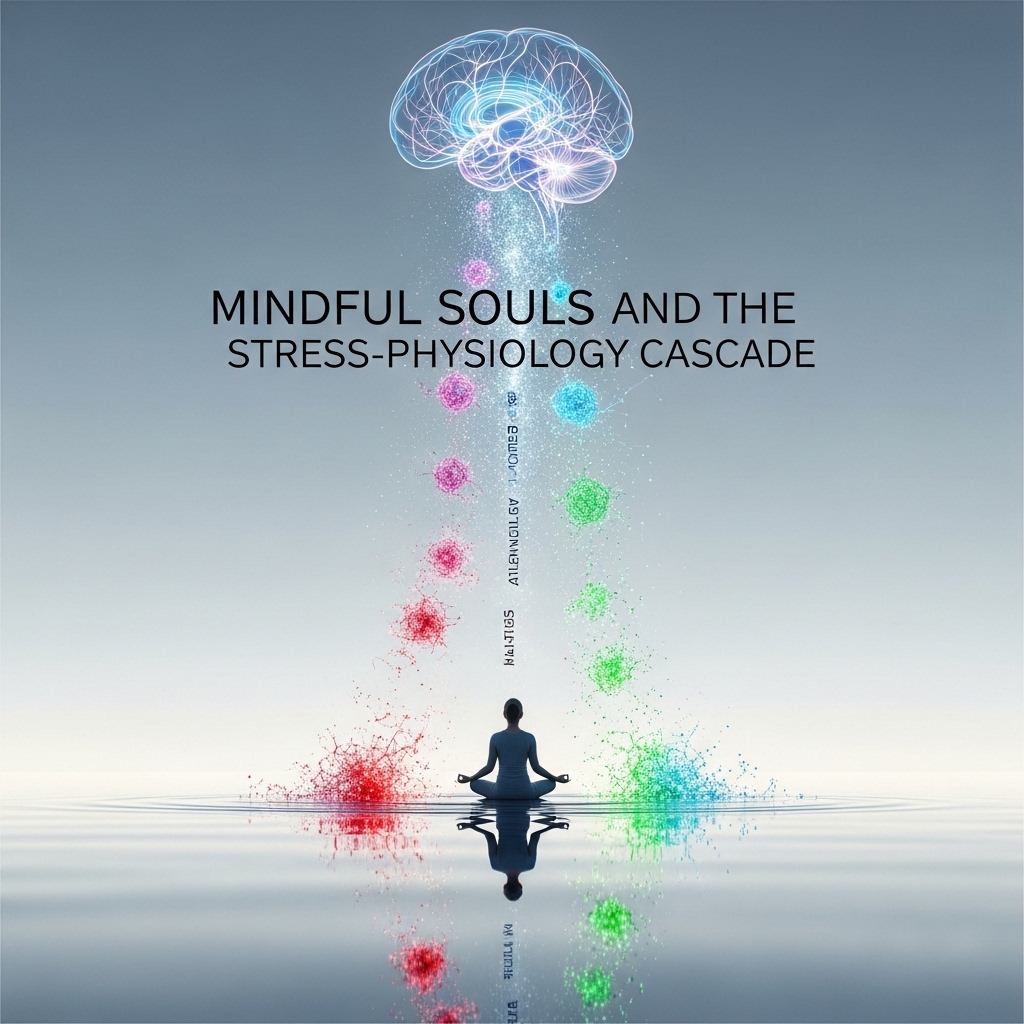
The path from chronic stress to measurable health decline is well-documented. When the brain perceives a sustained threat, it releases cortisol. That threat could be a high-stakes meeting, a board crisis, or a relentless travel schedule. In short bursts, this cortisol response is useful. Over months and years without recovery, however, it becomes harmful. Chronic cortisol exposure damages the brain's memory center, weakens immune function, raises blood pressure, and speeds up cellular aging.
Mindful souls who engage with structured mental regulation practices directly break this cycle. Mindfulness-based interventions activate the rest-and-recovery branch of the nervous system. They also reduce the frequency and strength of the cortisol stress response. As a result, resting cortisol drops and nervous system balance gradually returns. This shows up in HRV data within weeks of consistent practice.
For professionals who operate under sustained high pressure, this is not a vague benefit. It is a measurable, physiological one. The stress cycle that mindfulness breaks is the same one driving cardiovascular risk, elevated inflammatory markers, and cognitive decline. Addressing it through structured practice works at the root of multiple downstream health variables at once. In other words, it is a high-leverage intervention.
What Research Shows About Mindful Souls and Cortisol

The evidence connecting mindfulness practice to cortisol reduction is now strong enough to draw clear clinical conclusions. Research from the National Institutes of Health has reviewed multiple randomized controlled trials on Mindfulness-Based Stress Reduction, known as MBSR. MBSR is an eight-week structured program developed at the University of Massachusetts Medical School. Across multiple studies, MBSR produced significant reductions in cortisol output in both clinical and healthy professional groups.
A landmark study published in Health Psychology showed that mindfulness meditation training produced lower cortisol reactivity to lab-induced stress tasks. Critically, this was not simply a subjective report of feeling less stressed. It was a measurable change in a biological marker. That marker correlates directly with cardiovascular risk, immune suppression, and faster biological aging. Consequently, mindful souls who maintain consistent practice carry a demonstrably different cortisol profile than those who rely solely on passive recovery.
The significance of cortisol reduction extends well beyond conventional stress management. Chronically elevated cortisol suppresses testosterone and growth hormone production. It also impairs thyroid function, disrupts blood sugar regulation, and drives harmful fat buildup around the abdomen. This fat pattern carries elevated metabolic and cardiovascular risk in professionals over 40. Reducing cortisol load through mindfulness practice is therefore not simply a mood intervention. It is a broad metabolic and hormonal intervention with consequences across multiple longevity variables.
Heart Rate Variability as a Key Outcome for Mindful Souls

Heart rate variability is one of the most sensitive, non-invasive indicators of nervous system health. A high HRV reflects a nervous system that shifts rapidly between activation and recovery. By contrast, a low or suppressed HRV reflects a system locked in chronic stress dominance. This state links to increased cardiovascular risk, impaired immune function, and reduced cognitive flexibility. For mindful souls tracking their own biology, HRV provides a clear, objective window into the real effects of their practice.
Research published in Frontiers in Psychology confirms that mindfulness-based interventions produce measurable increases in HRV. These increases appear both during practice sessions and as a resting baseline over time. Moreover, these improvements reflect genuine structural changes in nervous system regulation — not simply acute relaxation responses. Professionals who practice consistently for eight weeks or more show HRV profiles that more closely resemble individuals with lower chronic stress loads. This holds even when the external demands of their professional environment remain unchanged.
This distinction matters. Mindful souls are not necessarily professionals with less demanding lives. Rather, they are professionals whose nervous systems have developed greater capacity to process demand without sustained stress activation. The practical result is more resilience under pressure, faster recovery between high-intensity demands, and a lower cardiovascular cost per unit of professional output. HRV data makes this advantage visible, trackable, and directly useful for performance monitoring.
Mindful Souls, Telomere Length, and Biological Age

Telomere length is one of the most direct cellular markers of biological aging. Telomeres are the protective caps at the end of chromosomes. They shorten with each cell division. They also shorten under conditions of oxidative stress and systemic inflammation. Shorter telomeres link to greater risk of age-related disease, reduced immune function, and elevated all-cause mortality risk. Chronic psychological stress is one of the most reliably documented drivers of telomere shortening in the research literature.
Research published in NeuroImage and reviewed by teams at the University of California, San Francisco — including work connected to Nobel Prize-winning researcher Elizabeth Blackburn — has examined mindfulness practice and telomere maintenance. The findings suggest that regular meditators show higher telomerase activity compared to non-meditating controls. In other words, their cells age more slowly at the chromosomal level. For mindful souls who engage with structured practice over years rather than weeks, this represents a measurable influence on one of the most fundamental variables in longevity science.
The mechanism linking mindfulness to telomere maintenance is not fully resolved. However, the leading explanations center on cortisol reduction, lower inflammation, and improved sleep quality. All three independently slow the processes that accelerate telomere loss. This positions mindfulness not as a single-pathway intervention but as a broad, systemic one. Mindful souls who maintain long-term practice likely benefit through multiple simultaneous biological mechanisms, each contributing independently to biological age deceleration.
Cognitive Performance and the Mindful Souls Advantage
Sustained high-performance cognitive output depends on the structural and functional health of the prefrontal cortex. This region governs strategic decision-making, rapid pattern recognition, and effective leadership under uncertainty. It is also the area of the brain most vulnerable to the damaging effects of chronic cortisol. Elevated cortisol over sustained periods reduces prefrontal grey matter density. It also impairs working memory and erodes executive function — the cognitive foundation underlying the most demanding professional tasks.
Mindful souls who engage in consistent practice demonstrate measurably different prefrontal function than non-meditating peers. Research published in Psychiatry Research: Neuroimaging found that participants in an eight-week MBSR program showed increased grey matter density in the prefrontal cortex, hippocampus, and a region called the posterior cingulate cortex. These areas govern attention, memory, and self-awareness. Moreover, these structural changes are visible on brain imaging. They represent genuine brain adaptation — not simply a subjective improvement in focus or mood.
For a professional audience, the relevance is direct. A prefrontal cortex operating under chronic cortisol load is not the same instrument as one supported by adequate recovery. The former makes slower decisions, misreads social cues more often, and struggles with sustained attention over long work sessions. The latter does not. Consequently, mindfulness practice — sustained consistently — is one of the few behavioral interventions with direct brain imaging evidence of structural benefit in healthy adults.
READ ALSO: Mindfulness Practices for Burnout: Simple Ways to Recover
Sleep Quality and the Role of Mindful Souls Practice

Sleep quality is a primary driver of next-day cognitive performance, cardiovascular recovery, hormonal regulation, and cellular repair. For high-performing professionals, poor sleep is rarely a simple behavioral choice. It is frequently driven by an overactivated nervous system that cannot settle sufficiently to enter and maintain deep sleep. This is precisely the nervous system dysregulation that mindfulness practice directly addresses.
Research reviewed by the National Institutes of Health and published across multiple sleep medicine journals shows that mindfulness-based interventions improve multiple dimensions of sleep quality. These include time to fall asleep, total sleep duration, sleep efficiency, and subjective sleep quality scores. The mechanism is consistent with the broader evidence base: reduced stress activation, lower pre-sleep cortisol, and improved HRV all create the conditions for deep and restorative sleep. Mindful souls who practice in the evening hours — particularly body scan and breath-focused techniques — show measurable improvements in these outcomes.
Slow-wave sleep is the phase during which the cardiovascular system undergoes its primary nightly repair cycle. It is also when growth hormone releases at its highest rate. Additionally, the brain's waste-clearance system removes harmful byproducts linked to brain disease risk during this phase. A professional who consistently achieves high-quality deep sleep through better nervous system regulation is not simply feeling more rested. They are giving their heart and brain the biological repair window that makes long-term performance and longevity possible.
READ ALSO: Magic Mind: Unlock Your Full Potential with Mindfulness
Inflammation, Mindful Souls, and Disease Risk

Systemic inflammation is the biological common factor in nearly every major chronic disease linked to accelerated aging. Cardiovascular disease, type 2 diabetes, brain decline, and cancer each involve chronic low-grade inflammatory disruption as a core mechanism. In high-performing professionals, inflammatory load comes primarily from the same stress cycle that elevates cortisol. Chronic stress activation, poor sleep quality, disrupted body clocks, and insufficient physical recovery all sustain an inflamed state at the cellular level.
Mindfulness practice produces measurable reductions in systemic inflammatory markers. Research published in Brain, Behavior, and Immunity — a leading peer-reviewed journal in mind-body medicine — shows that mindfulness-based stress reduction reduces circulating levels of interleukin-6, tumor necrosis factor-alpha, and C-reactive protein. These reductions appear in both clinical and healthy stressed populations. Furthermore, these are the same inflammatory markers linked to faster biological aging and elevated cardiovascular risk. Mindful souls who sustain consistent practice over months show inflammatory profiles more consistent with lower stress loads.
The anti-inflammatory effect of mindfulness works through multiple pathways. First, direct cortisol reduction removes one of the primary drivers of inflammatory gene expression. Second, improved sleep quality lowers inflammatory production, which spikes under sleep deprivation. Third, enhanced vagal tone — reflected in improved HRV — suppresses pro-inflammatory signaling through the parasympathetic nervous system. Each pathway operates independently. Together, their combined effect in consistent practitioners is biologically significant and clinically meaningful.
READ ALSO: Mindfulness Practices for Couples: Strengthen Your Bond
The Brain Change Evidence for Mindful Souls

Brain plasticity — the brain's capacity to structurally reorganize in response to experience — does not stop after early development. In adults, it continues throughout life. However, its rate is heavily influenced by the quality and consistency of cognitive inputs. Structured mindfulness practice is among the most rigorously studied inputs for producing structural brain changes in adult populations. For mindful souls who engage with practice over months and years, these brain changes represent a durable performance asset.
Research from Harvard Medical School has shown that long-term meditators display significantly greater cortical thickness than age-matched non-meditating controls. This difference appears in regions associated with attention, body awareness, and sensory processing. Notably, the cortical thickness difference between experienced meditators and non-meditators was equivalent in magnitude to the thickness difference typically seen across 20 years of aging. This suggests that consistent mindfulness practice may partially offset the brain thinning that comes with normal aging.
The practical result of these brain changes goes beyond sharper focus during meditation. Instead, it produces a fundamentally different cognitive setup for everyday professional function. Improved attention regulation reduces the mental cost of sustained concentration. Greater awareness of internal physical signals allows faster recognition of stress before it compounds. Moreover, greater grey matter density in the hippocampus supports working memory and pattern recognition under pressure. Mindful souls who build these structural advantages over years of practice are not simply managing stress more effectively — they are operating with a more capable cognitive instrument.
READ ALSO: Mindfulness Practices for Mental Well-Being You Need
How Mindful Souls Practice Differs From Passive Recovery

Passive recovery — adequate sleep, vacations, reduced work hours — addresses stress load by reducing the inputs. Mindfulness practice, by contrast, builds the nervous system's capacity to process demand without triggering a full stress response. This distinction matters clinically. Passive recovery is necessary, but it is not sufficient for professionals whose environments reliably regenerate high stress loads.
Mindful souls develop what researchers call dispositional mindfulness — a stable capacity for non-reactive, present-moment awareness. This capacity operates continuously, not only during formal practice sessions. This trait-level change has measurable nervous system consequences. Professionals who score higher on validated mindfulness scales — such as the Five Facet Mindfulness Questionnaire — consistently show higher resting HRV, lower baseline cortisol, and lower inflammatory marker profiles. This holds true when compared to peers with similar professional demands but lower mindfulness scores.
The difference is not in the objective stressor. Rather, it is in the biological cost of processing that stressor. As a result, mindful souls carry a lower physiological price tag for the same professional output. The clinical implication is that mindfulness practice functions less like a treatment and more like a training modality. Just as cardiovascular training builds aerobic capacity that persists between sessions, mindfulness training builds nervous system and attentional capacity that persists between formal practice sessions.
Choosing a Short-Session Format That Still Delivers Results

The research evidence supports several specific formats of mindfulness practice for producing measurable biological outcomes. Mindfulness-Based Stress Reduction — the eight-week protocol at the core of much of the clinical literature — provides a rigorously tested framework. Breath-focused attention practice, body scan meditation, and open monitoring meditation each engage different attentional and nervous system mechanisms. They also have distinct but complementary evidence bases. Mindful souls who build consistent practice using any of these formats show measurable biological benefits within eight to twelve weeks.
For professionals resistant to extended formal sessions, the evidence also supports shorter, high-consistency practice intervals. Research suggests that daily sessions of ten to twenty minutes — maintained consistently over eight or more weeks — produce measurable HRV improvements and cortisol reductions. Consistency across days matters more than duration within sessions. Additionally, tracking HRV through wearable technology provides an objective feedback tool. It allows professionals to observe the biological effects of their practice in real time — a data-driven approach that tends to improve adherence in analytically minded groups.
Integrating Mindful Souls Practice Into a Longevity Protocol

Integrating mindfulness practice into an existing performance protocol — alongside structured aerobic training, sleep improvement, and biomarker monitoring — positions it as one component of a broad longevity strategy. This integration matters because no single intervention addresses every longevity variable. However, mindfulness is one of the few practices with direct evidence across cortisol, HRV, inflammation, cognitive function, and biological age simultaneously.
Mindful souls who approach the practice with the same evidence-based rigor they apply to other performance variables are best placed to extract its full biological benefit. The research base is now sufficiently strong that it warrants the same systematic attention as any other measurable intervention in a serious professional health protocol. Furthermore, starting with a structured format — rather than informal or irregular practice — produces the most consistent and measurable biological outcomes in the research literature.
The evidence for mindfulness as a performance and longevity tool is no longer speculative. It is grounded in brain imaging data, blood biomarker studies, and large randomized controlled trials. For mindful souls who treat their health with the same analytical rigor they bring to business decisions, the data points clearly in one direction: structured, consistent mindfulness practice produces measurable biological benefits that compound over time.
UP NEXT: How to Cultivate Positive Critical Thinking Habits of Mind
Consistent mindfulness practice is one of the few behavioral interventions shown to measurably slow biological aging, with long-term meditators demonstrating higher telomerase activity, lower inflammatory markers, and cortisol profiles associated with biological ages running several years behind their chronological age in peer-reviewed research. WholeLiving's Biological Age Estimation Model incorporates this factor directly — your assessment takes under five minutes.
Ready to understand how these factors are influencing your biological age right now? [Take the Biological Age Assessment →]