


The tricep muscle is a quiet teacher. It reminds you that strength can be gentle. When you train your triceps, you also train patience. You do not need a perfect plan. You need a steady practice you can repeat. Your triceps will respond to calm consistency.
Today, you will treat training like self care. You will train hard, then recover well. That is where gratitude grows. Your upper arm does a lot every day. It carries bags, opens doors, and holds your phone. Your triceps make those tasks feel easier.
When your triceps feel strong, your posture often improves. Your movements feel cleaner and safer. That shift can feel like relief. You can also use training as a daily check in. You notice your energy and mood, you learn to adjust instead of forcing it.
Why triceps training can grow real gratitude

Training your triceps is about more than looks. It is about feeling capable. Capability makes daily life lighter. When you press, push, or carry, your triceps help. Those moments add up. You start appreciating your body’s quiet work.
Gratitude also grows when you keep promises to yourself. A small triceps workout each week can be that promise. You show up, even on busy days. You can keep it casual and still be consistent. Two short sessions can build real momentum. Your triceps growth comes from repetition.
Over time, you feel stronger in your upper limb. You notice smoother lifts and steadier support. That steadiness can calm your mind. Let that be the point. You are not “fixing” yourself. You are caring for what already serves you.
READ ALSO: Back Muscle Exercises For Strength And Balance
Triceps muscle anatomy in plain English

Your main muscle here is the triceps brachii. Some texts call it the musculus triceps brachii. It sits on the posterior aspect of the upper arm. The triceps brachii muscle has three heads. Each head has a job, yet they work together. Those parts are the long head, the lateral head, and the medial head.
The triceps primary function is simple. It creates elbow extension, so your arm can straighten. It also helps steady the shoulder joint. The muscle connects through a strong cord. That cord is the triceps tendon, sometimes called the triceps brachii tendon. It attaches at the olecranon process.
That bony point is on the back of your elbow. It is part of the posterior elbow area. When you straighten your arm, you feel it working. This is why form matters. The tendon does not love chaos. It loves smooth control and smart load.
The three heads and how to feel them working
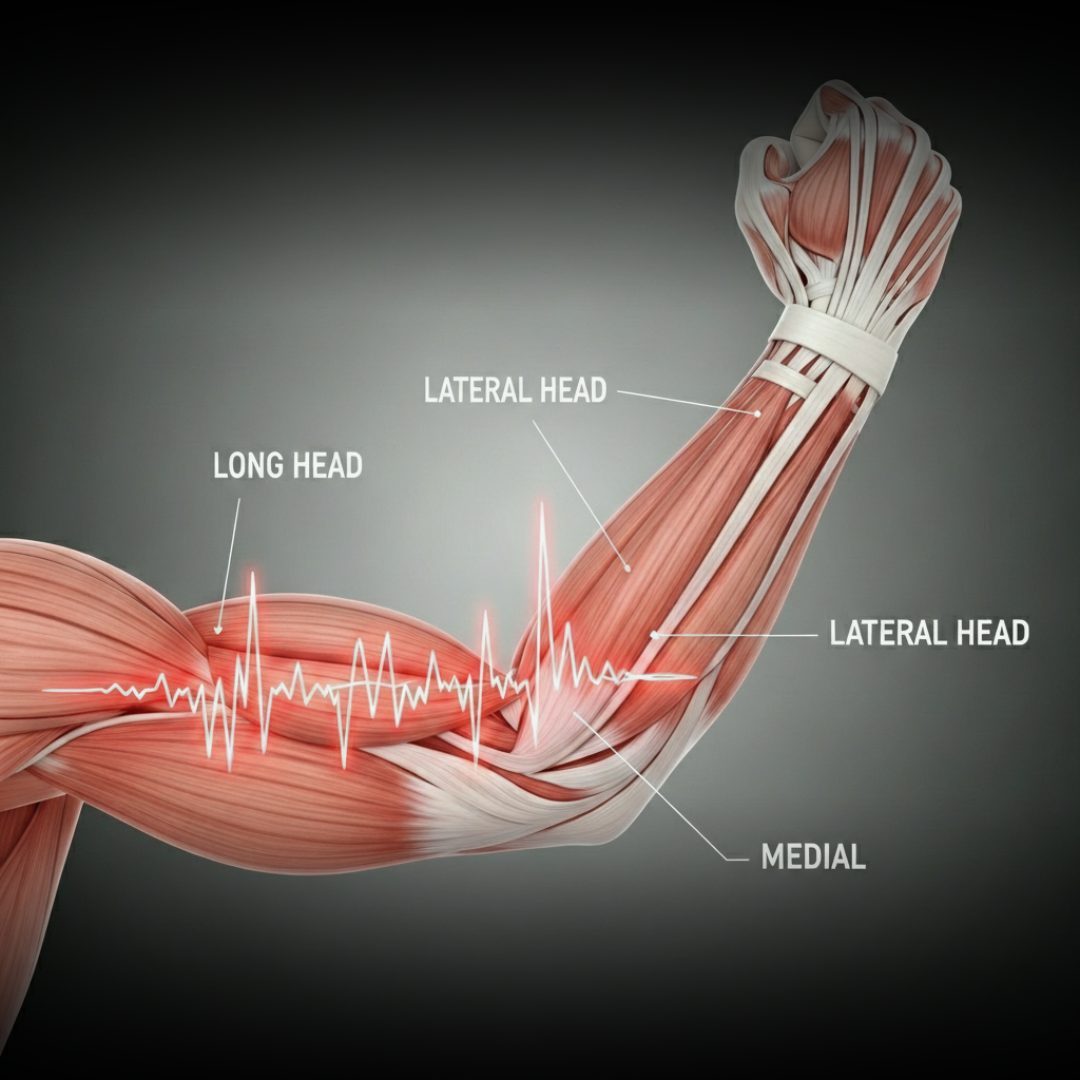
The long head crosses the shoulder joint. This means it helps with shoulder extension too. It also supports the back of the arm during pressing. The long head arises from near the glenoid cavity. That area is part of the shoulder socket. It is close to the glenohumeral joint.
The lateral head sits more on the outer back arm. The medial head sits deeper. Together, the lateral and medial heads often work hardest in lockout. You can “feel” different heads by changing angles. Elbows tucked can light up the medial head. A wider grip can shift stress toward the lateral head.
Still, do not overthink it. The goal is full range, steady control, and enough volume. Your triceps will adapt. If you want bigger triceps, keep the basics. Train the long head often. It adds most of the arm’s back mass.
How triceps protect the shoulder and elbow joints
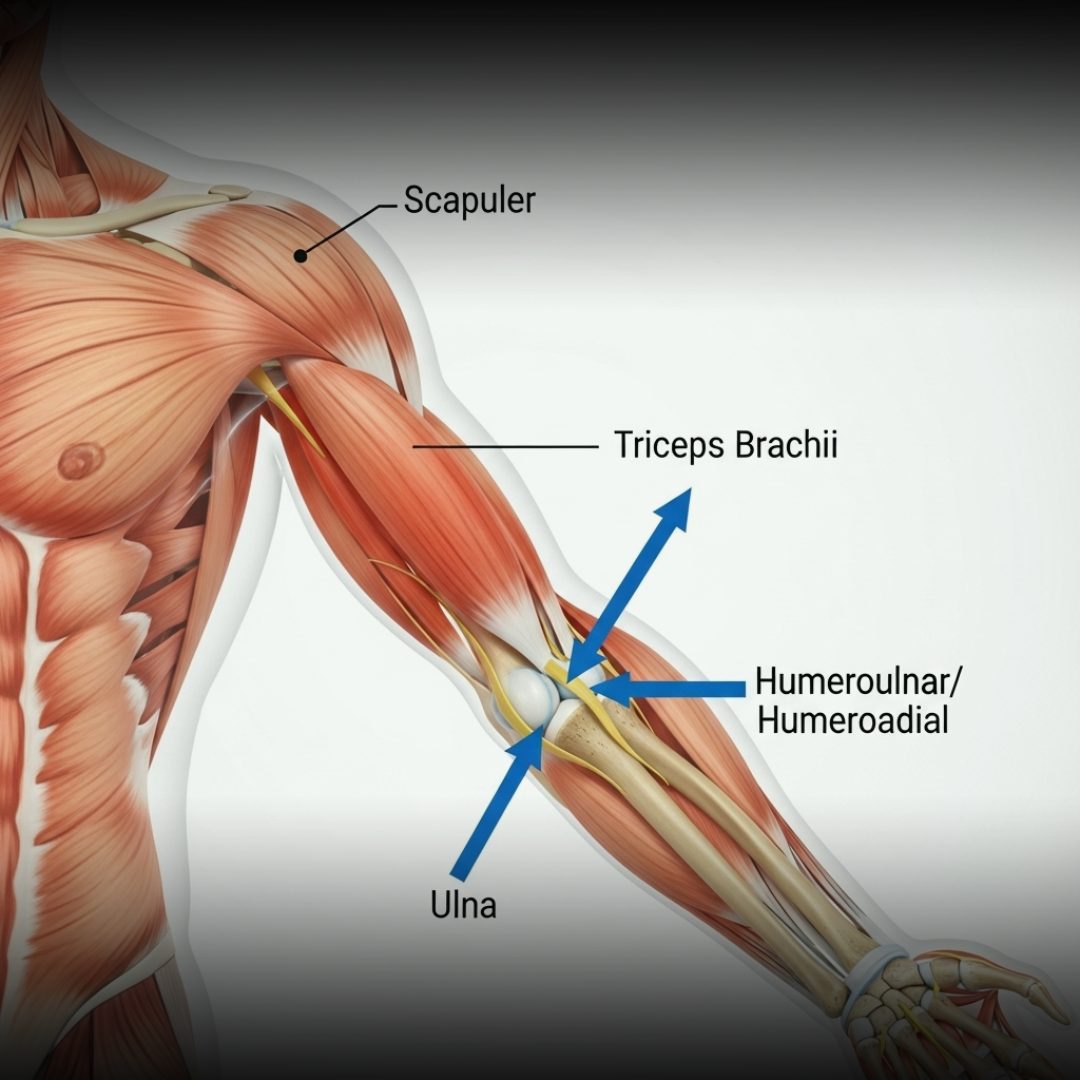
Your triceps muscle acts like a helper brake. It controls the arm as it straightens. That control protects the elbow joint. It also supports the shoulder. The long head helps stabilize the upper arm in the socket. That can reduce stress on the shoulder joint.
This matters during pushing and reaching. It matters during sports and daily tasks. Your upper arm feels safer when the back chain is strong. You also rely on nerves for clean movement. The radial nerve runs near the back arm. It travels in the radial groove.
Some people also hear about the ulnar nerve at the elbow. You may feel tingles if you lean on it. That is a cue to adjust. If you ever feel numbness or sharp pain, pause. Training should challenge you, not scare you. Support your joints with smart choices.
Warm up the upper arm, shoulder blade, and pressing chain

A warm up should feel like turning on lights. Start with easy arm swings. Then add gentle push ups on a wall. Next, wake up your shoulder support. Do slow scap circles with your shoulder blade. Add light band pulls if you have one.
You can also include bent over lateral raises. Keep them very light. They help your upper back stay active during pressing. Now add elbow prep. Do a few slow pushdowns with a band. Keep the motion smooth, like practice reps.
Your goal is blood flow, your goal is range. Your goal is calm confidence before load. This is also where gratitude begins. You are choosing to move with care. Your future self will thank you.
READ ALSO: Pulldown Exercise That Feels Gentle Yet Powerful
Compound elbow extension movements that build strength

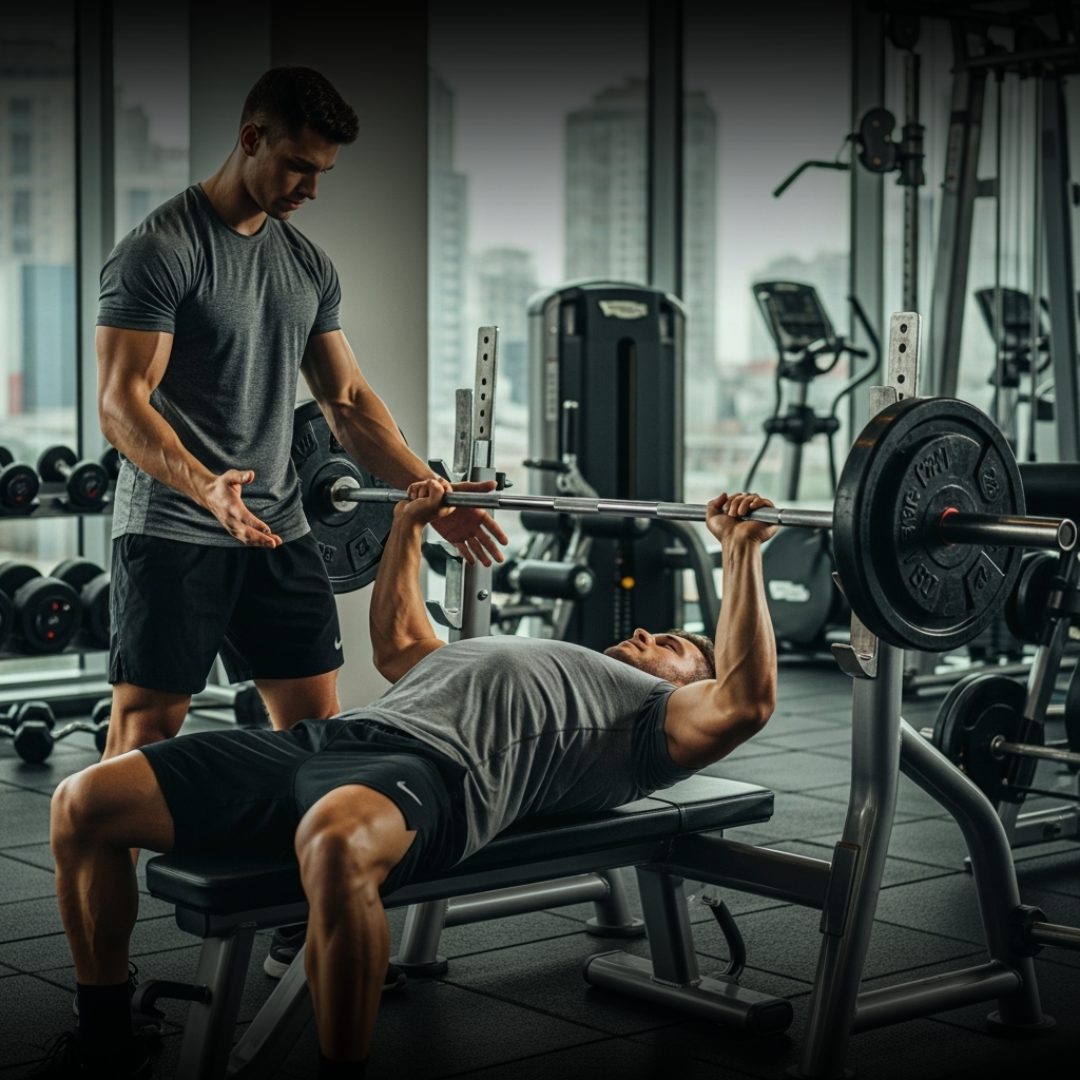
Your big builders are presses and dips. These are pressing movements with strong lockout. They train the triceps brachii under real load. Start with the bench press when you can. Keep your shoulders packed and stable. Think “control down, press up.”
Add the close grip bench press for more triceps focus. Keep elbows closer to your ribs. Use a weight you can control. A second option is the close grip bench press again on another day. Use lighter weight and slower reps. Your triceps will still get the message.
Add tricep dips if your shoulders feel good. Stay tall and do not crash into depth. Stop before pain. These are your main compound elbow extension movements. Keep them honest with form. Your strength will grow without drama.
Triceps isolation work for control and clean shape

Isolation builds control and joint friendly volume. Think cables, bands, and dumbbells. Use them to feed the muscle without wrecking recovery. A staple is the triceps pushdown. Keep your elbows pinned. Finish with the arm straight, but not slammed.
You can also do cable push downs for smooth tension. Keep your wrists neutral. Let your triceps do the work. Now, include a triceps extension pattern. Try the overhead triceps extension for the long head. It stretches the muscle in a safe way.
Also use the lying triceps extension for control. Keep elbows stable and move slowly. Repeat the lying triceps extension later with lighter weight. This is your triceps isolation exercise zone. It is not flashy. It is effective when you keep it clean.
A complete triceps workout you can repeat weekly
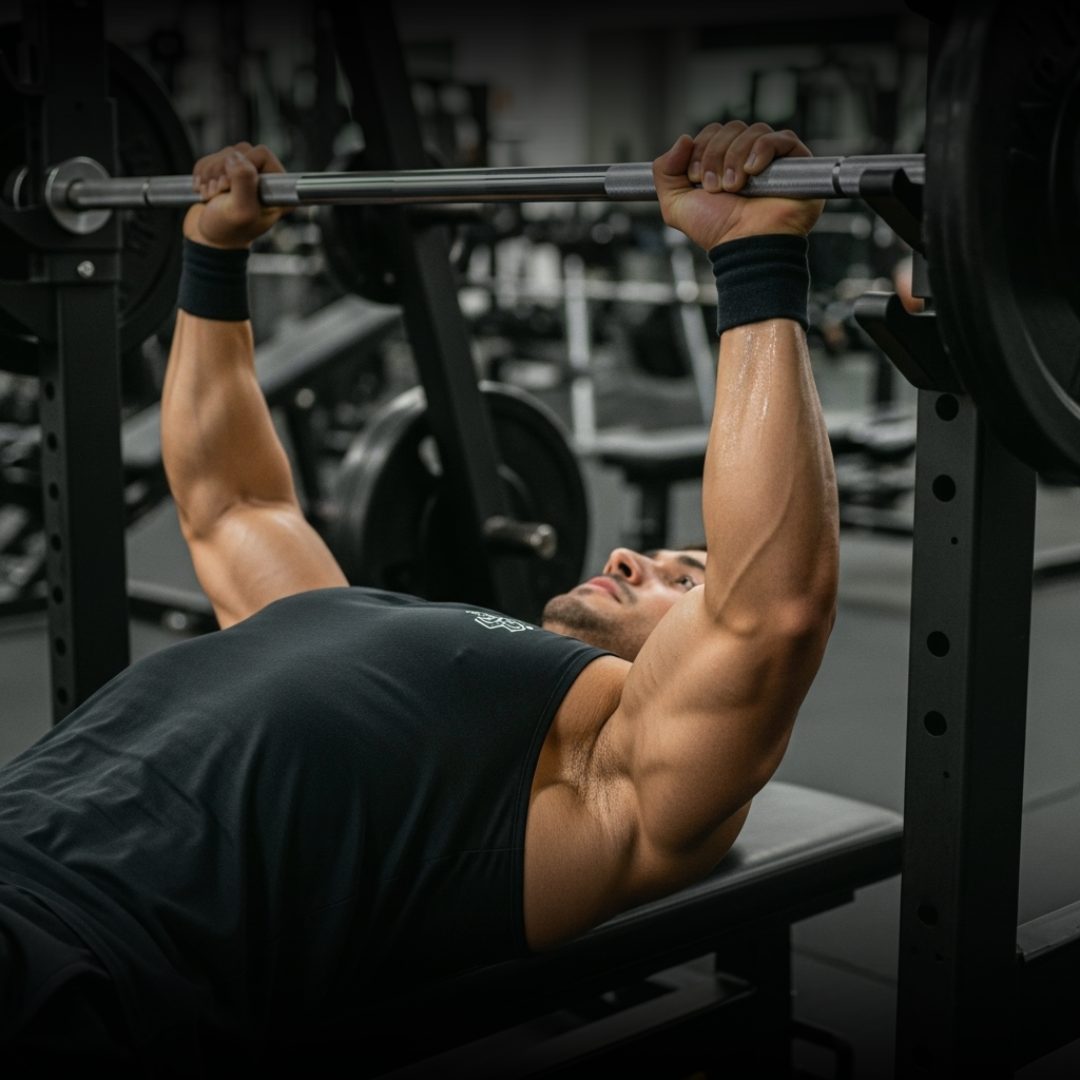
Here is a simple structure you can keep for months. It is a complete triceps workout that respects recovery. It fits real life. Day A focuses on strength. Do a moderate bench press, then pushdowns. Add a controlled overhead extension for the long head.
Day B focuses on volume and feel. Use lighter pressing, then higher rep cables. Finish with a slow triceps extension and a short hold. Those holds are useful sometimes. They are static contraction movements that build mind muscle connection. Keep them short and painless.
If you want more, add a third micro session. Do two sets of pushdowns and stop. Small doses can still build muscle growth. Remember, growth needs rest too. Stronger triceps come from training plus recovery. You do not need punishment.
Good tricep exercises and simple progress rules

You do not need twenty moves. You need a few good tricep exercises you can do well. Quality beats chaos every week. Use presses for load. Use cables for steady tension, use overhead work for the long head.
Here are reliable choices in rotation. Use the triceps pushdown, a press, and an extension. Add dips only if shoulders feel great. Progress is simple. Add one rep, or add a little weight. Or slow the lowering phase.
You can also add one extra set, sometimes. Keep weekly volume steady. Let your triceps brachii adapt without flare ups. If you feel joint stress, reduce load and keep form strict. That is not failure. That is skill.
Nerves, tendons, and the “listen early” approach
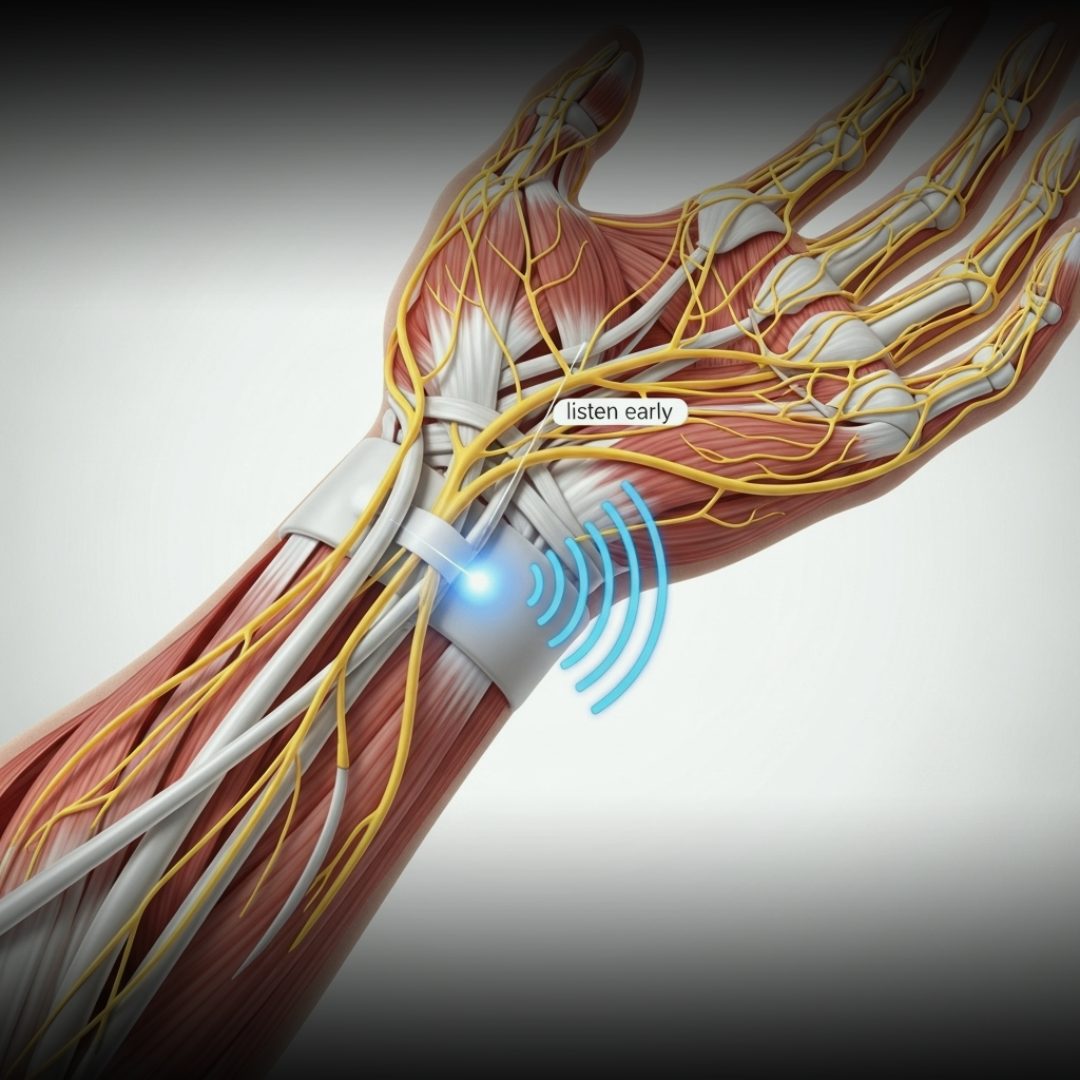
Your back arm has important structures. The radial nerve runs behind the arm. It sits near the radial groove on the humerus. Some anatomy texts mention the radial groove insertion region in discussions. You may see “radial groove insertion” in diagrams. Use it as a reminder to train with control.
Blood supply matters too. The brachial artery and the deep brachial artery support the area. That is why warm ups help. If pain shows up, note the pattern. A tendon injury typically occurs after sudden jumps in load. It can follow an occasional high intensity force.
A warning sign can be a painful popping sensation. If that happens, stop and seek care. Do not test it. In clinics, a provider may tap with a reflex hammer. They may check the ulnar nerve and the radial nerve. In rare cases, people hear about distal nerve transfer in advanced injuries.
Training balance with biceps and back support
Your arm is a team, not a solo act. Your biceps brachii bends the elbow, your triceps straighten it. If you only push, your shoulders may feel cranky. Add pulling work for balance. This supports the posterior compartment and posture.
Try rows and pulldowns. Add straight arm pull downs for your lats. The latissimus dorsi helps stabilize the shoulder. This balance can also help your press. A stable back makes pressing safer. It can also reduce stress at the shoulder joint.
You may also notice better “line” across the arm. The posterior surface looks firmer when both sides are trained. That is a nice bonus. Your chest matters too. Strong pressing involves the outer chest. Still, keep the triceps as your focus here.
READ ALSO: Bicep Muscle Workout You Can Do Anywhere
Form cues that protect the joints and build stronger triceps

Keep elbows steady. Avoid flaring hard on every rep. Let the elbow track naturally. Think smooth extension. The goal is clean forearm extension and control. Avoid snapping to “lock” fast.
Keep wrists neutral. Keep shoulders down and back. That protects the glenohumeral joint. On overhead work, keep ribs down. Let the long head stretch without arching. You should feel effort, not pinching.
Use lighter loads for isolation. Save heavy work for presses. Respect your muscle fibers and recovery. This is how you earn stronger triceps over time. You train smart, then you repeat it. Repetition is a quiet superpower.
Recovery habits that turn training into gratitude

Recovery is part of the plan. Sleep is where repair happens. Hydration supports tendons and focus. Eat enough protein and whole foods. You do not need extremes. You need steady fuel for muscle growth.
Also, take easy walks. Gentle movement supports blood flow. It helps soreness fade. Do simple mobility on rest days. Shoulder circles and elbow bends are enough. Keep it relaxed.
Then add a gratitude ritual. After training, name one thing your body did well. That small practice can change your mood. When you train your triceps this way, you train your mindset too. You stop chasing perfection. You start appreciating progress.
Train triceps, thank your body, repeat

Your triceps are not just “arm muscles.” They support your daily life. They help you push, brace, and move with confidence. Keep the plan simple. Choose a press, a pushdown, and an overhead extension. Repeat weekly, then adjust slowly.
If you ever feel nerve signs, get support. Watch for tingles, weakness, or sharp pain. Respect the signals. Over time, you will feel it. Your upper arm feels steadier. Your workouts feel calmer.
That is where gratitude becomes real. You feel health in your own movement. You notice how much your body carries for you. Keep going, one clean rep at a time. You are building stronger triceps and a kinder relationship with your health.