For high-performing professionals, words of affirmation are not sentimental language; they are a form of verbal input that can influence cortisol regulation, threat perception, and early-day cognitive stability under pressure. Within WholeLiving’s relationship pillar, this topic belongs in the same performance discussion as sleep quality, inflammatory load, and emotional regulation, because repeated exposure to supportive or hostile language shapes stress physiology and interpersonal safety over time. For executives, founders, and other decision-makers operating under sustained demand, the language used in close relationships can either reduce allostatic strain or reinforce the chronic stress patterns linked to cognitive decline, cardiovascular burden, and accelerated biological aging.
Words of Affirmation and the Stress System
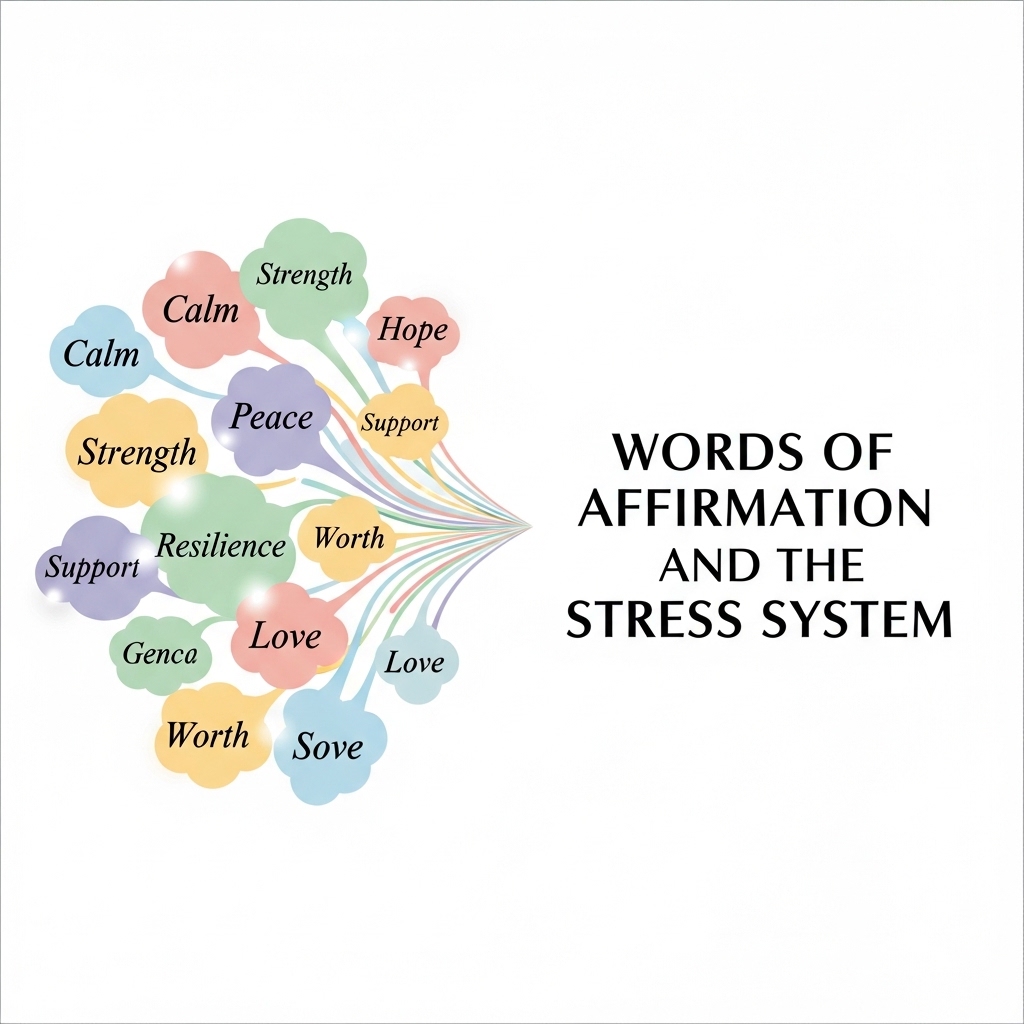
Words of affirmation matter because close relationships shape the body’s stress response. In a 2024 study in the Journal of Social and Personal Relationships, support, partner responsiveness, and cortisol moved together during couple interactions. That means language at home can affect more than mood.
For high-performing professionals, that point is practical. A harsh home climate can extend the threat state that work already creates. A steady and supportive verbal climate can help limit that extra load.
This is why words of affirmation belong in a performance health discussion. They can shape how safe, seen, and supported a person feels after a demanding day. Over time, that affects recovery, sleep, and mental control under pressure.
What Research Actually Means by Words of Affirmation
In research, words of affirmation are not a formal medical term. Studies usually examine verbal support, validation, warmth, and partner responsiveness instead. Those ideas ask one main question: does the other person feel understood and cared for.
That distinction matters because generic praise is not enough. A line such as “you handled that well” works better when it fits the real moment. Specific language tends to feel more believable and more useful.
For a senior professional, the point is not to sound positive all the time. The point is to use language that lowers friction and builds trust. That makes words of affirmation a relationship signal with measurable health value.
Words of Affirmation and Cortisol Patterns
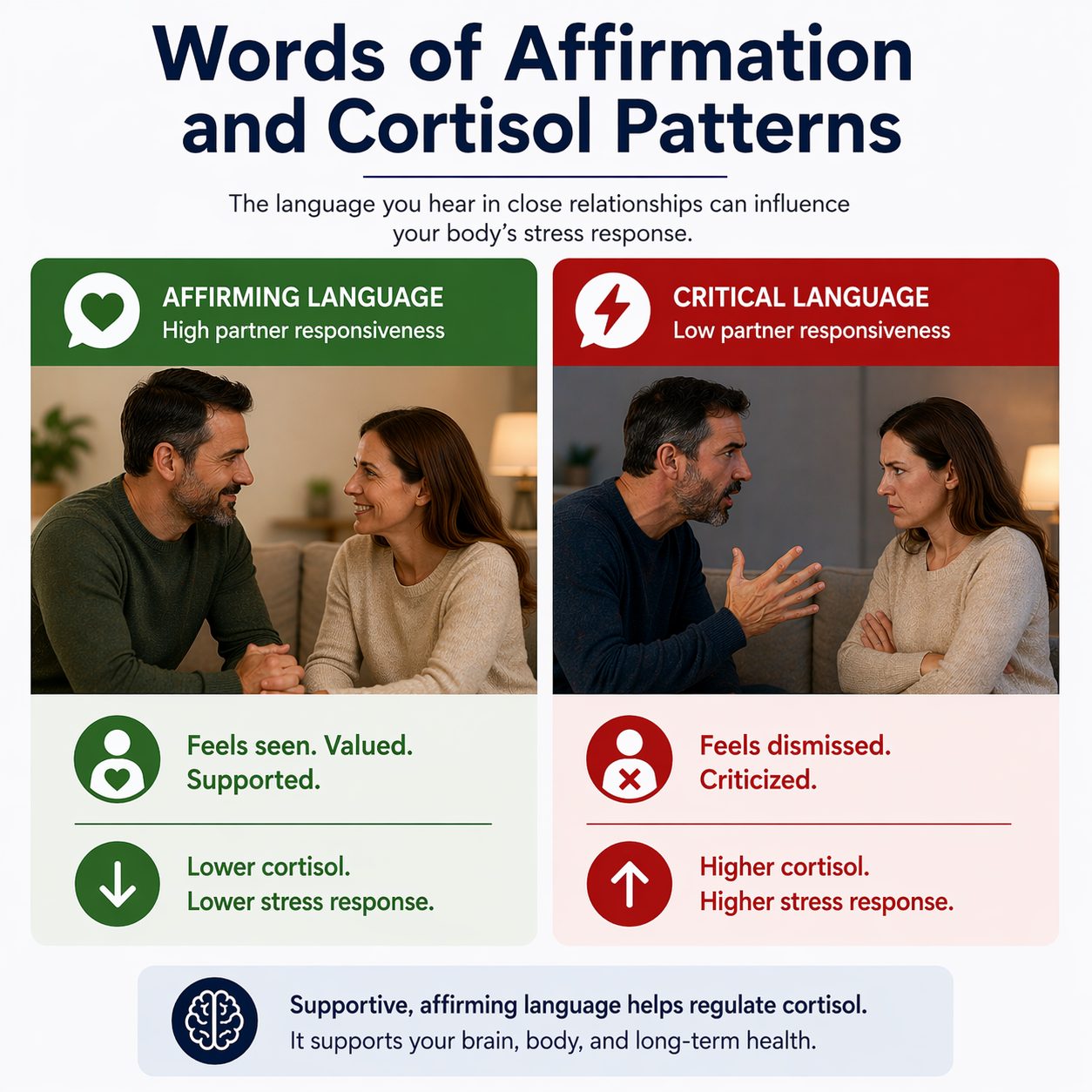
Cortisol is one of the body’s main stress hormones. The 2024 married-couple study found links between negative support behavior, lower responsiveness, and less favorable cortisol shifts during support talks. That gives words of affirmation a direct link to stress biology.
Older work by Beate Ditzen adds an important limit. Her 2007 study found that positive physical contact lowered cortisol and heart-rate responses to stress, while verbal support alone did not reduce stress in the same clear way. Words help most when the wider relationship also feels safe.
That is the useful clinical frame. Words of affirmation do not work like a script. They work best when tone, timing, and behavior all point in the same direction.
Words of Affirmation and Inflammation
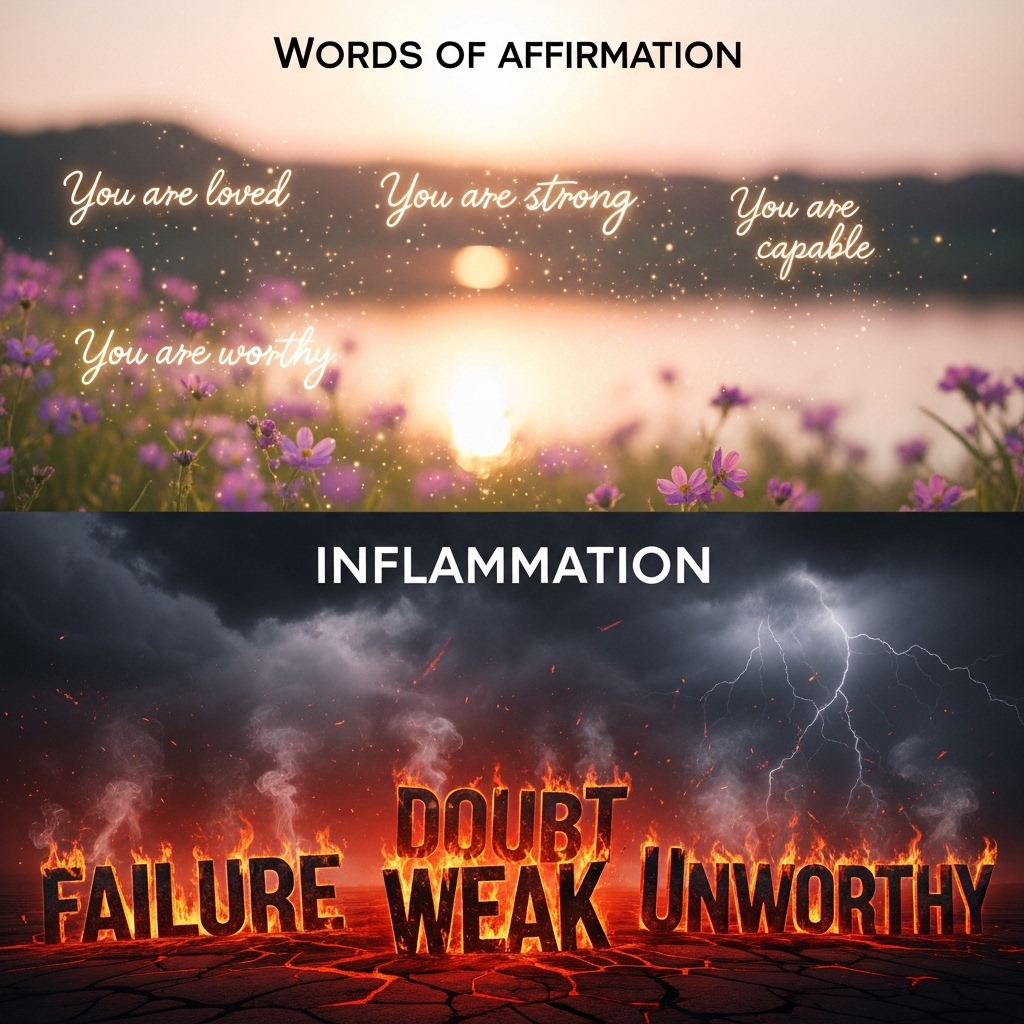
Relationship language also connects to inflammation. In a well-known 2005 study, Janice Kiecolt-Glaser and colleagues found that couples with more hostile behavior healed wounds more slowly and showed larger increases in inflammatory signals such as IL-6 and TNF-alpha after conflict.
This matters because inflammation is not a minor issue. It sits close to cardiovascular disease, metabolic decline, and biological aging. When conflict becomes a repeated pattern, the body may carry that cost for years.
A few kind phrases cannot cancel constant criticism. However, words of affirmation can help create a lower-conflict climate when they appear inside a broader pattern of respect. That is where the health benefit becomes more plausible.
Words of Affirmation and Heart Health
Close relationships affect the heart through several paths. A 2022 review in Current Cardiology Reports found that intimate relationship strain links to higher coronary heart disease risk and poorer outcomes, while supportive relationships appear protective.
Words of affirmation are not a heart treatment on their own. Still, they often mark a warmer relationship style with less hostility and less daily strain. That can support healthier blood pressure patterns, better habits, and lower stress load.
For executives in midlife, this is highly relevant. Work pressure already pushes the body hard. A steady home environment can reduce added strain, while a hostile one can make recovery harder.
Words of Affirmation and Sleep Quality

Sleep is one of the clearest ways relationship language affects daily performance. A 2025 systematic review and meta-analysis in Sleep Medicine Reviews found that better couple relationship quality was linked with better overall sleep quality and longer sleep duration.
That link likely runs both ways. When sleep drops, patience falls, and negative interactions rise. When the relationship feels warmer and more stable, sleep often improves as well.
This is where words of affirmation become practical. Clear and supportive language can lower evening tension and reduce the carryover of conflict into the night. For a high-output professional, that can protect next-day focus and emotional control.
Words of Affirmation and Cognitive Performance
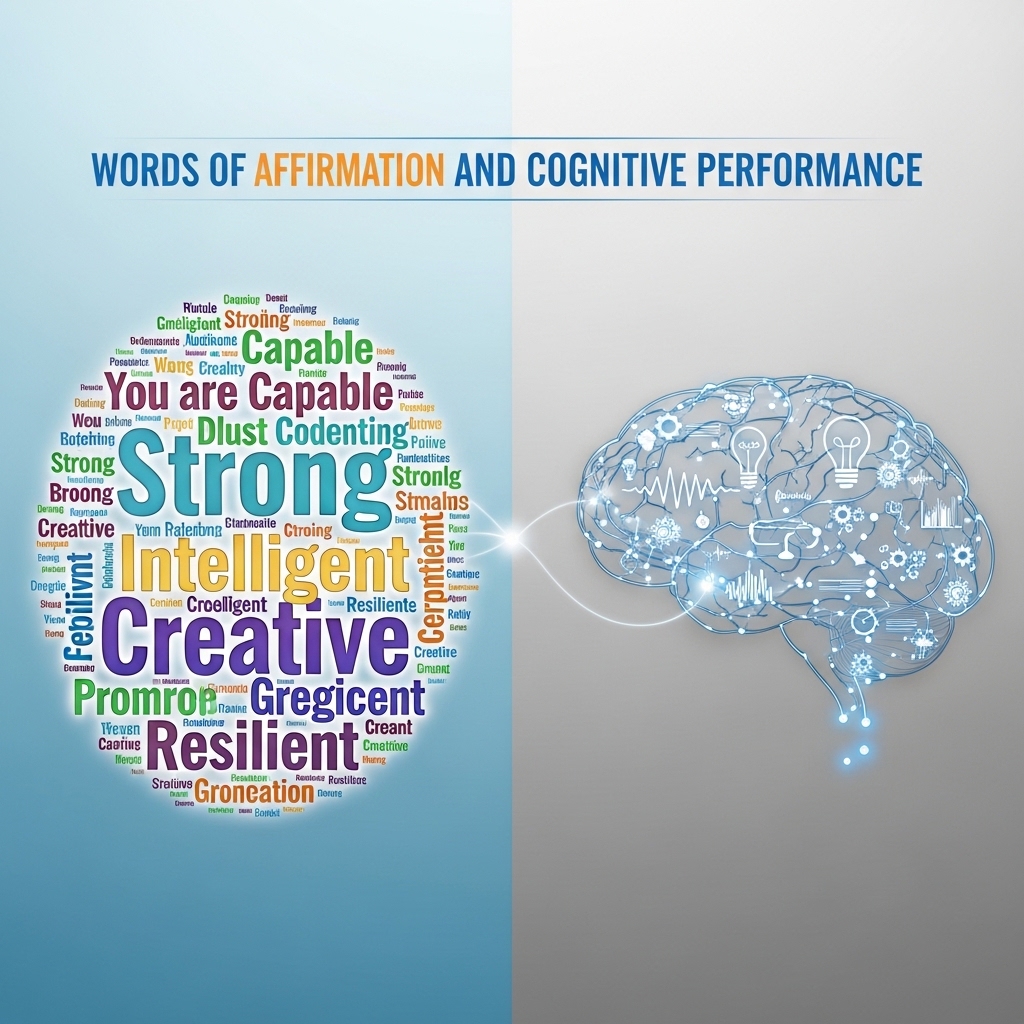
Stress can narrow mental range. A 2016 meta-analysis by Grant Shields and colleagues found that acute stress impairs working memory, cognitive flexibility, and cognitive inhibition. Those functions sit at the core of planning, judgment, and self-control.
That makes the home verbal climate more than a private matter. If conflict keeps stress high, the brain may stay in a more reactive mode. That can weaken decision quality in the office, on calls, and during conflict.
By contrast, words of affirmation can help create a safer setting after work. They do not solve every stressor, but they can reduce the extra load that comes from feeling judged or unseen at home. That gives the brain a better chance to recover.
READ ALSO: Emotional Intimacy in Relationships: Building Deeper Bonds
Why Timing Matters More Than Volume
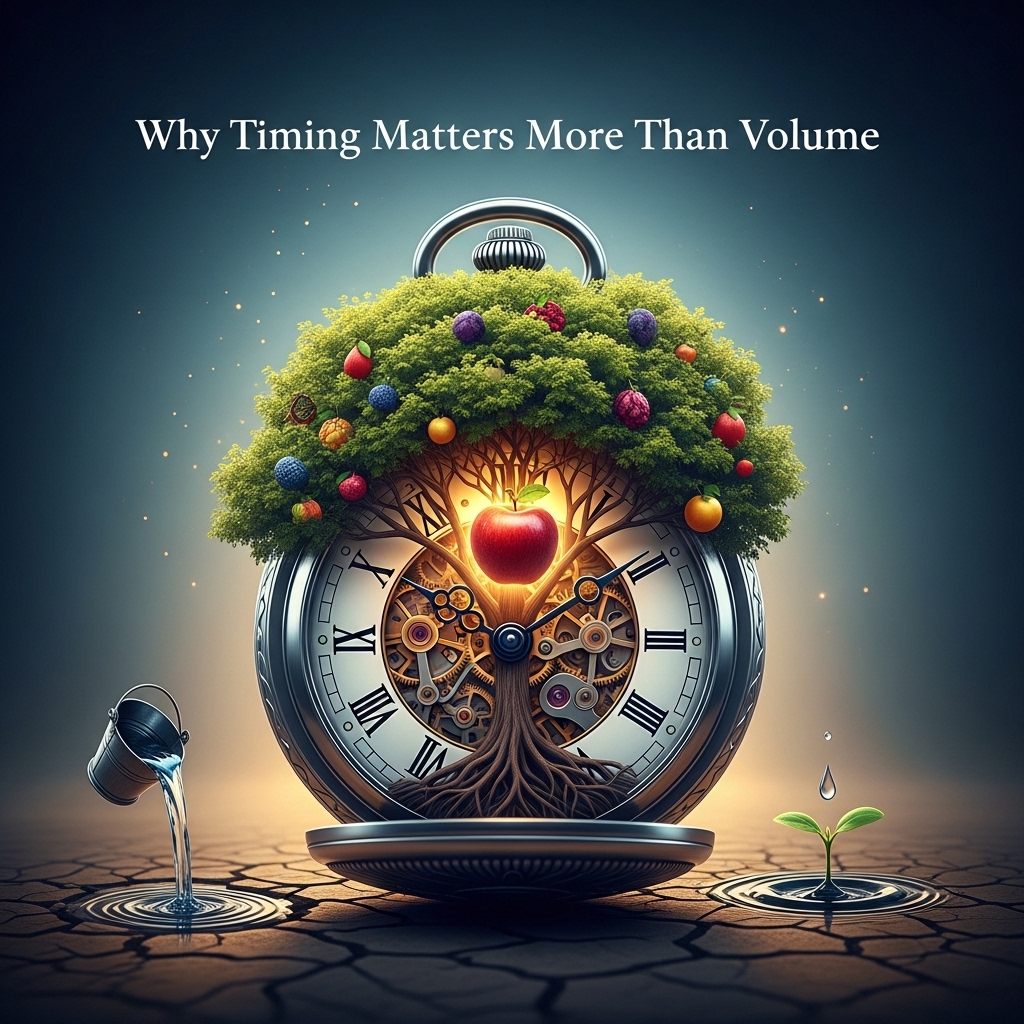
Many people use praise too late or too vaguely. Support works better when it arrives near the stressor and matches what actually happened. That is one reason specific words of affirmation tend to land better than broad statements.
Timing also affects trust. If affirmation appears only after an argument or after repeated neglect, it can feel like damage control instead of care. The body is less likely to read it as a sign of safety.
For serious professionals, this means less volume and more precision. Short, timely, and credible language often does more than long speeches. In health terms, the nervous system responds best to signals that feel real.
READ ALSO: Platonic Relationships: A Guide to Strong Friendships
Why Words of Affirmation Fail Without Action

Language alone has limits. Ditzen’s research showed that verbal support by itself did not clearly reduce stress responses in the way positive physical contact did. That does not make words useless, but it does show that behavior matters.
This explains why some people hear support but do not feel supported. If praise comes from a partner who is distant, dismissive, or unreliable, the message loses force. The spoken words and the lived experience do not match.
So words of affirmation work best as verbal proof of a larger pattern. That pattern includes follow-through, attention, respect, and steady behavior. Without those, positive language can sound good but do little.
READ ALSO: Five Languages of Love: Nurturing Connections Everyday
Evidence-Based Options for Using Words of Affirmation
The strongest evidence supports a narrow use of words of affirmation. Keep the language specific, timely, and tied to real effort, judgment, or endurance. That approach fits better with research on responsiveness than generic praise does.
It also makes sense to judge affirmation by outcomes, not intent. If the relationship still shows high conflict, poor sleep, or constant strain, positive language alone is not enough. The broader pattern likely needs attention.
For a high-performing professional, the evidence-based options are clear: use words of affirmation in a concrete way, pair them with reliable action, reduce hostile exchanges, and notice how the relationship affects sleep, stress, and decision quality. That approach aligns with the best available evidence on cortisol, inflammation, heart health, and mental performance.
UP NEXT: How Love Bombing Elevates Cortisol and Accelerates Biological Aging in High-Performing Professionals
How This Affects Your Biological Age