

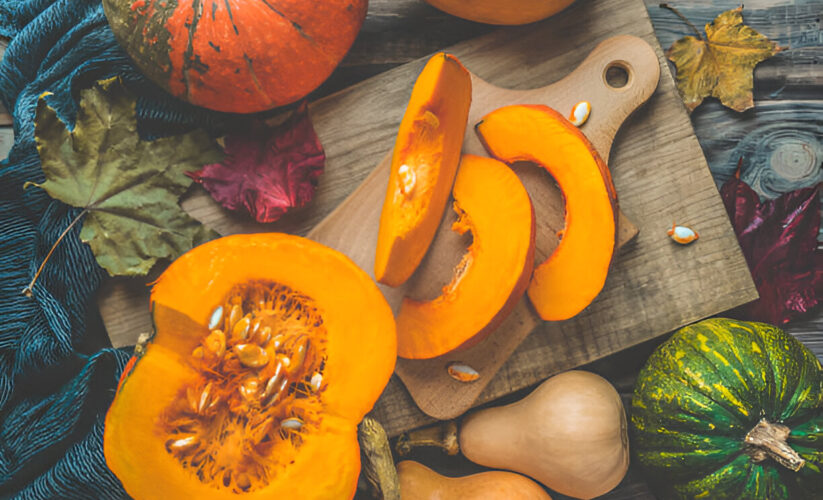

The gourd's high levels of carotenoids account for its orange color — and star status. In addition to its vision-promoting beta-carotene, pumpkin contains the carotenoids lutein and zeaxanthin, which researchers now believe help protect against macular degeneration. Alpha-carotene, yet another invaluable pumpkin offering, may even aid in the prevention of tumor growth. Pumpkin seeds (or pepitas) also provide many nutrients, including bone-strengthening magnesium and copper. On top of that, the seeds contain cholesterol-lowering phytosterols and omega-3 fatty acids, which help reduce inflammation and may help prevent heart disease.
How to Buy
Look for weightier pumpkins (the gourds lose moisture and mass as they age) with hard rinds and no soft areas. Sugar pumpkins are best for cooking, since they're less stringy and provide more flavor.
Cooking Tips
For a tasty snack, rinse pepitas well, making sure to remove any pulp. Let them dry overnight. Spread the seeds onto a baking sheet sprayed lightly with olive oil, and sprinkle with salt, pepper, garlic, paprika, or other seasonings. Cook for one hour at 250 degrees.
Nutrition Breakdown
Per 1 cup cooked, boiled, drained, and mashed pumpkin:
Calories:
49 calories
Fat:
0.17 grams
Fiber:
2.7 grams (11 percent* DRI**)
Vitamin A:
612 mcg*** (87 percent DRI)
Vitamin C:
11.5 mg (15 percent DRI)
Beta-carotene:
5135 mcg
Potassium:
564 mg (12 percent of DRI)
*Percentages are for women 31 to 50 years old
**DRI, Dietary Recommended Intakes, is based on National Academy of Sciences Dietary Reference Intakes, 1997 to 2004
***Based on a conversion of 1 retinol activity equivalents = 1 mcg retinol or 12 mcg of beta-carotene