
Chronic muscular tension is not a minor inconvenience — it is a measurable stressor that elevates circulating cortisol, disrupts autonomic nervous system regulation, and accelerates biological aging in adults who carry sustained physiological load. For executives and founders operating under prolonged cognitive and organizational pressure, unresolved somatic tension compounds over time, degrading sleep architecture, impairing executive function, and increasing cardiovascular risk. Consistent mindful movement practice addresses this at the physiological level — not as a wellness ritual, but as a clinical intervention with documented systemic benefit.
The Physiology of Chronic Tension

Sustained muscular tension is not simply a byproduct of a demanding schedule. It reflects a dysregulated stress response. This response keeps the body locked in a low-grade state of physiological arousal. The autonomic nervous system — specifically the sympathetic branch — remains activated beyond its functional window. As a result, the body cannot recover adequately between high-demand periods.
This sustained activation triggers a hormonal cascade. Consequently, cortisol output stays elevated. Over time, this suppresses immune function, disrupts glucose metabolism, and accelerates cellular aging. Research from the National Institutes of Health links chronic psychophysiological stress to measurable telomere shortening — one of the most studied biomarkers of biological age.
The muscular system responds to this state by holding tension as a protective mechanism. Specifically, muscles in the posterior chain, neck, and shoulder girdle become habitually contracted. Without deliberate intervention, this pattern becomes structural. It alters posture, restricts breathing mechanics, and compresses spinal discs.
Understanding this physiology reframes the problem entirely. Chronic body tension is not a comfort issue. It is a systemic performance variable with downstream consequences that extend well beyond physical discomfort.
Why High Performers Carry More Somatic Load

Executives and founders operate within environments that generate consistent sympathetic activation. Decision fatigue, compressed timelines, and organizational responsibility create a neurological environment the body interprets as sustained threat. Notably, the stress response does not distinguish between a boardroom conflict and physical danger. It responds with the same hormonal output regardless.
As a result, high performers accumulate somatic load faster than they discharge it. Recovery strategies that address only the mind — such as cognitive reframing without movement — leave the body holding residual tension. That tension compounds across days and weeks.
Research from the Harvard T.H. Chan School of Public Health supports the connection between chronic occupational stress and elevated inflammatory markers, including C-reactive protein. Furthermore, elevated inflammation associates with accelerated cardiovascular aging, impaired metabolic function, and reduced cognitive resilience.
Somatic load, therefore, is not a soft metric. It carries hard biological consequences that directly affect the variables high performers depend on most.
What Mindful Movement Actually Does

Mindful movement refers to structured physical practice that deliberately integrates breath regulation, attentional focus, and controlled motion. Practices such as yoga, tai chi, somatic movement therapy, and clinical Pilates all qualify under this classification. However, they must be performed with intentional awareness rather than mechanical repetition.
The primary mechanism is autonomic modulation. Specifically, slow, breath-coupled movement activates the parasympathetic nervous system — the physiological counterpart to the fight-or-flight response. This shift reduces heart rate, lowers blood pressure, and signals the muscular system to release held tension.
A second mechanism involves the interoceptive network. This is the brain's system for processing internal bodily signals. Mindful movement strengthens interoceptive accuracy. In turn, this improves the body's ability to detect early stress signals before they accumulate into chronic load.
Together, these mechanisms produce changes that go beyond relaxation. They recalibrate the body's baseline threat response, making the system more resilient to future stressors.
READ ALSO: Exercise for Overall Health: Tips to Start Today
The Cortisol Connection

Cortisol is the body's primary stress hormone. In short bursts, it serves a functional role — sharpening focus, mobilizing energy, and preparing the body for demand. Chronically elevated cortisol, however, operates as a systemic disruptor.
Sustained cortisol elevation impairs hippocampal function. This directly affects memory consolidation and cognitive flexibility. It also promotes visceral fat accumulation and suppresses testosterone and growth hormone production. Additionally, it increases arterial inflammation — a variable that matters significantly to long-term performance and longevity.
Mindful movement practices produce measurable reductions in cortisol output. A widely cited meta-analysis published in Psychoneuroendocrinology reviewed multiple controlled trials. It found consistent evidence that yoga-based interventions reduce salivary cortisol across diverse adult populations. Moreover, the effect was stronger with regular, sustained practice than with single-session exposure.
This evidence, therefore, positions mindful movement not as stress management in the colloquial sense, but as a cortisol regulation strategy with quantifiable physiological impact.
Inflammatory Markers and Systemic Recovery

Inflammation is a primary driver of biological aging. When the body carries chronic somatic tension, it maintains a low-level inflammatory state. This degrades tissue integrity, impairs cellular repair, and accelerates organ system deterioration. Consequently, this is the biological mechanism behind accelerated aging in chronically stressed individuals.
Mindful movement reduces inflammatory burden through several pathways. It lowers sympathetic nervous system activity, which directly reduces pro-inflammatory cytokine production. It also improves lymphatic circulation and supports mitochondrial efficiency — both relevant to systemic recovery.
The National Institutes of Health has funded multiple trials examining the anti-inflammatory effects of mind-body practices. Findings consistently show reductions in interleukin-6 and tumor necrosis factor-alpha. Both cytokines associate closely with systemic inflammation and chronic disease progression.
For professionals tracking biological age or managing early metabolic risk, reducing inflammatory load is among the highest-leverage interventions available without pharmaceutical support.
READ ALSO: Stretching Exercise for Lower Back Pain You Can Do in Bed
Sleep Architecture and the Recovery Window

Sleep is not passive recovery. It is an active biological process. During sleep, the body repairs tissue, consolidates memory, regulates hormones, and clears metabolic waste via the glymphatic system. Chronic muscular tension, however, disrupts entry into the deep sleep stages most critical to these functions.
Elevated evening cortisol — a common consequence of unresolved somatic load — delays melatonin onset and fragments sleep architecture. The result is reduced slow-wave sleep and REM duration, even when total sleep time appears adequate. This explains why many high performers sleep eight hours and still wake unrestored.
Mindful movement, particularly when practiced as part of an evening wind-down protocol, accelerates the physiological transition toward parasympathetic dominance. It lowers core body temperature slightly, reduces neuromuscular activation, and creates hormonal conditions that support deeper sleep.
Better sleep quality, in turn, amplifies every other recovery variable. It improves cortisol rhythm, reduces inflammatory markers, supports cognitive consolidation, and restores hormonal balance — making it one of the most significant downstream benefits of consistent mindful movement practice.
Cardiovascular Health and Autonomic Tone
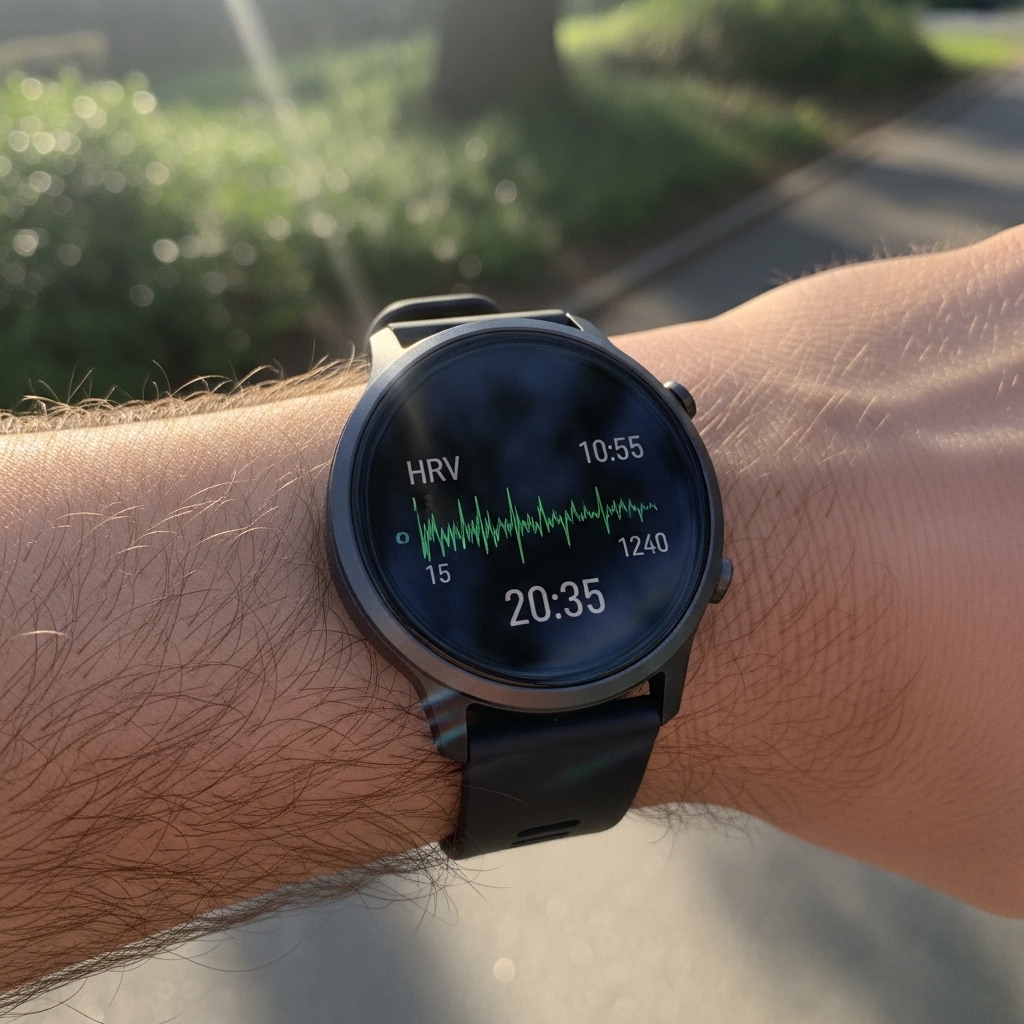
Heart rate variability — the variation in time between consecutive heartbeats — is one of the most reliable clinical indicators of autonomic nervous system health. High HRV reflects a well-regulated system. It signals the capacity to flex between sympathetic activation and parasympathetic recovery. Low HRV, by contrast, associates with cardiovascular risk, burnout, and poor stress resilience.
Chronic body tension suppresses HRV by keeping the sympathetic system persistently engaged. This reduces the heart's adaptive capacity. It also increases the physiological cost of routine stressors.
Research published in the Journal of the American College of Cardiology links sustained low HRV with increased risk of major cardiovascular events, independent of traditional risk factors. Conversely, regular mind-body practice — including yoga and tai chi — improves HRV across populations with documented cardiovascular risk.
For high performers, autonomic tone is not an abstract metric. It directly determines how efficiently the body recovers between demands and how much reserve capacity remains available across a high-intensity workday.
Cognitive Performance and the Somatic-Brain Connection

The brain and body do not operate as separate systems. The vagus nerve — the primary communication channel between the gut, thoracic region, and brain — transmits bidirectional signals that shape mood, cognition, and decision-making. Chronic somatic tension, however, compresses this communication pathway and degrades signal quality.
Elevated muscular tension in the neck and shoulder region specifically restricts vagal tone. This reduces the brain's access to the calming, regulatory signals the vagus nerve carries. As a result, this contributes to cognitive narrowing — the well-documented phenomenon where stressed executives make shorter-horizon decisions and exhibit reduced creative thinking.
Mindful movement practices activate vagal pathways through slow exhalation, postural alignment, and sustained attention. These inputs improve vagal tone. In turn, this supports prefrontal cortex function — the region governing complex reasoning, strategic planning, and impulse regulation.
The cognitive case for mindful movement, therefore, is not peripheral to performance. It is central to the neurological infrastructure that high-level decision-making depends on.
READ ALSO: How Strategic Home Gym Equipment Selection Drives VO2 Max Gains and Slows Biological Age Decline
Muscle Tension Patterns and Postural Degradation

Habitual somatic tension does not distribute evenly across the body. Instead, it clusters in specific regions — the suboccipital muscles at the base of the skull, the upper trapezius, the hip flexors, and the thoracic spine. These areas bear the highest cumulative load in sedentary, high-cognitive-demand work patterns.
Left unaddressed, these tension patterns alter skeletal alignment. Forward head posture and thoracic kyphosis — both common in desk-based professionals — compress the chest cavity and reduce lung capacity. They also shift mechanical load onto intervertebral discs, producing a progressive reduction in movement efficiency.
Mindful movement practices systematically address these patterns through targeted mobilization, eccentric lengthening, and breath-led release. Clinical Pilates and somatic movement therapy, in particular, identify and correct habitual tension patterns rather than simply strengthen over them.
Correcting postural degradation at the muscular and fascial level produces measurable improvements in breathing mechanics. These improvements, consequently, support cardiovascular efficiency, sleep quality, and stress regulation.
Emotional Regulation as a Physiological Variable

Emotional well-being is not separate from physical performance. Dysregulation emotionally — the inability to modulate affective states efficiently — consumes significant metabolic and cognitive resources. It elevates cortisol, suppresses immune function, and reduces the executive bandwidth available for high-stakes decisions.
The body stores emotional residue as somatic tension. This reflects measurable changes in muscle fiber activation and autonomic tone that persist beyond the triggering event. Mindful movement, therefore, provides a structured mechanism for processing and releasing this stored load.
Practices that combine breath regulation with slow, deliberate movement engage the interoceptive system in ways that talking-based interventions cannot replicate. The release of held tension in the hips, chest, and shoulders often produces a rapid shift in affective state. This occurs not because of placebo, but because of direct autonomic modulation.
For professionals who rely on emotional composure as a leadership variable, managing somatic load is consequently a direct input into emotional performance — not a wellness afterthought.
Evidence-Based Entry Points for Practice

The research supports several practical entry points for professionals seeking to integrate mindful movement as a performance and longevity variable. Yoga-based protocols of two to three sessions per week — each between 30 and 60 minutes — have produced measurable reductions in cortisol, inflammatory markers, and subjective stress load across multiple controlled trials. Tai chi practiced three times weekly shows consistent HRV improvement in adults over 40. Similarly, clinical Pilates — when delivered with somatic awareness rather than purely as a strength modality — addresses postural tension patterns with documented benefit to breathing mechanics and pain reduction. For professionals with limited scheduling flexibility, even 15-minute daily breath-coupled movement sequences produce cumulative autonomic benefit. This is supported by growing evidence from the NIH's mind-body research portfolio, particularly when applied consistently over eight weeks or more.
UP NEXT: The Structural Case for Posterior Chain Development: Back Muscle Function, Posture, and Longevity Performance
Chronic somatic tension sustained over months or years elevates circulating cortisol, increases systemic inflammatory markers, and suppresses cellular repair mechanisms — biological processes that collectively accelerate measurable aging beyond chronological age, with research linking persistent psychophysiological stress to telomere shortening equivalent to a decade or more of added biological age in high-load adult populations. WholeLiving's Biological Age Estimation Model incorporates this factor directly — your assessment takes under five minutes.
Ready to understand how these factors are influencing your biological age right now? [Take the Biological Age Assessment →]