
Not All Brain Games Train the Same Cognitive System
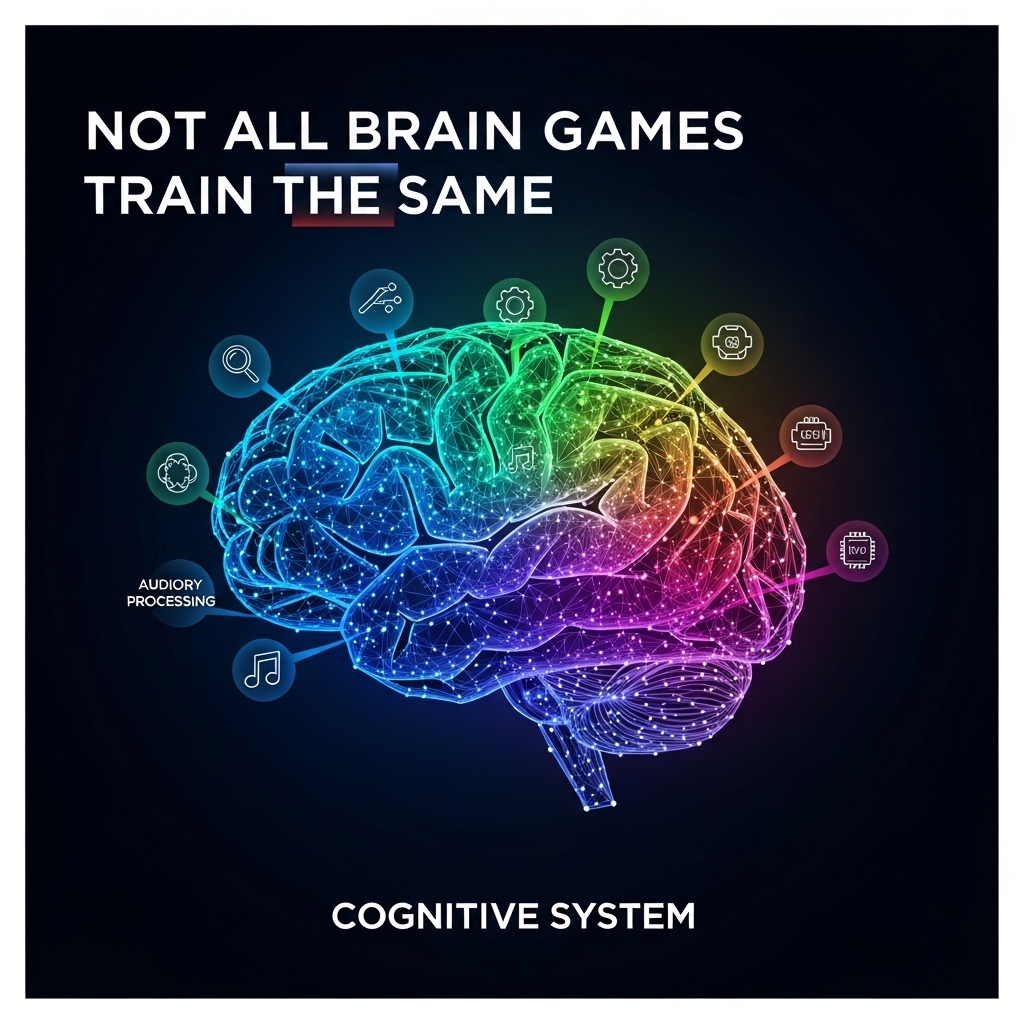
The term Brain Games covers a wide range of tasks. Some target working memory, some train processing speed, and others challenge task switching or attention control. Those domains are not interchangeable, and the evidence does not support treating them as one uniform intervention.
That distinction matters for professionals whose output depends on fast decisions and low error rates. A task that improves score performance inside one app may only reflect practice effects, meaning the brain has become better at that exact task. It does not automatically mean that executive function has improved outside the training setting.
This is the central clinical issue in the BRAIN GAMES debate. The relevant question is not whether performance inside a game improves, but whether gains transfer into broader cognitive work such as reasoning, memory, and daily function. That standard is much harder to meet.
The Best-Supported Benefit Is Often Processing Speed

The strongest long-term evidence does not come from generic app claims. It comes from the NIH-funded ACTIVE trial, one of the largest cognitive training studies in older adults. That study found durable benefits in trained domains, with reasoning and speed-of-processing effects still detectable years later.
The signal is strongest for visual processing speed training. In a 2026 NIH report on long-term follow-up, only one training type, rapid object-detection speed training, was linked to a 25% lower rate of dementia diagnosis over 20 years. That does not prove all BRAIN GAMES protect against dementia, but it does identify one specific training model with unusually strong outcome data.
For a high-performing audience, this matters because processing speed is not a trivial metric. It affects how quickly the brain sorts inputs, updates priorities, and shifts from detection to action under time pressure. When that system slows, decision latency rises and error risk often follows.
Far Transfer Remains the Hardest Standard to Meet
In cognitive science, far transfer means improvement in an untrained ability. A memory game may show far transfer only if it improves broader reasoning, fluid thinking, or daily work performance. This is where many commercial claims weaken.
A 2022 study in Translational Psychiatry tested adaptive working-memory training in healthy middle-aged adults. The investigators found no near or far transfer effects beyond the trained tasks, and they found no training-related changes in neural structure or function. That result argues against the idea that repeated practice on one demanding task reliably raises general cognitive capacity.
This does not mean BRAIN GAMES are useless. It means claims need to be narrower. Specific training may improve specific skills, but broad promises about IQ, universal memory gains, or total cognitive enhancement are not well supported across healthy adults.
Cognitive Reserve Matters More Than Short-Term Stimulation
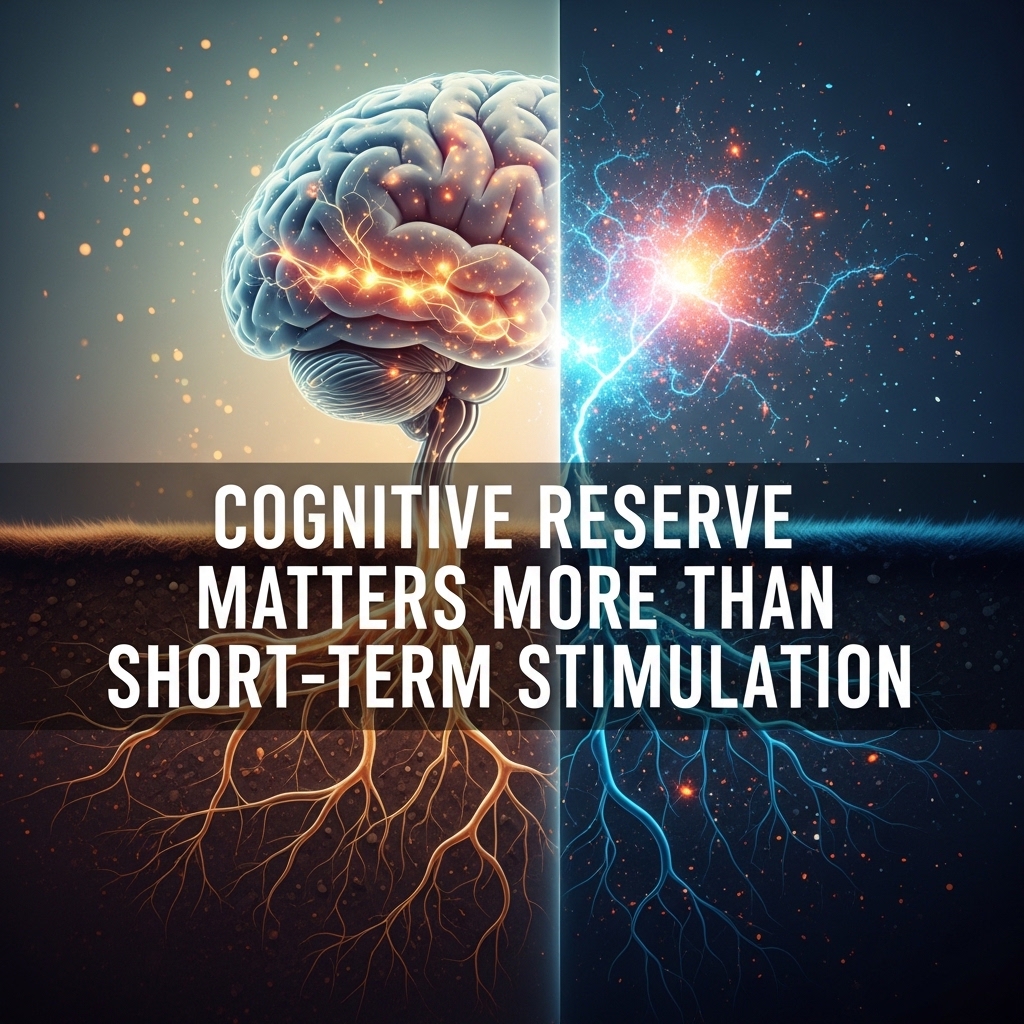
The more durable framework is cognitive reserve. This concept describes the brain’s ability to cope with age-related change or pathology while preserving function. It has been linked to education, mentally demanding work, and lifelong cognitive engagement rather than to one brief burst of digital training.
A review on cognitively stimulating activity in Trends in Cognitive Sciences noted that people with greater education and more sustained mental engagement often maintain function better despite underlying brain pathology. That is why reserve is a more serious target than short-term stimulation. It reflects resilience, not just temporary activation.
For executives and founders, this framing is useful. The goal is not to feel briefly sharper after a game session. The goal is to support a brain that remains adaptable, efficient, and resistant to decline across years of high cognitive demand.
Brain Training Works Best Inside a Multidomain Strategy
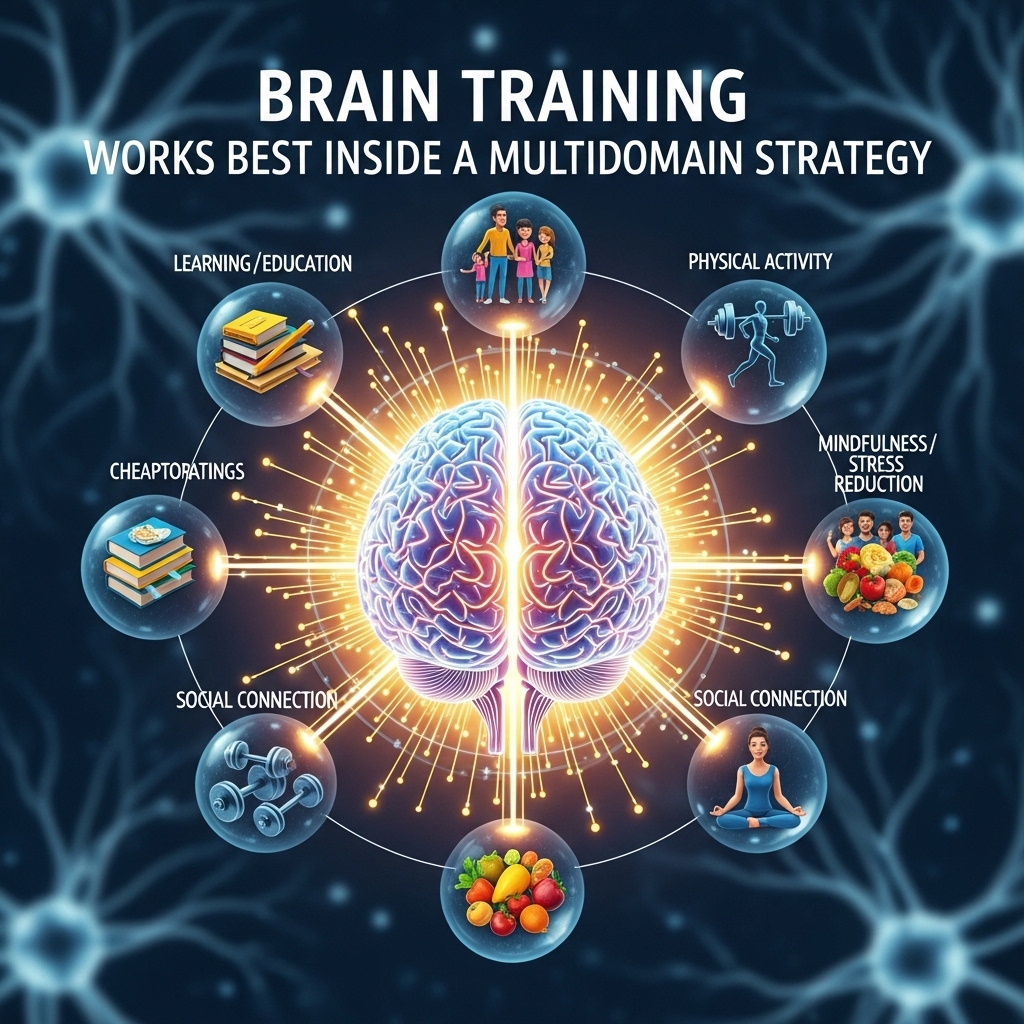
Isolated digital training has mixed results, but combined strategies perform better. In the 2023 SYNERGIC randomized trial in JAMA Network Open, aerobic-resistance exercise paired with computerized cognitive training improved cognition more than exercise alone in older adults with mild cognitive impairment.
That result is clinically important because it shifts the question. Instead of asking whether BRAIN GAMES alone can carry cognitive health, the better question is whether they add value when layered onto stronger drivers such as physical training. In SYNERGIC, the answer was yes for cognition, while added vitamin D did not improve the effect.
This aligns with the broader prevention model in the 2024 Lancet Commission on dementia. The Commission emphasized modifiable risk factors across vascular, sensory, educational, and behavioral domains. That framework favors combined risk reduction over single-tool solutions.
Sleep Quality Sets the Ceiling for Cognitive Benefit
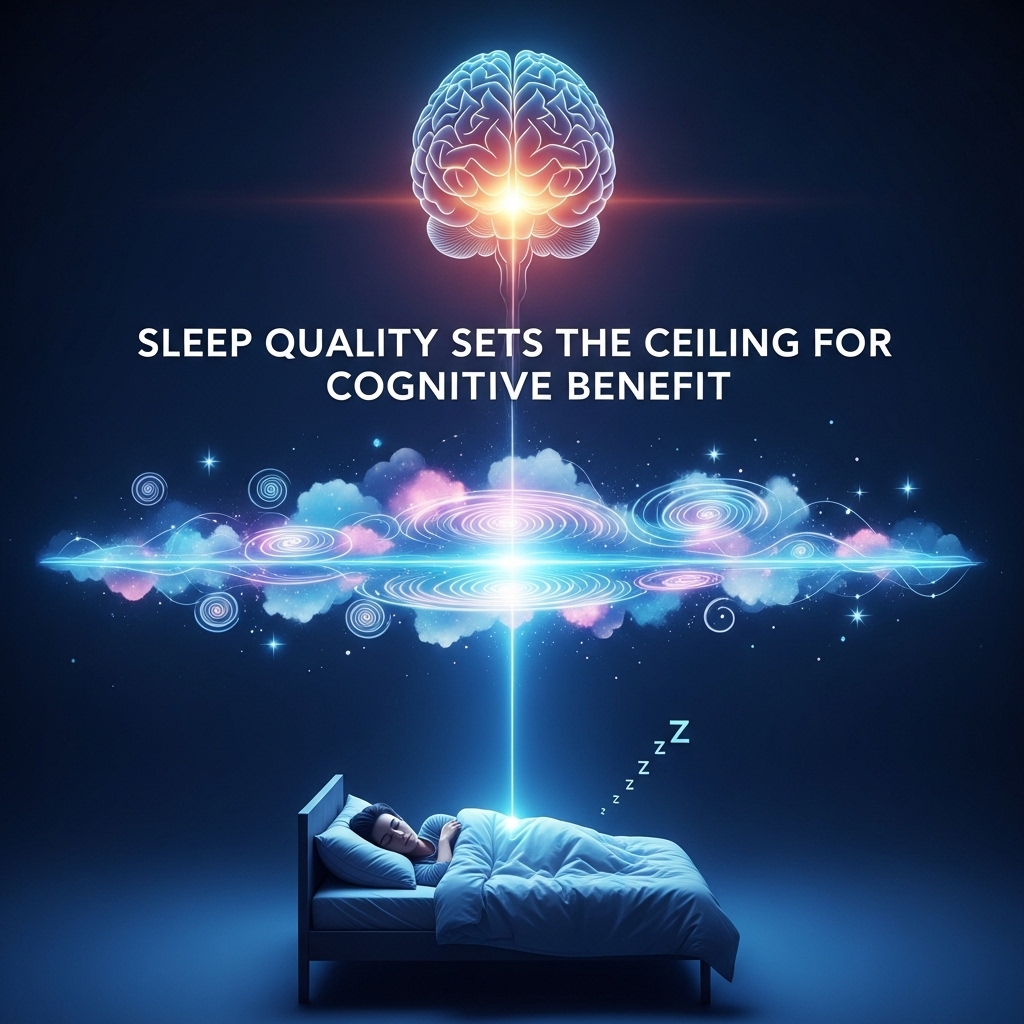
No form of brain training can fully offset chronic sleep disruption. Studies on adults across age groups show that poor sleep continuity and sleep fragmentation are associated with worse executive function, memory, and verbal fluency. When sleep quality drops, the brain’s ability to consolidate learning also weakens.
This has direct implications for BRAIN GAMES. A person may train attention or memory tasks consistently, yet see limited benefit if sleep is fragmented and recovery is incomplete. In that setting, the problem is not low game exposure. The problem is that the physiologic base required for learning is unstable.
For performance longevity, sleep is a stronger lever than most apps. It affects working memory, inhibitory control, reaction time, mood stability, and decision quality. Any cognitive strategy that ignores sleep quality rests on a weak foundation.
READ ALSO: The Gut-Brain Axis Shapes Executive Decision-Making and Emotional Resilience Under Pressure
Stress Physiology Changes Cognitive Output More Than Most Apps Do
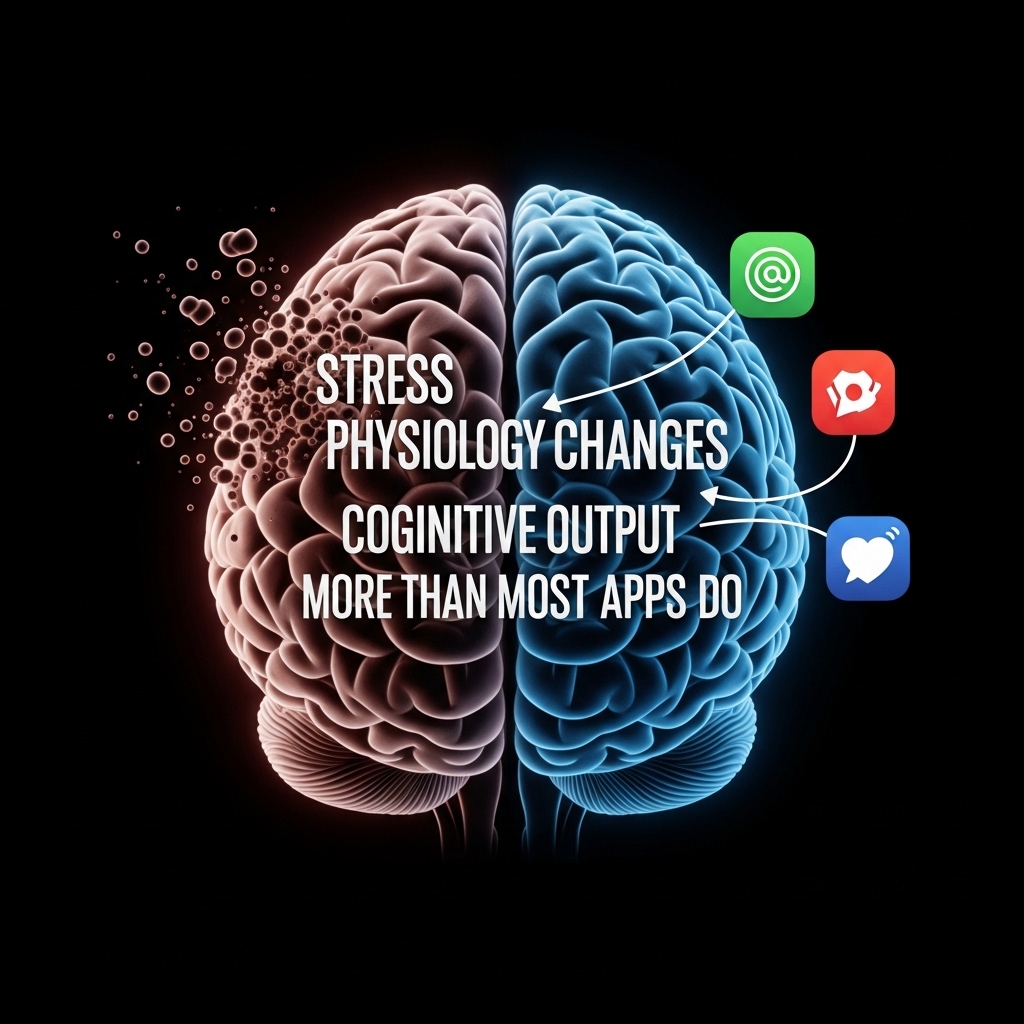
High cognitive demand does not occur in a vacuum. Chronic stress alters attention, working memory, and mental flexibility through sustained cortisol exposure and higher allostatic load, the cumulative wear created by repeated stress activation. When that load rises, performance can fall even before formal impairment appears.
This is one reason many professionals overestimate what BRAIN GAMES can do. A training task may improve task familiarity, but it cannot fully correct a brain operating under sleep loss, persistent stress, and poor recovery. In that state, the main barrier is not lack of cognitive drills. It is altered stress biology.
The WholeLiving audience should read BRAIN GAMES through this lens. They are best seen as a focused tool for selected domains, not as a substitute for managing the physiologic factors that shape executive function day to day. That includes stress load, sleep continuity, and cardiovascular fitness.
READ ALSO: Emotional Brain Training Practices to Lift Your Mood Daily
The Stronger Longevity Link Is Indirect, but Still Clinically Relevant
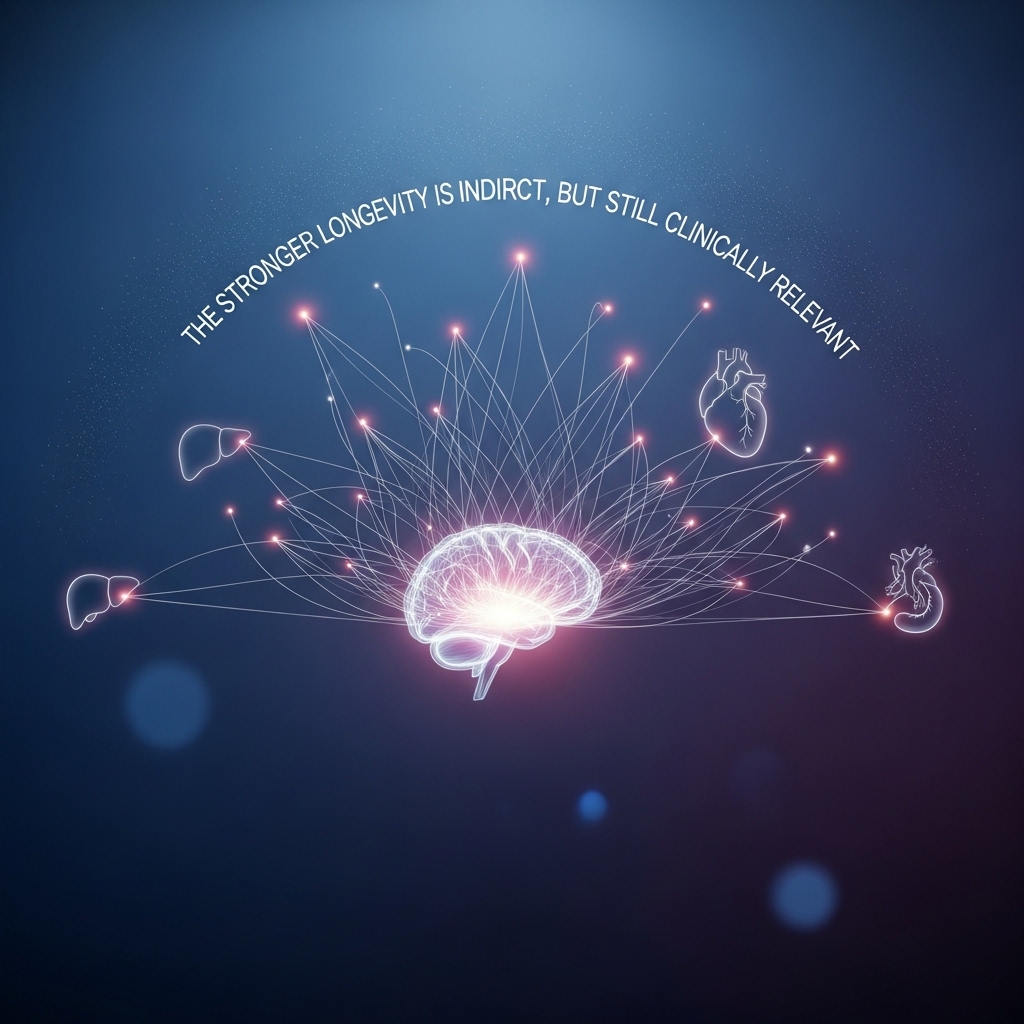
BRAIN GAMES do not currently have the same level of evidence for longevity as exercise, sleep, or vascular risk control. Still, they may contribute to long-term cognitive resilience when they target useful domains and sit inside a broader prevention strategy. The best support is for maintaining function, delaying decline in selected groups, and strengthening reserve rather than extending life directly.
That makes the performance consequence clearer. Cognitive decline affects earnings, judgment quality, independence, and the ability to manage complexity under pressure. Even small changes in processing speed or task switching can matter when the professional role depends on rapid synthesis and sustained mental load.
The more defensible clinical claim is modest but meaningful. Some forms of training appear able to support selected cognitive functions, and one speed-of-processing model has shown long-term association with lower dementia diagnosis. That is a narrower claim than “brain games prevent aging,” but it is the more credible one.
READ ALSO: Left Brain vs Right Brain: How Both Sides Work Together
What an Evidence-Based Professional Can Do With This Information
An evidence-based approach starts by choosing cognitive tasks that match the function under pressure, such as processing speed, attention control, or task switching, rather than relying on generic stimulation claims. It also treats BRAIN GAMES as one component of a larger cognitive strategy, not as a standalone answer.
The stronger options are to pair targeted cognitive training with aerobic and resistance exercise, protect sleep continuity, and reduce chronic stress load that can blunt executive function. For readers focused on performance longevity, those variables have broader support than digital training alone and are more closely tied to durable cognitive outcomes.
The most rational use of BRAIN GAMES is selective and measured: use them to train a defined cognitive domain, watch for real-world transfer in speed, focus, or accuracy, and place them inside a system that also protects vascular health, recovery, and cognitive reserve over time.
UP NEXT: Are You Doing Enough to Keep Your Brain Healthy?
How This Affects Your Biological Age
Targeted brain games may support processing speed, working memory, and cognitive reserve, all of which are tied to how well the brain resists age-related decline and maintains functional performance over time. WholeLiving's Biological Age Estimation Model incorporates this factor directly — your assessment takes under five minutes.
Ready to understand how these factors are influencing your biological age right now? [Take the Biological Age Assessment →]