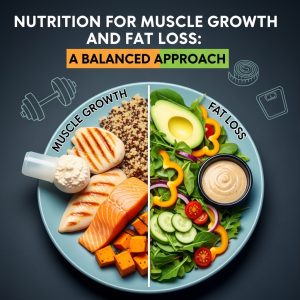


Unilateral lower body strength is among the most clinically undervalued variables in executive health management. This is despite its direct associations with fall risk reduction and pelvic stability. It also connects to the preservation of functional movement capacity across the fourth and fifth decades of life. Bilateral training patterns — the default in most resistance programmed — fail to expose and correct the asymmetries. These asymmetries accumulate silently through years of sedentary professional work. The Bulgarian split squat addresses this gap with precision. By loading each leg independently through a full range of hip and knee flexion, it identifies and corrects strength imbalances. Furthermore, it stimulates hypertrophic adaptation in the quadriceps and glutes. It also preserves the neuromuscular coordination on which long-term physical resilience depends.
What the Bulgarian Split Squat Actually Trains
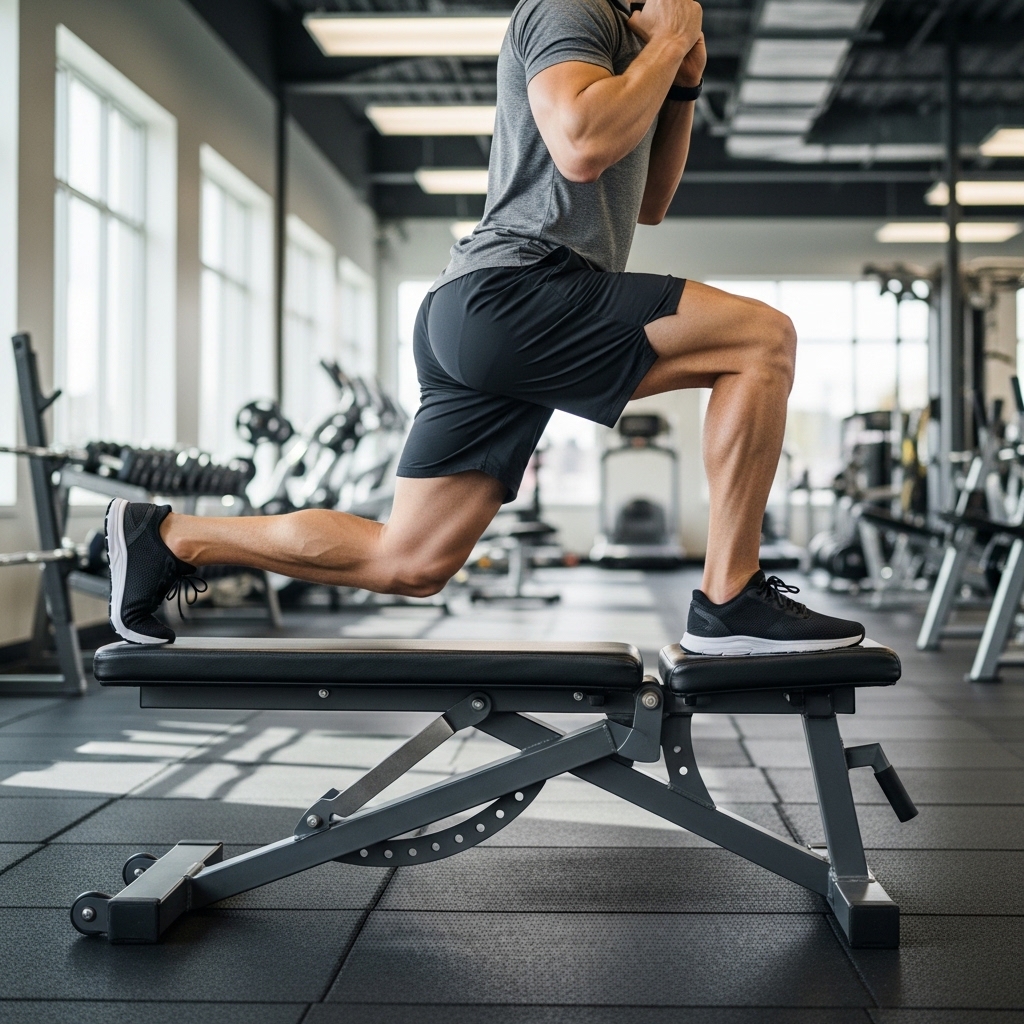
The Bulgarian split squat — also called the rear-foot elevated split squat — places the trailing foot on an elevated surface behind the body. The lead leg then performs the primary work of the movement. This configuration loads the quadriceps, gluteus maximus, and hip adductors through a deep range of hip and knee flexion. It simultaneously challenges the hip flexors of the trailing leg in a lengthened position. The movement therefore addresses both anterior and posterior lower body development within a single exercise. The rectus femoris — the only quadriceps muscle crossing both the hip and the knee — receives particular mechanical stress in this position. This is anatomically established and may carry relevance for training stimulus distribution. Direct evidence on injury prevention implications specific to this movement, however, remains limited.
Dominant-side preference in daily professional behavior extends beyond posture. Habitual phone-holding, mouse use, and even the consistent rotation of the torso toward a secondary monitor reinforce asymmetric loading patterns in the hip and lumbar musculature over thousands of cumulative hours. These patterns are not addressed by general conditioning alone. Their presence is typically unrecognized until a movement assessment or unilateral strength test reveals the discrepancy — at which point years of compensatory adaptation may already have altered motor recruitment patterns.
The neuromuscular consequences of long-standing asymmetry are not limited to the affected limb. Compensatory strategies emerge in contralateral muscle groups and in the axial skeleton as the nervous system redistributes load to maintain locomotor efficiency. This reorganization tends to increase joint loading at secondary sites — commonly the contralateral knee or lumbar facet joints — in ways that standard bilateral strength testing will not detect. Unilateral assessment is therefore both a corrective tool and a diagnostic one.
Unilateral Loading and Neuromuscular Demand

The neuromuscular demands of unilateral training differ meaningfully from bilateral alternatives. Single-leg loading requires the nervous system to recruit stabilizing musculature. This includes the gluteus medius, tensor fasciae Latae, and deep hip rotators. Bilateral movements largely bypass these muscles through shared load distribution. The stabilization demand drives adaptations in motor unit recruitment patterns and proprioceptive accuracy. These translate into the movement quality required for stairs, uneven terrain, and postural transitions. Research comparing unilateral and bilateral lower body training — including studies in the Journal of Strength and Conditioning Research — has produced mixed findings on absolute strength outcomes. Several studies report comparable trained-limb strength gains from unilateral training. Others document greater absolute strength gains from bilateral loading. The more consistent unilateral advantage lies in identifying and reducing between-limb asymmetry — an outcome bilateral loading cannot produce.
The adductor magnus warrants specific attention within this movement's training profile. Often classified primarily as a hip adductor, it functions as a powerful hip extensor at deeper flexion angles — a role that becomes mechanically prominent during the ascent phase of the Bulgarian split squat. Electromyographic research on single-leg squat variations documents significant adductor magnus activation in this context. This makes it a more comprehensive posterior chain stimulus than its categorization as an isolation movement would suggest.
The gluteus Medius contributes to frontal plane stability throughout the movement and is placed under sustained demand in its role as a pelvic stabilizer during the single-leg stance phase. Weakness in this muscle is commonly identified as a factor in lateral knee deviation during loaded single-leg movements. The Bulgarian split squat therefore serves simultaneously as a training stimulus and a functional screen — individuals with insufficient gluteus Medius strength will demonstrate observable valgus collapse under load, providing real-time diagnostic information that bilateral squatting conceals.
READ ALSO: Back Muscle Exercises For Strength And Balance
Sarcopenia, Muscle Mass, and the Longevity Case for Leg Training
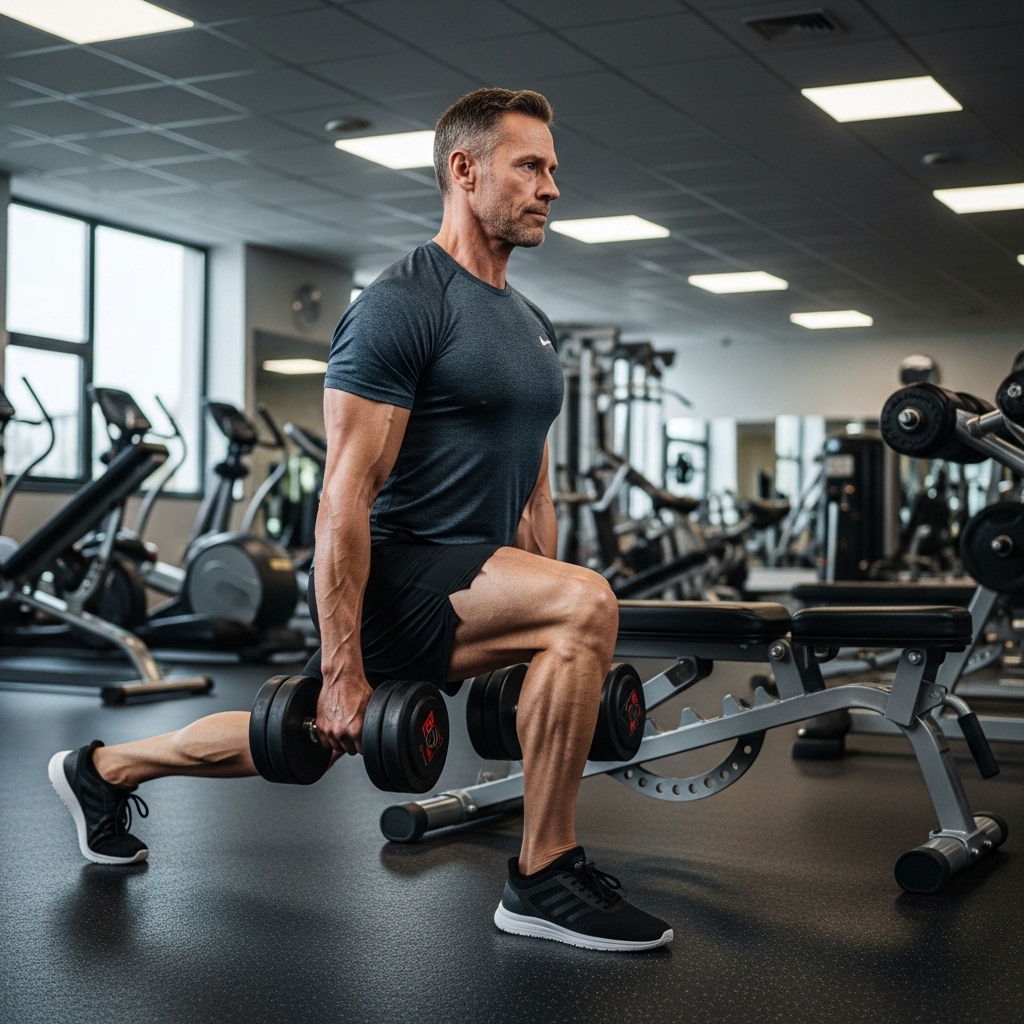
The longevity case for lower body resistance training rests on the relationship between skeletal muscle mass and all-cause mortality. Srikanthan and Karlamangla published relevant research in the American Journal of Medicine. It drew on NHANES data from older adult cohorts. Their findings showed that muscle mass index predicted all-cause mortality more strongly than body mass index within that population. This held independently of cardiovascular and metabolic risk factors. Lower body musculature — the quadriceps, gluteals, and hamstrings — represents the largest muscle mass in the human body by volume. Resistance training directly counteracts the sarcopenic progression that accelerates after age 40. The Bulgarian split squat loads the largest lower body muscle groups through a full functional range. This delivers a hypertrophic stimulus of direct relevance to that trajectory.
The cross-education effect is a further neurological dimension of unilateral training that bilateral loading does not leverage equivalently. Research in motor learning and rehabilitation consistently demonstrates that training one limb produces measurable strength gains in the contralateral, untrained limb — an effect mediated by ipsilateral cortical adaptations and interhemispheric neural transfer. For professionals returning from unilateral injury or managing acute asymmetry, this mechanism allows continued neural adaptation in an affected limb even when direct loading is contraindicated.
Motor unit synchronization — the coordinated firing of multiple motor units within a muscle — improves with consistent unilateral resistance training and underlies a meaningful proportion of early-phase strength gains before structural hypertrophy becomes the primary driver. This adaptation is particularly relevant for adults over 40, in whom age-related motor unit dropout reduces the pool of available contractile units. Training that demands precise recruitment under unstable single-leg conditions places a higher synchronization demand on the remaining motor unit pool, producing neural efficiency gains that translate directly to functional movement quality outside the gym.
Hip Flexor Length and Postural Consequences of Desk Work

Prolonged sitting places the hip flexors — particularly the iliopsoas and rectus femoris — in a chronically shortened position. Over months and years, this produces adaptive shortening. The pelvis anteriorly tilts, the lumbar spine compresses, and gluteal activation during movement becomes inhibited. The Bulgarian split squat places the hip flexors of the trailing leg under a sustained lengthening load throughout the movement. Research on loaded stretching and flexibility supports the view that sustained loading in a lengthened position can improve extensibility over time. Whether this translates to measurable anterior pelvic tilt changes in healthy adults through this specific exercise is less directly established. The mechanistic rationale is coherent. The hip flexor lengthening stimulus is a genuine characteristic of the movement. The postural adaptation claim warrants that qualification.
Reciprocal inhibition compounds the postural consequences of hip flexor shortening in ways that extend beyond the hip joint itself. Chronically activated hip flexors suppress neural drive to the gluteus maximus through this spinal reflex mechanism — a pattern clinically described as synergistic dominance, where secondary movers compensate for inhibited primaries. The Bulgarian split squat, by demanding active hip extension from the lead leg while simultaneously lengthening the trailing hip flexors, works against this inhibition pattern within a single loaded movement.
The thoracolumbar fascia connects the gluteal musculature to the contralateral latissimus dorsi through a crossed mechanical linkage that is tensioned during single-leg loading. Anterior pelvic tilt — sustained through hip flexor shortening — disrupts this fascial tension and reduces force transfer efficiency across the posterior chain during gait and rotational movement. Restoring hip flexor length therefore carries functional implications for upper body power expression and rotational movement patterns, not only for lumbar mechanics.
The Knee Mechanics Distinction
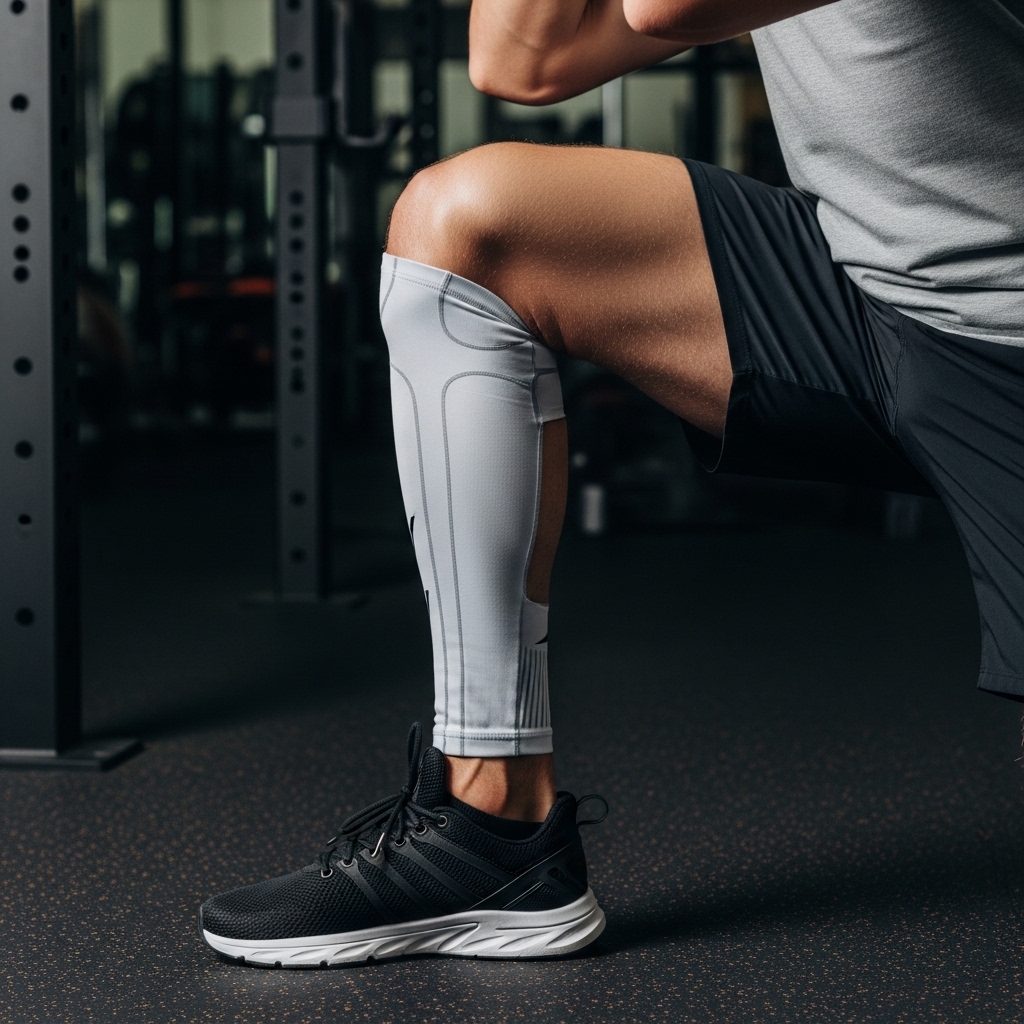
Concerns about knee loading in single-leg squatting are common. They are frequently overstated when technique is appropriately managed. The Bulgarian split squat, with the lead foot positioned sufficiently forward, distributes load across the knee joint in a mechanically defensible pattern. The key variable is tibial inclination — the angle of the shin relative to the floor during the descent. Excessive forward tibial travel elevates patellofemoral compressive forces. The broader squatting biomechanics literature establishes this relationship clearly. A more vertical shin angle, achieved through lead foot placement and deliberate hip-hinge initiation, reduces patellofemoral compressive load.
The precise load distribution between quadriceps and gluteal musculature as a function of shin angle in this specific movement has not been directly quantified in published research. It represents an inferential extension from general squat biomechanics. Clinical rehabilitation literature identifies tibial angle management as a relevant technical consideration for individuals with prior knee pathology.
Valgus collapse at the knee — inward deviation of the joint during the descent or ascent phase — represents a separate mechanical concern from tibial inclination and is governed primarily by hip abductor and external rotator strength rather than foot placement alone. Where gluteus Medius capacity is insufficient to maintain frontal plane alignment under load, lateral knee stress increases in ways that are not fully mitigated by adjusting shin angle. For this reason, load selection during initial familiarization with the movement should be calibrated to the capacity demonstrated in hip stabilization, not to the strength limit of the primary movers.
READ ALSO: Exercise for Overall Health: Tips to Start Today
Loading Variables and Programming Considerations
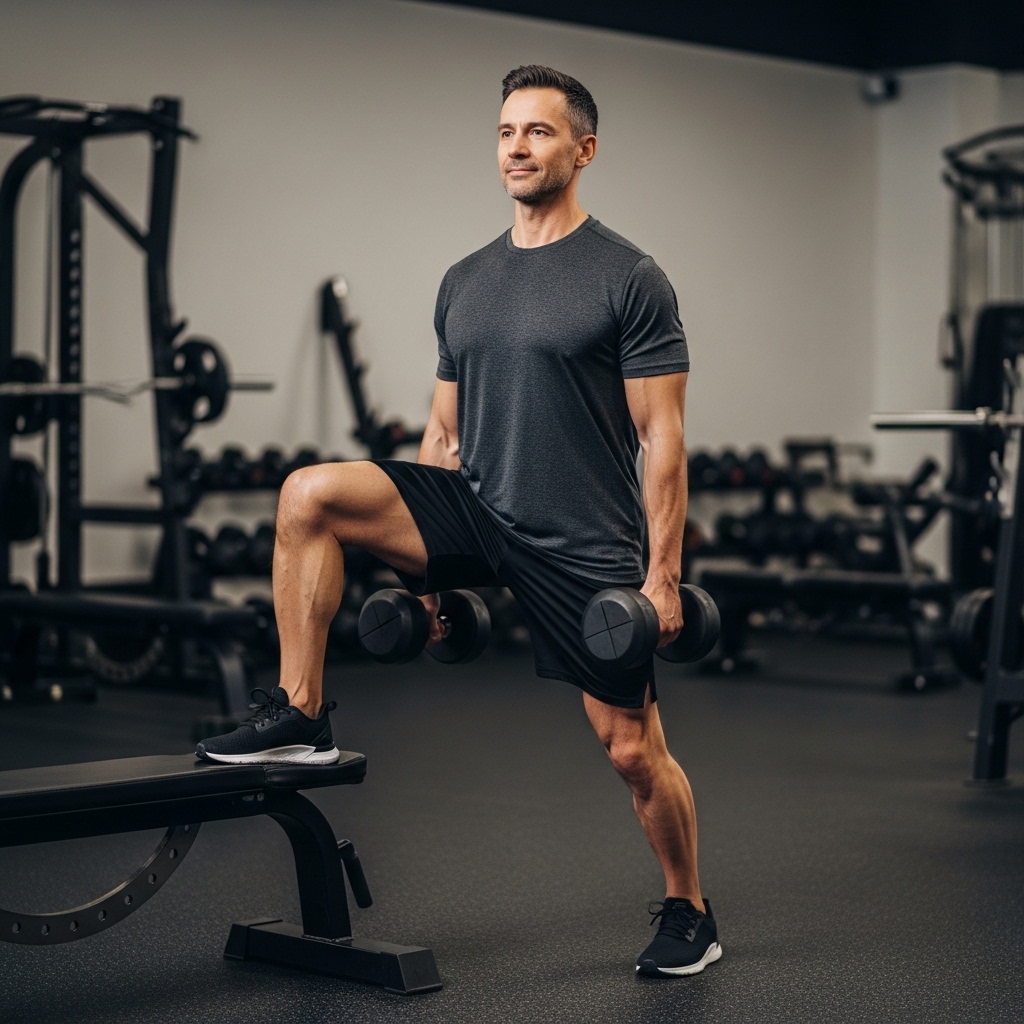
The Bulgarian split squat accommodates a wide range of loading strategies. Bodyweight alone produces meaningful neuromuscular challenge for individuals returning to structured training after inactivity. Dumbbell loading — held at the sides — introduces resistance without the spinal compressive forces of barbell back-squat variations. This distinction carries relevance for professionals with lumbar sensitivity. Barbell front-rack or safety-bar configurations allow heavier absolute loading for those pursuing maximal hypertrophic stimulus.
The specific threshold for adults over 35 is less precisely age-stratified in the available evidence. Three to four sets per session, with a controlled three-to-four second eccentric phase, produce sufficient mechanical tension and metabolic stress to drive progressive adaptation. Tempo manipulation offers an additional programming variable that is independent of absolute load. Extending the eccentric phase to four or five seconds increases time under tension and mechanical stress on the muscle-tendon unit without requiring load increases that might compromise form or exceed recovery capacity.
This approach serves early training phases particularly well, where the neuromuscular system is still consolidating coordination patterns and load progression remains appropriately conservative. Multiple studies examining time-under-tension as an independent variable support slow-eccentric training as a driver of hypertrophic adaptation in adults over 40.
Balance, Proprioception, and Fall Risk Reduction
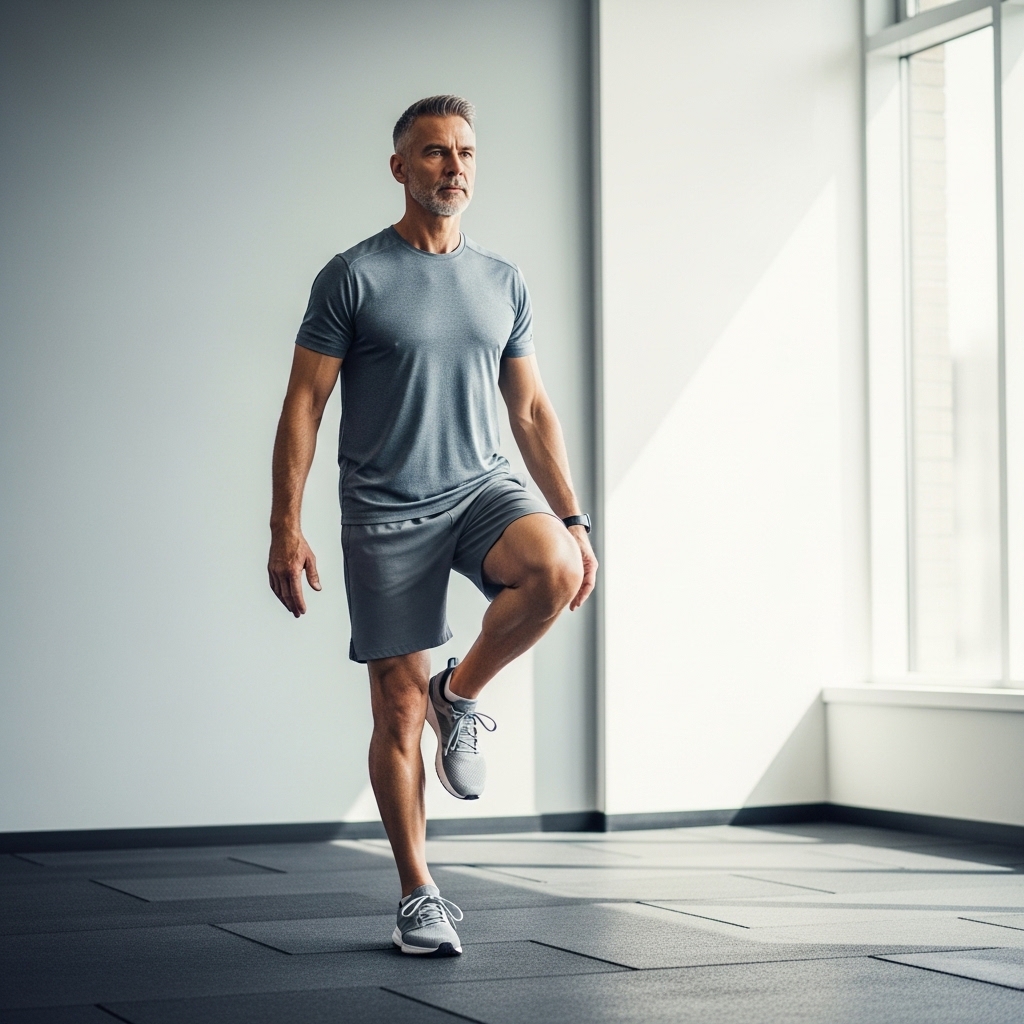
Unilateral lower body training carries a secondary benefit beyond hypertrophy and strength. It develops single-leg balance and proprioceptive accuracy. These capacities decline measurably with age in sedentary populations. They also associate with elevated fall risk. The Centers for Disease Control and Prevention and the World Health Organization both identify falls as a leading cause of injury-related mortality in adults over 65. The Bulgarian split squat trains the single-leg stance phase underlying walking, stair negotiation, and reactive balance recovery.
Research in physical therapy and sports medicine documents associations between unilateral resistance training and improved dynamic balance performance and proprioceptive acuity. The most robust evidence comes from older adult and athletic populations. Direct research in general adult mid-life populations is less extensive. Generalization across all adult fitness levels is a reasonable inference from the available evidence base.
The mechanoreceptor density of the hip and knee joint structures is high, and loading these joints through a full unilateral range of motion under controlled conditions has been shown to enhance mechanoreceptor sensitivity and joint position sense over training cycles. This adaptation is particularly relevant during mid-life, when somatosensory acuity begins its age-related decline.
Metabolic Implications of Large-Muscle Lower Body Training
Lower body resistance training involving large muscle groups carries metabolic implications beyond acute energy expenditure. Skeletal muscle is the body's primary site of insulin-mediated glucose disposal. The quadriceps and gluteal musculature — as the largest muscle groups by volume — contribute substantially to this capacity. The precise proportional contribution of specific muscle groups to whole-body glucose disposal has not been quantified in the published literature. The resistance training literature broadly associates greater lower body muscle mass with improved insulin sensitivity, reduced postprandial glucose excursions, and lower fasting insulin over time.
For professionals in their 40s and 50s, insulin resistance typically accelerates. Preserving and developing lower body muscle mass carries direct metabolic relevance during this period. The Bulgarian split squat contributes to this metabolic reserve through the acute energy demand of training and the sustained resting metabolic rate elevation that follows structural muscle adaptation.
GLUT4 transporter upregulation represents the cellular mechanism through which resistance-trained skeletal muscle improves glucose disposal capacity. Each contraction cycle during loaded lower body training triggers GLUT4 translocation to the muscle cell membrane through an insulin-independent pathway — a response that remains elevated for hours post-exercise. In adults with incipient insulin resistance, this contraction-mediated pathway offers a means of improving glucose uptake that operates independently of the impaired insulin signaling cascade.
READ ALSO: Stretching Exercise for Lower Back Pain You Can Do in Bed
Cortisol, Recovery, and Training Volume Management

The relationship between resistance training volume and cortisol is dose-dependent. Resistance training produces a transient cortisol elevation during the session. The broader resistance training literature supports a reduction in baseline cortisol over time with consistent training. This evidence is stronger for higher-volume and higher-intensity protocols than for moderate-intensity unilateral training specifically. High-performing professionals often carry elevated baseline cortisol from sustained cognitive and organizational demand.
Managing training volume within recoverable limits therefore carries practical relevance for this population. The Bulgarian split squat produces significant local muscular fatigue at lower absolute loads than bilateral alternatives. This characteristic of unilateral loading may support recovery management for professionals with high occupational stress loads. No consistent body of direct research has yet examined cortisol outcomes specifically comparing unilateral and bilateral training protocols.
Session timing relative to the cortisol diurnal curve carries additional relevance for this population. Cortisol peaks in the early morning hours as part of the cortisol awakening response — a pattern that overlaps with the preferred training windows of many high-performing professionals. Training during this natural cortisol peak may amplify the hormonal stress response, while late-afternoon sessions — when cortisol has declined to its daily nadir — coincide with a more favorable anabolic-to-catabolic hormonal ratio.
Tracking Progress as a Longevity Variable
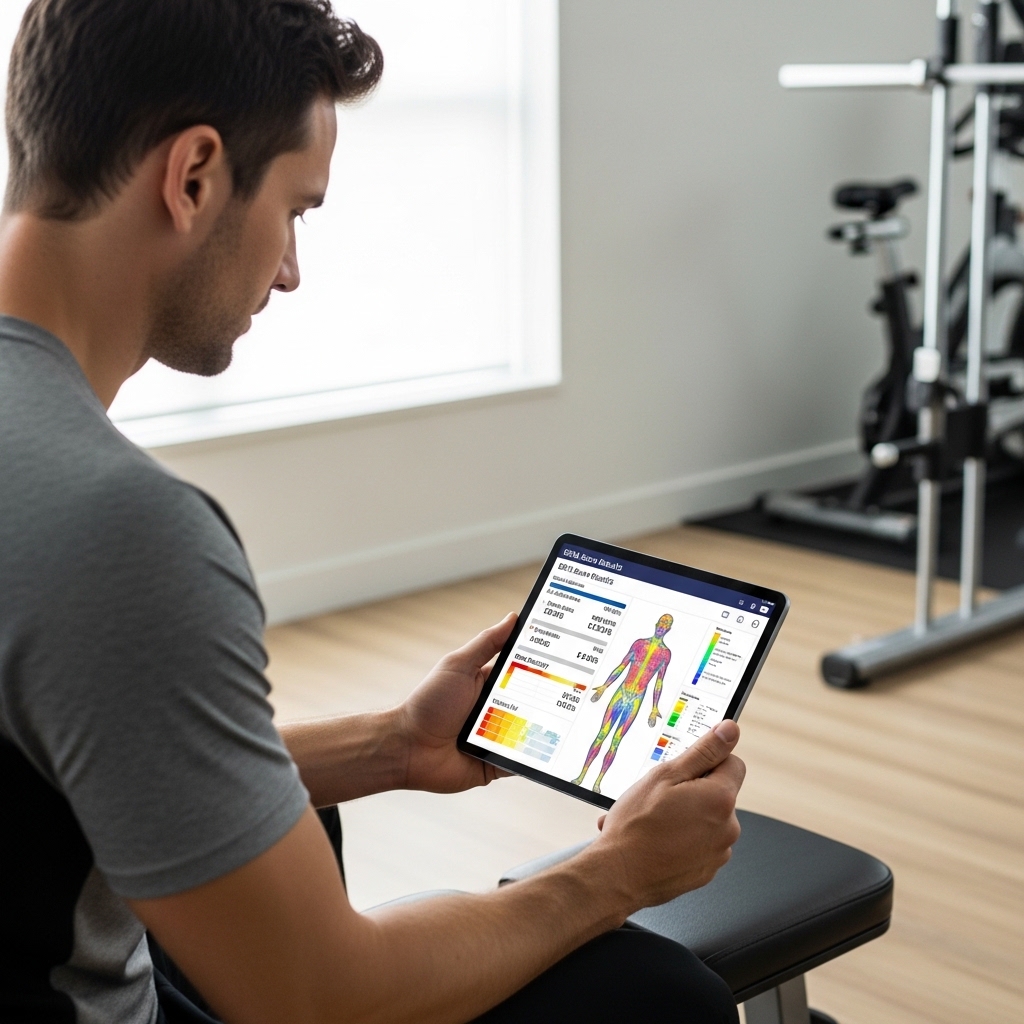
Professionals managing health as a quantified system can track Bulgarian split squat progress through multiple indicators. Single-leg squat depth, unilateral load symmetry ratios, and timed single-leg balance tests offer specific indicators of the adaptations this movement targets. Dual-energy X-ray absorptiometry scanning quantifies lean mass changes in the lower body across training cycles.
Twelve-week reassessment intervals provide sufficient time for DEXA to detect meaningful lean mass changes against baseline. Insulin sensitivity markers may respond earlier — within four to eight weeks of consistent training. Tracking through fasting insulin or glucose tolerance panels at shorter intervals allows more granular assessment of the metabolic response to lower body hypertrophy training.
Force plate assessment offers a precision tracking layer above functional movement tests for professionals with access to clinical performance facilities. Single-leg vertical ground reaction force and rate of force development can be quantified bilaterally, producing limb symmetry indices that detect sub-clinical asymmetry before it is observable in standard strength testing. ate of force development — the speed at which the neuromuscular system generates maximal force — declines with age independently of maximal strength and predicts fall risk and athletic performance in ways that load-based tracking does not capture.
Evidence-Based Options for Implementation
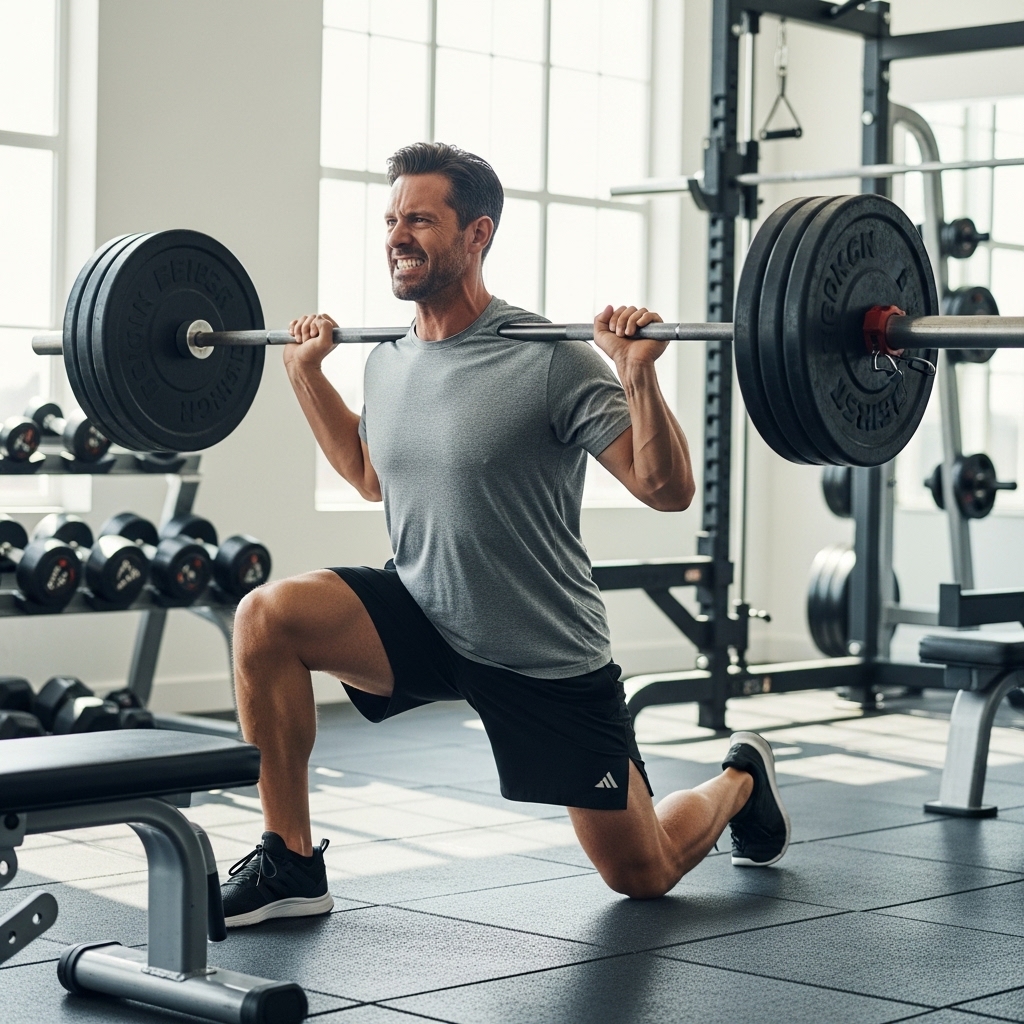
Professionals integrating the Bulgarian split squat into a structured resistance programmed have several well-supported options. Beginning with bodyweight or light dumbbell loading allows technique development and proprioceptive adaptation before progressive resistance follows — a sequence particularly relevant for those with limited unilateral training history or prior knee or lumbar involvement. Two sessions per week with three to four sets per leg per session, emphasizing a controlled three-to-four second eccentric phase, aligns with the minimum effective dose the resistance training literature supports for lean mass adaptation in adults. Pairing this movement with bilateral hip-hinge work — such as Romanian deadlifts — within the same session addresses the full lower body efficiently and provides complementary posterior chain stimulus.
UP NEXT: Home Gym Exercise Equipment That Fits Your Flow
Skeletal muscle mass index — particularly in the large lower body muscle groups — predicts all-cause mortality more reliably than body mass index, and progressive unilateral strength training that directly targets sarcopenia decline is among the most evidence-supported behavioral variables for slowing the biological aging trajectory after 40. WholeLiving's Biological Age Estimation Model incorporates this factor directly — your assessment takes under five minutes.
Ready to understand how these factors are influencing your biological age right now? [Take the Biological Age Assessment →]