For high-performing professionals, misplaced reliance on a detox body cleanser can obscure the real drivers of fatigue, reduced cognitive performance, and elevated metabolic strain, while delaying attention to measurable variables such as liver enzymes, renal function, sleep quality, and glycemic control. This analysis is written for serious operators, not a general wellness audience, because performance longevity depends on validated physiology rather than marketing claims about “cleansing” the body. In clinical terms, the liver and kidneys already perform the body’s waste-processing functions, and the National Center for Complementary and Integrative Health notes that evidence for commercial detoxes and cleanses remains limited and methodologically weak.
What a Detox Body Cleanser Usually Means

A detox body cleanser has no standard medical meaning. Brands use the term for juice fasts, herbal pills, laxative products, colon cleanses, and short food plans. That makes the label broad, but the evidence base thin.
The National Center for Complementary and Integrative Health states that research on detoxes and cleanses is limited. Some small studies reported short-term changes in weight, insulin resistance, or blood pressure. However, study quality was low, sample sizes were small, and long-term evidence is lacking.
For a high-performing professional, that gap matters. A program that claims to “clean” the body still needs proof on metabolic function, recovery, or mental output. At present, most commercial cleanser claims do not meet that clinical bar.
The Body Already Has Its Own Detox Systems
The liver and kidneys already manage waste handling and fluid balance. NIDDK explains that the kidneys filter blood, remove wastes, and help control water, salts, and acid balance. These are core body functions, not optional wellness features.
That physiology links directly to performance. When fluid balance or mineral balance shifts, nerve function, muscle function, and focus can drop. In the same way, liver strain can weaken nutrient handling and raise metabolic stress.
So the clinical question is not whether a cleanse can replace detox organs. It is whether a plan supports the systems the body already uses. That means looking at diet quality, hydration, sleep, and metabolic load, not brand language.
Why the Evidence Still Looks Weak

NCCIH is clear that only a small number of human studies exist on detox programs. It also notes that these programs often use very different methods. That makes it hard to compare results or define a real treatment effect.
Short-term weight loss does not prove toxin removal. Many cleanses cut calories hard, so body weight falls at first. Yet NCCIH notes that weight often returns after normal eating resumes.
That matters for longevity work. A brief drop on the scale is not the same as better cardiovascular health, lower inflammation, or slower biological aging. A serious intervention needs clear markers and durable results, not a fast but short-lived shift.
READ ALSO: Cortisol Detox: A Softer Reset for a Frazzled System
Supplement-Based Cleansers Can Add Risk
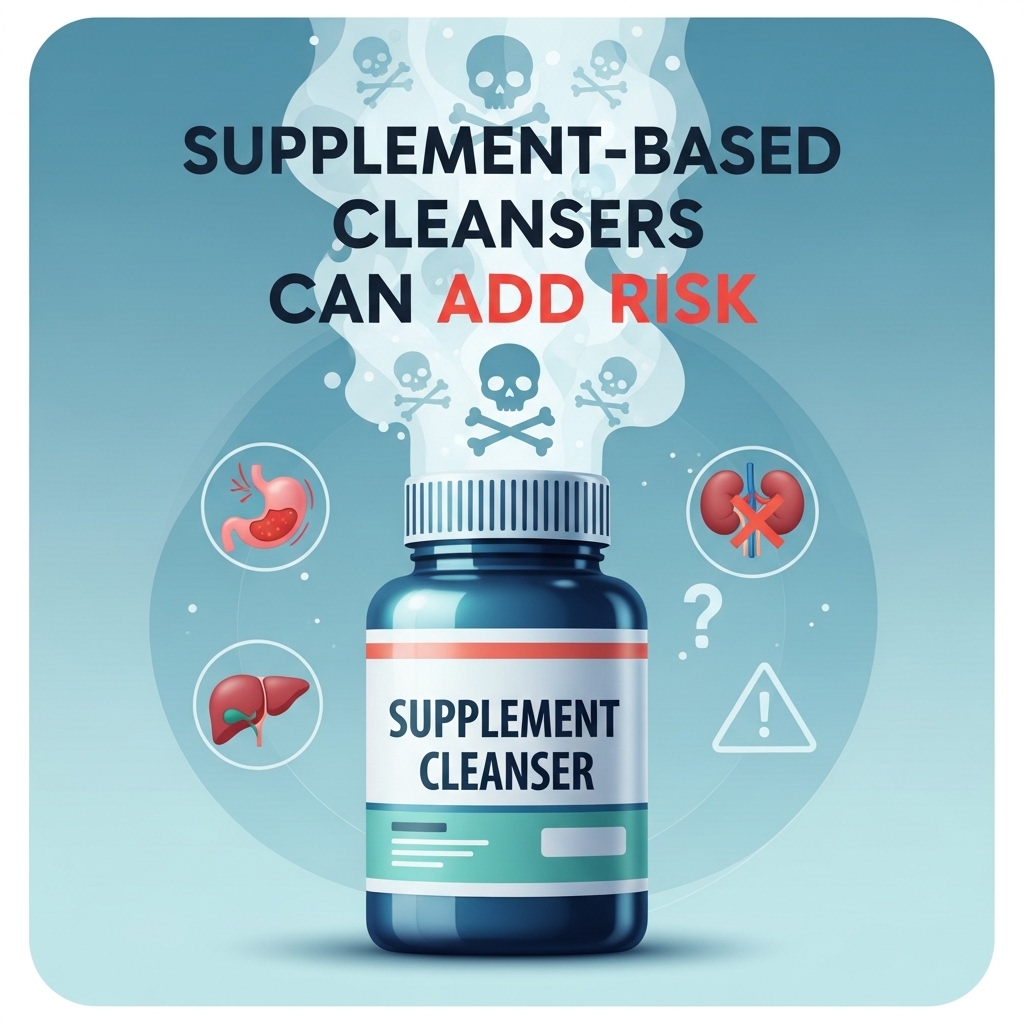
Risk rises when a detox body cleanser uses concentrated herbs or mixed supplements. NCCIH reports that the FDA and FTC have acted against some detox products for hidden ingredients, false claims, or safety problems. That is not a small quality issue.
Liver safety is a main concern. The NIH LiverTox resource states that herbal and dietary supplements can cause liver injury. It also notes that product labels may not match actual contents, and some products may contain unlabeled ingredients or contaminants.
For executives, the point is simple. A product sold as “cleansing” can sometimes raise liver stress instead. In that setting, abnormal liver markers matter far more than the promise printed on the package.
READ ALSO: Liver Cleansing Detox to Clear Out What Drains You
Performance Costs Often Appear Before Any Claimed Benefit

Aggressive cleanses can disrupt normal function fast. NCCIH warns that laxative-based programs may cause diarrhea, dehydration, and poor nutrient uptake. Fasting-based plans may also trigger fainting, weakness, and headaches.
Those effects can hurt daily output. Dehydration and electrolyte shifts may reduce muscle function, mental clarity, and cardiovascular stability. Severe calorie cuts can also weaken cognitive performance and slow recovery across the workday.
The broader nutrition data points in another direction. The American Heart Association recommends an overall eating pattern built on vegetables, fruits, whole grains, healthy protein sources, and minimally processed foods. That pattern has far stronger support for heart and metabolic health than short cleanse cycles do.
READ ALSO: Detox Living for a Healthier, More Vibrant You
What the Evidence Supports Instead
If the goal is lower liver fat and better metabolic health, the evidence favors steady diet quality over a cleanser. NIDDK states that in fatty liver disease, healthy food choices and physical activity can reduce liver fat, inflammation, and fibrosis. It also warns that rapid weight loss and malnutrition can worsen liver disease.
Harvard T.H. Chan School of Public Health also reported that a green Mediterranean diet reduced liver fat more than standard advice in an 18-month trial. That finding matters because liver fat burden tracks closely with metabolic risk. It is a measurable change, not a vague “reset.”
For a high-performing professional, evidence-based options are more useful than detox branding. These options include reducing ultra-processed foods, choosing more minimally processed meals, maintaining normal hydration, and tracking real markers such as weight trend, blood pressure, glucose control, lipids, and liver-related labs. If fatigue, stomach symptoms, or abnormal lab values persist, clinical evaluation offers more value than another detox body cleanser because long-term function improves through stable metabolic conditions, not short cleanse cycles.
UP NEXT: Detoxifying Stretches to Boost Your Immunity – Whole Living Fitness
Detox body cleanser regimens can worsen biological age signals when they trigger dehydration, electrolyte imbalance, glycemic instability, or liver stress instead of improving validated markers of metabolic and cardiovascular health. WholeLiving's Biological Age Estimation Model incorporates this factor directly — your assessment takes under five minutes.
Ready to understand how these factors are influencing your biological age right now? [Take the Biological Age Assessment →]