

We all express affection in different ways, but some methods resonate more deeply than others. The five languages of love, a groundbreaking concept by Dr. Gary Chapman, have helped millions understand how to communicate love more effectively. This idea centers on the concept that each person has a primary love language—a unique way of both receiving and expressing love. By understanding your own love language and the language of others, you can improve communication, strengthen emotional bonds, and enhance overall relationship satisfaction.
What Are the Five Love Languages?

Dr. Gary Chapman first introduced the concept of love languages in his best-selling book, The 5 Love Languages. According to Chapman, everyone has one dominant love language, though we may appreciate the other languages as well. The key to successful relationships lies in understanding and honoring your partner's dominant love language while expressing love in a way that speaks to their heart.
Here are the five primary love languages:
Words of Affirmation
Acts of Service
Receiving Gifts
Quality Time
Physical Touch
These languages represent different ways of showing affection. Identifying your dominant love language—and the love language of others—can help foster a deeper emotional connection.
Check this out The 5 Love Languages: The Secret to Love that Lasts here.
Why Love Languages Matter in Relationships

Understanding the five expressions of love is crucial for building a healthy relationship. For example, imagine a couple where one partner thrives on words of affirmation and the other prefers acts of service. If both fail to communicate in the way the other needs, misunderstandings and frustration can arise.
In relationships, we often expect others to show affection in the way we understand it. When we don't receive love in that form, it can lead us to feel unloved, even if our partner is genuinely expressing their care in their own way. This is why it's so important to learn to speak your partner's preferred way of showing affection.
READ ALSO: Love Languages: Nourish the Way You Give and Receive
Exploring the Five Love Languages
1. Words of Affirmation: Love Through Words

For some, words mean everything. Words of affirmation are verbal expressions of love, such as compliments, encouragement, and appreciation. A simple “I love you” or “You did a great job” can speak volumes for those whose primary love language is words.
If words of affirmation are your love language, hearing praise from your partner makes you feel valued and loved. On the other hand, criticism or a lack of verbal affection can cause you to feel distant and unappreciated.
2. Acts of Service: Love Through Actions

For others, love is best expressed through actions. People who value acts of service feel loved when their partner takes the time to help out with chores, errands, or other tasks. Whether it's cooking dinner or assisting with daily responsibilities, these acts show care and affection.
If acts of service are your primary love language, you feel most appreciated when your partner goes out of their way to make your life easier. For you, actions speak louder than words.
READ ALSO: Acts of Service to Renew Love on All Seasons
3. Receiving Gifts: A Tangible Expression of Love

For some, receiving gifts is the most meaningful expression of love. It's not about the price tag, but the thought behind the gift that shows how much you are valued. A small, thoughtful gift can have more emotional significance than an extravagant one.
When receiving gifts is your love language, a well-chosen present can make you feel deeply loved and understood, as it demonstrates your partner's thoughtfulness and attention to your emotional needs.
4. Quality Time: Uninterrupted Togetherness

For those who value quality time, nothing says “I love you” like undivided attention. This love language emphasizes the importance of spending meaningful time together, free from distractions. Whether it's a walk in the park or a quiet dinner, moments of connection are cherished.
If quality time is your dominant love language, you feel loved when your partner focuses on you and engages in meaningful conversations. These moments of shared attention create a stronger bond.
READ ALSO: Quality Time That Builds Connection and Capacity
5. Physical Touch: Affection Through Touch

Physical touch is a powerful way to express love. Whether it's a hug, holding hands, or a kiss, these physical gestures communicate affection and emotional connection. For those whose primary love language is physical touch, these acts are essential to feeling loved.
If physical touch is your main love language, small acts like cuddling or a reassuring touch can make you feel emotionally safe and connected to your partner. This love language is about fostering emotional intimacy through physical presence.
Understanding Your Love Language and Your Partner's

Once you know the five expressions of love, it's crucial to identify both your own and your partner's primary way of receiving affection. While it's common for people to have different preferences, understanding this can help prevent misunderstandings. You might show love in one way, while your partner expresses it differently, but with effort, you can bridge this gap.
As Dr. Gary Chapman suggests, it's important for couples to learn to speak each other's preferred form of affection. This isn't about changing who you are, but rather about adapting your approach to meet your partner’s emotional needs.
Speaking Each Other’s Love Language

When you learn to speak your partner’s preferred way of receiving love, they feel understood and valued. Similarly, when they express affection in a way that resonates with you, you feel the same. Synchronized expressions of love create emotional harmony, making it easier to connect on a deeper level.
Keep in mind that different relationships might require different approaches to affection. For example, the way you connect with your partner may differ from how you express care with a family member or friend. Recognizing these differences allows you to show love more meaningfully in each relationship.
How to Use the Five Love Languages in Everyday Life
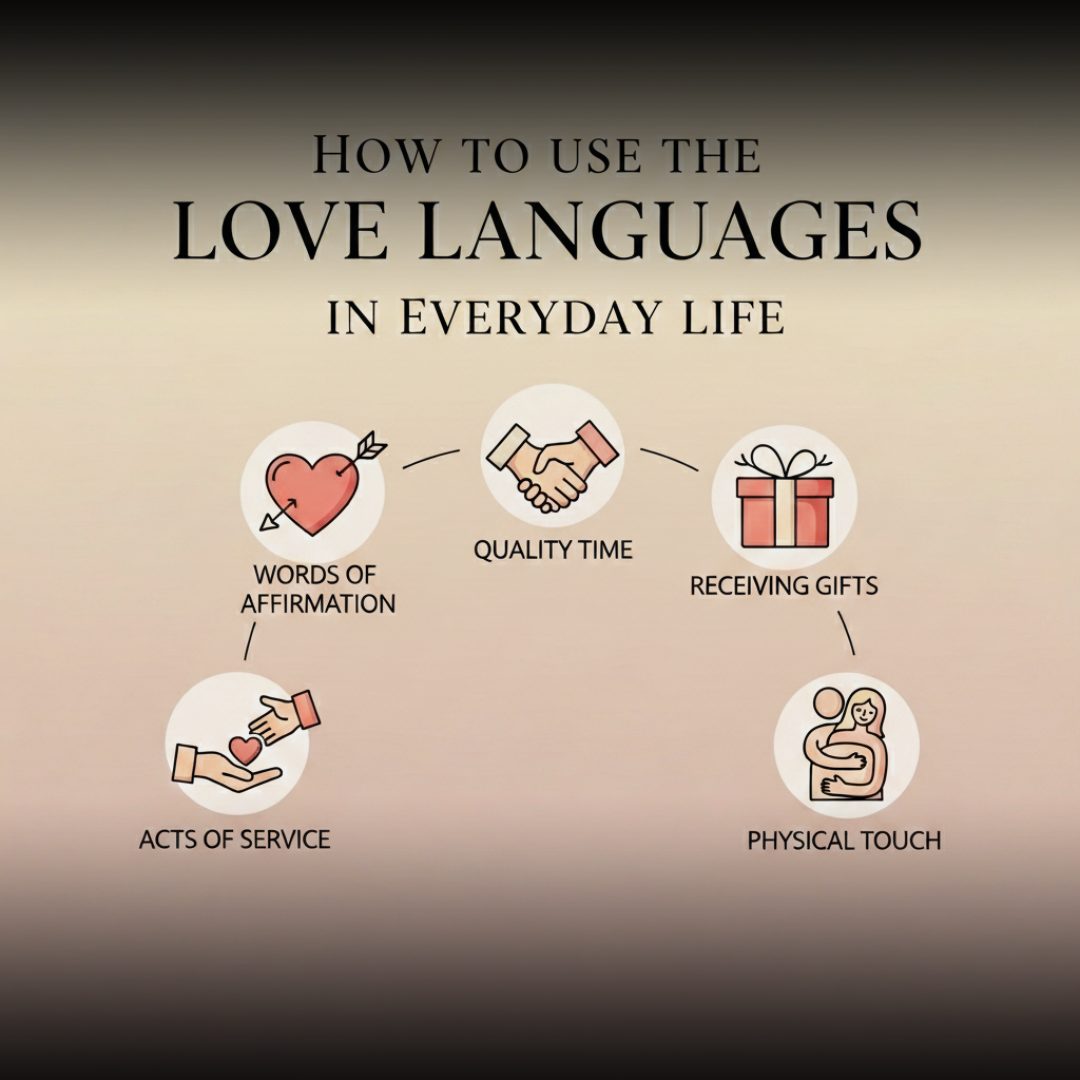
While the concept of love languages is often discussed in romantic relationships, it can be applied to all kinds of connections—whether with family, friends, or coworkers. When you understand how others prefer to express affection, you can nurture stronger, more empathetic bonds.
For instance, if a family member values quality time, make an effort to spend more time with them. If a friend thrives on words of affirmation, make sure to express your appreciation more frequently. By adjusting your actions to match the ways others feel loved, you show that you truly understand and care for them.
The Importance of Expressing Heartfelt Commitment
One key takeaway from the five love languages is the importance of expressing heartfelt commitment. Regardless of which love language you speak, showing that you care for your partner's emotional needs creates a stronger bond.
When you make the effort to express love in a way that resonates with your partner, it demonstrates deep emotional commitment. This fosters trust and intimacy, creating a solid foundation for the relationship.
Embrace the Power of Synchronized Love Languages

By practicing synchronized love expressions, you can strengthen the emotional foundation of your relationships. Dr. Gary Chapman teaches us that love is an evolving skill, and the more you understand each other’s preferences, the better you can foster connection and harmony.
Make the effort today to discover your own way of receiving and giving love and learn about the emotional needs of those around you. By speaking affection in a manner that resonates deeply with them, you’ll nurture more meaningful and fulfilling connections.