Chronic relational misattunement — the persistent failure to give or receive emotional connection in ways that register as meaningful — activates the hypothalamic-pituitary-adrenal axis with the same physiological consistency as occupational stress. For executives and founders operating at sustained high output, this translates into measurable cortisol dysregulation, accelerated biological aging, and diminished cardiovascular resilience. Understanding love languages is not a soft skill exercise; it is a clinical variable in relationship quality, and relationship quality is among the most replicated predictors of all-cause mortality in longitudinal health research. Your relational communication pattern has a biomarker signature.
The Physiology Behind Relational Mismatch

Gary Chapman introduced the five love languages framework in 1992. It entered popular culture as a couples counseling tool. Its clinical relevance, however, extends further. UCLA research on social baseline theory shows the human nervous system is built to function within stable relational environments. When relational exchange falls below an individual's threshold for felt connection, the autonomic nervous system responds with measurable shifts — increased sympathetic tone, reduced heart rate variability, and elevated inflammatory activity.
For high-output professionals, occupational stress compounds this effect. The nervous system does not distinguish between a boardroom threat and a relational one. Both fire identical threat-detection circuitry. A founder already carrying elevated cortisol who also experiences chronic relational misattunement bears a dual physiological burden. Research in Psychosomatic Medicine links perceived social disconnection with elevated interleukin-6 and C-reactive protein — inflammatory markers tied to cardiovascular disease progression and reduced immune function.
Understanding love languages is not a psychological exercise. It is a framework for identifying the source of a chronic physiological stressor — one that drives biological aging when left unaddressed.
The Five Domains and Their Neurobiological Correlates
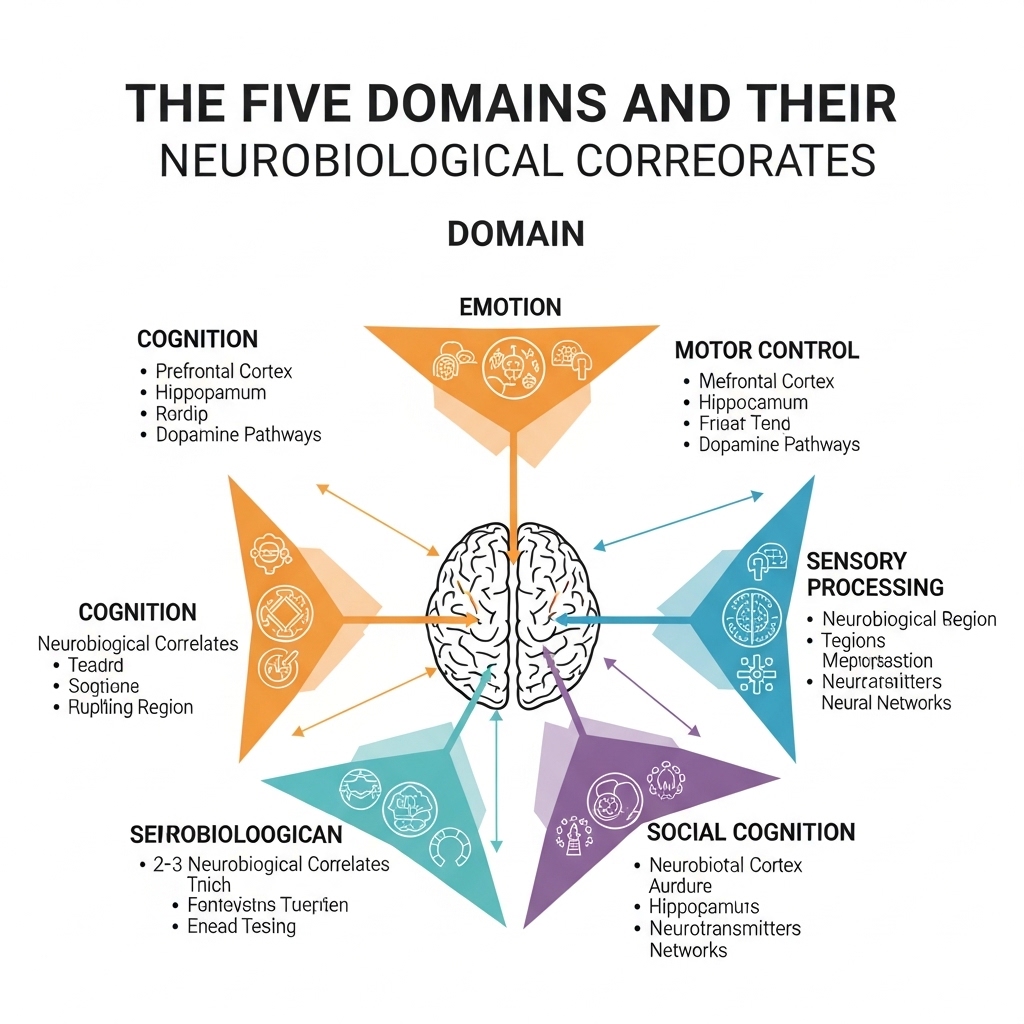
Chapman identifies five primary modes of expressing and receiving connection: words of affirmation, acts of service, receiving gifts, quality time, and physical touch. Each maps onto distinct neurobiological pathways.
Physical touch activates oxytocin release via the hypothalamus. This suppresses cortisol, lowers blood pressure, and activates the parasympathetic nervous system. Carnegie Mellon University researchers found that people who received more frequent physical affection showed greater resistance to infection under experimental viral exposure. The immune consequence of tactile connection is direct and measurable.
Quality time — defined as sustained, undistracted co-presence — engages the prefrontal cortex's social cognition network. It links to improved vagal tone, a measure of parasympathetic efficiency that predicts cardiovascular resilience and emotional regulation. Authentic words of affirmation modulate the brain's reward circuitry, including the ventral striatum, and reduce threat appraisal. Acts of service and gift-giving operate through perceived investment and social trust. Their absence — especially when expected — triggers social pain circuitry. That circuitry overlaps substantially with how the brain processes physical pain.
Misattunement as a Chronic Stressor
The clinical significance of love language misalignment lies in its chronicity. An executive who needs quality time to feel secure, but whose partner expresses care through acts of service, lives in a state of persistent relational deficit. The care is present. It simply does not arrive in a form the nervous system registers as real.
This mismatch rarely surfaces as a performance variable. It presents instead as baseline irritability, reduced frustration tolerance, sleep disruption, and low-grade depletion. Most professionals attribute these symptoms to workload. The physiology, however, mirrors documented chronic stress. The Harvard Study of Adult Development — one of the longest-running longitudinal studies on human health — found that relationship quality, not quantity, was the strongest predictor of late-life health outcomes across its multi-decade cohort.
Cortisol dysregulation is the most immediate result. The Trier Social Stress Test shows that people with low perceived social support display stronger cortisol responses to acute stress and slower recovery afterward. In high-stakes decision-making environments, this prolonged cortisol exposure erodes prefrontal cortex function — specifically working memory, cognitive flexibility, and impulse control.
READ ALSO: Intimate Questions for Couples That Spark Gratitude and Love
Cardiovascular and Longevity Consequences
The cardiovascular literature on relationship quality is consistent. Data from the Framingham Heart Study identified emotional support as an independent predictor of cardiac risk. Its effect on all-cause mortality matched the magnitude of established risk factors like blood pressure control and smoking cessation. The mechanism runs through multiple pathways — autonomic regulation, inflammatory signaling, and behavioral effects on sleep, activity, and diet.
For professionals aged 35 to 60, this period is a critical window in cardiovascular risk. Atherosclerotic processes that appear clinically in later decades are actively building now. Chronic relational stress contributes to endothelial dysfunction through oxidative stress and sustained sympathetic activation. A relational environment marked by persistent misattunement is not a passive background variable. It actively accelerates vascular aging.
Sleep quality provides another clear link. Research in Sleep Medicine Reviews shows that perceived relationship security independently predicts objective sleep measures — including sleep efficiency, slow-wave sleep duration, and REM architecture. Slow-wave sleep drives growth hormone release, metabolic repair, and clearance of neurotoxic waste including amyloid-beta. The quality of one's relational environment has a direct pathway to both metabolic function and long-term brain health.
Love Languages in Professional and Organizational Contexts

Love language dynamics are not confined to intimate partnerships. The neurobiological effects of relational attunement operate across all relationship types, including professional ones. A senior leader whose primary register is words of affirmation may read a high-performing, service-oriented team as disengaged. The team is not disengaged. The relational signal is simply arriving in an unrecognized form.
This misread carries measurable costs. Elevated cortisol in leaders activates threat-detection behaviors. These impair collaborative thinking and increase zero-sum decision-making. Research in organizational neuroscience consistently links leader psychological safety and perceived social connection to team innovation, risk tolerance, and cognitive output under pressure.
Recognizing one's own relational signal preferences — and reading those of close professional contacts — acts as a regulatory tool. It reduces stress-activating misreads and raises the baseline relational quality of environments where high-stakes work takes place.
READ ALSO: Five Languages of Love: Nurturing Connections Everyday
Assessment: Moving from Intuition to Data

Self-report instruments for identifying love language patterns offer limited clinical precision. They remain, however, a useful starting point. The Chapman assessment shows reasonable test-retest reliability. More rigorous approaches involve tracking the relational interactions that produce measurable shifts in energy, mood stability, and mental clarity — using validated daily affect tools over time.
Wearable technology adds an objective layer. Heart rate variability, measured by continuous monitoring devices, serves as a real-time proxy for autonomic nervous system state. Tracking HRV alongside relational interaction patterns moves love language identification from preference into biometric territory.
Emotionally focused therapy, developed by Sue Johnson and grounded in attachment theory, offers a structured clinical path. Multiple randomized controlled trials support its effects on both relationship satisfaction and physiological stress markers.
READ ALSO: Acts of Service to Renew Love on All Seasons
The Partner Variable in Executive Health

High-performing professionals often underinvest in their closest relational environments. Intimate partnerships and family systems appear stable relative to work demands. That stability is frequently maintained by suppressing relational deficits rather than resolving them. Over five to ten years, this pattern produces measurable physiological wear — visible in inflammatory markers, autonomic dysregulation, and accelerated biological aging.
Intimate partnership quality is one of the most modifiable variables in long-term health for this demographic. A partner who consistently provides connection in the form one's nervous system registers as meaningful acts as a co-regulator of autonomic state. This lowers baseline threat activation, improves recovery from work stress, and supports the behavioral patterns — sleep, exercise, nutrition — that sustain performance.
Longitudinal data from the Harvard Study of Adult Development, the NIH, and multiple European aging cohorts support this framing. The quality of close relational bonds ranks among the most replicated predictors of both healthspan and lifespan in the research literature.
Evidence-Based Options for Relational Optimization
Several well-supported entry points exist for professionals looking to act on this evidence. Formal assessment of relational signal preferences — through validated instruments, structured therapy, or biometric correlation — builds the foundational data layer. Restructuring relational interactions to increase signal-matched exchanges has shown improvements in both relationship quality and stress markers within eight to twelve weeks in couples research. HRV tracking adds an objective feedback loop to what might otherwise stay a subjective process. For those in leadership roles, developing literacy in the relational preferences of close professional contacts reduces misreads that generate unnecessary stress responses. Attachment-based or emotionally focused therapy offers the most rigorous path for those with entrenched relational patterns or significant stress burden. The highest-yield interventions in the relational literature share one feature — they prioritize quality and intent of engagement over time spent.
UP NEXT: How Love Bombing Elevates Cortisol and Accelerates Biological Aging in High-Performing Professionals
Chronic relational misattunement — the persistent failure to give or receive connection in ways the nervous system registers as meaningful — is associated with elevated inflammatory markers, autonomic dysregulation, and reduced sleep quality, a cluster of physiological changes that population-level research links to measurable acceleration in biological aging. WholeLiving's Biological Age Estimation Model incorporates this factor directly — your assessment takes under five minutes.
Ready to understand how these factors are influencing your biological age right now? [Take the Biological Age Assessment →]