
Accurate memory encoding and rapid information retrieval shape decision speed, error rate, and sustained cognitive output in high-performing professionals, making the idea of a photographic mind more relevant to executive performance than to popular psychology. For an informed professional audience, the real issue is not whether perfect visual recall exists in the mythic sense, but how visual memory, working memory load, attentional control, and stress physiology interact to influence cognitive performance over time. In practice, the difference between perceived photographic recall and trained memory efficiency can affect mental fatigue, task switching, meeting retention, and the long-term preservation of high-level cognitive function under chronic workload.
The Term Photographic Mind Has More Popular Appeal Than Scientific Precision
The phrase Photographic Mind sounds exact, but cognitive science does not treat it as a formal diagnosis or a settled memory category. Researchers more often discuss eidetic imagery, visual long-term memory, working memory, and autobiographical memory when they study unusual recall.
That distinction matters for a high-performing audience because executive performance depends less on mythic total recall and more on reliable encoding, fast retrieval, and low error rates under pressure. A memory system that works well in meetings, negotiations, and rapid decisions is usually structured, selective, and adaptive rather than photographic in the literal sense.
The real question is how visual memory, attention control, stress physiology, sleep, and age-related change shape cognitive performance over time.
Eidetic Recall Is Rare and Does Not Equal Perfect Adult Memory

Scientific debate around eidetic memory has persisted for decades, and strong evidence for true adult photographic memory remains weak. Reports exist, but they are rare, hard to reproduce, and often do not support the idea of flawless, permanent visual replay.
That does not mean exceptional memory is unreal. It means the popular image of someone mentally scanning a perfect internal photograph does not match the strongest evidence. Even unusual recall tends to remain partial, reconstructive, or highly dependent on task type.
For professionals in cognitively demanding roles, that correction is useful. It shifts attention away from fantasy-level recall and toward measurable systems that affect performance, including working memory load, attentional filtering, and the quality of stored representations.
Visual Memory Capacity Is Strong, but It Still Reconstructs
One reason the Photographic Mind idea persists is that visual memory can be remarkably strong. In a widely cited study published in the Proceedings of the National Academy of Sciences, Timothy Brady and colleagues showed that visual long-term memory can store a very large number of object representations with substantial detail.
Strong visual storage, however, is not the same as exact replay. Human memory reconstructs information during retrieval, and that process can insert bias, omit context, or favor the most meaningful details over literal duplication.
In practical terms, executives often remember the visual frame of a slide, room, or document better than the exact wording within it. That pattern reflects an efficient brain, not a defective one, because memory prioritizes relevance and meaning over perfect duplication.
Working Memory and Executive Control Drive Real-World Recall
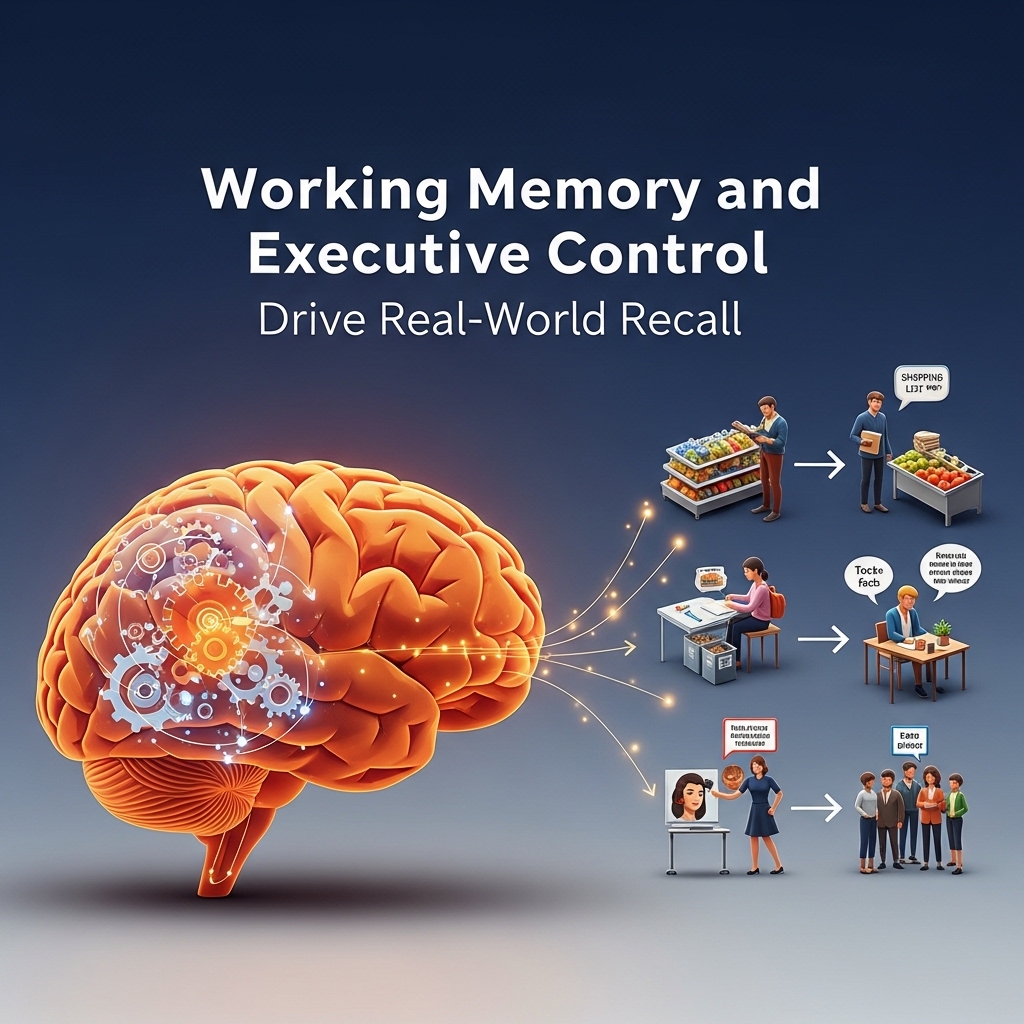
In serious professional settings, memory performance relies heavily on working memory and executive function. These systems support mental updating, distraction control, task switching, and the short-term holding of relevant material while decisions unfold.
A person may appear to have a photographic mind when the real advantage is strong cognitive organization. Fast sorting, efficient chunking, and good attentional control can make recall look effortless, even when the brain uses structured strategies rather than raw visual capture.
Stress Physiology Can Undercut Memory at the Moment It Is Needed
A high-performing professional rarely works in a neutral internal state. Acute stress changes cognition through cortisol and related stress signaling, and research shows that stress can impair working memory, cognitive flexibility, and memory retrieval.
The timing effect is clinically relevant. Stress can sometimes strengthen the encoding of emotionally charged material, yet it often weakens retrieval when a person needs precise access to stored information under pressure. That is one reason recall may fail during presentations, negotiations, or crisis decisions.
For longevity-focused readers, this links the Photographic Mind question to stress biology rather than talent mythology. Chronic high-load states can degrade the consistency of memory performance, even in individuals with otherwise strong cognitive skills.
Sleep Supports Consolidation More Than Willpower Does

Memory does not stabilize only during focused work. Sleep plays a central role in consolidation, the process by which recently acquired information becomes more durable and easier to retrieve later. Harvard Medical School’s Division of Sleep Medicine and multiple review papers have described this connection in clear terms.
Sleep loss affects more than recall of facts. Reviews in NIH-indexed literature show that sleep deprivation can impair attention, working memory, long-term memory, and decision-making. In executive life, that can look like weaker meeting retention, slower synthesis, and more reliance on notes for material that should have consolidated overnight.
This is why the search for a Photographic Mind often misses the more actionable mechanism. A brain with ordinary talent but strong sleep-supported consolidation will outperform a more gifted brain that operates under chronic sleep debt.
Midlife Cognitive Change Alters Recall Even Without Disease

Reviews of working memory and executive function show that declines can emerge across normal aging, with middle age serving as a meaningful transition period rather than a cognitively static decade.
That does not imply rapid deterioration. It means the brain becomes less forgiving of overload, fragmented sleep, and chronic distraction. Tasks that once relied on effortless mental juggling may begin to require more deliberate structure and external support.
From a longevity standpoint, the issue is preservation of high-level cognitive performance, not only avoidance of dementia. Midlife changes in executive function can affect strategic thinking, meeting endurance, and the speed of accurate recall long before any clinical disorder appears.
READ ALSO: Mindfulness Practices for Mental Well-Being You Need
Exceptional Memory Usually Reflects Training, Not Superhuman Wiring
Research on elite memory performers provides one of the clearest correctives to the Photographic Mind myth. In Neuron, Martin Dresler and colleagues studied memory athletes and found that their performance related strongly to learned mnemonic strategies, especially the method of loci, rather than to a unique brain region or a magical recall trait.
The study also showed that several weeks of mnemonic training changed functional brain connectivity in non-athletes and improved performance. That finding matters because it reframes exceptional recall as trainable network organization, not fixed destiny.
For executives, this is more useful than the fantasy of innate photographic memory. The evidence suggests that structured memory systems, especially those that combine visual imagery with spatial order, can raise recall quality in ways that matter for professional output.
READ ALSO: The Theory of the Mind: Unlock Your Mental Potential
Cognitive Performance Depends on Retrieval Quality, Not Recall Theater
A professional rarely needs to reproduce a page exactly as seen. The more relevant demand is accurate retrieval of the right information at the right moment, with low distortion and minimal delay. That is a performance problem, not a parlor trick.
In that context, the ideal Photographic Mind is not literal. It is a brain that encodes selectively, stores efficiently, retrieves under pressure, and resists the disruptive effects of stress and poor sleep. Those features align more closely with executive function and resilience than with perfect visual replay.
This also ties memory to broader longevity variables. When stress load rises, sleep quality falls, and cognitive control weakens, the downstream effects can include poorer decision quality, greater fatigue, and a steeper sense of cognitive aging.
READ ALSO: Magic Mind: Unlock Your Full Potential with Mindfulness
What the Evidence Supports for High-Performing Professionals

The strongest evidence does not support a literal adult Photographic Mind as a standard human ability. It supports something more relevant: robust visual memory, trainable mnemonic skill, strong dependence on sleep for consolidation, and measurable vulnerability of recall to stress and midlife cognitive change.
For a high-performing professional, evidence-based options center on improving the conditions under which memory works best. That includes reducing avoidable cognitive overload, protecting sleep as a memory process, using structured visual-spatial encoding methods for critical material, and treating chronic stress as a cognitive variable rather than a personality trait.
A clinically serious approach also includes paying attention to midlife shifts in working memory, retrieval speed, and mental fatigue. When those changes appear, the evidence favors strategy, recovery quality, and cognitive organization over the pursuit of mythical total recall.
UP NEXT: How to Cultivate Positive Critical Thinking Habits of Mind
How This Affects Your Biological Age