
Positive behavior supports — the structured, evidence-based behavioral frameworks that govern how individuals respond to stress, regulate emotion, and maintain consistent health-promoting habits — are among the most underutilized performance variables available to high-functioning professionals. For executives and founders operating under sustained cognitive and physiological load, the absence of deliberate behavioral structure is not a neutral condition. It is associated with elevated cortisol dysregulation, accelerated biological aging, increased inflammatory marker burden, and progressive erosion of the cognitive architecture that executive performance depends on. The clinical literature is unambiguous: behavioral consistency, not motivation, is the primary driver of long-term health and performance outcomes.
Positive Behavior Supports: What the Clinical Definition Actually Means

Positive behavior supports originated in applied behavior analysis and educational psychology. The framework focused on replacing harmful or counterproductive behaviors with structured, reinforced alternatives. In clinical and organizational research, the framework has expanded significantly. It now covers the full range of deliberate behavioral strategies that individuals use to maintain health-promoting habits, regulate emotional responses, and build conditions that make consistent high performance sustainable over time.
The core principle underlying positive behavior supports is environmental design over willpower. Behavioral science research consistently shows that self-regulation is a finite cognitive resource. It depletes under conditions of high cognitive load, sleep deprivation, and chronic stress — precisely the conditions that define executive professional life. Positive behavior supports reduce dependence on moment-to-moment willpower. They embed health-promoting behaviors into routines, environments, and social structures that make the desired behavior the path of least resistance.
For high-performing professionals, this reframe is clinically significant. It shifts the model of behavioral change from motivational to architectural. Rather than relying on sustained motivation — which fluctuates with stress, sleep quality, and emotional state — positive behavior supports create external structures that maintain behavioral consistency independent of internal state. Research through the NIH's National Institute of Mental Health supports this architectural approach as substantially more effective than motivation-based models for producing durable behavioral change.
The Neurobiological Basis of Positive Behavior Supports

Positive behavior supports work because they align with the brain's existing habit architecture. Specifically, they engage the basal ganglia-driven habit loop that governs automatic behavior. When a behavior consistently occurs in the same context, the prefrontal cortex progressively disengages from its execution. The behavior transfers to subcortical automaticity. It then requires significantly less cognitive effort to maintain. This transfer is the neurobiological goal of any effective positive behavior support system.
The clinical relevance of this mechanism for high-performing professionals is direct. Prefrontal cortical resources — the neural substrate of executive function and decision-making — are finite. Every health-promoting behavior that requires active deliberation consumes prefrontal bandwidth. That bandwidth would otherwise support high-value cognitive work. Positive behavior supports automate health behaviors through habit architecture. In doing so, they effectively return that cognitive bandwidth to executive function.
Furthermore, the basal ganglia habit system responds to dopaminergic reward signaling. Behaviors that produce consistent, predictable positive outcomes — including reduced stress, improved sleep, or enhanced physical performance — generate dopamine release. That release strengthens the habit circuit over time. This creates a self-reinforcing cycle. Well-designed positive behavior supports become progressively easier to maintain as the neurobiological reward system consolidates around them.
Cortisol Regulation as a Target of Positive Behavior Supports
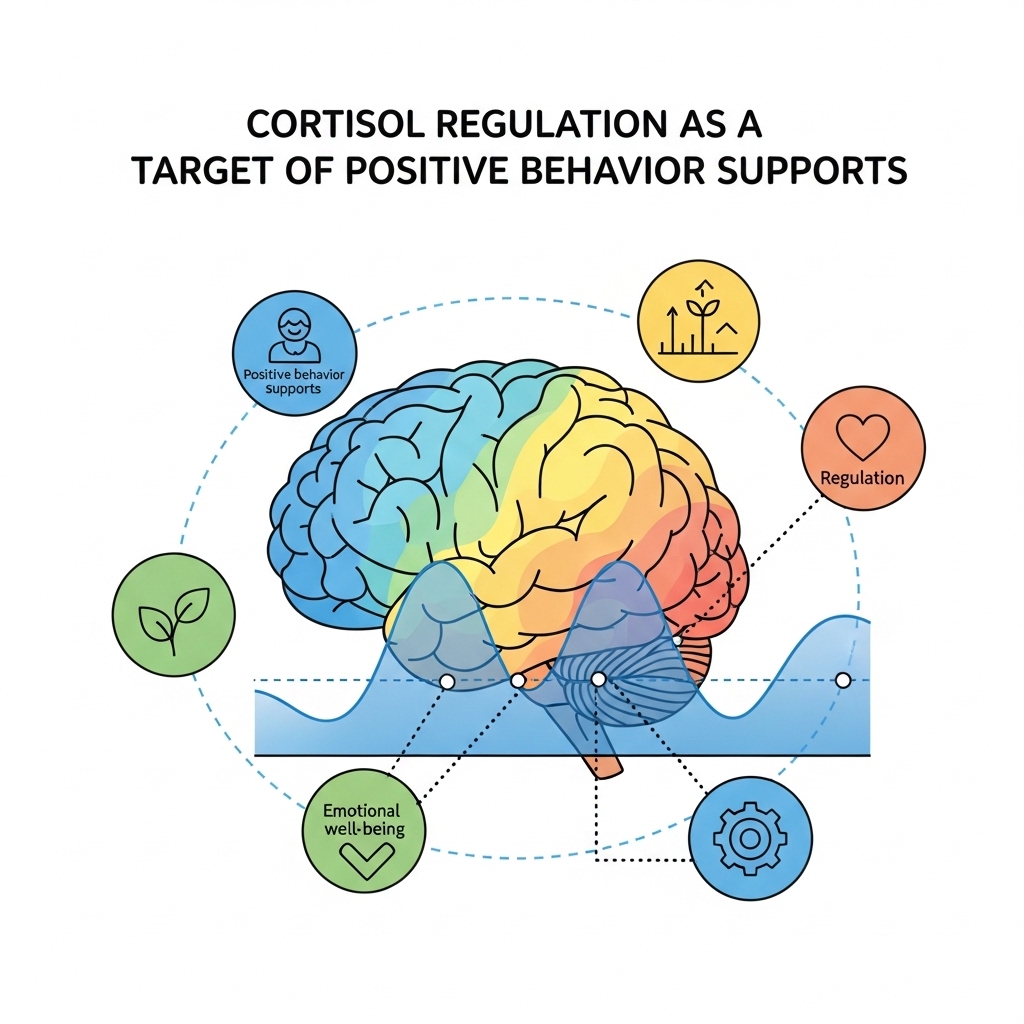
Cortisol dysregulation is one of the most consequential and addressable physiological patterns in the executive demographic. Sustained cortisol elevation — driven by chronic occupational stress, irregular sleep timing, skipped meals, and insufficient recovery — suppresses immune function and accelerates biological aging. It also impairs hippocampal integrity and reduces the prefrontal cortical efficiency that executive performance depends on. Positive behavior supports that target cortisol regulation therefore produce effects that extend well beyond stress management.
Behavioral structures that stabilize cortisol include consistent sleep and wake timing. This anchors the cortisol awakening response and normalizes diurnal cortisol rhythm. Structured recovery periods, regular physical activity, and deliberate social connection also contribute. Each of these behaviors carries individual clinical support. Together, when embedded as positive behavior supports rather than aspirational goals, they create a physiological environment in which cortisol stays within the range associated with optimal cognitive function and metabolic health.
Research through the NIH's National Institute on Aging documents that individuals with stable daily behavioral routines show measurably lower allostatic load than those with irregular behavioral patterns. This holds independent of the specific content of their routine. Allostatic load — the cumulative physiological cost of chronic stress adaptation — is a validated composite marker of biological aging. Positive behavior supports that stabilize daily routine therefore directly reduce biological age trajectory.
Sleep Architecture and the Role of Positive Behavior Supports
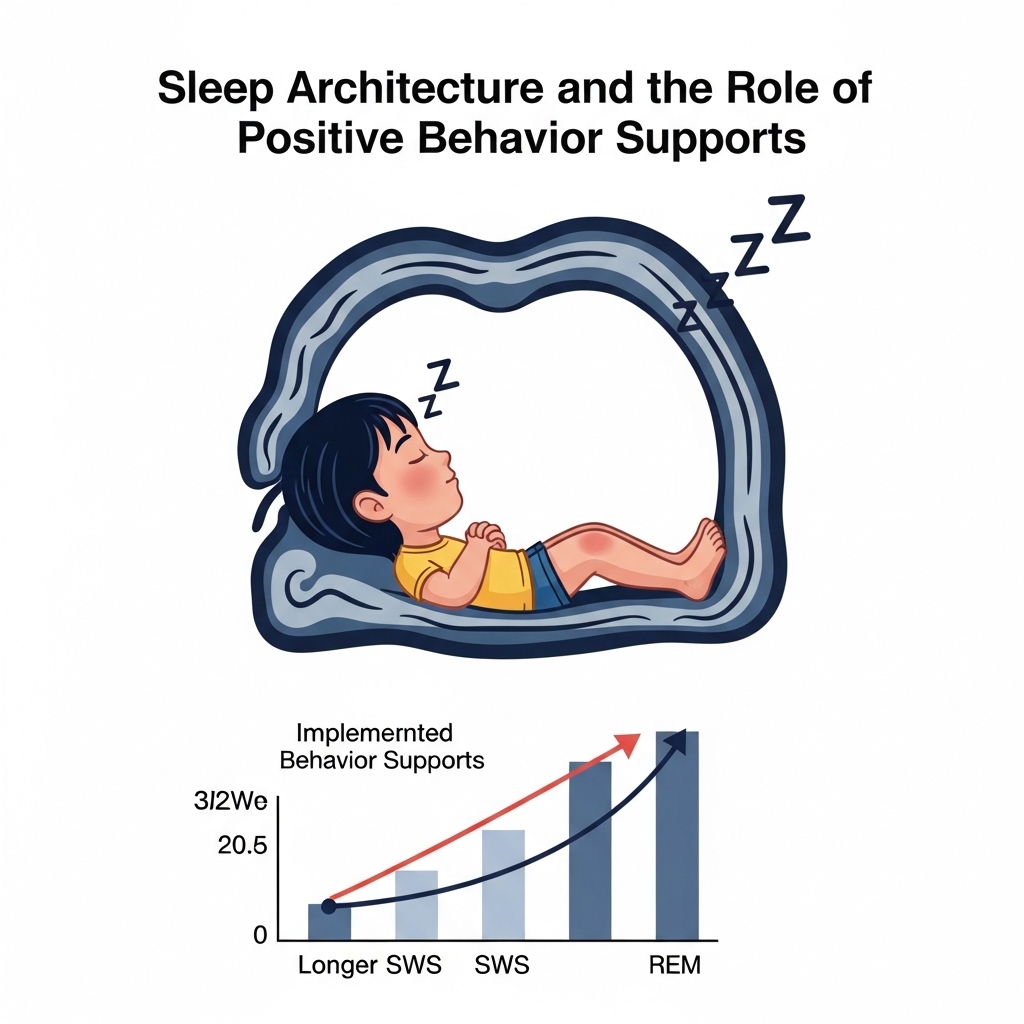
Sleep is the physiological variable most sensitive to behavioral disruption and most responsive to behavioral correction. For high-performing professionals, sleep architecture — the distribution of slow-wave and REM sleep across the night — determines the quality of overnight cortisol clearance, memory consolidation, and cellular repair. Positive behavior supports that protect sleep architecture therefore produce upstream benefits across virtually every other health and performance variable.
The behavioral determinants of sleep architecture are well-established. Consistent sleep and wake timing, evening light exposure management, thermal regulation of the sleep environment, and avoidance of stimulant intake after early afternoon all produce measurable improvements in sleep continuity and slow-wave sleep depth. When these behaviors become positive behavior supports — structured into the environment and routine rather than applied through nightly willpower — their adherence rate and physiological impact increase substantially.
Research published in Sleep Medicine Reviews documents that maintaining the same wake time seven days per week is one of the single most effective interventions for improving sleep architecture in adults with irregular sleep patterns. For executives whose schedules create chronic variability in sleep timing, this finding positions sleep timing consistency as a high-priority positive behavior support. It carries direct consequences for cognitive performance, inflammatory load, and biological age.
Physical Activity Consistency Through Positive Behavior Supports

Physical activity is among the most well-supported behavioral interventions for longevity, cognitive performance, and metabolic health in the clinical literature. However, the gap between knowing this and maintaining consistent physical activity under executive professional demands is significant. Positive behavior supports address this gap by restructuring the environment and schedule. Physical activity then occurs by design rather than by motivation.
Implementation intentions — a specific positive behavior support strategy involving pre-planned if-then behavioral responses — demonstrate consistent efficacy in physical activity research. When individuals specify in advance exactly when, where, and how they will exercise, adherence rates increase significantly compared to goal-setting alone. Research published in the British Journal of Health Psychology showed that implementation intentions more than doubled exercise adherence rates in working adults relative to motivation-based approaches. This effect holds across varying levels of baseline motivation.
The physiological consequences of maintained physical activity consistency are extensive. Regular aerobic exercise sustains VO2 max — the single strongest physiological predictor of all-cause mortality in middle-aged adults. It simultaneously reduces inflammatory markers, improves insulin sensitivity, promotes hippocampal neurogenesis, and slows biological age progression. Positive behavior supports that protect physical activity consistency during high-demand professional periods therefore protect the full downstream physiological benefit stack that exercise produces.
READ ALSO: How to Cultivate Positive Critical Thinking Habits of Mind
Nutrition Consistency and Behavioral Structure

Nutritional consistency — maintaining stable meal timing, composition, and quality across varying professional demands — depends far more on behavioral architecture than on nutritional knowledge. Most high-performing professionals already possess sufficient nutritional knowledge to make health-supporting food choices. The clinical gap is not informational. It is behavioral — specifically, the absence of positive behavior supports that maintain nutritional consistency when schedule pressure, travel, and cognitive load peak.
Positive behavior supports in the nutritional domain include pre-commitment strategies. These involve selecting and preparing meals in advance and establishing default food environments at home and in the office. They also include creating decision rules for common high-pressure situations such as travel and client dinners. These strategies reduce the cognitive load associated with nutritional decision-making at precisely the moments when that load is already highest. The result is maintained nutritional quality through environmental design rather than effortful decision-making.
The metabolic consequences of nutritional inconsistency in the executive demographic are clinically significant. Irregular meal timing disrupts circadian metabolic signaling and elevates postprandial glucose variability. It also increases inflammatory marker burden. All of these associate independently with accelerated biological aging and reduced cognitive performance. Positive behavior supports that stabilize nutritional patterns therefore produce metabolic benefits that extend well beyond any specific dietary composition choice.
READ ALSO: How to Cultivate Positive Critical Thinking Habits of Mind
Social Reinforcement as a Core Positive Behavior Support

Social reinforcement — the use of close relationships and social accountability structures to maintain behavioral consistency — is one of the most effective and underused positive behavior supports available to high-performing professionals. Behavioral science research consistently shows that social commitment devices, accountability partnerships, and shared health behaviors produce significantly higher adherence rates than individually maintained behavioral goals.
The mechanism is both psychological and neurobiological. Social commitment activates reward circuits associated with reputation and reciprocity. This creates a social consequence for behavioral inconsistency that augments the health consequence alone. For executives whose professional identity closely links to reliability and follow-through, social accountability structures align positive behavior supports with existing motivational architecture rather than working against it.
The Harvard Study of Adult Development — with more than 80 years of longitudinal follow-up data — identifies close relationship quality as the strongest predictor of sustained health behavior maintenance across the adult lifespan. Individuals embedded in high-quality close relationships show greater consistency in sleep, physical activity, and nutritional behavior than those with lower relationship quality. This holds independent of health knowledge, income, or professional status. Social connection, in this context, functions as a positive behavior support system with measurable physiological consequences.
Stress Recovery Protocols as Structured Positive Behavior Supports
Recovery from acute stress is a physiological process that requires deliberate behavioral support. It does not occur automatically in high-demand professional environments. Without structured positive behavior supports for recovery, the physiological stress response stays partially activated between stressors. This produces cumulative allostatic load that degrades performance, accelerates biological aging, and increases cardiovascular risk over time.
Structured recovery positive behavior supports include scheduled micro-recovery periods within the workday. These are brief intervals of deliberate physiological downregulation through slow breathing, reduced sensory input, or physical movement. They also include weekly and quarterly recovery anchors that provide more sustained physiological restoration. Research on ultradian rhythms — the 90 to 120-minute cycles of cognitive alertness and recovery that govern brain function throughout the day — supports scheduling brief recovery intervals aligned with natural cognitive downregulation phases.
Heart rate variability biofeedback is a technology-assisted positive behavior support. It provides real-time data on autonomic nervous system recovery status. It also enables recovery protocol timing based on objective physiological state rather than subjective assessment. Research published in Applied Psychophysiology and Biofeedback documents that regular HRV biofeedback practice produces measurable improvements in autonomic regulation, cortisol patterns, and cognitive performance in high-stress professional populations. For executives already tracking HRV through wearable devices, this positions existing data as an actionable input for structuring recovery positive behavior supports.
Environmental Design and the Architecture of Behavioral Consistency

Environmental design — deliberately structuring the physical and digital environment to make health-promoting behaviors easier and health-undermining behaviors harder — is the most leveraged category of positive behavior supports available. It operates continuously and passively. It maintains behavioral influence independent of cognitive state, motivation level, or available willpower at any given moment.
Specific environmental positive behavior supports with strong evidence bases include placing healthy food as the default accessible option in home and office environments. They also include removing digital devices from the sleep environment and pre-positioning exercise equipment or athletic wear to reduce friction for morning physical activity. Scheduling recovery and social connection time as protected calendar commitments — rather than aspirational intentions — is another high-impact environmental positive behavior support. Each modification reduces the decision-making burden associated with health-promoting behavior at the point of execution.
The behavioral economics literature — particularly research published through the National Bureau of Economic Research — consistently demonstrates that environmental default structures predict behavioral outcomes more reliably than motivation, knowledge, or intention. For high-performing professionals whose cognitive resources are already heavily committed to professional demands, environmental positive behavior supports represent the highest-return behavioral investment available.
READ ALSO: How to Cultivate Positive Critical Thinking Habits of Mind
Measuring the Physiological Impact of Positive Behavior Supports

Positive behavior supports produce measurable physiological outcomes. These outcomes track through the same biomarker and performance metrics that high-performing professionals already use to monitor health. Inflammatory markers including hsCRP and IL-6, cortisol awakening response patterns, HRV trends, sleep architecture data, body composition, and cognitive performance metrics all respond measurably to sustained behavioral consistency. They provide objective evidence of the physiological return on behavioral investment.
Serial biomarker monitoring — tracking inflammatory and metabolic markers at regular intervals — enables direct assessment of whether the positive behavior supports in place are producing the intended physiological effects. This transforms behavioral health from a subjective domain into a measurable, data-driven practice. It integrates naturally with the performance monitoring frameworks that executives already apply to other domains of their health strategy.
The Framingham Heart Study's longitudinal data consistently demonstrate that behavioral consistency in sleep, physical activity, social connection, and nutritional patterns is among the strongest predictors of sustained cardiovascular health, cognitive function, and longevity across the adult lifespan. This holds independent of genetic predisposition and socioeconomic status. For high-performing professionals, this evidence positions positive behavior supports not as lifestyle enhancements but as the primary behavioral infrastructure through which longevity and performance outcomes are determined.
Applying Positive Behavior Supports Within a High-Performance Health Protocol

For the executive or founder seeking to apply this evidence, the entry point is a behavioral audit rather than a behavioral overhaul. Mapping current daily behavioral patterns against the evidence-based positive behavior supports covered in this article — sleep timing consistency, structured recovery, physical activity implementation intentions, nutritional pre-commitment, social accountability, and environmental design — identifies the specific structural gaps most likely to be driving measurable physiological cost.
From that audit, the evidence supports prioritizing positive behavior supports that address the highest-burden physiological variables first. Cortisol dysregulation and sleep architecture disruption typically carry the greatest physiological cost and respond most rapidly to behavioral correction. Nutritional, physical activity, and social reinforcement structures then layer in progressively. Biomarker monitoring at baseline and at three to six month intervals provides the objective feedback loop that identifies which positive behavior supports are producing measurable physiological return and which require redesign.
The output of this process is not a wellness routine. It is a precision behavioral architecture — grounded in the same evidence base that governs clinical intervention. Through this architecture, the physiological conditions for sustained high performance and biological age deceleration are systematically constructed and maintained. Positive behavior supports, applied with this level of structural intention, are among the most direct and durable interventions available to the high-performing professional seeking to extend both the length and quality of their productive years.
UP NEXT: Think Positive Be Positive: The Mood Shift You Need
Structured positive behavior supports — including consistent sleep timing, regular aerobic activity, and deliberate stress recovery protocols — directly reduce allostatic load and systemic inflammatory burden, with longitudinal research indicating that individuals who maintain high behavioral consistency across these domains carry biological age profiles measurably two to six years younger than chronologically matched peers operating without structured behavioral architecture. WholeLiving's Biological Age Estimation Model incorporates this factor directly — your assessment takes under five minutes.
Ready to understand how these factors are influencing your biological age right now? [Take the Biological Age Assessment →]