


Measurable loss of skeletal muscle mass begins in the fourth decade of life, with the rate of decline accelerating meaningfully after age 40. Clinically defined sarcopenia — characterized by both reduced muscle mass and impaired physical function — typically becomes a significant health variable from the mid-40s onward, per consensus criteria established by the European Working Group on Sarcopenia in Older People. It is directly associated with increased all-cause mortality, insulin resistance, and declining functional capacity — associations documented across multiple longitudinal studies in adult populations.
For executives who spend the majority of their working hours seated, Posterior chain degradation and scapular instability compound this risk, producing measurable postural deficits that elevate injury probability and reduce movement efficiency — factors that, over time, affect the physical capacity available to sustain high-output professional performance. The lat pulldown, when executed with correct mechanics and programmed with precision, directly counters these trajectories. It does this by loading the latissimus dorsi, engaging spinal stabilizers, and stimulating hypertrophic adaptation. In turn, this preserves the metabolic and structural resilience essential to long-term performance.
The Latissimus Dorsi: Anatomy and Systemic Relevance

The latissimus dorsi is the largest muscle in the upper body by surface area. It spans from the thoracolumbar fascia and posterior iliac crest upward to the intertubercular groove of the humerus.
This anatomical span gives it leverage across both spinal and shoulder mechanics. The latissimus dorsi does not function in isolation. It contributes to lumbar stabilization, respiratory mechanics, and force transmission through the posterior chain.
For professionals whose working posture compresses this range daily, the consequences of latissimus dorsi weakness extend into postural integrity, injury risk, and sustained physical output capacity.
Why Seated Work Accelerates Posterior Chain Decline

Prolonged sitting places the latissimus dorsi in a chronically lengthened and underloaded state. It also creates adaptive shortening in the hip flexors and anterior shoulder structures. This inhibits posterior chain activation during movement.
Over time, the pattern produces measurable asymmetries in scapular positioning, thoracic kyphosis, and lumbar load distribution. Research in occupational biomechanics has consistently documented reduced posterior chain strength in sedentary professionals relative to anterior chain strength.
This imbalance elevates intervertebral disc loading, increases rotator cuff injury risk, and accelerates postural deterioration associated with musculoskeletal aging.
The Lat Pulldown as a Corrective Loading Strategy

The lat pulldown addresses posterior chain deficits through a controlled, scalable pulling pattern. It does not require the baseline mobility or stability that pull-ups demand. This makes it particularly relevant for professionals returning to structured resistance training after extended inactivity.
The movement loads the latissimus dorsi through its full functional range — from overhead shoulder flexion through adduction and extension. It simultaneously engages the teres major, rear deltoids, rhomboids, and biceps brachii as synergists.
This multi-muscle recruitment pattern produces a training stimulus that extends beyond isolated lat development into broader upper body structural integrity.
READ ALSO: Exercise for Overall Health: Tips to Start Today
Scapular Mechanics and Injury Prevention

Correct execution requires deliberate scapular depression and retraction before and throughout the pulling phase. This sequencing activates the lower trapezius and serratus anterior — two muscles chronically inhibited in individuals with forward head posture and rounded shoulders.
Strengthening this pattern reduces subacromial impingement risk. That risk commonly develops in desk-based professionals as shoulder mobility deteriorates. Clinical rehabilitation literature identifies scapular dyskinesis as a primary upstream contributor to rotator cuff pathology.
The lat pulldown, programmed with attention to scapular mechanics, directly addresses this risk factor.
Muscle Mass, Sarcopenia, and Longevity Outcomes

The relationship between skeletal muscle mass and longevity outcomes is among the most robustly supported areas of exercise science. A study published in the American Journal of Medicine by Srikanthan and Karlamangla — drawing on NHANES data from older adults — found that muscle mass index was a stronger predictor of all-cause mortality than body mass index within that population.
The authors noted that this relationship was independent of cardiovascular and metabolic risk factors, though the findings apply most directly to older adult cohorts rather than the broader adult population. Sarcopenia accelerates after 40 and compounds annually without targeted intervention.
Resistance training that loads large muscle groups stimulates hypertrophic signaling pathways that directly counteract sarcopenia progression. The lat pulldown activates sufficient motor unit recruitment to drive meaningful hypertrophic adaptation across multiple muscle groups simultaneously.
Metabolic Implications of Upper Body Muscle Mass

Skeletal muscle is the body's primary site of insulin-mediated glucose disposal. Greater muscle mass improves insulin sensitivity, reduces postprandial glucose excursions, and lowers fasting insulin over time.
For professionals in their 40s and 50s — a period when insulin resistance typically accelerates — preserving upper body muscle mass carries direct metabolic relevance. The lat pulldown contributes to this metabolic reserve in two ways.
First, through the acute energy demand of the exercise itself. Second, through the sustained elevation in resting metabolic rate that follows hypertrophic adaptation in large muscle groups.
READ ALSO: Stretching Exercise for Lower Back Pain You Can Do in Bed
Grip Strength as a Biomarker: The Pulldown Connection

Grip strength has emerged as one of the most predictive functional biomarkers in longevity research. The Prospective Urban Rural Epidemiology (PURE) study — published in The Lancet in 2015 — followed over 140,000 adults across 17 countries.
It found that grip strength decline predicted cardiovascular mortality more strongly than systolic blood pressure. The lat pulldown requires sustained grip force throughout the movement, providing a repeated mechanical stimulus to the forearm flexors.
While dedicated grip training produces the most direct grip strength gains, compound pulling movements — including the lat pulldown — contribute to forearm flexor endurance and may support grip strength maintenance as part of a broader resistance training programmed. For professionals tracking grip strength as a longevity biomarker, the lat pulldown delivers a training stimulus with direct relevance to that metric.
Load Placement: Wide Grip vs. Neutral Grip

Two grip variations dominate clinical and performance literature: the wide overhand grip and the neutral close grip. Electromyographic research comparing grip variations in the lat pulldown has produced mixed but broadly comparable findings across grip widths.
Several studies report similar latissimus dorsi activation between neutral and wide grip conditions, while the neutral grip consistently places the Glenohumeral joint in a more mechanically advantageous position — a distinction that carries practical relevance for shoulder health rather than for raw muscle activation alone. It also places the shoulder in a more biomechanically advantageous position.
The wide overhand grip — particularly with excessive range of motion or anterior humeral glide — elevates impingement risk in individuals with shoulder restriction. For professionals with a history of shoulder discomfort or limited overhead mobility, the neutral grip offers a mechanically safer entry point without compromising training stimulus.
Programming Frequency and Volume for Professionals

Skeletal muscle hypertrophy research supports a minimum effective dose of two direct training sessions per week per muscle group for meaningful adaptation in adults over 35. The lat pulldown integrates efficiently into upper body or full body resistance sessions.
For most trained adults, 48 hours between sessions targeting the same muscle group provides sufficient recovery. Professionals returning to resistance training after extended inactivity may require longer recovery windows initially, with frequency increasing as adaptation progresses.
For time-constrained professionals, two to three sets per session at a controlled tempo produces sufficient mechanical tension and metabolic stress to drive progressive adaptation. Volume can be accumulated across the week rather than concentrated in single sessions. This aligns with the scheduling realities of high-demand professional environments.
READ ALSO: Back Muscle Exercises For Strength And Balance
The Posterior Chain and Cortisol Regulation

Resistance training's relationship with cortisol is dose-dependent. Moderate-intensity resistance exercise produces a transient cortisol elevation during the session. It then drives a measurable reduction in baseline cortisol over time with consistent training.
Peer-reviewed exercise physiology research — including studies published in journals such as the Journal of Strength and Conditioning Research — has documented that regular resistance training improves hypothalamic-pituitary-adrenal axis regulation.
Habitually trained individuals demonstrate reduced cortisol reactivity to standardized psychological stressors compared to sedentary controls, an adaptation associated with improved stress resilience over time. For executives managing chronic stress loads, this neuroendocrine adaptation represents a performance-relevant benefit extending well beyond musculoskeletal outcomes.
Tracking Progress Beyond Aesthetics
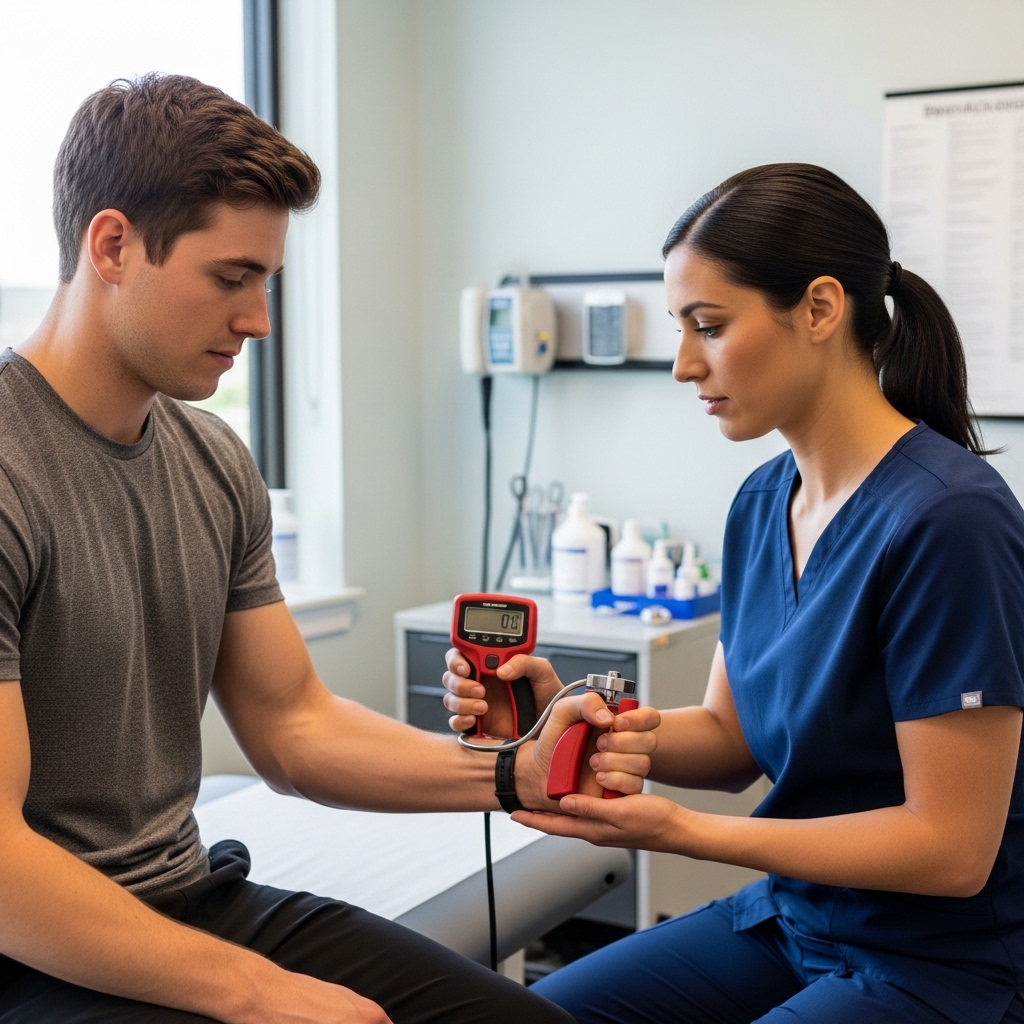
For professionals managing health as a quantified system, progress metrics for the lat pulldown extend beyond load increases. Grip dynamometry provides an objective measure of strength adaptation relevant to longevity biomarkers.
Scapular positioning assessments — conducted by a qualified physiotherapist or sports medicine physician — track postural adaptation over time. Dual-energy X-ray absorptiometry (DEXA) scanning quantifies lean mass changes in the upper body across training cycles.
These tools translate resistance training progress into data. They allow the lat pulldown to function as a trackable intervention within a broader longevity framework — not simply as an exercise.
Evidence-Based Options for Daily Practice

Professionals integrating the lat pulldown into a structured resistance programmed have several well-supported implementation options. Beginning with a neutral grip attachment reduces shoulder impingement risk during the adaptation phase. This is particularly relevant for those with limited overhead mobility or prior rotator cuff involvement.
Programming two sessions per week with three to four sets per session — emphasizing a controlled eccentric phase of three to four seconds — aligns with the minimum effective dose established in hypertrophy research for adults over 35. Pairing lat pulldown sessions with grip dynamometry tracking connects training output to a longevity biomarker with documented cardiovascular predictive value.
For professionals using DEXA scanning or metabolic panels within a longevity protocol, scheduling DEXA reassessment at 12-week intervals provides sufficient time for measurable lean mass changes to register against baseline. Improvements in insulin sensitivity markers may become detectable earlier — within four to eight weeks of consistent training — and can be tracked through fasting insulin or glucose tolerance panels at shorter intervals.
UP NEXT: Home Gym Exercise Equipment That Fits Your Flow
Consistent lat pulldown training preserves the skeletal muscle mass and grip strength that longevity research identifies as among the strongest predictors of all-cause mortality and cardiovascular resilience — with measurable lean mass decline beginning as early as the fourth decade making targeted resistance training one of the most directly modifiable variables in biological age trajectory. WholeLiving's Biological Age Estimation Model incorporates this factor directly — your assessment takes under five minutes.
Ready to understand how these factors are influencing your biological age right now? [Take the Biological Age Assessment →]