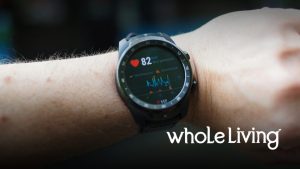
Most Singaporeans who own an Oura Ring or a Garmin Forerunner look at their HRV number in the morning and have no clear protocol for what to do with it. The number changes. It is sometimes red and sometimes green. Without a structured method for building a personal baseline and applying it to daily training decisions, HRV tracking produces data without insight. This protocol establishes how to track HRV in Singapore specifically — including which devices are available at local retailers in SGD, how to build a reliable 14-day baseline, and why Singapore's tropical heat introduces a confound that temperate-climate HRV protocols do not account for.
Why Singapore's Heat Changes Your HRV Baseline
This is the context that most wearable guides omit entirely, and for Singaporean users it matters. Ambient heat suppresses parasympathetic tone independently of recovery status. When your body is managing a thermal load — as it does throughout a Singapore day at 30–32°C and 80–85% relative humidity — the sympathetic nervous system is engaged in active thermoregulation. That sympathetic engagement reduces HRV even when your physical recovery from training is complete.
A 2018 study in Frontiers in Physiology found that passive heat exposure at 35°C reduced resting RMSSD by 12–18 ms in healthy adults compared to a thermally neutral environment, with the effect persisting for up to 90 minutes after return to a cool environment. The mechanism is direct: cutaneous vasodilation driven by heat triggers increased sympathetic outflow, which suppresses the parasympathetic signal that HRV measures.
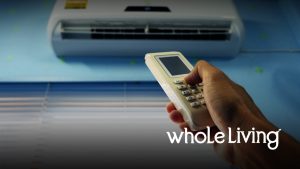
The practical consequence for Singapore HRV tracking: your baseline measurement must be taken in an air-conditioned room, lying still, before you have been exposed to outdoor heat. An HRV reading taken after walking from an MRT station in the morning heat will be artificially suppressed relative to a climate-controlled measurement. Across 14 days, that inconsistency will produce a noisy baseline that obscures real recovery signals. Taking your reading immediately upon waking, before rising, in an air-conditioned bedroom solves the problem entirely.
Wearable Options Available in Singapore With SGD Pricing (2026)
The following options are available through local retailers or authorised online channels in Singapore. Prices are current as of 2026 and reflect typical retail cost in SGD.
Polar H10 Chest Strap: Best Accuracy, Lowest Cost
The Polar H10, priced at approximately $89–99 SGD (2026), is the most accurately validated consumer HRV device in published research. A 2021 study in the Journal of Medical Internet Research found it correlates at r = 0.97 with ECG reference standard for RMSSD measurement. It is available at Polar Singapore's online store and selected sports retailers. The limitation is form factor — it requires wearing a chest strap for the 5-minute morning measurement, which some users find inconvenient for daily use.
Oura Ring Gen 4: Best Overnight Tracking
The Oura Ring Gen 4, priced at approximately $498–598 SGD (2026) depending on finish, is available through Oura's website with delivery to Singapore. It measures HRV continuously through the night and produces a morning readiness score based on the overnight HRV trend rather than a single spot-check. The validation study noted above showed overnight correlation at r = 0.91 with ECG. For users whose schedules make a structured morning protocol difficult, the overnight measurement approach is a practical advantage.
Garmin Forerunner 265 / Epix Pro: Best Integration With Training Load
Garmin's Forerunner 265 retails at approximately $599–649 SGD (2026) and the Epix Pro at $1,099–1,199 SGD (2026), both available at Garmin Singapore and major electronics retailers including Challenger and Lazada. Garmin's HRV Status feature takes a 5-minute overnight wrist-based measurement and computes a rolling average that feeds directly into the Training Readiness and Training Load metrics. For runners already using Garmin GPS tracking on park connector routes or at ActiveSG facilities, the ecosystem integration is a genuine practical benefit. Accuracy is adequate for trend tracking; absolute values should not be compared directly against ECG-referenced norms.
Apple Watch Series 10: Lowest Additional Cost for Existing Users
If you already own an Apple Watch Series 10 (approximately $599–799 SGD, 2026, available at Apple Orchard Road, Wheelock Place, or authorised resellers), the Health app records RMSSD via background measurements throughout the day. The limitation is that Apple does not take a structured resting morning measurement — it averages background readings, which introduces thermal and positional noise. For trend tracking it is serviceable. For building a reliable baseline to apply to daily training decisions, the Polar H10 or Oura Ring are more appropriate tools.
How to Build a 14-Day HRV Baseline
A reliable personal HRV baseline requires 14 consecutive measurements under consistent conditions. The training-load research supporting HRV-guided protocols consistently uses 7-day rolling averages as the minimum useful window; 14 days is the standard for establishing a stable individual norm.
The protocol for each morning measurement:
- Measure immediately upon waking, before rising from bed.
- Lie still on your back in a cool room (air-conditioned, 18–22°C).
- Wait 2 minutes before beginning the measurement.
- Breathe normally — do not attempt to slow your breathing deliberately, as this artificially elevates the reading.
- Record the reading in the same app each day; do not switch devices mid-baseline period.
- Note any factors that will affect interpretation: alcohol the prior evening, late bedtime, illness, or travel.
After 14 days, compute your average. That average is your personal baseline. All subsequent morning readings are interpreted relative to it, not relative to population tables.
The Morning Decision Protocol: How to Apply HRV to Training Load
This is the operational step most wearable guides skip. Once your baseline is established, the morning HRV reading feeds a structured three-zone decision framework.
Green Zone: Within 5% of Your Baseline
Proceed with your planned training session. This includes hard efforts, interval work, or Zone 2 training in Singapore's heat at the adjusted heart-rate ceiling. Your autonomic system is operating at normal capacity.
Amber Zone: 5–10% Below Your Baseline
Proceed with training, but reduce intensity. Replace a hard session with an easy Zone 2 session at a lower ceiling. The research suggests this conservative approach prevents the accumulation of parasympathetic debt that makes recovery progressively more difficult across a training week.
Red Zone: More Than 10% Below Your Baseline, Sustained for Two or More Days
Prioritise recovery over training. This means a full rest day or very light walking only, early sleep onset, and attention to the primary HRV recovery drivers: sleep duration, alcohol abstinence, and reduction of acute psychological stressors where possible.
A 2019 study published in the International Journal of Sports Physiology and Performance found that HRV-guided training load adjustments reduced injury incidence and improved aerobic adaptation compared to fixed training schedules in competitive athletes, with the effect strongest when the threshold was applied over multiple consecutive days rather than single-day readings.
Interpreting HRV Alongside the Singapore Heat Confound
If you have been outdoors in the heat before your morning measurement, or if you slept in a poorly air-conditioned room, expect your reading to be lower than your baseline regardless of actual recovery status. Rather than acting on a single suppressed reading, look at the context: if yesterday was a rest day, you slept 7 or more hours, and you drank no alcohol, a single low reading in a hot environment is more likely thermal noise than a true recovery deficit. Two or more consecutive low readings in the same context begin to carry signal.
This contextual interpretation is why annotating your readings matters. The Oura, Garmin, and Polar apps all allow notes. Recording “hot commute before measurement” takes 5 seconds and prevents a false red-zone decision the following morning.
HRV and Training at ActiveSG Facilities
For Singaporeans training at ActiveSG pools, tracks, or gym facilities, the morning HRV reading integrates naturally with facility booking decisions. An amber or red reading the night before a booked interval session is a practical prompt to shift to a pool-based low-intensity session instead — a flexibility that indoor, climate-controlled ActiveSG facilities make straightforward.
When to Involve a Clinician
HRV tracking is a self-monitoring tool, not a diagnostic one. A chronically suppressed HRV (consistently below your established baseline for more than three to four weeks despite adequate sleep and reduced training load) warrants a conversation with a clinician. Persistent autonomic suppression can reflect underlying conditions including thyroid dysfunction, sleep apnoea, and chronic infection — none of which a wearable can diagnose. Polyclinics in Singapore offer initial investigations at subsidised rates for residents, and Screen for Life panels include relevant metabolic and cardiovascular markers that provide useful context alongside HRV data.
The Takeaway
Tracking HRV in Singapore is straightforward if you account for the tropical heat confound from the start. Measure in a cool room immediately upon waking, build a 14-day baseline before acting on any single reading, and apply the three-zone decision framework to your daily training load. The device matters less than the consistency of the measurement conditions. A $99 SGD (2026) Polar H10 used correctly will produce more useful data than a $600 SGD smartwatch used inconsistently in varying thermal conditions. The number on its own is not the protocol — the trend, in context, is.
This protocol is one step in a 30-day sequence. The guide gives you the full system, including what comes before and after this step. Download the 30-Day Biohacking Starter Guide.
This article is educational and does not constitute medical advice. Consult your clinician before making changes to your training protocols or interpreting wearable data in a clinical context.