Nutritional inconsistency on high-demand days is not a minor inconvenience — it is a measurable physiological event with compounding consequences. Skipped meals, reactive eating, and reliance on processed convenience food elevate postprandial glucose variability, suppress anabolic hormone output, and drive cortisol dysregulation in ways that accumulate over weeks and months. For executives and founders operating at sustained cognitive and physiological load, these patterns accelerate biological aging, erode decision-making quality, and compromise metabolic function in ways that performance metrics eventually reflect. The professional who consistently under-fuels on busy days is not managing a lifestyle preference — they are incurring a measurable biological debt.
How to Eat Healthy When Busy Days Change Your Biology

High-demand days do not simply reduce eating opportunity. They actively alter the physiological conditions under which food decisions get made. Elevated cortisol, compressed time windows, and sustained cognitive load all shift food preference toward high-calorie, low-nutrient options. This is not a discipline failure. It is a well-documented neurobiological response to stress and decision fatigue.
Research from the National Institutes of Health on stress and eating behavior shows that cortisol elevation directly increases preference for energy-dense, highly palatable foods. This happens through cortisol's interaction with dopamine reward pathways in the brain. On busy days, this biological pull intensifies precisely when structured eating is hardest to maintain.
Understanding how to eat healthy on busy days therefore requires more than scheduling meals. It requires building a nutritional framework that accounts for the specific physiological and behavioral conditions that high-demand days generate. That framework begins with understanding what breaks down — and why — under professional pressure.
Glucose Variability and Its Cognitive Consequences

Erratic eating on busy days produces erratic blood glucose patterns. Skipped meals followed by large, carbohydrate-dense meals create sharp post-meal glucose spikes and subsequent drops. These fluctuations are not benign. Research published in Nature Metabolism has linked high intraday glucose variability — independent of average glucose levels — to impaired cognitive function, elevated inflammatory markers, and accelerated metabolic aging.
For executives, the cognitive consequences are the most immediately relevant. Glucose troughs — the drops that follow rapid spikes — correlate with reduced working memory, slower processing speed, and diminished executive function. These are precisely the cognitive capacities most demanded during high-stakes professional activity.
Stabilizing glucose variability on busy days is therefore a direct cognitive performance intervention. Consistent meal timing, adequate protein and fiber at each eating occasion, and avoidance of large refined carbohydrate loads in isolation all reduce glucose fluctuation. This is not dietary perfectionism. It is applied metabolic management with measurable cognitive output implications.
READ ALSO: 10 Signs of an Unhealthy Gut You Shouldn’t Ignore
How to Eat Healthy Enough Protein on Compressed Days
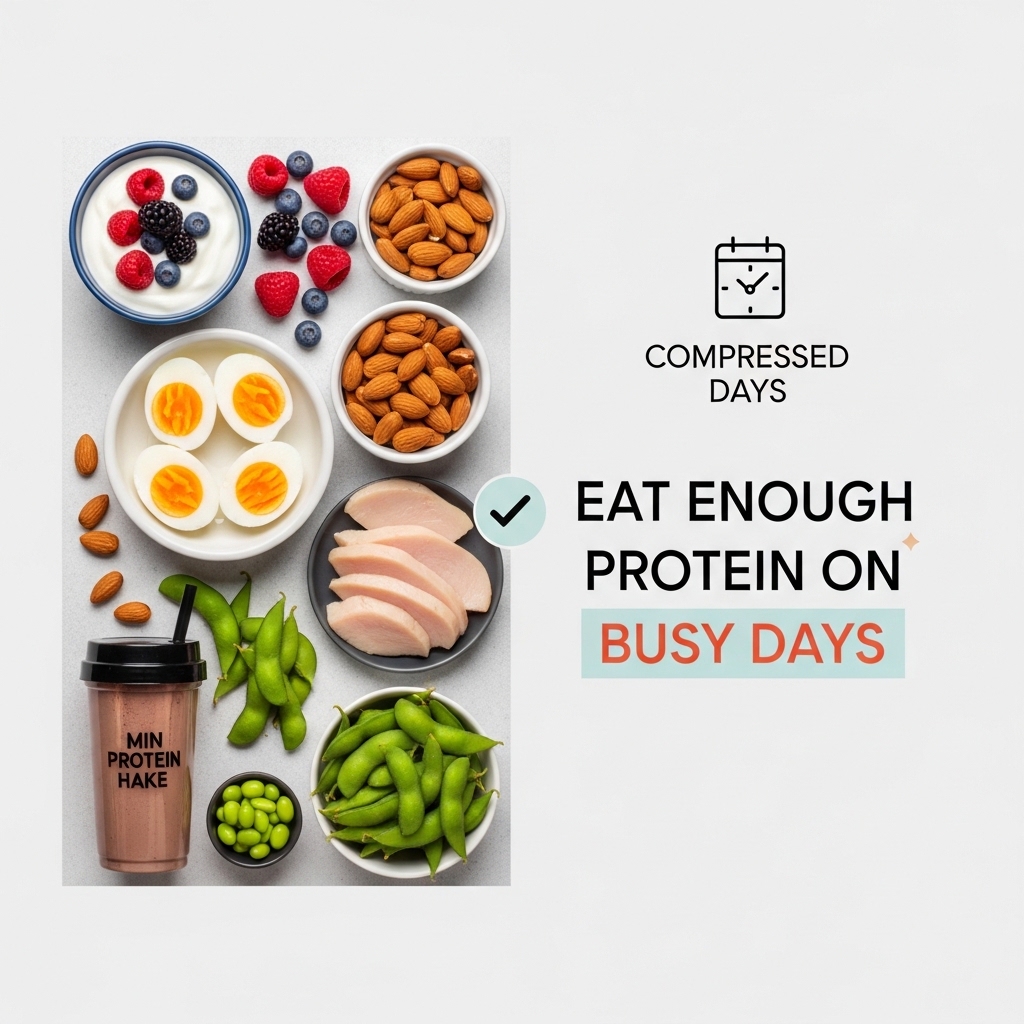
Protein intake is among the most commonly compromised nutritional variables on busy days. When meals are skipped or replaced with convenience options, total daily protein intake typically falls well below the threshold required to support muscle protein synthesis, satiety signaling, and neurotransmitter production. For professionals over 40, this compounds an already accelerating sarcopenia risk.
The Harvard T.H. Chan School of Public Health has published extensively on protein distribution and metabolic health in aging adults. The evidence consistently supports distributing protein intake across multiple meals rather than concentrating it in a single sitting. On busy days, when one or two meals are commonly skipped or reduced, this distribution pattern collapses.
The practical consequence is gradual. Even professionals who meet total weekly caloric targets through compensatory eating on easier days may still accumulate a protein distribution deficit. Over months and years, this pattern slowly erodes lean mass and metabolic rate. Knowing how to eat healthy on busy days means treating protein distribution as a structural variable — not an optional refinement.
READ ALSO: Easy Healthy Snacks to Stay Full & Energized
Cortisol, Meal Timing, and the Hormonal Cascade
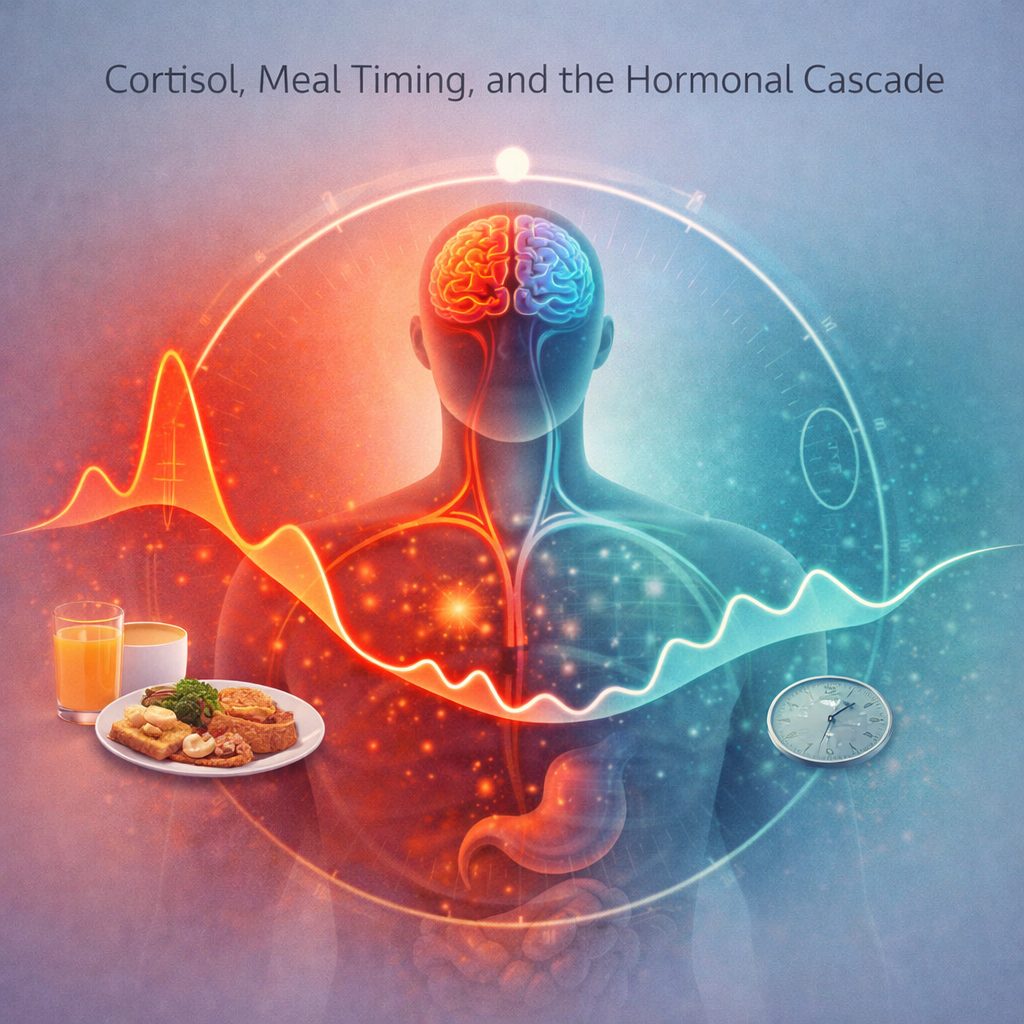
Cortisol follows a diurnal rhythm — peaking in the morning and declining through the day. On high-demand days, occupational stress sustains cortisol elevation beyond its normal morning peak. This extended elevation suppresses insulin sensitivity, accelerates muscle protein breakdown, and promotes visceral fat deposition. Over time, these outcomes compound into measurable metabolic dysfunction.
Meal timing interacts directly with this hormonal pattern. Eating adequate protein and complex carbohydrates in the morning helps buffer the catabolic effects of elevated cortisol. Conversely, skipping breakfast or delaying the first meal removes this buffer. The cortisol-driven catabolic environment then runs unopposed for several hours — a pattern that accelerates lean mass loss over weeks and months.
Research from the American Heart Association on meal timing and cardiovascular risk reinforces when — not just what — professionals eat as clinically relevant. Earlier meal distribution associates with better metabolic markers, lower inflammatory burden, and reduced cardiovascular risk. On busy days, dinner often becomes the largest and latest meal by default. This inverts the optimal pattern, with measurable downstream consequences.
READ ALSO: 5 Healthy Snack Recipes Perfect for Mid-Day Cravings to Energize You
Decision Fatigue and How to Eat Healthy Under Cognitive Load
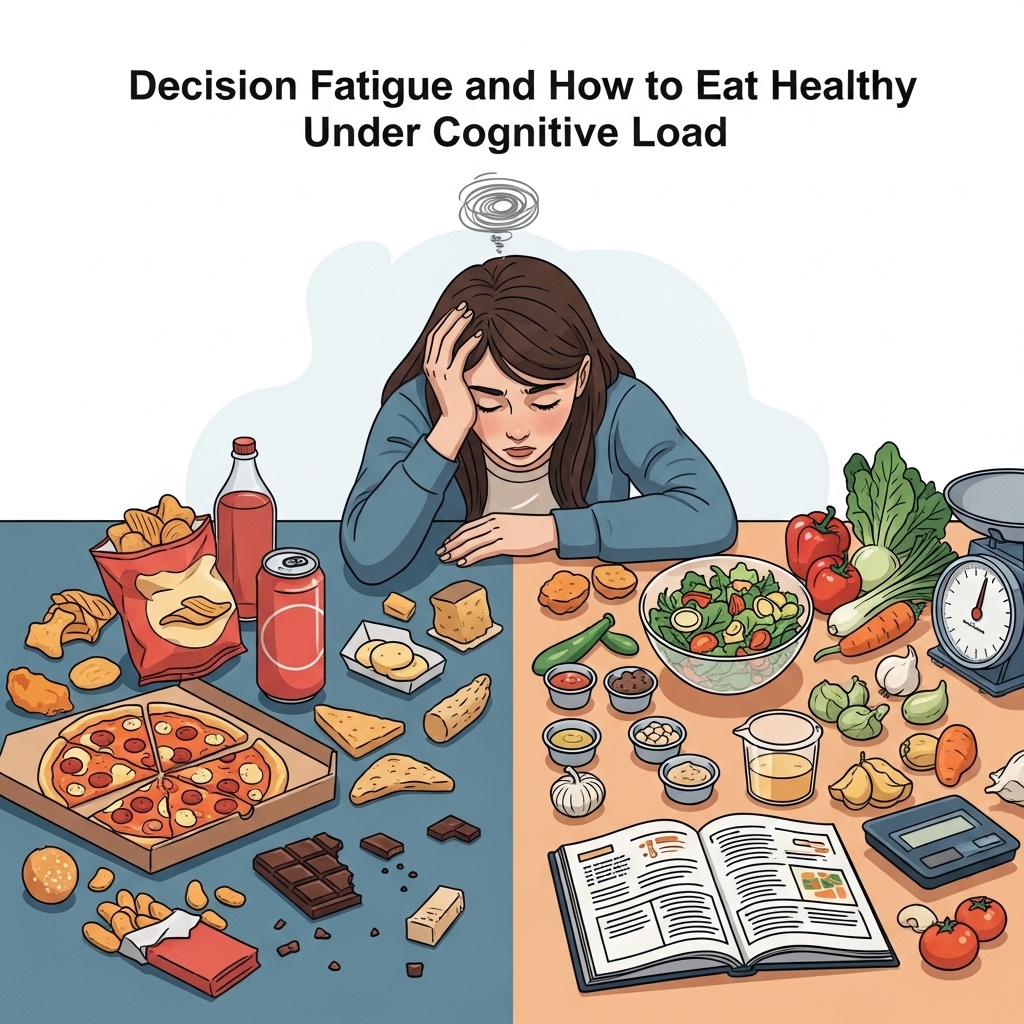
Decision fatigue is a well-documented phenomenon in cognitive psychology. As cognitive load accumulates through a demanding day, the quality of subsequent decisions degrades — including food decisions. By mid-afternoon on a high-demand day, the neural resources available for deliberate, goal-consistent food choice are measurably reduced. Reactive eating then becomes the default behavioral mode.
The structural implication is clear. How to eat healthy on busy days cannot rely on in-the-moment decision-making. It requires pre-made decisions that remove the need for active deliberation at the point of eating. When food decisions are made in advance — under conditions of lower cognitive demand — the quality of those decisions is protected from fatigue-driven degradation.
This means the nutritional quality of a busy day is largely determined before that day begins. Professionals who establish default meal structures — fixed eating windows, pre-selected food options, or prepared food requiring no decision effort — consistently maintain better nutritional quality under high cognitive load. The food environment shapes the outcome more reliably than willpower does.
READ ALSO: The 2026 Guide to a Healthy Grocery List (and Actually Saving Money)
Inflammatory Load and the Cumulative Cost of Reactive Eating
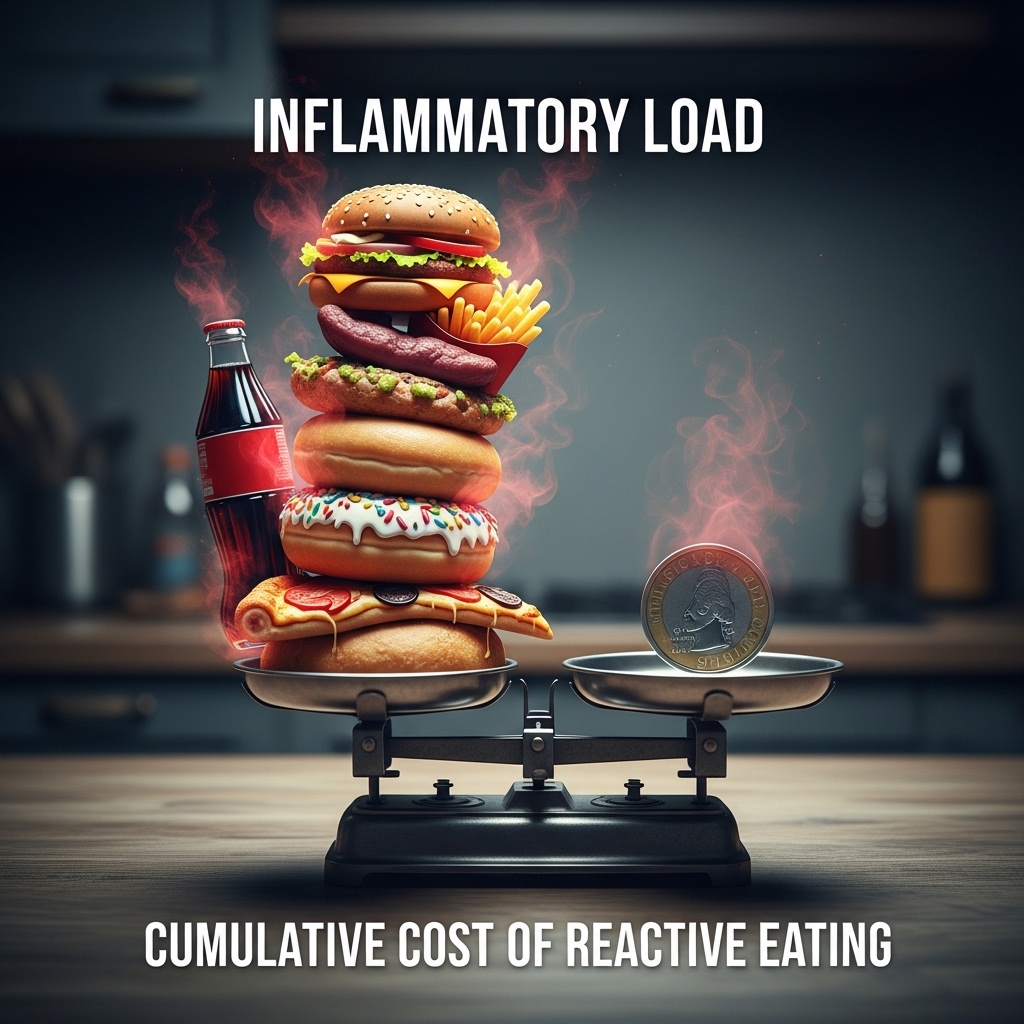
Reactive eating on busy days — processed convenience food, high refined carbohydrate content, irregular meal timing — generates an acute inflammatory response. A single high-fat, high-sugar meal produces a measurable post-meal rise in inflammatory markers including C-reactive protein and interleukin-6. When this pattern repeats across multiple busy days per week, the cumulative inflammatory burden becomes clinically significant.
Chronic low-grade inflammation is a primary driver of biological age acceleration. It associates with accelerated cardiovascular aging, cognitive decline, metabolic dysfunction, and increased all-cause mortality risk. For professionals who experience multiple high-demand days per week — a structural feature of most executive and founder roles — repeated reactive eating accumulates into a measurable longevity liability.
Research from the Nurses' Health Study and the Health Professionals Follow-up Study, both conducted through Harvard, has extensively documented the relationship between dietary pattern quality and long-term inflammatory status. Diets high in vegetables, lean protein, whole grains, and healthy fats consistently associate with lower inflammatory marker levels. Maintaining those dietary characteristics on busy days — not just on low-demand days — is where the longevity impact of nutritional consistency is most clearly expressed.
Hydration as a Cognitive and Metabolic Performance Variable

Hydration status is among the most routinely neglected nutritional variables on high-demand days. Busy professionals frequently move through hours of cognitive work, meetings, and travel with minimal fluid intake. This produces mild but functionally significant dehydration well before thirst signals become prominent. Thirst itself is a lagging indicator — not a reliable real-time guide to hydration status.
Even mild dehydration — in the range of one to two percent of body weight — produces measurable declines in attention, working memory, and processing speed. Research published in the Journal of Nutrition has documented these cognitive effects in otherwise healthy adults under normal conditions. For executives whose cognitive output is their primary professional asset, mild chronic dehydration on busy days represents an entirely addressable performance drag.
Beyond cognitive performance, dehydration impairs metabolic function, reduces exercise capacity, and elevates cortisol. This compounds the hormonal disruption that busy days already generate. Maintaining consistent fluid intake across a high-demand day is therefore a dual-purpose intervention — it protects cognitive performance and supports the metabolic stability that erratic eating tends to erode.
Meal Composition: How to Eat Healthy for Sustained Energy
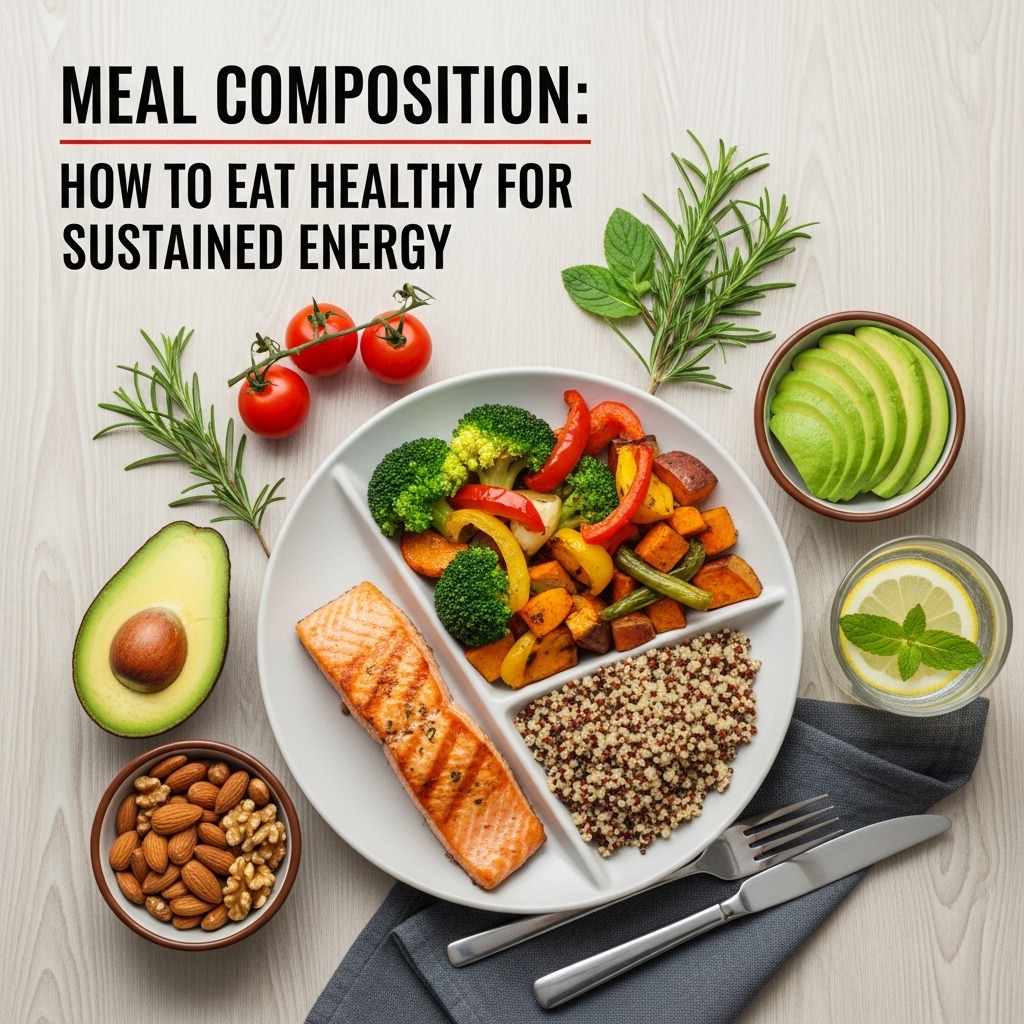
Energy crashes on busy days are often attributed to insufficient sleep or high workload. In many cases, however, meal composition drives them. Meals dominated by refined carbohydrates — common in workplace lunch settings, airport environments, and convenience eating contexts — produce rapid energy availability followed by sharp metabolic decline. This pattern is predictable and avoidable.
Meals structured around lean protein, fiber-rich carbohydrates, and healthy fats produce a significantly flatter post-meal glucose and energy response. Protein and fiber slow gastric emptying and reduce the rate of glucose absorption. Healthy fats support sustained energy availability and reduce the inflammatory response to eating. Together, these macronutrient interactions produce stable cognitive and physical energy across a two-to-four-hour window.
Knowing how to eat healthy on busy days includes understanding that meal composition directly determines functional energy availability in the hours that follow. A lunch that ends in a glucose crash two hours later carries a measurable cost to afternoon cognitive output. Structuring that same meal around protein, fiber, and fat — rather than refined carbohydrates — produces a clinically superior energy trajectory for the remainder of the working day.
Food Environment Design as a Health Strategy

The food environment — what is physically accessible, visible, and immediately available — is one of the strongest determinants of eating behavior under stress and time pressure. Research in behavioral nutrition consistently shows that accessibility and proximity drive food choice more reliably than intention or nutritional knowledge under high cognitive load. On busy days, the path of least resistance determines the outcome.
For professionals, this means the home kitchen, office environment, travel bag, and meeting schedule all function as nutritional infrastructure. When that infrastructure contains high-quality, low-preparation food options — cooked proteins, portioned nuts, whole fruit, prepared vegetables — the path of least resistance aligns with nutritional quality. When it does not, reactive eating fills the gap regardless of nutritional intentions.
Food environment design is therefore a legitimate executive performance strategy. The professional who structures their physical food environment in advance — at home, in the office, or during travel — makes a high-leverage decision. That single decision protects nutritional quality across multiple subsequent high-demand days. It does this without requiring repeated active decision-making. The environment does the work that willpower cannot sustain under pressure.
READ ALSO: 25 Fast and Healthy Recipes | Whole Living Eat Well
Eating Frequency, Satiety, and How to Eat Healthy Despite a Packed Schedule

Skipping meals on busy days is one of the most common and most consequential nutritional patterns in executive populations. The short-term logic is understandable — when time is compressed, eating gets deprioritized. The physiological consequences, however, extend well beyond the skipped meal itself. Extended fasting periods on high-cortisol days accelerate muscle protein breakdown and amplify hunger hormone response.
Ghrelin — the primary hunger-signaling hormone — rises sharply during extended meal gaps. When eating eventually occurs after a prolonged fast, elevated ghrelin drives increased caloric intake, preference for energy-dense foods, and faster eating speed. These responses reduce satiety signaling accuracy and increase the likelihood of overconsumption. The professional who skips lunch and overeats at dinner responds predictably to hormonal consequences — not a failure of self-control.
Maintaining consistent eating frequency — even through smaller, lower-preparation eating occasions during compressed days — supports more stable satiety signaling and lower ghrelin elevation. It also improves total daily nutritional distribution. The goal on a high-demand day is not a perfect meal. It is a sufficient one, timed well enough to prevent the hormonal cascade that a skipped meal sets in motion.
How to Eat Healthy on Busy Days: Translating the Evidence Into Practice

The evidence reviewed here points toward several concrete, evidence-based approaches for professionals seeking to maintain nutritional quality under high occupational demand. Pre-structuring the eating day — establishing fixed eating windows and default food options before high-demand days begin — removes food decision-making from the periods when decision quality degrades most. Front-loading protein and calories toward earlier meals supports better cortisol buffering, glucose stability, and lean mass preservation over time.
Designing the physical food environment to make high-quality options the path of least resistance structurally protects nutritional quality without relying on real-time deliberation. Tracking intraday hydration as a scheduled behavior — rather than a thirst-driven response — addresses one of the most consistently overlooked cognitive performance variables in executive populations.
For professionals who monitor biomarkers through periodic laboratory work, glucose variability, C-reactive protein, and fasting insulin all provide objective feedback on whether current busy-day nutritional patterns produce measurable metabolic consequences. They also indicate whether adjustments generate the intended results. Knowing how to eat healthy on high-demand days is ultimately a systems problem — and systems, not intentions, determine outcomes under pressure.
UP NEXT: Snacks on the Go – Healthy Eating and Recipes – Whole Living
Chronic nutritional inconsistency on high-demand days — driven by skipped meals, reactive eating, and elevated glucose variability — is a measurable contributor to biological age acceleration, with research linking poor dietary pattern quality to inflammatory marker profiles and metabolic aging rates associated with a biological age three to seven years older than chronological age in working-age adults. WholeLiving's Biological Age Estimation Model incorporates this factor directly — your assessment takes under five minutes.
Ready to understand how these factors are influencing your biological age right now? [Take the Biological Age Assessment →]