
You may have heard the phrase muscular dystrophy muscle when learning about muscle diseases. It refers to how muscular dystrophy slowly weakens and changes muscle cells over time. Additionally, these conditions belong to a larger group of neuromuscular diseases that affect muscles and limit movement. Importantly, muscular dystrophy is not just one condition. It includes many types of muscular dystrophy caused by genetic mutation and gene mutations. As a result, each condition affects muscle fibers differently and changes muscle function over time. As a guide on this journey, I want you to feel supported. When you understand muscular dystrophy and how muscular dystrophy affects your body, you gain confidence and direction.
Understanding Muscular Dystrophy
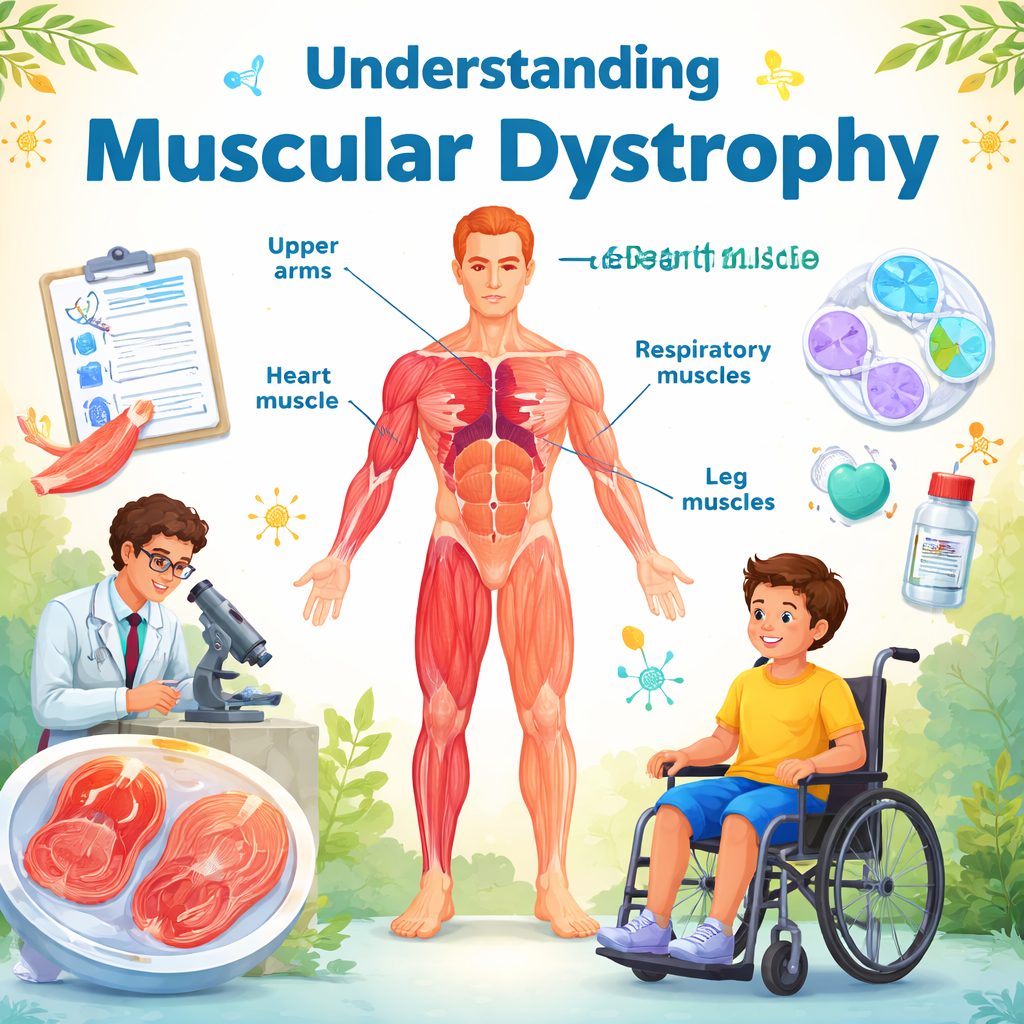
Muscular dystrophy belongs to a group of neuromuscular disorders that cause progressive muscle degeneration. These muscle disorders damage muscle cells and reduce muscle strength slowly over time. The disease often begins with general muscle weakness. Over time, progressive muscle weakness spreads across several muscle groups. Muscles involved in walking and lifting usually weaken first. In many cases, the condition affects voluntary muscles that control movement. Later, it may affect respiratory muscles and even the heart muscle. Understanding this helps you prepare with supportive care and lifestyle adjustments.
Why Muscular Dystrophy Happens
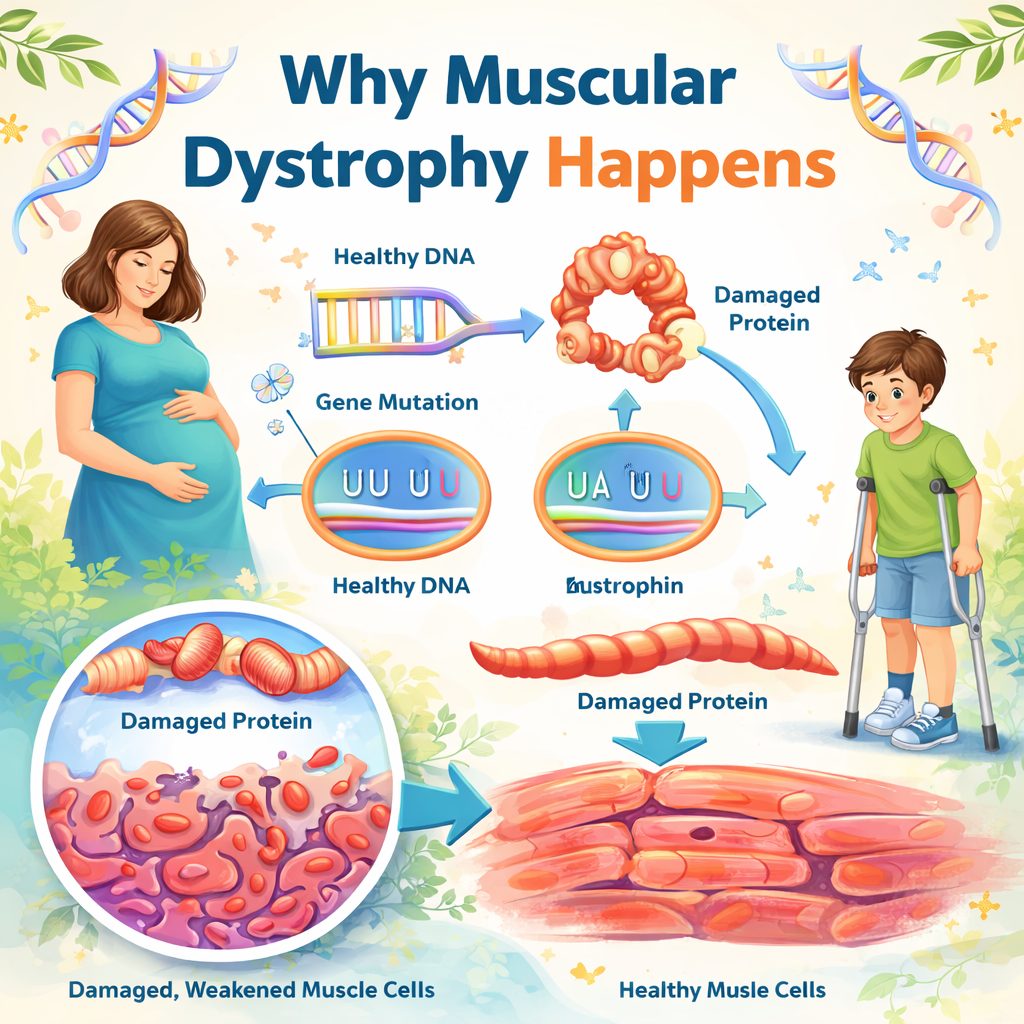
In most cases, the condition develops because of a genetic mutation. These mutations affect proteins that keep muscle fibers strong and stable. Without these proteins, muscle cells become fragile. Muscle tissue breaks down easily, leading to muscle degeneration and fewer muscles over time. Many of these conditions belong to genetic diseases that affect families. Some appear in early childhood, while others develop in young adults or middle age.
READ ALSO: Oblique Muscle Guide With Simple Core Workouts
The Most Common Types of Muscular Dystrophy
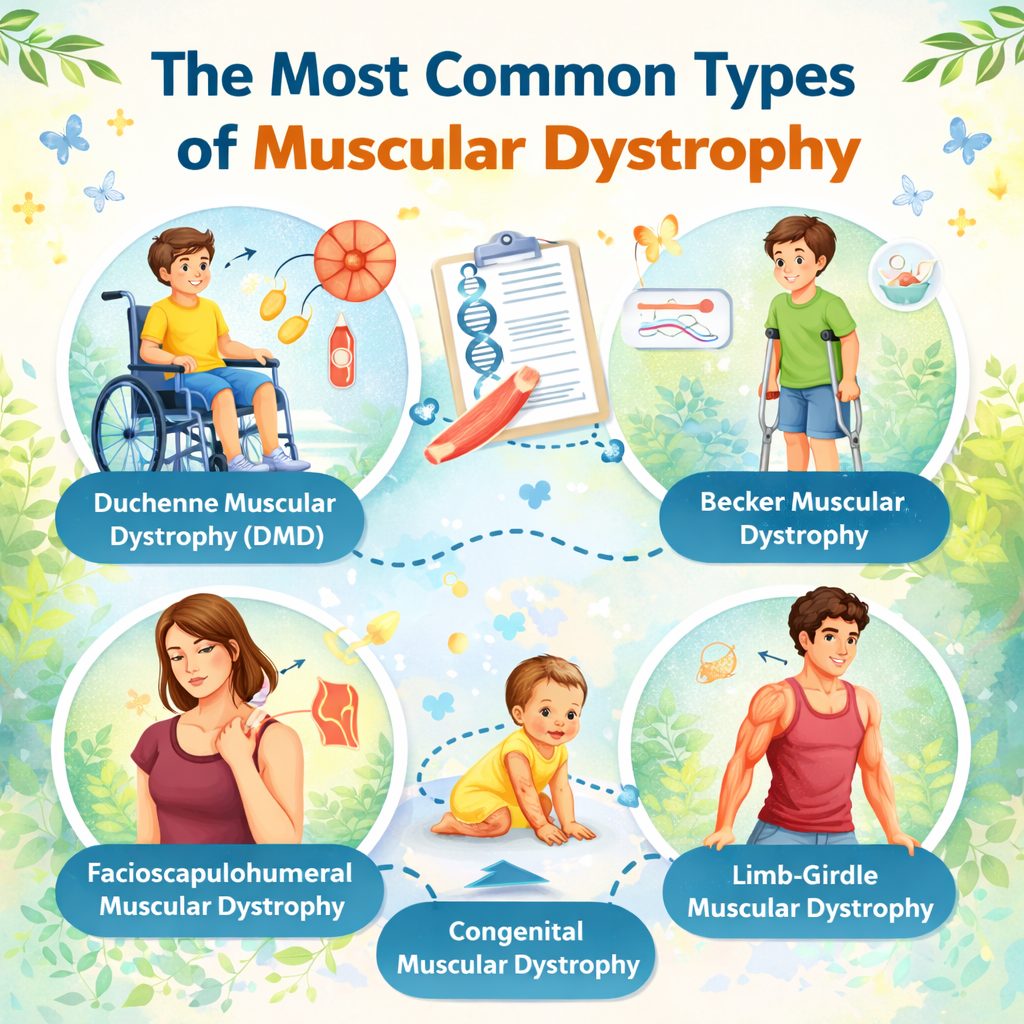
Doctors recognize many muscular dystrophy types. These include duchenne muscular dystrophy, becker muscular dystrophy, limb girdle muscular dystrophy, and myotonic dystrophy. Other types of muscular dystrophy include facioscapulohumeral muscular dystrophy, distal muscular dystrophy, congenital muscular dystrophy, and emery dreifuss muscular dystrophy. Each condition shows different symptoms and progression. Learning the types of muscular dystrophy helps families understand treatment and disease control options.
Duchenne Muscular Dystrophy
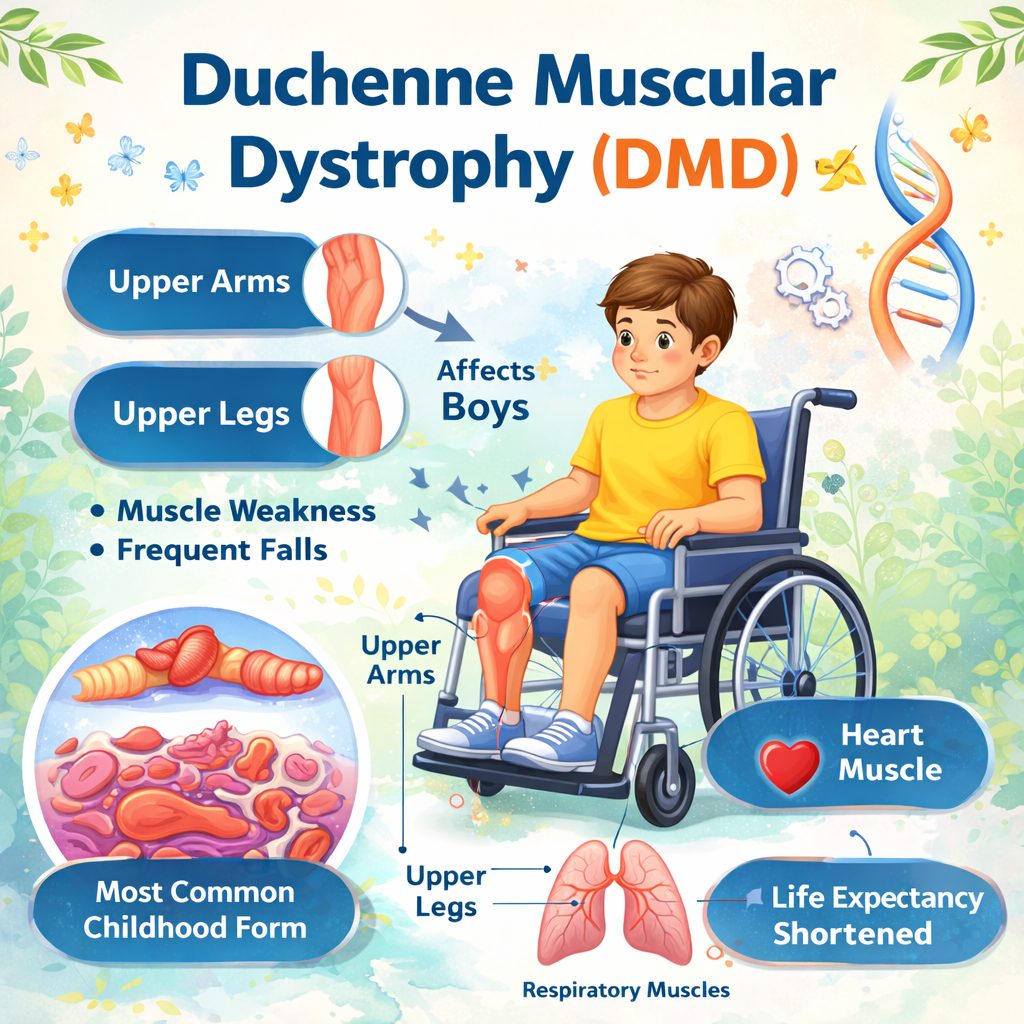
Duchenne muscular dystrophy is the most common childhood form of muscular dystrophy. Duchenne muscular dystrophy DMD usually appears during early childhood. This form affects boys because the genetic mutation occurs on the X chromosome. Duchenne muscular dystrophy affects boys more frequently than girls. For example, children often show signs while climbing stairs or running. Frequent falls and a waddling gait are common early symptoms.
READ ALSO: Bicep Muscle Workout You Can Do Anywhere
Becker Muscular Dystrophy
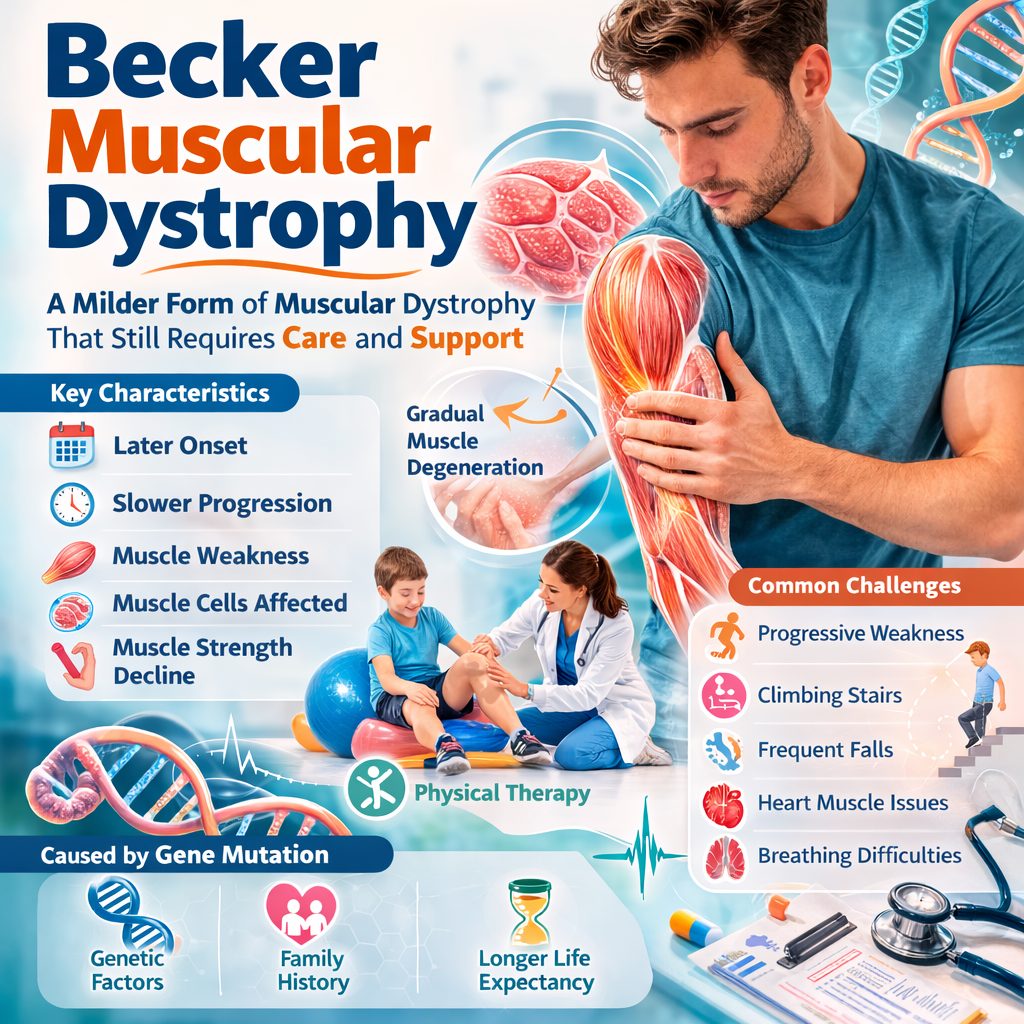
Becker muscular dystrophy is similar to duchenne muscular dystrophy but progresses slower. Many individuals develop milder symptoms compared with Duchenne muscular dystrophy DMD. Becker muscular dystrophy usually appears in teenagers or young adults. The disease progresses slowly, allowing many people to stay active longer. Even so, muscle weakness still affects upper legs and upper arms gradually.
Limb Girdle Muscular Dystrophy
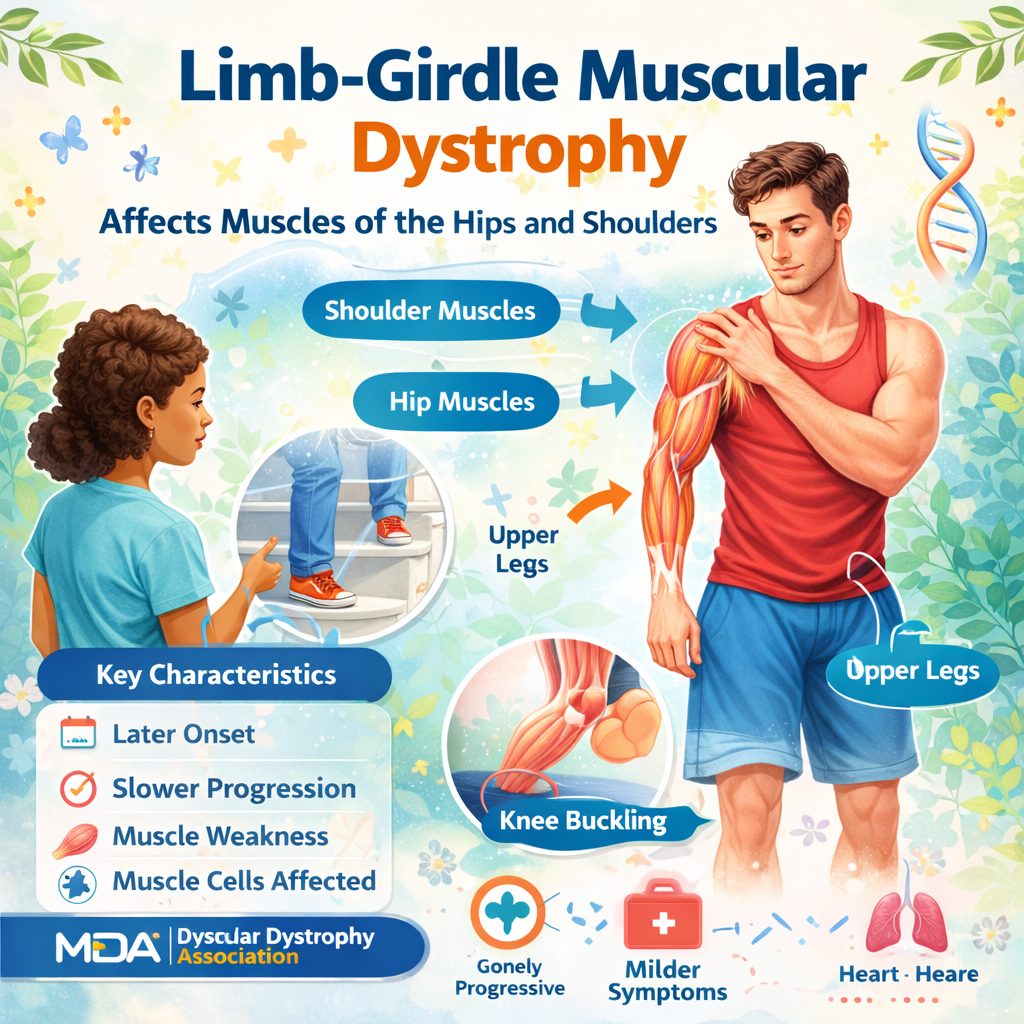
Limb girdle muscular dystrophy affects the proximal muscles around the hips and shoulders. These muscles support walking and lifting movements. Because of this, people with limb girdle muscular dystrophy often struggle with climbing stairs or standing from chairs. Progressive weakness spreads to upper arms and upper legs. Over time, walking becomes difficult because muscle fibers lose strength.
READ ALSO: Tricep Muscle Training to Boost Your Gratitude for Health
Facioscapulohumeral Muscular Dystrophy
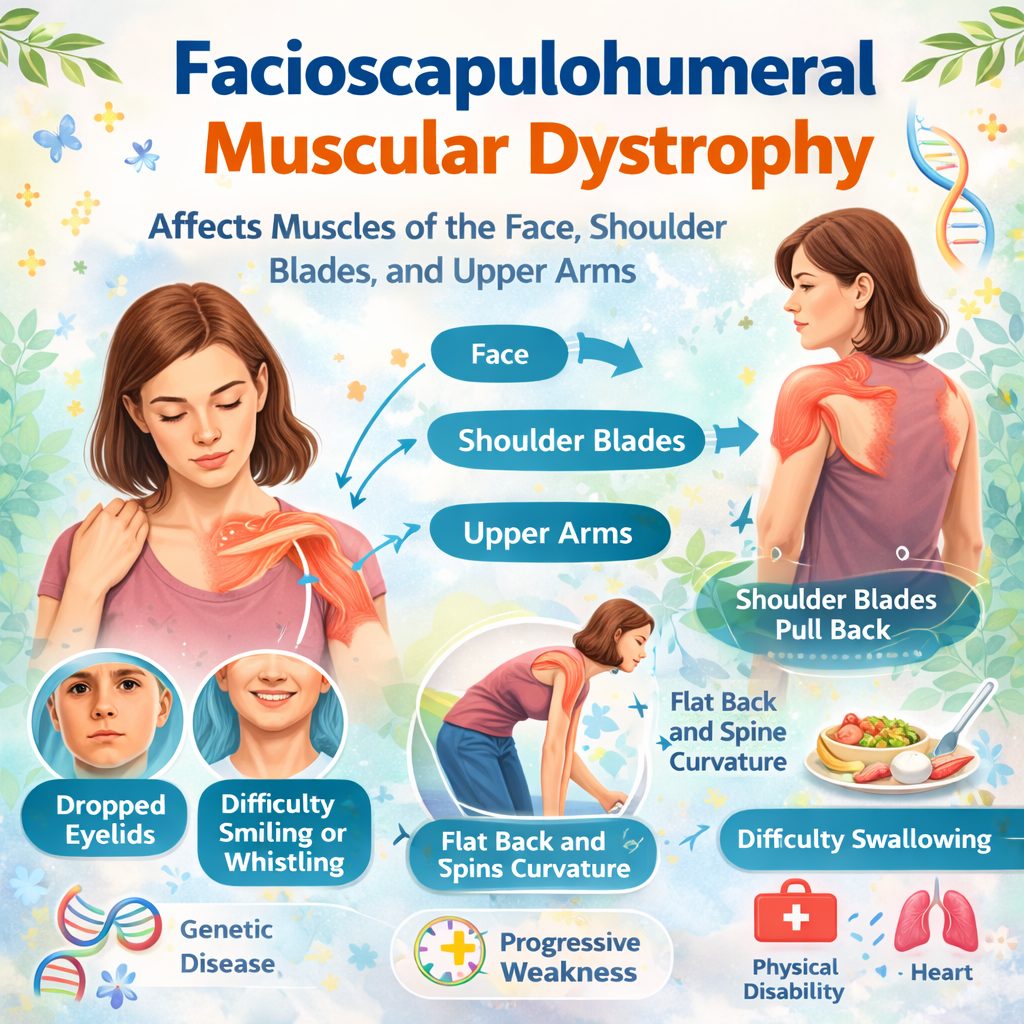
Facioscapulohumeral muscular dystrophy affects muscles around the face and shoulder blades. These muscles help control expressions and arm movement. Typically, many people notice weakness around the shoulder blades first. Raising arms or lifting objects becomes difficult. Facioscapulohumeral muscular dystrophy can appear during teenage years or young adulthood.
READ ALSO: Latissimus Muscle: The Secret to a Stronger, Leaner Back
Congenital Muscular Dystrophy
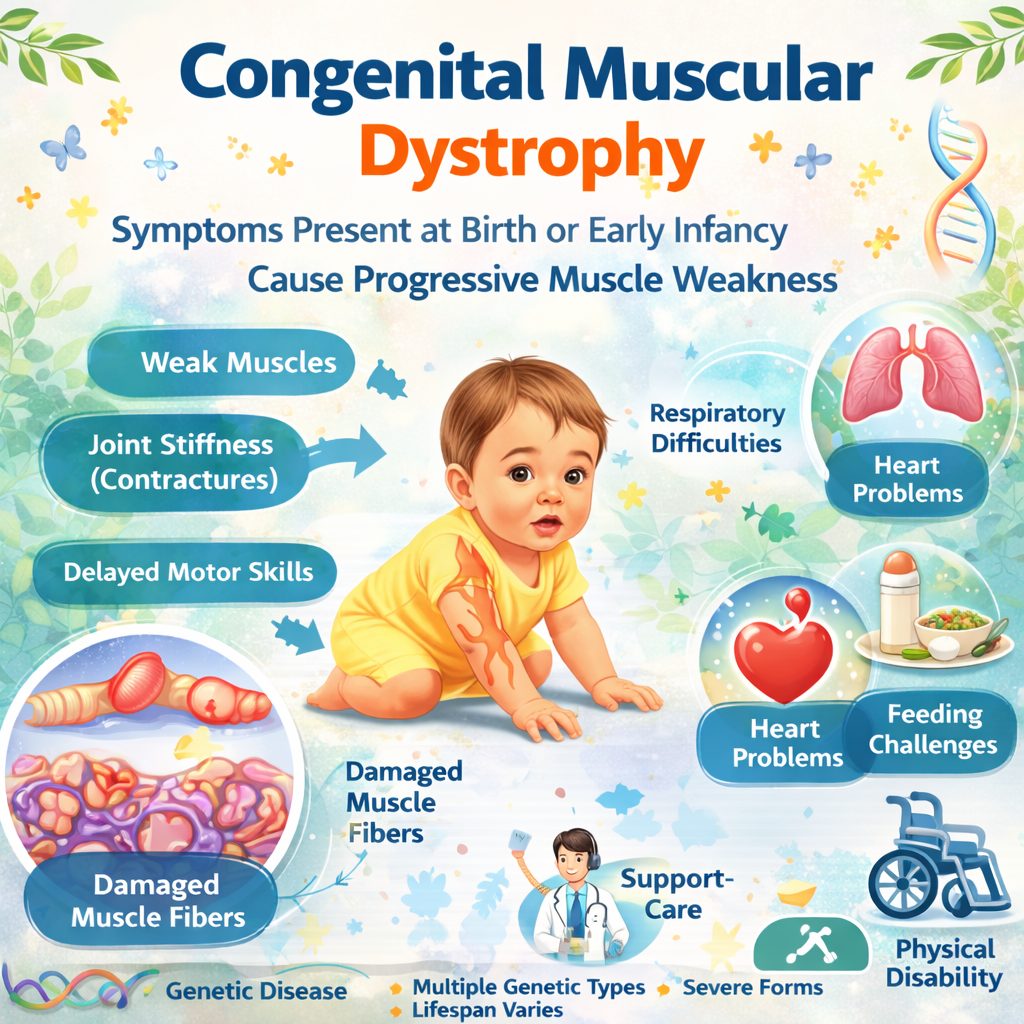
Congenital muscular dystrophy appears during early childhood or infancy. Some cases are noticed even during early pregnancy screening. In many cases, babies may show muscle weakness and delayed motor development. Muscle cells cannot support movement properly. Congenital muscular dystrophy often affects muscle fibers across the body.
Distal Muscular Dystrophy
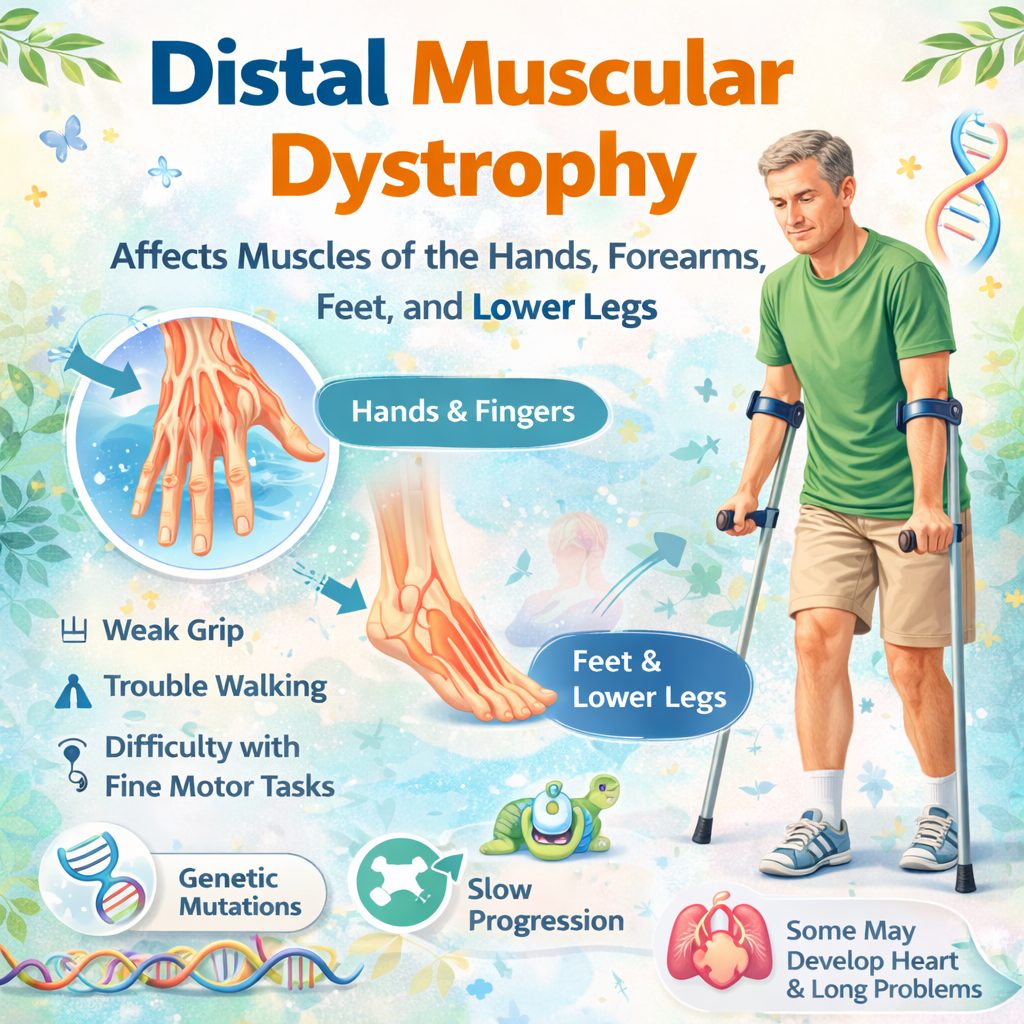
Distal muscular dystrophy affects muscles in lower legs and hands. These muscles help with fine movements and balance. At first, weakness may begin in the lower legs and later spread upward. Walking long distances may become difficult. Distal muscular dystrophy is less common but still part of recognized muscular dystrophy types.
READ ALSO: Leg Muscle Strength for Balanced Energy
Emery Dreifuss Muscular Dystrophy
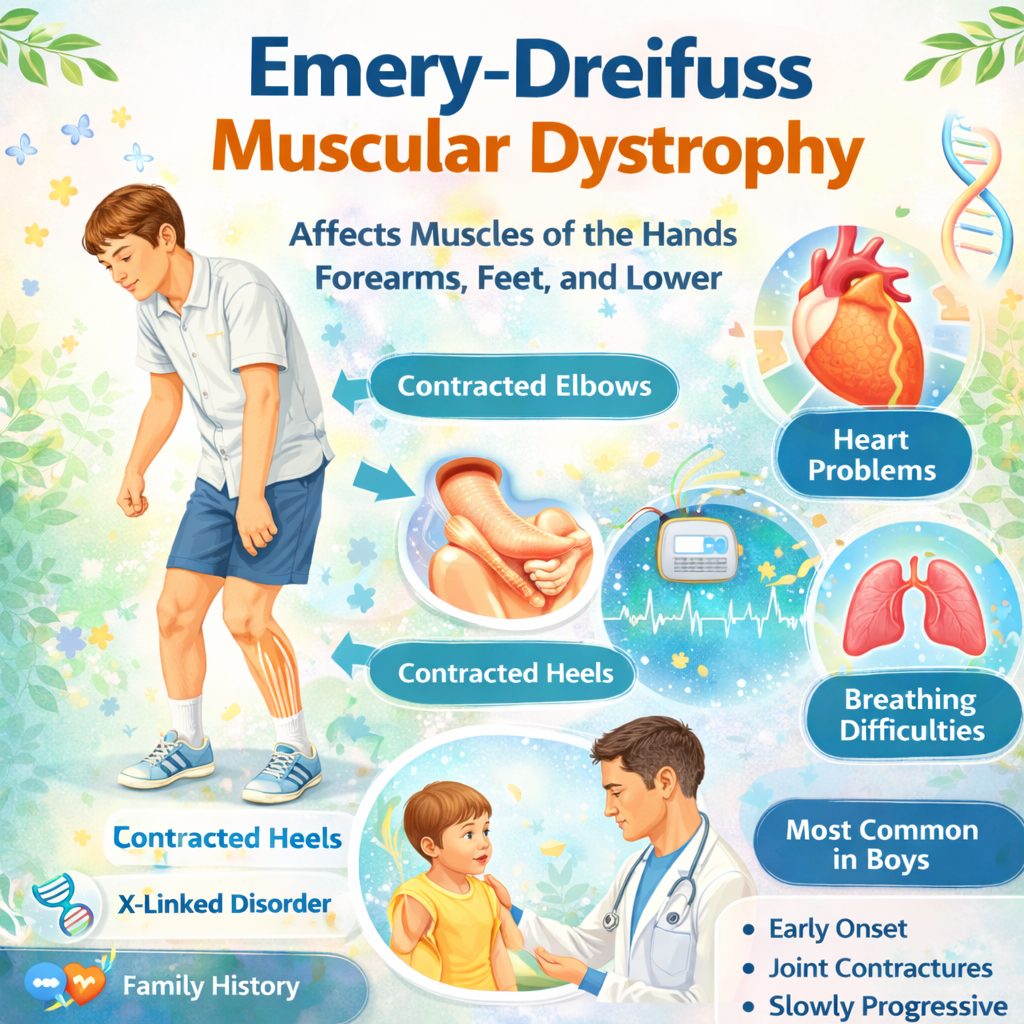
Emery dreifuss muscular dystrophy often affects the upper arms and lower legs. At the same time, joint stiffness may appear early. Emery dreifuss muscular dystrophy can also involve cardiac involvement. Doctors monitor heart rhythm carefully. Although emery dreifuss muscular dystrophy progresses slowly, supportive care remains important.
Oculopharyngeal Muscular Dystrophy
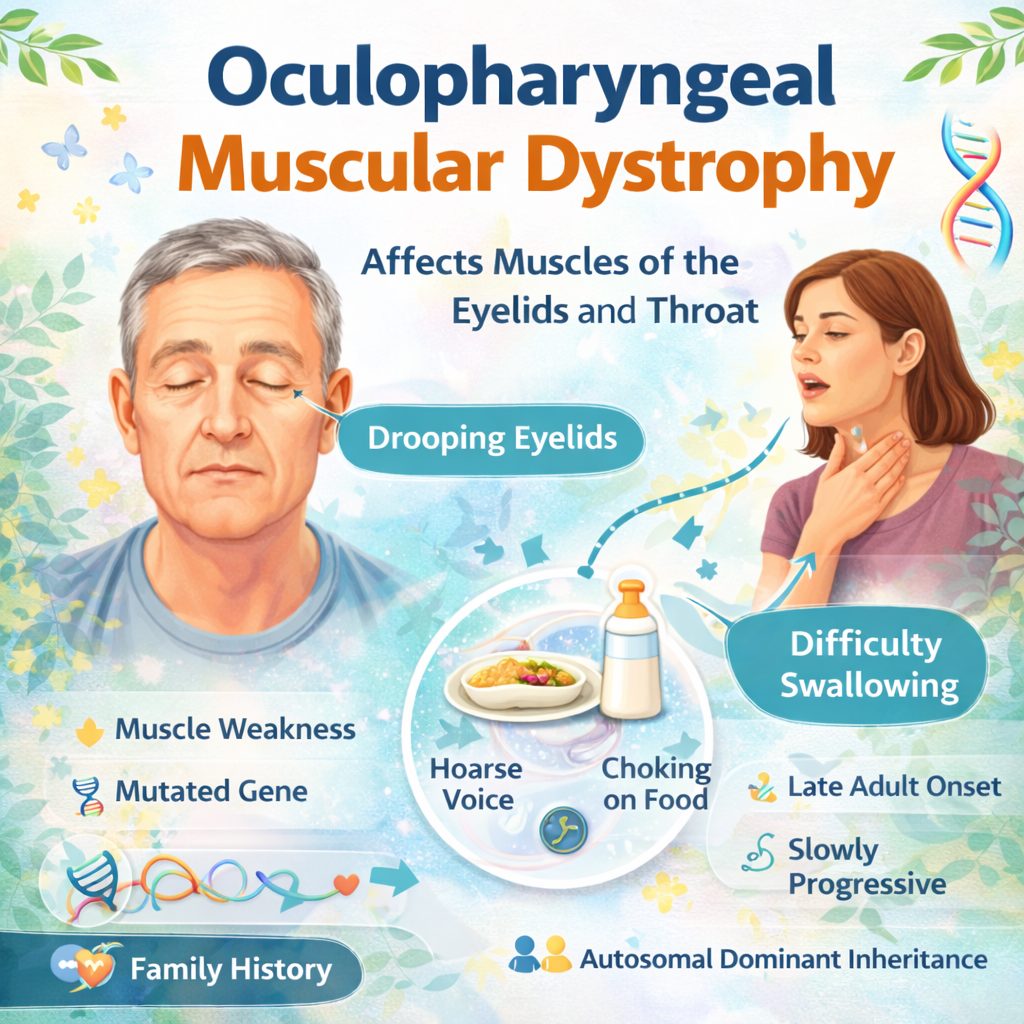
Oculopharyngeal muscular dystrophy mainly affects throat muscles and eyelids. Many people develop trouble swallowing. Later on, difficulty swallowing or drooping eyelids can appear during middle age. Muscle fibers in the throat weaken gradually. Oculopharyngeal muscular dystrophy often leads to difficulty swallowing and fatigue during meals.
Myotonic Dystrophy
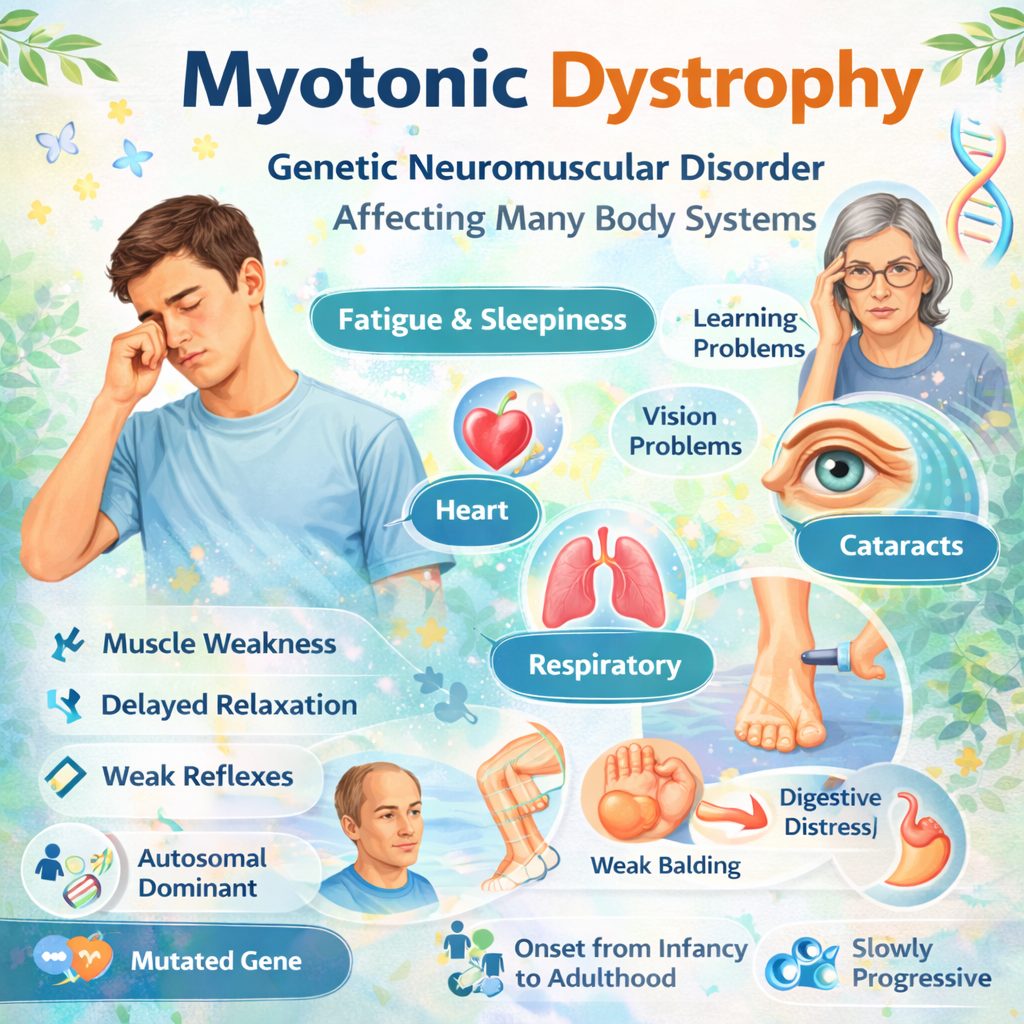
Myotonic dystrophy is another common form among neuromuscular diseases. It affects muscles and the nervous system. As the condition develops, people may experience progressive weakness and delayed muscle relaxation. Everyday tasks become harder with time. Myotonic dystrophy can also involve the central nervous system and heart muscle.
Signs That Muscular Dystrophy Is Developing
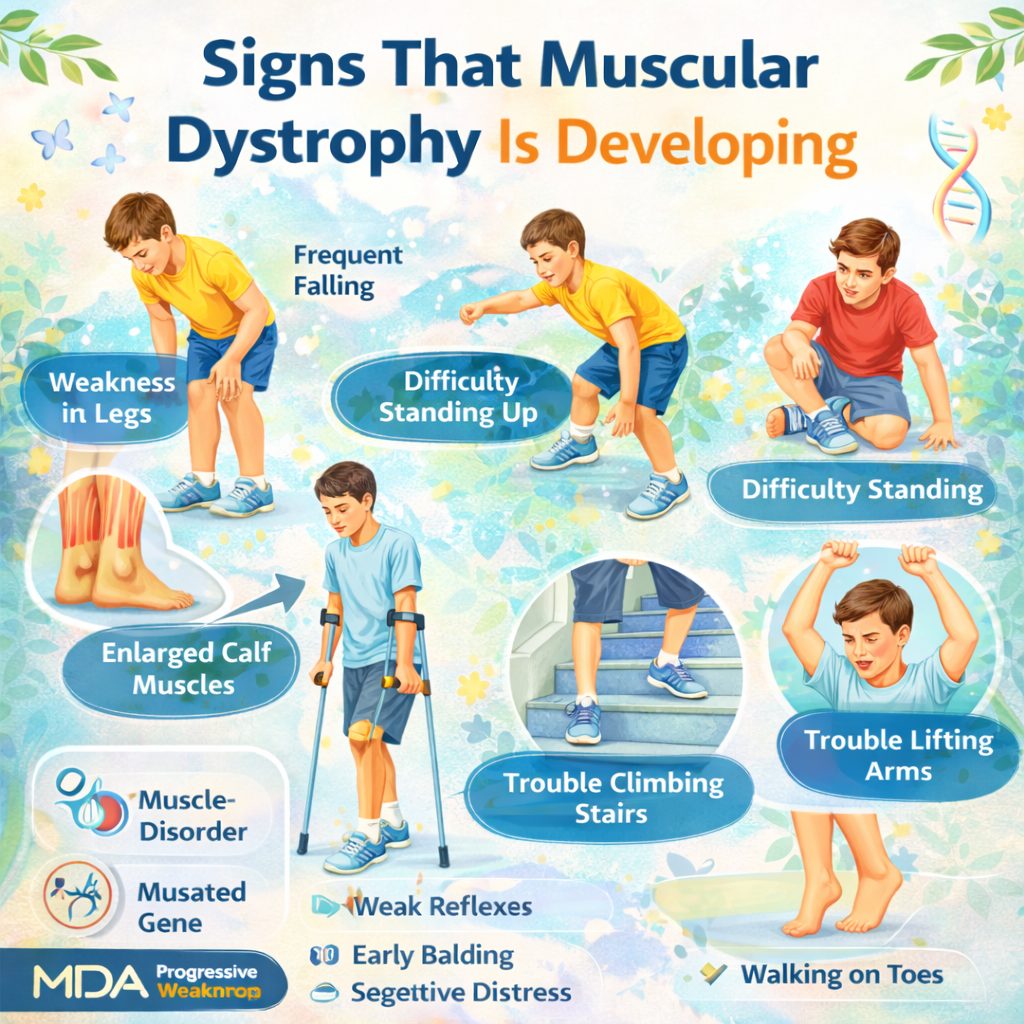
Often, doctors notice muscular dystrophy diagnosed when children show frequent falls or difficulty climbing stairs. Other symptoms include progressive weakness in upper legs and upper arms. Some people develop breathing difficulties or curved spine. Over time, muscular dystrophy affects muscle fibers gradually, so symptoms grow slowly over years.