Every Zone 2 heart-rate formula in widespread use — the Maffetone 180-minus-age method, Garmin's lactate-threshold estimator, the standard 60–70% of maximum heart rate calculation — was developed and validated in temperate climates. None of them account for what happens to cardiac output when you train in 30°C ambient heat and 80% humidity.
Singapore sits on the equator. Its year-round conditions impose a thermoregulatory demand on the cardiovascular system that simply does not exist in the populations where Zone 2 protocols were built. At 0700 on the Rail Corridor or at a Bedok Reservoir loop, your heart is doing measurably more work to manage core temperature than it would at the same pace in a temperate climate. Research in exercise thermoregulation confirms that cardiac output in hot, humid conditions runs approximately 10–15 bpm above temperate baselines for equivalent aerobic metabolic work. (Sawka et al., Medicine and Science in Sports and Exercise, 2011.)
The consequence for training is direct: if you follow a standard Zone 2 ceiling of 145 bpm without adjustment, you are very likely training in Zone 3. Your intended aerobic base-building session has become an unintended lactate accumulation session — you recover more slowly, build mitochondrial density less efficiently, and accumulate greater physiological stress per session than the protocol intends.
This protocol gives you the corrected targets, the evidence behind the adjustment, and a complete session structure calibrated for Singapore's conditions.
What Zone 2 Training Produces
Zone 2 work builds mitochondrial density in slow-twitch muscle fibre — the aerobic machinery that determines how efficiently cells generate ATP without accumulating lactate. The research confirms that consistent Zone 2 training over twelve or more weeks produces measurable improvements in mitochondrial function, fat oxidation at submaximal intensities, and overall cardiovascular efficiency. (Hood et al., Cell Metabolism, 2019; Holloszy and Coyle, Journal of Applied Physiology, 1984.) These adaptations are among the most directly longevity-relevant changes that exercise can produce.
The critical requirement is accuracy: the training stimulus depends on staying within the zone. Training above Zone 2 triggers a different physiological response — more glycolytic, more inflammatory, requiring longer recovery — that does not produce the same mitochondrial adaptations. In temperate climates, hitting the ceiling is straightforward. In Singapore, without adjustment, the ceiling is typically breached before you realise it.
Step 1: Establish Your Temperate-Baseline Zone 2 Ceiling
Use one of two methods:
Method A (Maffetone): 180 minus your age. A 35-year-old gets a ceiling of 145 bpm.
Method B (percentage of max HR): 70% of your measured maximum heart rate. If you do not have a recent field-test maximum, use Method A as a starting point.
Write down this number. It is your temperate-baseline Zone 2 ceiling — the number Zone 2 formulas assume when climate conditions are neutral.
Step 2: Apply the Singapore Heat Adjustment
Add 5–10 bpm to your temperate-baseline ceiling to establish your Singapore-adjusted Zone 2 ceiling.
The rationale is physiological. Cardiac output increases in heat and humidity to sustain skin perfusion for thermoregulation — the body routes additional blood to the periphery to support cooling. This elevated cardiac output is a circulatory cost, not an aerobic training signal. Elevated heart rate in hot conditions does not reflect proportionally elevated metabolic intensity, meaning the standard formula will underestimate your true Zone 2 upper boundary when ambient conditions are hot and humid.
Research in exercise thermoregulation confirms that for every 10°C above temperate ambient temperature, cardiac output increases by approximately 5–8 bpm at matched exercise intensity; humidity adds a further 2–5 bpm as evaporative cooling efficiency declines. (Sawka et al., 2011; ACSM Position Stand on Heat and Exercise, Medicine and Science in Sports and Exercise, 2007.) At Singapore's typical training conditions — 28–32°C, 75–85% relative humidity — the practical upper-end adjustment is 10 bpm.
Example: A 35-year-old with a temperate-baseline ceiling of 145 bpm adjusts to a Singapore operating ceiling of 150–155 bpm. At that ceiling, pace will feel slower than expected. That is correct. Pace is not the target; heart rate is.
Step 3: Structure the Session
Duration: 45–60 minutes for base-building. Three sessions per week is the minimum frequency for meaningful mitochondrial adaptation; four per week is the longevity-optimised target at this duration.
Warm-up — 10 minutes: Walk or easy jog at a pace well below your Zone 2 ceiling. In Singapore's humidity, core temperature rises faster than in temperate conditions; compressing or skipping the warm-up produces an abrupt cardiovascular load before thermoregulatory systems have reached steady state.
Main block — 30–45 minutes: Maintain heart rate at or below your Singapore-adjusted ceiling throughout. Use a chest-strap heart rate monitor rather than an optical wrist-based sensor; wrist sensors under-read by 5–15 bpm during heavy sweating in humid conditions, which defeats the precision the protocol requires. Pace should adjust naturally — accept the slower pace. Nasal breathing should remain possible throughout; if it becomes strained, reduce pace before your heart rate breaches the ceiling.
Cool-down — 10 minutes: Walk at whatever pace allows heart rate to drop below 100 bpm before stopping. Abrupt cessation of cardiovascular work in heat increases the risk of transient hypotension; the cool-down window matters more in Singapore than in a temperate setting.
Step 4: Choose Your Venue
Outdoor training: The Rail Corridor and Bedok Reservoir Park provide sufficient continuous length for Zone 2 sessions without traffic interruptions. Schedule outdoor sessions between 0600–0700 or after 1900. Between those windows, wet-bulb conditions in Singapore routinely reach levels where thermoregulatory cost compromises training quality even with the heart-rate adjustment in place.
Indoor alternative: ActiveSG gyms offer climate-controlled treadmill access at approximately $1.30 SGD per entry with a MyActiveSG+ membership (2026) — a practical option when outdoor conditions are unsuitable or schedule constraints preclude early-morning sessions. Treadmill sessions in a climate-controlled environment can use the temperate-baseline Zone 2 ceiling without heat adjustment, making them useful calibration sessions: comparing your pace at the zone ceiling indoors versus outdoors gives you a direct measure of the ambient cardiovascular cost you absorb on outdoor runs.
Step 5: Hydration Protocol
Sweat rate in Singapore's ambient conditions exceeds temperate-climate norms by 20–40% for equivalent exercise intensity. The research confirms that a body-water deficit of just 2% is sufficient to degrade aerobic performance and impair thermoregulatory capacity. (Sawka et al., Medicine and Science in Sports and Exercise, 2007.)
Practical targets for Zone 2 sessions in Singapore:
- Drink 500 ml of water 30–60 minutes before the session begins
- Carry fluid for any session exceeding 45 minutes — 150–200 ml every 20 minutes is a serviceable starting target
- Weigh yourself before and after one or two sessions to calibrate your individual sweat rate; replace 1 litre per kilogram of post-session body-weight loss within two hours of finishing
For sessions exceeding 75 minutes, sodium replacement becomes relevant as cumulative sweat sodium losses increase. Consult your clinician about whether electrolyte supplementation is appropriate for your individual physiology before adding it to the protocol.
Step 6: Track Adaptation
The primary adaptation marker for Zone 2 training is pace at ceiling: over 8–12 weeks of consistent protocol execution, your running pace at your Zone 2 heart-rate ceiling should increase — meaning you are covering more ground for the same cardiac cost. This is mitochondrial efficiency improving in a directly measurable way.
HRV (heart rate variability — the beat-to-beat variation in cardiac interval reflecting autonomic recovery state) provides a complementary readout. A stable or rising HRV trend across consecutive training days confirms the load is producing adaptation rather than accumulated fatigue. A downward HRV trend sustained across five or more days signals that volume or intensity should reduce before you add sessions.
Accessing a Baseline
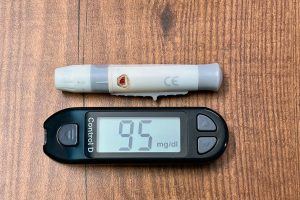
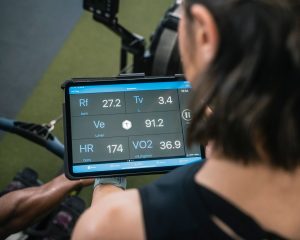
If you want to establish a cardiovascular fitness baseline before starting, a standard lipid panel and resting glucose are available through any Singapore polyclinic and covered under Screen for Life (the Community Health Assist Scheme, CHAS) for eligible adults. VO2 max testing — the most direct measure of aerobic capacity and among the strongest single predictors of longevity — is available at sports science facilities including the Singapore Sport Institute and selected private providers; costs range from approximately $150–$300 SGD depending on provider and protocol (2026 estimate; confirm current pricing directly with the provider).
This protocol is one step in a 30-day sequence. The guide gives you the full system, including what comes before and after this step. Download the 30-Day Biohacking Starter Guide