Singapore consistently ranks among the world's most pressured work environments. Data from the Ministry of Manpower's Labour Force in Singapore survey places average working hours among the highest in the Asia-Pacific region — and that figure does not include the digital overspill of messages and notifications that extend the cognitive workday well past formal hours. Chronic occupational stress is not merely uncomfortable; it produces measurable physiological change: an elevated cortisol awakening response (the spike in cortisol during the first 30–45 minutes after waking), reduced heart rate variability, and progressive fragmentation of focused attention across the working week.
What is less often discussed is what the evidence says about structured leisure as a direct countermeasure. Not passive entertainment — streaming, scrolling, gaming — but purposeful, progressively deepening hobby engagement. Collecting, as a hobby type, has a specific evidence profile: it activates the dopaminergic seeking circuit, demands the kind of focused attention that restores cognitive capacity, and generates durable social architecture. For working-age Singaporeans managing high-output careers, that combination is worth understanding precisely.
How Collecting Reduces Stress: The Cortisol Pathway

The link between enjoyable leisure and reduced physiological stress is not anecdotal. A paper published in Psychosomatic Medicine (Pressman et al., 2009) followed 1,399 adults over several days, measuring leisure activity alongside biomarkers of stress and physical health. The research confirms that participation in enjoyable leisure activities was independently associated with lower cortisol, lower blood pressure, and higher positive affect — even after adjusting for socioeconomic status, physical health, and sleep quality.
The cortisol awakening response (CAR) — the standard clinical range sits at a 50–100% increase over baseline in the first 30 minutes after waking, with the longevity-optimised range showing a moderate, well-regulated spike that tapers cleanly — is an objective readout of chronic allostatic load. In chronically stressed individuals, the CAR either blunts (the system is fatigued) or dysregulates upward. The gap between the two ranges is exactly where behavioural interventions like structured leisure act.
Collecting does not lower cortisol by being relaxing in the passive sense. The mechanism is more specific: it engages the brain's seeking system. Neuroscientists Kent Berridge and Terry Robinson identified, across research published in Trends in Cognitive Sciences, that the dopamine system governs anticipatory wanting — the motivated search for a reward — more than the reward itself. The pleasurable absorption of hunting for a missing variant, tracking down a provenance detail, or completing a set activates this circuit in a sustained, low-intensity way that chronic work stress does not. Work stress activates threat circuitry; collecting activates seeking circuitry. The physiological profiles are measurably different, and deliberately shifting between them during leisure time is a practical intervention, not a metaphor.
Focus and Flow: Why Collecting Trains Attention

READ ALSO: The Multitasking Productivity Myth: Why Focused Work Outperforms Divided Attention
The capacity for sustained focused attention depletes under high cognitive load and partially restores during sleep — but sleep is not the only restoration mechanism. Psychologist Stephen Kaplan's attention restoration theory (ART), formalised in a 1995 paper in Psychological Bulletin, proposes that directed attention — the effortful cognitive resource required for complex work — restores specifically during periods of soft fascination: engagement that is inherently interesting, does not demand vigilance, and allows the mind to be gently occupied without depletion.
Collecting fits this profile closely. The cognitive tasks involved — categorising, appraising condition, cross-referencing variants, researching historical context — are genuinely engaging but not threat-coded. They satisfy curiosity without activating the sustained vigilance that depletes directed attention.
The research on flow state, formalised by Mihaly Csikszentmihalyi and measured across decades of experience sampling studies (including a 1999 paper in Social Indicators Research co-authored with Giovanni Moneta), confirms that flow — defined as complete absorption in a task that is appropriately challenging relative to current skill — is reliably associated with reduced anxiety, improved mood, and higher subjective wellbeing. Collecting, because it scales naturally in complexity as the collector's knowledge deepens, creates conditions for flow more consistently than leisure activities with fixed difficulty levels. The challenge-to-skill match updates itself automatically as expertise grows.
Cognitive Reserve: Building an Expert Mental Model

READ ALSO: Neuroplasticity in Cognitive Ageing: Six Practices That Sustain Learning Capacity
There is a further mechanism operating on a longer time horizon: cognitive reserve, defined as the brain's resilience against age-related neurodegeneration — its capacity to maintain function despite structural damage. Yaakov Stern at Columbia University, in a 2009 paper published in Neuropsychologia, confirmed that cognitive reserve builds through activities requiring the sustained acquisition and organisation of complex knowledge.
Collecting does exactly this. An experienced stamp collector builds detailed categorical knowledge across printing errors, watermark variants, and postal history. A vintage watch collector develops pattern recognition across movement calibres, case references, and dial variants spanning decades. A trading card collector learns set composition, print run variations, and condition-grading standards. These are not trivial cognitive demands. They require the sustained construction and maintenance of expert mental models — precisely the kind of intellectual engagement the research suggests accumulates reserve over years.
This matters in Singapore's specific demographic context: as the HPB (Health Promotion Board) notes in its Healthier SG framework, Singapore's ageing population faces a projected rise in dementia prevalence. Cognitive reserve-building activities are among the modifiable behaviours with the strongest evidence base for delaying onset. A collecting hobby begun at 35 is not merely a weekend diversion; it is years of structured cognitive investment.
Social Architecture: Friendships That Stick

READ ALSO: Heart Rate Variability and Recovery Readiness in Singapore: Why Western HRV Benchmarks Don't Translate
Social isolation is a stronger mortality risk factor than many clinicians routinely discuss. Julianne Holt-Lunstad and colleagues published a meta-analysis in PLOS Medicine (2010) synthesising data from 148 studies covering more than 300,000 participants. The research confirms that adequate social relationships reduce mortality risk by 50% — an effect size comparable to quitting smoking and exceeding the effects of physical activity or managing obesity. A follow-up meta-analysis in Perspectives on Psychological Science (2015) reinforced this, with the research confirming that social isolation predicts premature mortality independently of other risk factors.
The quality of social connection that collector communities provide is worth examining specifically. Unlike the transient interactions of professional networking or the shallow sociality of broad-interest online groups, collector communities share a common vocabulary, a structured activity (trading, appraising, buying, selling), and a progressive social hierarchy based on knowledge rather than occupational status. These structural features make the social bonds more durable — and more likely to accumulate the longevity-relevant effects that Holt-Lunstad's data describes.
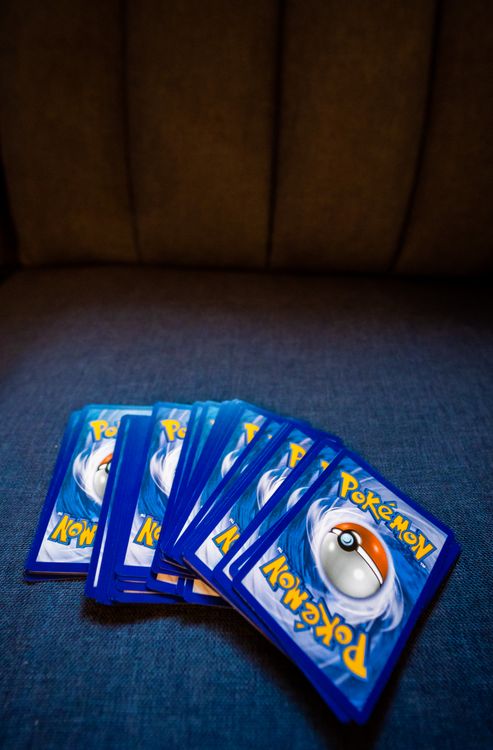
In Singapore, this is visible in practice. Pokémon card collectors gather at weekend trading events across Bugis, Chinatown, and community centres islandwide — a community with its own grading language, evolving market knowledge, and informal mentorship structures for newer collectors. Singapore's philatelic clubs maintain active membership spanning decades of shared interest. Vintage watch collector groups organise regular viewings and trades at hawker centres in Toa Payoh and Bras Basah. These are not casual acquaintanceships; they are structured around progressively deepening shared expertise, and that structure is precisely what makes them socially durable.
Starting a Collecting Hobby in Singapore: A Practical Protocol

READ ALSO: Parasympathetic Breathing Protocols for Nervous-System Recovery
The evidence is consistent enough to treat collecting as a behavioural protocol rather than simply a lifestyle preference. If your most recent bloodwork or HRV readings suggest elevated allostatic load, a structured hobby is one of the non-pharmacological interventions with the most coherent evidence base behind it.
- Step 1 — Choose a category with a local community. The social benefit requires actual people. In Singapore, well-supported collector communities include trading cards (Pokémon, One Piece, sports cards), stamps, vintage watches, die-cast models, and vintage books and maps — Bras Basah Complex hosts multiple specialist dealers and regular collector meets.
- Step 2 — Define a scope. Unconstrained accumulation is not collecting in the sense that drives cognitive benefit. A defined scope — one era, one set, one country of origin, one reference number range — is the collecting equivalent of a training programme goal. It creates the challenge-skill gradient that flow requires.
- Step 3 — Schedule sessions, not just purchases. The attention-restoration and flow benefits require regular, sustained engagement. Thirty to forty-five minutes twice a week — researching, cataloguing, appraising condition — is more effective than occasional large acquisitions.
- Step 4 — Join one community channel. Whether a Carousell collector group, a Facebook club, or a regular weekend trading event, the social architecture does not build passively. Structured, recurring contact is required for the mortality-risk-relevant social bonds to form and deepen.
- Step 5 — Track your allostatic markers. If you wear a continuous heart rate or HRV device, note your morning HRV baseline before starting and again after eight to twelve weeks of consistent engagement. The leisure-biomarker research suggests measurable change in allostatic markers is detectable within this window.
Frequently Asked Questions

Do expensive hobbies provide more benefit than budget ones?
The research does not support a cost-benefit gradient. Pressman et al.'s findings held across income levels. The mechanism is the quality of engagement, not the monetary value of what is collected. A $2 stamp with a printing variety to identify activates the seeking circuit as effectively as a $2,000 watch movement.
Can digital collecting — in-game items, digital assets — provide the same effects?
Preliminary research indicates that digital collecting activates some seeking-circuit pathways, but the social architecture benefit is substantially reduced without in-person community engagement. The evidence base for digital-only collecting remains thin; treat it as Tier 3 until there is human trial replication.
How much time per week is actually needed?
The flow state literature suggests sessions of at least 20–30 minutes are needed to reach and sustain the absorbed state associated with attention restoration. Two to three sessions per week appears sufficient for cortisol-related benefits, based on the general leisure biomarker research.
The Takeaway
Collecting is not a soft lifestyle preference. At the mechanistic level, it activates the dopaminergic seeking circuit, restores directed attention, builds cognitive reserve over years, and generates durable social bonds — each of these linked to measurable longevity markers. In Singapore's high-pressure work environment, where chronic allostatic load is the norm rather than the exception, a purposeful collecting hobby addresses multiple risk factors simultaneously and requires no clinical prescription.
This article covers one piece of the system. The 30-Day Biohacking Starter Guide covers all of it, with a day-by-day protocol built specifically for Singapore.
Download the free 30-Day Biohacking Starter Guide →