Why Acquaintance Networks Matter in Executive Health
People often treat an acquaintance network as a business asset. In health terms, it also shapes support, stress buffering, and mental stimulation. Social connection is linked with longer life and lower risk across several major diseases.
That matters for high-performing professionals because weak-tie networks do more than improve access to information. They affect how often a person feels connected, how quickly stress settles, and how resilient the nervous system stays under heavy workload. The U.S. Surgeon General’s advisory treats social disconnection as a measurable risk to health, productivity, and performance.
In this context, an acquaintance is not a minor social category. It can act as part of a larger health system that shapes stress physiology, cardiovascular risk, and long-term cognitive resilience. That is the level at which this article examines relationship structure.
The Physiology of Weak-Tie Relationships
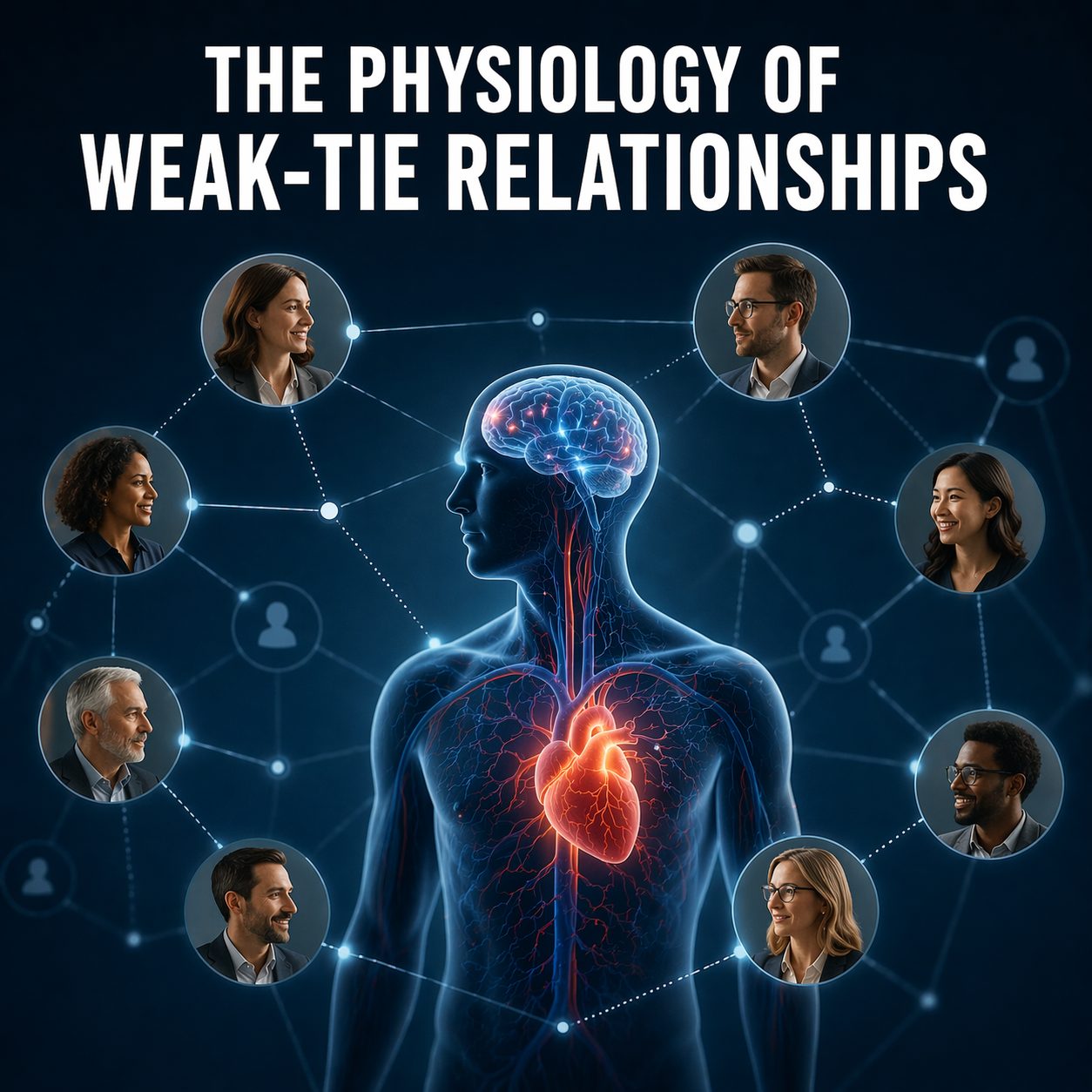
Weak ties rarely offer the same depth as family or close friends. They do widen social reach and reduce the isolation that often develops in senior leadership roles. That broader contact pattern matters because social disconnection is linked to worse health outcomes, including heart disease, stroke, and cognitive decline.
The physiological pathway is direct. Social isolation and loneliness are linked with higher stress signaling, including hypothalamic-pituitary-adrenal axis strain and increased sympathetic nervous system activity. These pathways can raise cortisol load and increase wear on cardiovascular and immune systems over time.
For a high-performing professional, this means an acquaintance network can help regulate chronic social stress. The effect is not that every weak tie protects health on its own. The effect is that a well-shaped network lowers the chance of social compression, isolation, and ongoing threat signaling.
Acquaintance Structure and Cortisol Load

Cortisol is one of the most useful markers in this discussion because it links social stress to performance decline. When a professional feels socially cut off, uncertainty rises and stress appraisal often worsens. That can push baseline arousal higher across work, travel, and decision-heavy environments.
The Surgeon General’s advisory notes that stronger social connection can improve stress responses and reduce the negative effects of stress. This does not require emotional intimacy from every person in a network. It does suggest that regular, low-friction social contact can ease strain on stress systems that might otherwise stay active for too long.
An acquaintance therefore has biological value when the relationship lowers social friction, expands perceived support, or prevents isolation during demanding work cycles. For executives, that can mean better emotional regulation and lower cumulative stress burden. That is more useful than a vague sense of sociability.
Cardiovascular Risk Is Not Separate From Social Design
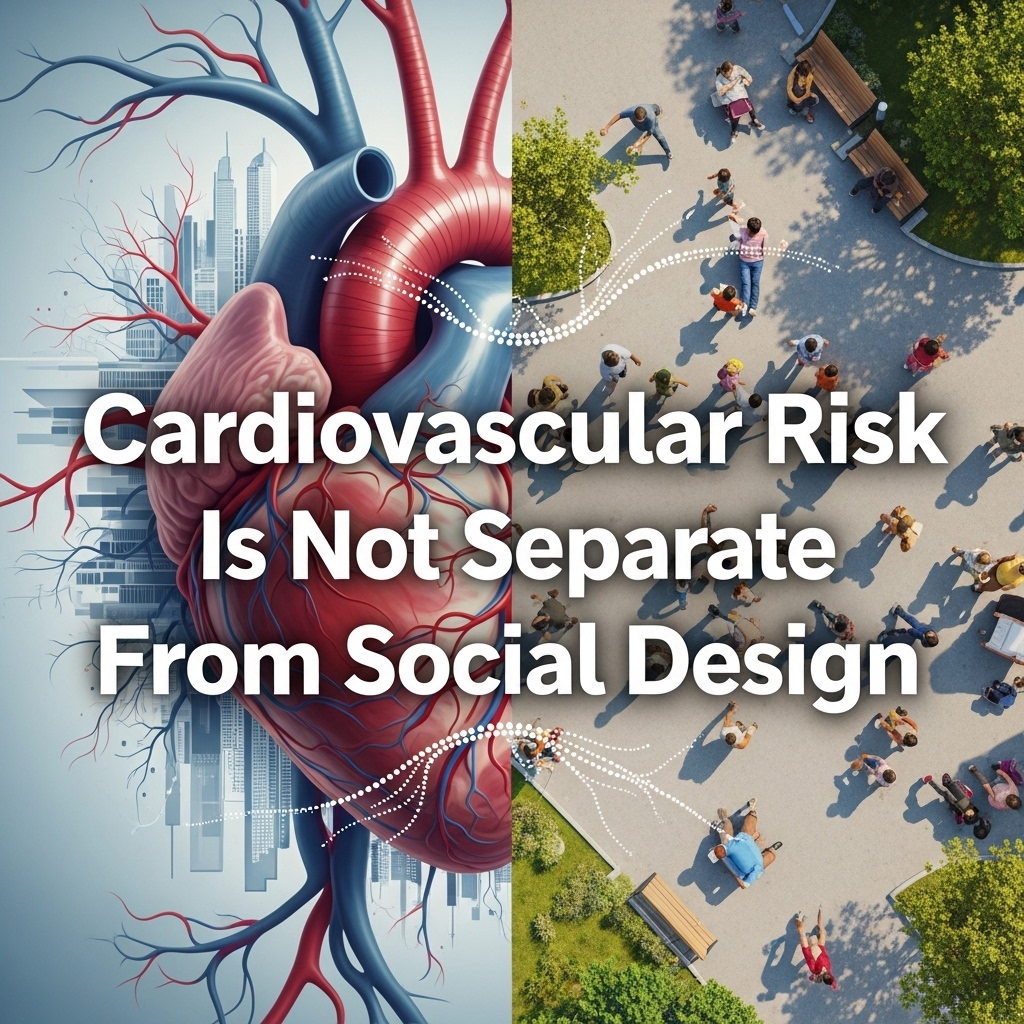
Cardiovascular health is one of the clearest areas where social connection shows measurable value. A review in Loneliness, Social Isolation, and Cardiovascular Health found strong evidence that loneliness and isolation raise the risk of illness and death in cardiovascular disease.
Related work has also linked social isolation with inflammatory burden and coronary risk. A study on social isolation, C-reactive protein, and coronary heart disease mortality found links between isolation, CRP, and long-term coronary outcomes in adults over 40. That makes social structure relevant to inflammatory and vascular aging, not just emotional state.
In practical terms, an acquaintance network may support cardiovascular resilience when it reduces chronic isolation and keeps people engaged with the outside world. The mechanism is likely indirect, but the health signal is strong. Social disconnection now looks much closer to a real risk variable than a lifestyle footnote.
Inflammation, Social Behavior, and Biological Strain
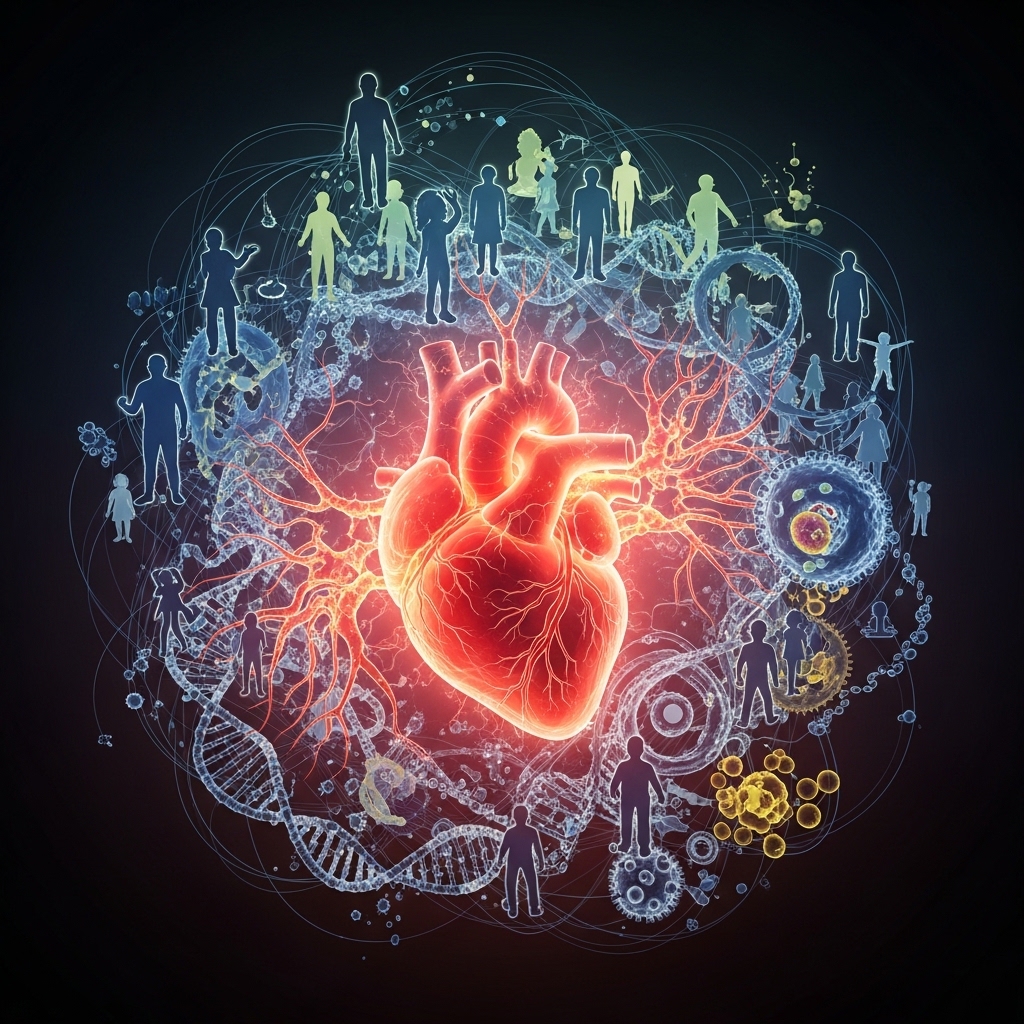
Inflammation is one of the most useful bridges between relationship quality and biological age. Research on the co-regulation of inflammation and social behavior shows that inflammatory signaling and social behavior interact closely, especially under threat, withdrawal, and vulnerability.
This matters because repeated social stress can raise proinflammatory activity. Higher inflammatory states can also change how people read social contact. That creates a loop in which strained social conditions worsen biological burden, and biological burden makes healthy interaction less likely.
A stable acquaintance network may interrupt that loop by preserving a baseline sense of connection without the demands that often come with high-intensity relationships. For high-performing adults, this can reduce the background conditions that let inflammatory load build across already stressful years.
Cognitive Performance Benefits From Broader Social Exposure
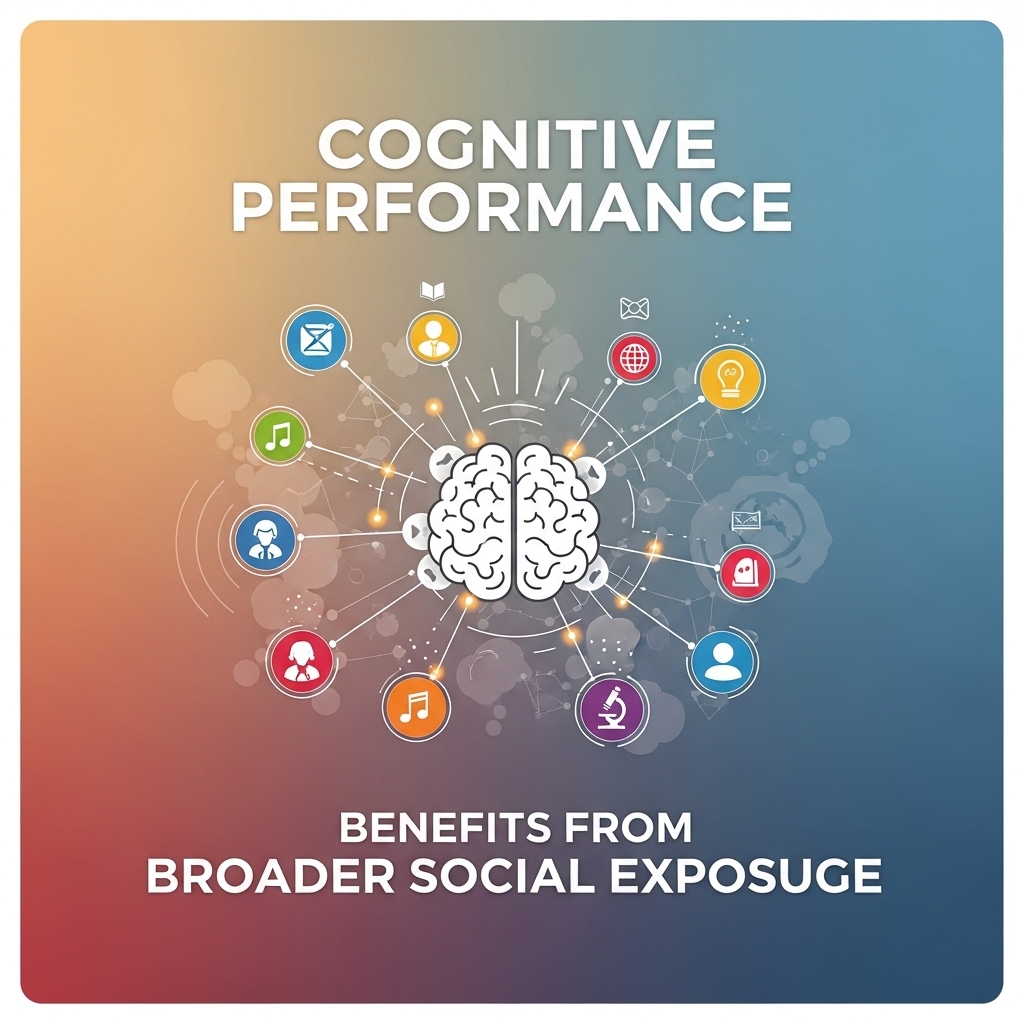
Executives and founders often assume that cognitive performance depends mainly on sleep, training, and work discipline. Social structure also matters because isolation reduces stimulation, narrows perspective, and increases repetitive thinking under pressure. The National Institute on Aging notes that loneliness and social isolation are linked with cognitive decline and other serious health risks.
An acquaintance network adds something that close relationships do not always provide: novelty. Weak ties expose professionals to unfamiliar views, new information, and a wider range of feedback signals. That exposure can support cognitive flexibility, which matters for people whose roles depend on complex judgment rather than routine execution.
The value here is not social volume for its own sake. It is cognitive diversification through recurring low-intensity contact, which may reduce mental rigidity and preserve adaptability during long leadership cycles. In performance terms, that makes acquaintance structure part of a wider cognitive resilience framework.
READ ALSO: Navigating Relationship Challenges: Mindful Approaches
Sleep Quality and the Buffering Effect of Social Connection
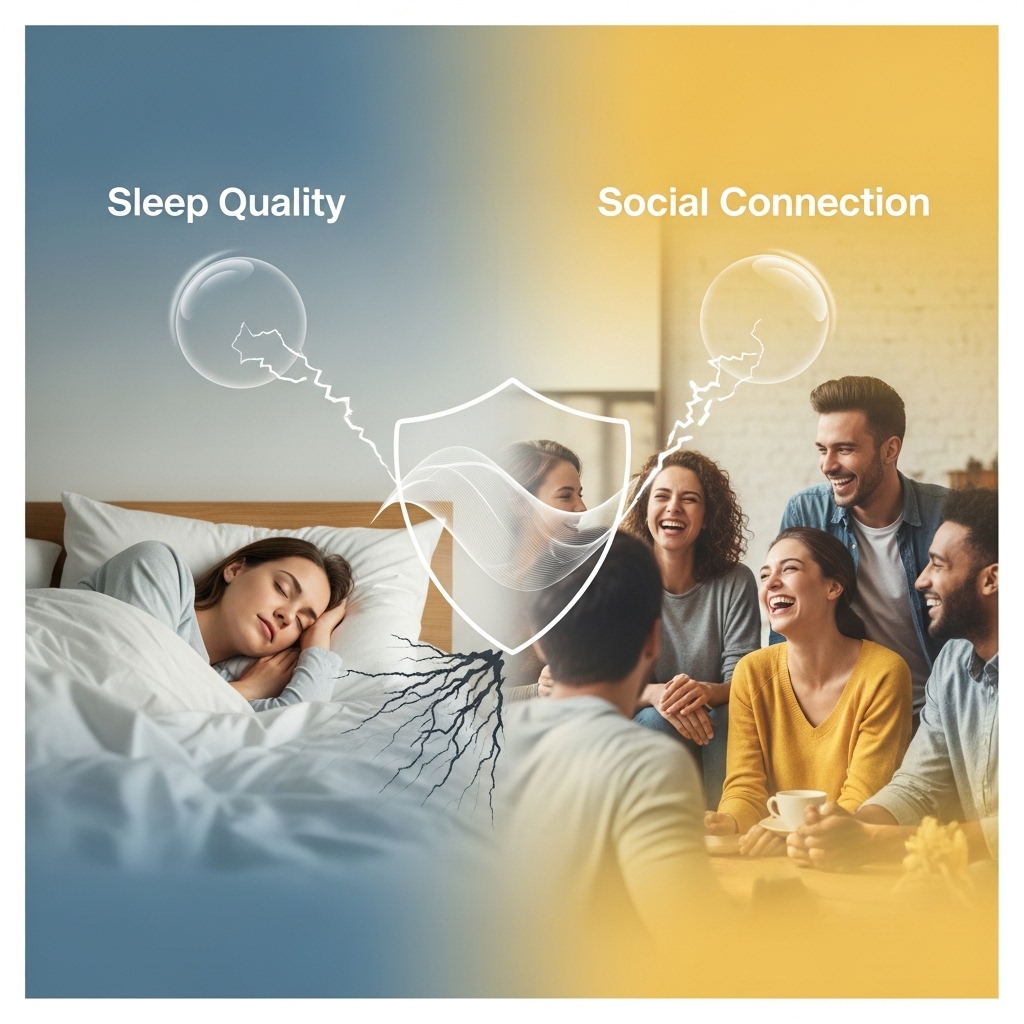
Sleep is sensitive to unresolved stress, especially stress linked to threat, uncertainty, and emotional overactivation. When social isolation becomes chronic, those conditions become more likely. The Surgeon General’s advisory identifies poorer sleep as one of the downstream effects of loneliness and social disconnection.
A broad acquaintance network may help by lowering the sense of social scarcity that intensifies stress at night. Regular low-stakes interaction can make professional life feel less compressed. That may reduce rumination and support steadier recovery patterns. The mechanism is indirect, but the stress-sleep link is well recognized.
For high-performing adults, the implication is straightforward. Relationship design affects recovery design, and weak ties may help preserve sleep quality when work intensity would otherwise narrow life into a small number of high-pressure exchanges.
READ ALSO: Emotional Intimacy in Relationships: Building Deeper Bonds
When an Acquaintance Network Becomes a Liability

Not all weak-tie networks protect health. An acquaintance structure can become harmful when it creates constant social obligation, fragmented attention, or a high volume of shallow interactions with no stabilizing value. At that point, the network adds allostatic load rather than easing it.
This distinction matters in executive settings where people often confuse networking with connection. High exposure to transactional social contact can raise performative pressure, reduce real recovery, and amplify the feeling of being visible without being supported. That pattern may worsen stress physiology rather than buffer it.
The relevant variable is not the number of contacts alone. It is whether the network lowers isolation, widens support, and reduces threat perception, or whether it simply multiplies social labor. An acquaintance only becomes health-supportive when it improves the structure of connection rather than the volume of obligation.
Biological Age and the Long Arc of Social Disconnection

Biological age rises faster when chronic strain remains unresolved across years. Social disconnection contributes to that process through stress signaling, inflammation, cardiovascular burden, and poorer recovery. Harvard T.H. Chan School of Public Health has summarized the evidence by noting that stronger social connection is linked with longer and healthier lives.
Loneliness and isolation have also been linked with a higher risk of premature death. Harvard’s public health reporting cites risk estimates that place social disconnection closer to established health risks than many professionals assume. That makes relationship structure more clinically relevant than it first appears.
That does not mean an acquaintance network replaces close attachment. It means weak ties can serve as part of a protective architecture against biological strain, especially in careers where authority, travel, and privacy often shrink the range of ordinary human contact.
READ ALSO: Platonic Relationships: A Guide to Strong Friendships
Evidence-Based Options for High-Performing Professionals
The evidence supports a more deliberate view of relationship structure. For high-performing professionals, that can include reviewing whether an acquaintance network provides regular low-friction contact, broader perspective, and reduced isolation, or whether it mainly adds performative interaction and attention fragmentation. That distinction has implications for stress physiology, cardiovascular burden, sleep, and cognitive resilience.
A second option is to treat social architecture as a measurable input rather than a personal afterthought. That may involve tracking periods of isolation during travel, examining whether work routines compress social exposure into purely transactional exchanges, and assessing whether broader relationship patterns align with lower stress and better recovery rather than constant activation.
Within that framework, an acquaintance network becomes part of performance medicine rather than informal networking culture. The most evidence-aligned approach is not maximal social expansion. It is a relationship structure that reduces isolation, supports cognitive range, and protects the physiological systems most tied to long-term healthspan and executive function.
UP NEXT: Building Trust in Relationships: Simple Steps That Work
How This Affects Your Biological Age
A well-structured acquaintance network can reduce social isolation, a chronic stressor linked with poorer stress responses, higher cortisol, greater inflammation, and higher risks of cardiovascular disease, cognitive decline, and premature death, all of which increase biological strain over time. WholeLiving's Biological Age Estimation Model incorporates this factor directly — your assessment takes under five minutes.
Ready to understand how these factors are influencing your biological age right now? [Take the Biological Age Assessment →]