
Walk into almost any Singapore gym and you will hear the same prescription: short, intense, efficient. High-intensity interval training became the dominant fitness recommendation for time-poor working adults because the logic appeared straightforward — more cardiovascular stress per minute should mean more adaptation per minute, which should mean a longer, healthier life. The first two steps of that reasoning are not wrong. The third step is where the data diverge from the belief.
The large cohort studies do not show that HIIT outlives Zone 2 training, or vice versa. They show that VO2 max — the absolute ceiling of your aerobic engine — is the variable that predicts mortality, and that VO2 max can be elevated by both modalities, provided the programme is one you actually sustain across years. The intensity debate is a distraction from the number that matters.
The Case for HIIT: Why the Intensity-First Belief Took Hold
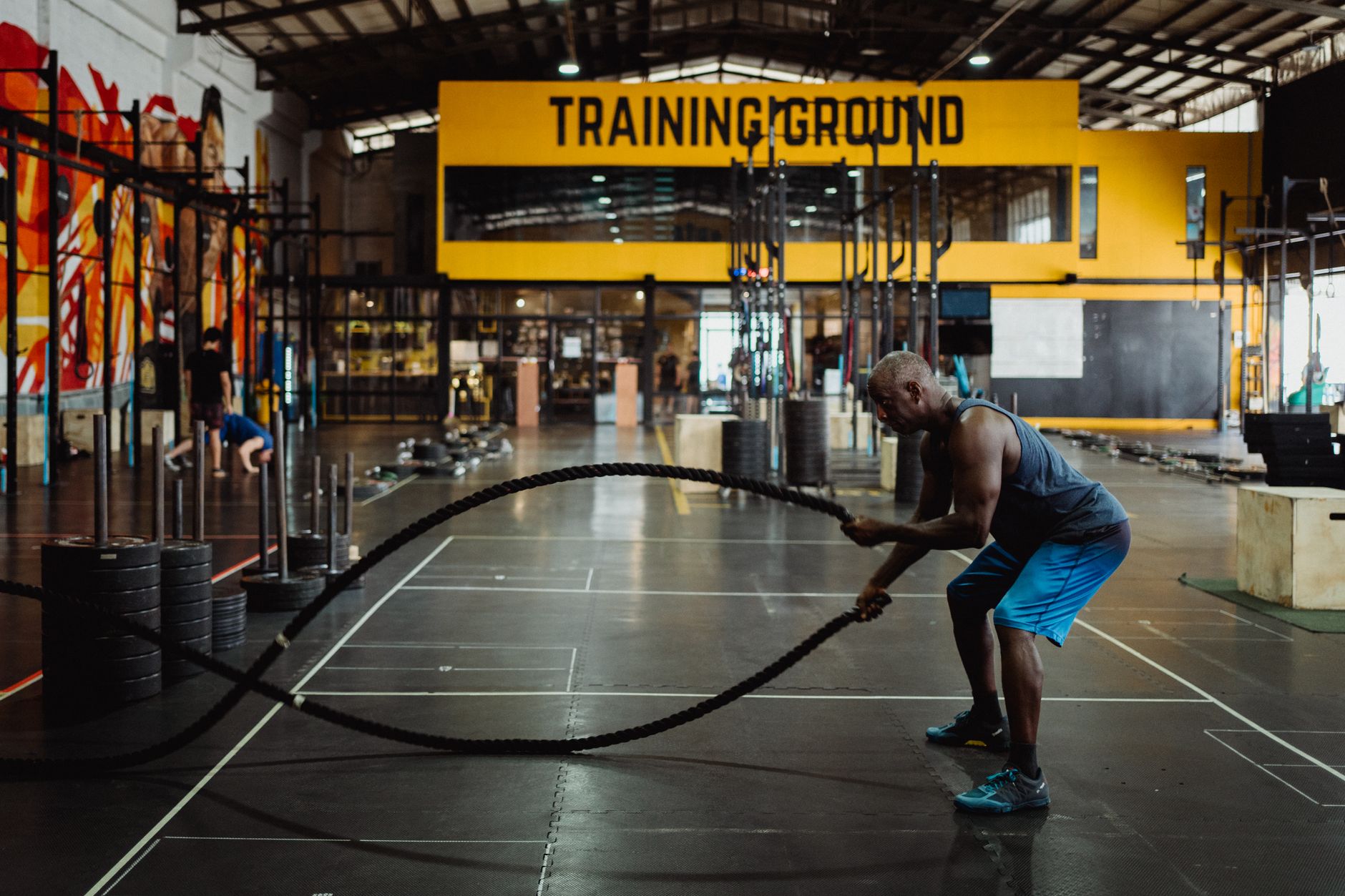
The HIIT argument rests on a genuine finding. Across multiple randomised controlled trials, high-intensity intervals produce VO2 max improvements comparable to longer moderate-intensity sessions in roughly half the total training time. The research confirms this efficiency advantage — when two groups train for the same session duration, the high-intensity group typically records greater aerobic gains. For a working adult whose available window is forty minutes, that appears to settle the matter.
It does not, because the metric that drives longevity is not rate of VO2 max gain — it is VO2 max achieved and sustained across years and decades. Time-to-gain and long-term trajectory are different questions, and most of the popularity of HIIT rests on conflating them. The efficiency advantage disappears when the question shifts from “which session produces more adaptation per hour?” to “which programme produces the most VO2 max elevation across the next twelve months for this specific person, given their injury history, recovery capacity, and schedule?”
The Variable That Actually Drives Longevity: VO2 Max, Not Training Label
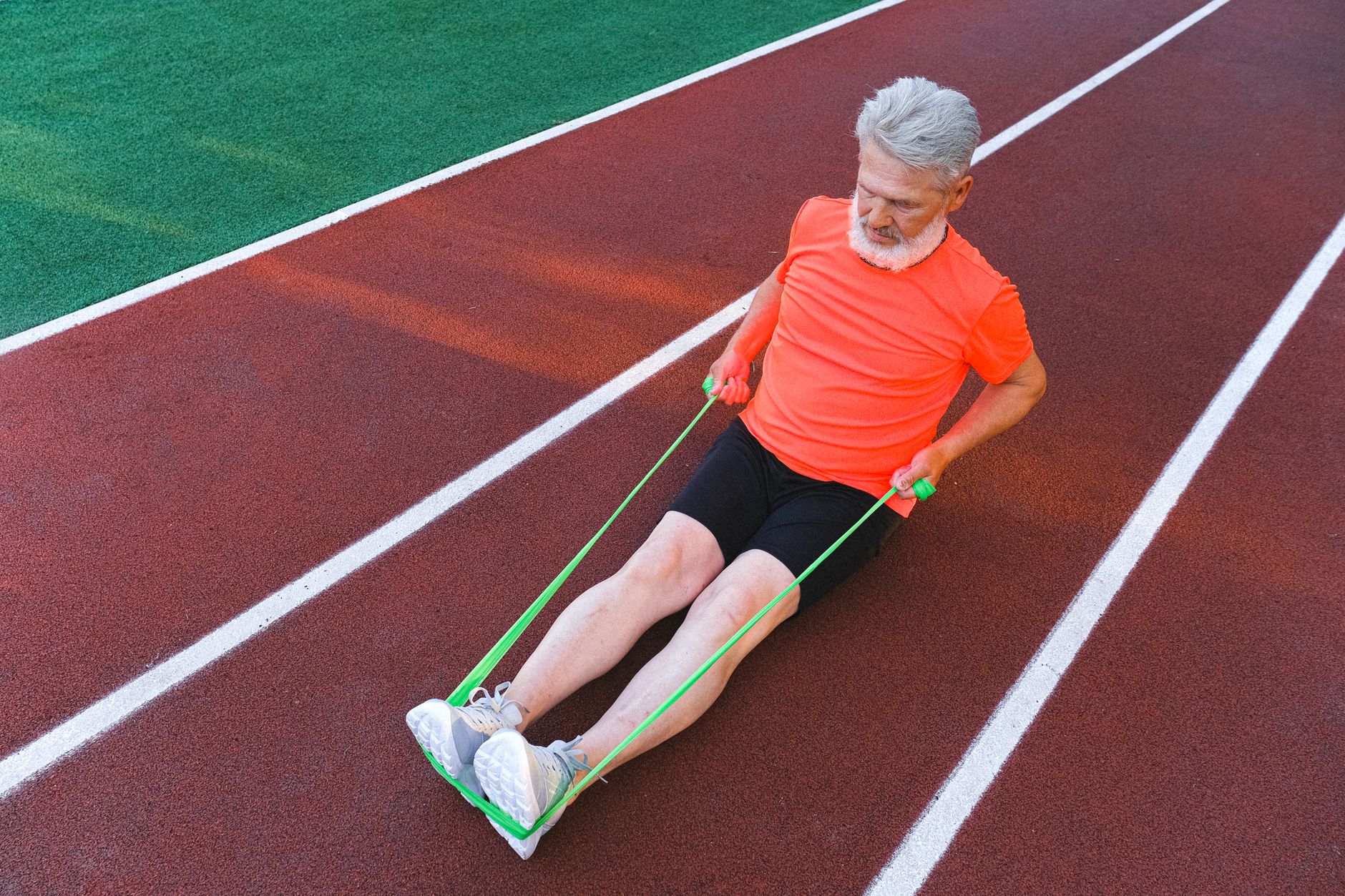
VO2 max — maximal oxygen uptake, measured in millilitres of oxygen consumed per kilogram of bodyweight per minute — is among the most powerful exercise-derived predictors of all-cause mortality identified in the clinical literature. A 2018 Cleveland Clinic study of 122,007 patients published in JAMA Network Open found that cardiorespiratory fitness category predicted long-term mortality more strongly than most established cardiovascular risk factors, with the mortality gradient across fitness categories exceeding the benefit associated with treatment of hypertension in comparable populations (Mandsager et al., JAMA Network Open, 2018).
Moving from the “low” fitness category to “above average” in that cohort corresponded to a 35% reduction in all-cause mortality risk over a median follow-up of 8.4 years. Reaching the “elite” fitness category — roughly the top 2–3% of subjects by age and sex on a graded treadmill test — was associated with a hazard ratio for all-cause mortality of approximately 0.20 relative to the low category. The study did not prescribe a training modality. It measured a number: VO2 max. Zone 2 practitioners and HIIT practitioners appeared in every fitness category. Modality was incidental; aerobic capacity was the variable with mortality attached to it.
VO2 Max Ranges: Standard Clinical Benchmarks vs the Longevity-Optimised Target

Here is where the standard approach fails most people. Clinical fitness classifications flag values that indicate danger or acceptability. The Mandsager mortality data point to a higher threshold where the protective benefit actually concentrates — and the gap between the two targets is substantial.
| Category | Men aged 40–49 (mL/kg/min) | Women aged 40–49 (mL/kg/min) |
|---|---|---|
| Standard clinical “average” (AHA/ACSM fitness classification) | 36.5–44.9 | 29.5–36.7 |
| Longevity-optimised target (based on Mandsager et al., JAMA Network Open, 2018 mortality curve) | ≥50 | ≥43 |
| The gap | ~5–14 mL/kg/min | ~6–13 mL/kg/min |
A person sitting at the upper end of the clinical “average” band looks reassuring on a standard health screen but remains meaningfully below the VO2 max level where the mortality protection concentrates. Closing that gap — not selecting the correct training label — is the actual work. For most people starting from average fitness, that gap represents roughly 12 to 24 months of consistent structured training.
What the Evidence Confirms: Three Datasets on Intensity, Volume, and Mortality

The Cleveland Clinic cohort (Mandsager et al., JAMA Network Open, 2018). In this 122,007-patient study, cardiorespiratory fitness showed a steep inverse dose-response with all-cause mortality. The research confirms that the mortality reduction associated with reaching elite fitness was greater in magnitude than the benefit of statin therapy in comparable populations — making VO2 max elevation one of the highest-yield longevity interventions available without a prescription. No single training modality was associated with superior outcomes; fitness category was.
The Generation 100 trial (Stensvold et al., BMJ, 2020). This five-year Norwegian randomised controlled trial assigned 1,567 older adults to twice-weekly high-intensity intervals, twice-weekly moderate continuous training, or physical activity advice alone. Both structured exercise arms achieved comparable VO2 max improvements over the trial period. All-cause mortality did not differ significantly between the high-intensity and moderate-exercise groups. The research suggests that when training volume is matched and participants complete their prescribed sessions, intensity modality produces no measurable mortality advantage — VO2 max gained is VO2 max gained.
The HUNT3 Fitness Study (Nes et al., Medicine & Science in Sports & Exercise, 2011). The population-level VO2 max reference values established from the Health Study of Nord-Trøndelag (HUNT3, one of the largest population fitness cohorts conducted) showed a consistent gradient: individuals in the upper fitness quintiles carried substantially lower cardiovascular and metabolic risk profiles than those in the lower quintiles, independent of the training approach used to reach their fitness level. The research confirms that the target number predicts risk; the path used to reach it is secondary.
What the HIIT-First Model Misses: Injury Rates, Dropout, and the Volume Ceiling

HIIT produces VO2 max gains when sessions are completed at the intended intensity. The practical failure mode is that musculoskeletal load and training intensity co-scale. High-intensity intervals leave narrower recovery margins than Zone 2 sessions — less margin for disrupted sleep, accumulated weekly stress, or existing joint load. When that margin is insufficient, session quality degrades toward moderate intensity before the interval completes, which undermines the efficiency argument that made HIIT attractive in the first place.
There is also a hard volume ceiling. Zone 2 training — sustained at roughly 60–70% of maximum heart rate, a pace at which full sentences remain comfortable — can be accumulated for four to six hours per week without significant injury risk for most trained adults. High-intensity work at 85–95% of VO2 max cannot be sustained at that weekly volume. A programme built entirely around HIIT is constrained to shorter total weekly durations, which limits the cumulative aerobic training stimulus across a month or a year. The research suggests that this ceiling is particularly consequential for de-conditioned individuals: Milanović et al., in a systematic review of controlled trials comparing HIIT with moderate continuous training (Sports Medicine, 2015), found that the VO2 max efficiency advantage of HIIT over matched-duration moderate training was most pronounced in already-trained subjects. For those starting from low fitness, moderate-intensity training produces comparable early gains — without the recovery cost.
What to Do Instead: Building Your Protocol Around VO2 Max Elevation

The practical reframe is this: stop asking which modality is better and start asking which combination of training will produce the most VO2 max elevation across the next twelve months, given your current fitness level, injury history, schedule, and recovery capacity.
For most people currently below the longevity-optimised VO2 max threshold, this points to a structured three-part approach:
- Three to four Zone 2 sessions per week — 30 to 60 minutes each at conversational pace — as the aerobic base. This is the training volume that drives mitochondrial density (the concentration of energy-producing structures within muscle cells), which is the cellular mechanism underlying sustained VO2 max gains.
- One high-intensity session per week once a Zone 2 base is established over eight to twelve weeks, providing the ceiling-raising stimulus that pushes VO2 max upward. This session should begin only when you are fully recovered; starting it under-recovered produces a degraded stimulus at moderate intensity anyway.
- VO2 max assessment every three to six months to verify that training is producing measurable progress. In Singapore, sub-maximal VO2 max estimation is available at major sports centres and sports medicine clinics; a graded exercise test conducted with a trained clinician provides the most accurate reading. Track the number — not the workout category — and adjust your protocol accordingly. Consult your clinician before beginning any high-intensity testing if you have a pre-existing cardiovascular condition.
The 30-Day Starting Point
Now you know what the standard approach misses. The guide shows you what to do instead, starting tomorrow. The 30-Day Biohacking Starter Guide gives you a day-by-day protocol built specifically for Singapore — including how to structure Zone 2 sessions in tropical heat and humidity where heart-rate zones shift relative to temperate-climate benchmarks, how to slot one weekly high-intensity session without compromising recovery, and when to retest your VO2 max to confirm the approach is working.
Medical disclaimer: This article is for educational purposes only and does not constitute medical advice, diagnosis, or treatment. The information presented reflects published research and is intended to inform, not replace, a conversation with a qualified clinician. VO2 max testing involving maximal exertion should be conducted under medical supervision if you have a pre-existing cardiovascular or musculoskeletal condition. Consult your clinician before beginning or modifying any exercise programme.