Your heart rate monitor reads 158 BPM. You are moving at what feels like a comfortable jog — slower than you'd run indoors, certainly slower than your training plan suggests. According to every Zone 2 calculator you've used, you passed your Zone 2 ceiling three minutes ago. So you slow to a walk. HR drops to 138. You pick up the pace again, and the same thing happens. Training in Zone 2 outdoors in Singapore starts to feel structurally impossible.
It is not impossible — but the standard Zone 2 heart rate targets, calibrated for temperate climates, require adjustment before they work here. The Health Promotion Board (HPB) recommends at least 150 minutes of moderate-intensity aerobic activity per week, a threshold Zone 2 training is specifically designed to satisfy. The problem is that Singapore's combination of 30–32°C ambient temperature and 75–85% relative humidity adds a cardiovascular load that standard HR zones do not account for, pushing heart rate readings above Zone 2 boundaries even when metabolic intensity remains squarely in Zone 2 territory.
Understanding why this happens — and how to correct for it — requires a look at the thermoregulatory mechanism driving the discrepancy.
What Zone 2 Training Is and Why It Matters for Longevity Adaptations
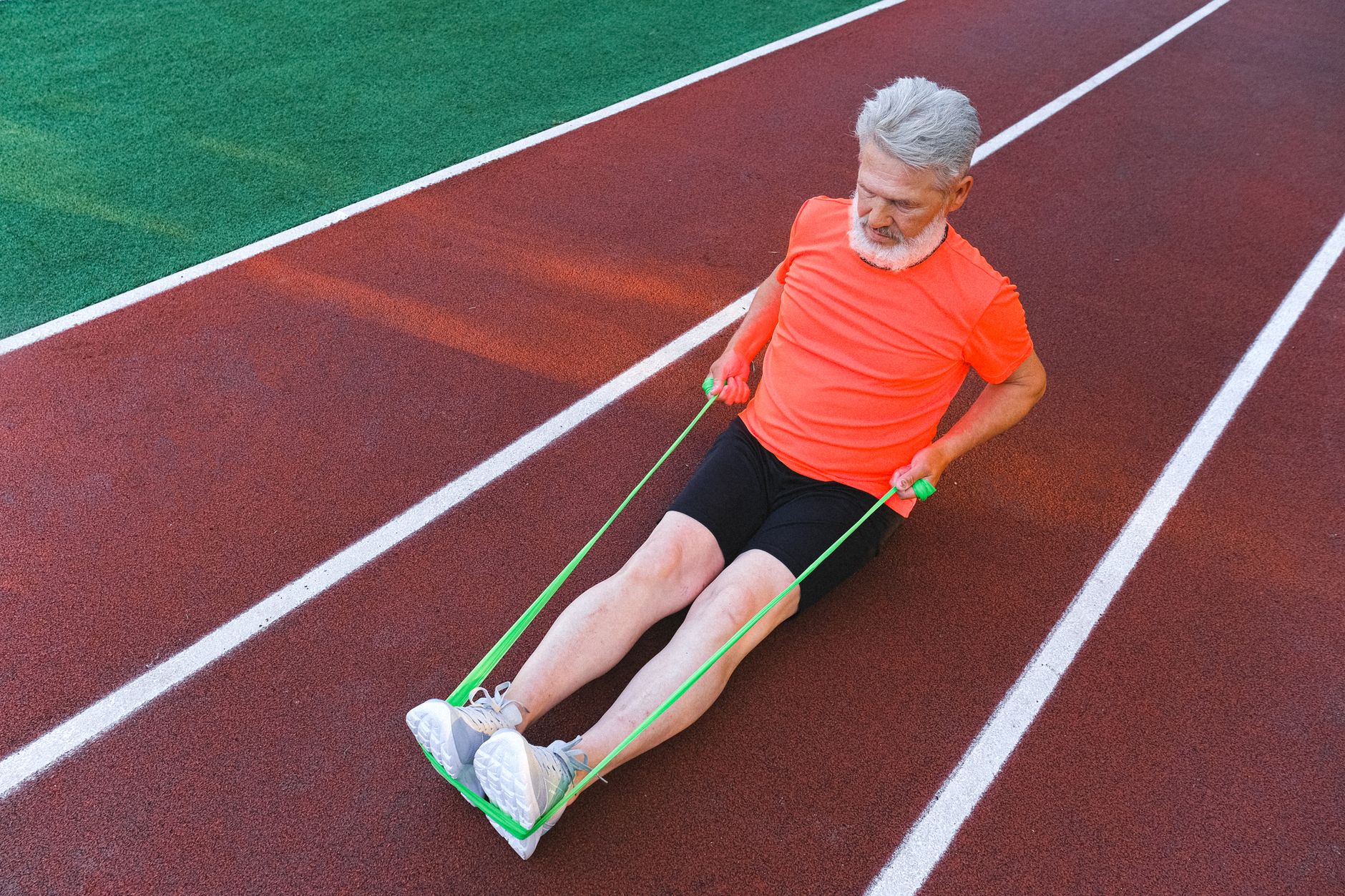
Zone 2 is not simply “easy running.” It is the highest intensity at which your body relies predominantly on fat oxidation and aerobic metabolism, without significant lactate accumulation — a state exercise physiologists define as below the first lactate threshold (LT1). The practical marker: you can speak in complete sentences, but you cannot comfortably sing.
The longevity case for Zone 2 training rests on mitochondrial adaptations. The research confirms that sustained low-intensity aerobic training triggers mitochondrial biogenesis — the growth of new mitochondria in skeletal muscle cells — via the PGC-1α (peroxisome proliferator-activated receptor gamma coactivator 1-alpha) signalling pathway. Research published in Cell Metabolism has documented that structured endurance training produces measurable increases in mitochondrial content and respiratory capacity in skeletal muscle, with effects observed across both younger and older adults. These mitochondrial adaptations fall off sharply if training intensity is miscalibrated: too low produces inadequate stimulus; too high shifts the metabolic burden to anaerobic pathways and defeats the purpose.
Beyond mitochondria, consistent Zone 2 training improves cardiac stroke volume, lowers resting heart rate, and improves insulin sensitivity — outcomes that appear repeatedly in JAMA's cardiovascular epidemiology literature as markers of reduced cardiometabolic risk. AHA physical activity guidance links higher aerobic capacity with meaningfully lower all-cause mortality across large prospective cohort datasets.
The point is not academic: you cannot reliably capture these adaptations if your training intensity is systematically miscalibrated. In Singapore, outdoors, it often is.
The Thermoregulatory Mechanism: How Heat and Humidity Drive Cardiac Drift
When you exercise in heat, your body must simultaneously supply working muscles with oxygenated blood and dissipate excess core heat. It does both by redirecting blood toward the periphery — specifically by dilating cutaneous (skin) blood vessels to maximise heat dissipation through radiation and convection.
This cutaneous vasodilation creates a circulatory competition. More blood pools near the skin surface; less returns to the heart via venous return. With less blood filling the ventricles each cycle, stroke volume — the volume of blood ejected per heartbeat — falls. The heart compensates by increasing rate to maintain cardiac output. You sustain the same work output at the cost of a higher heart rate. This is cardiovascular drift, and the AHA documents it as a predictable, well-characterised physiological response to sustained exercise in hot environments.
Humidity compounds the effect substantially. Sweat evaporation is the body's primary cooling mechanism; in air already saturated with moisture, evaporation slows or stops entirely. Singapore's relative humidity routinely exceeds 80% during morning and evening hours. When sweat cannot evaporate, core temperature rises faster, thermoregulatory demand on the cardiovascular system intensifies, and cardiac drift accelerates. A 45-minute run in 32°C at 85% relative humidity produces meaningfully greater cardiovascular strain than the same run in 22°C at 40% humidity — even at identical pace and perceived effort.
Dehydration extends the effect further. As plasma volume falls with sweat loss — a process that becomes measurable at fluid deficits as small as 2% of bodyweight, a threshold documented in NIH-funded heat physiology research — stroke volume drops further and heart rate rises to compensate. In Singapore's climate, that 2% deficit can accumulate within 30 minutes of moderate outdoor effort without adequate pre-hydration.
The net result: in Singapore conditions, your heart rate may read 10–20 BPM above what it would register at the same metabolic intensity in a temperate, air-conditioned setting. That elevation is not evidence of harder effort. It is thermoregulation doing its job — at the cost of your heart rate data.
Standard Zone 2 Ceiling vs Singapore-Adjusted Zone 2 Ceiling: The Numbers Side by Side

The table below compares standard temperate-calibrated Zone 2 HR targets against a Singapore-adjusted estimate for the same individual: a 38-year-old with a resting HR of 58 BPM. The Karvonen (heart rate reserve) formula is used rather than the simpler 220-minus-age approach, as it accounts for fitness level more accurately.
| Measure | Standard (temperate) Zone 2 | Singapore-adjusted Zone 2 |
|---|---|---|
| Max HR estimate (220 − 38) | 182 BPM | 182 BPM |
| Resting HR | 58 BPM | 58 BPM |
| Heart Rate Reserve (HRR) | 124 BPM | 124 BPM |
| Zone 2 metabolic target (60–70% HRR + resting HR) | 132–145 BPM | 132–145 BPM (unchanged) |
| Expected monitor reading at Zone 2 effort | 132–145 BPM | 142–162 BPM (cardiac drift elevated) |
| Effective outdoor training ceiling | 145 BPM | ~155–160 BPM (effort-calibrated) |
The gap — roughly 10–15 BPM at the Zone 2 ceiling — is the point. If you train outdoors in Singapore and aim to keep your monitor below 145 BPM, you are almost certainly training below Zone 2 metabolically and producing inadequate stimulus for the adaptations described above. If you run at true Zone 2 effort confirmed by the ventilatory talk test, your monitor may read 155–160 BPM and your watch will flag Zone 3. Both miscalibrations have consequences: the first delivers too little stimulus; the second can push you above LT1, accumulate fatigue, and compromise recovery.
The Singapore-adjusted ceiling is not a fixed offset applied uniformly to every session. It is a starting estimate that requires individual field calibration, because the drift magnitude varies with ambient temperature, humidity, your fitness level, acclimatisation state, and hydration.
How to Field-Calibrate Your Zone 2 Threshold in Singapore Conditions
Field calibration means establishing your actual Zone 2 ceiling under the conditions in which you train, using ventilatory markers as the primary reference rather than formula-derived HR targets. HR becomes a secondary confirmatory signal, not the control variable.
Step 1 — Establish your indoor baseline first. Run on a treadmill in an air-conditioned space at a pace that clearly satisfies the talk test: you can speak in complete sentences without pausing to breathe, but maintaining conversation requires some attention. After at least 15 minutes of warm-up, sustain this pace for 10 minutes and note the HR at the end of that window. This is your temperate-condition Zone 2 ceiling — your reference point.
Step 2 — Perform the same protocol outdoors at your usual training time. Run at the same ventilatory effort — sentences possible, not effortless — for the same 10-minute sustained window after warm-up. Note the HR. The difference between your indoor and outdoor readings at equivalent ventilatory effort is your personal cardiac drift coefficient for those conditions. Repeat across two or three separate sessions and average the result.
Step 3 — Set your outdoor Zone 2 ceiling as your indoor ceiling plus that coefficient. If your indoor Zone 2 ceiling is 143 BPM and outdoor testing at equivalent ventilatory effort consistently reads 155–158 BPM, your outdoor Zone 2 ceiling for Singapore conditions is approximately 155–158 BPM. Continue to use the talk test in real time as the binding constraint — if you cannot complete a sentence, you have exceeded Zone 2 metabolically, regardless of what your monitor reads.
Step 4 — Recalibrate as your fitness changes. As cardiovascular fitness improves, stroke volume at rest and during exercise increases, and the same cardiac drift may produce a smaller absolute HR elevation. Repeat the comparison protocol every 8–12 weeks, or whenever you notice your perceived effort and HR reading are drifting apart again.
This method requires no laboratory equipment and no specialist testing. It is the same ventilatory threshold approach used in clinical exercise testing — the clinical gold standard for Zone 2 boundary identification — adapted for field conditions in Singapore.
Where HPB Physical Activity Guidelines Fit — and What They Leave Out
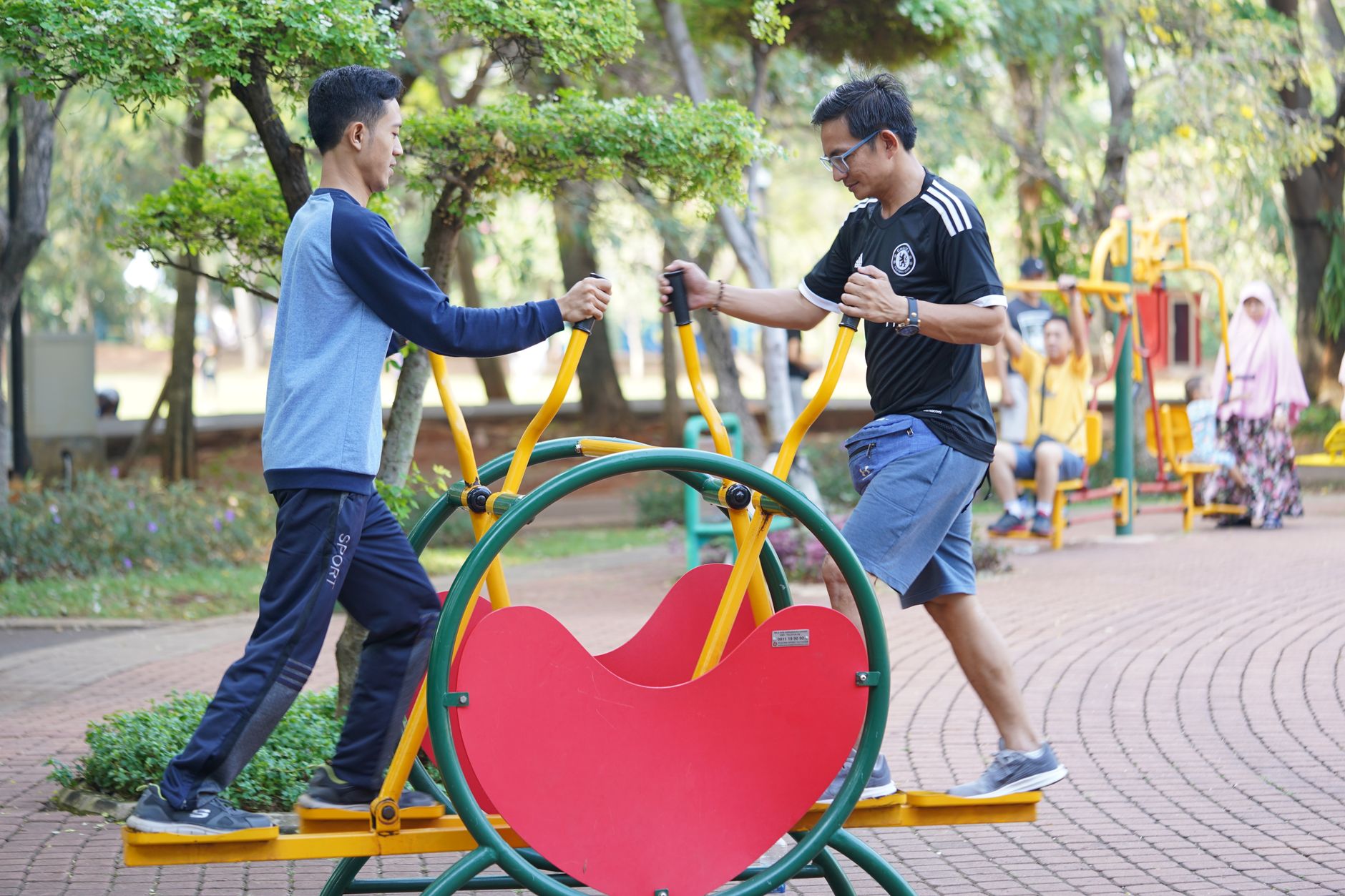
The HPB recommends that adults in Singapore accumulate at least 150 minutes of moderate-intensity aerobic activity per week, or 75 minutes of vigorous-intensity activity, alongside at least two muscle-strengthening sessions weekly. These thresholds align with AHA guidance and are supported by substantial epidemiological data associating adherence with reduced cardiovascular disease incidence.
“Moderate intensity” in HPB's framework is operationalised as activity that raises your heart rate and breathing noticeably — broadly corresponding to 50–70% of maximum HR, or a perceived exertion of 5–6 on a 10-point scale. Zone 2 training sits squarely within this target band by design.
What HPB's guidelines do not address is the intensity calibration problem created by outdoor conditions. A runner achieving genuine moderate-intensity metabolic effort outdoors in Singapore will routinely register HR readings that a standard wearable flags as vigorous intensity. If that runner trusts the device and slows to bring HR into the “moderate” zone, they may fall below the training stimulus that produces the mitochondrial and cardiovascular adaptations the guidelines are designed to generate.
The HPB framework is correct in principle. The calibration gap is a local execution problem it was not built to resolve — and it is the gap this article addresses directly.
Practical Adjustments: Timing, Route Selection, and Monitoring Outdoors in Singapore
Beyond recalibrating your HR ceiling, three operational decisions materially reduce the magnitude of cardiac drift for outdoor Zone 2 training in Singapore.
Timing. Singapore's heat index peaks between 12:00 and 15:00. Ambient temperature is lowest between 06:00 and 07:30, before solar heating accelerates. Relative humidity at dawn often exceeds 85%, but ambient temperature is the dominant driver of cardiovascular drift — the AHA's position on exercise in hot environments identifies temperature as more significant than humidity in isolation. Training before 07:30 consistently produces lower cardiac drift readings at equivalent effort compared with midday or early-evening sessions. The humidity at dawn is tolerable if you pre-hydrate; the midday temperature is not a manageable variable.
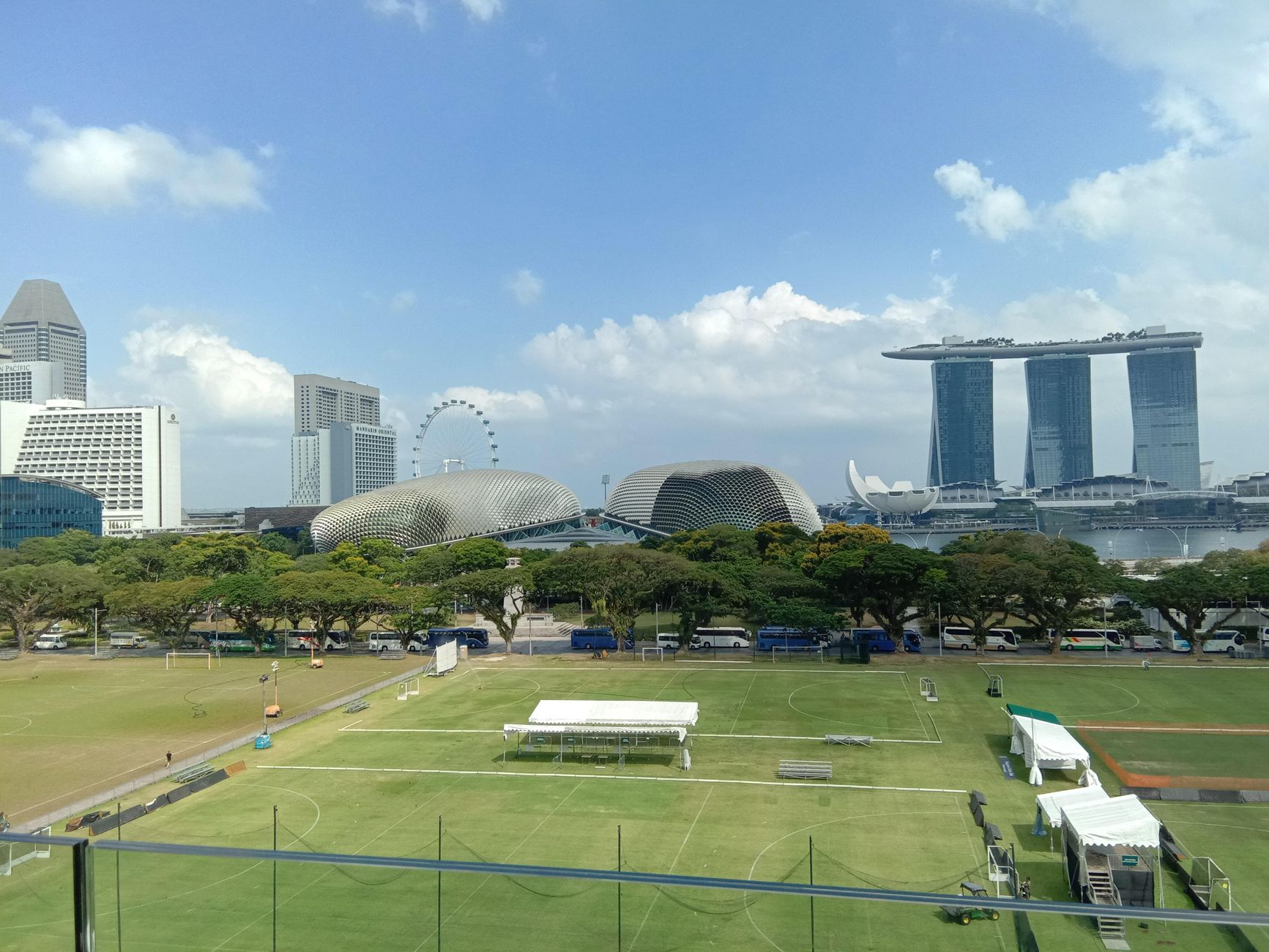
Route selection. Shaded routes — park connectors, tree-lined paths, forest-edge trails — reduce radiant heat load, the thermal energy absorbed from sunlight reflected off exposed concrete and tarmac surfaces. NParks' Park Connector Network provides largely shaded alternatives to road and pavement routes across most residential areas of Singapore. Choosing shade can lower the effective heat stress index by several degrees even at identical ambient temperatures, measurably reducing the cardiovascular demand of a given session.
Hydration protocol. Pre-hydrating — consuming 400–600 ml of fluid in the 60–90 minutes before an outdoor session — helps maintain plasma volume and attenuates the dehydration-driven component of cardiac drift. During sessions exceeding 45 minutes, NIH guidance on exercise in hot environments recommends fluid replacement at approximately 150–250 ml every 15–20 minutes. Electrolyte replacement — sodium in particular — becomes relevant for sessions exceeding 60–90 minutes, as sweat losses in Singapore's climate are high. Consult your clinician for personalised fluid and electrolyte guidance if you have any cardiovascular, renal, or metabolic condition, or if you are on medication that affects fluid regulation.
Real-time monitoring. Ventilatory awareness — maintaining the ability to complete a sentence without pausing — is more reliable than raw HR in heat conditions. Use your calibrated outdoor ceiling as an upper boundary and the talk test as the real-time arbiter. If your outdoor ceiling is 157 BPM and your monitor reads 155 BPM but you cannot complete a sentence, you have already exceeded Zone 2 metabolically. The HR will catch up — the ventilatory test reflects where you are now.
Your Next Step: The 30-Day Biohacking Starter Guide

This article covers one piece of the system. The 30-Day Biohacking Starter Guide covers all of it, with a day-by-day protocol built specifically for Singapore. Download it at wholeliving.com/longevity-guide.
Frequently Asked Questions
Can I do Zone 2 training indoors and get the same adaptations?
Yes — and this is the most straightforward way to avoid the calibration problem entirely. Mitochondrial and cardiovascular adaptations from Zone 2 training depend on metabolic intensity, not environmental conditions. Indoor sessions in air-conditioning allow you to use your standard HR targets accurately. Many Singapore-based athletes run a mix of indoor baseline sessions and outdoor field sessions, applying the calibrated outdoor ceiling only to the latter.
Does heat acclimatisation reduce cardiac drift over time?
The research confirms that repeated heat exposure — typically 10–14 consecutive sessions of moderate exercise in hot conditions — produces measurable plasma volume expansion and improved thermoregulatory efficiency, reducing the HR elevation associated with cardiovascular drift at comparable exercise intensities. This acclimatisation effect is documented in exercise physiology literature. It reduces the magnitude of drift, not the need for calibration. Even acclimatised athletes training outdoors in Singapore's peak-heat conditions will show HR elevations above temperate-climate Zone 2 ceilings. Recalibrate after any acclimatisation period using the field protocol above.
My GPS watch has a heat-adjustment setting. Is that reliable?
Consumer wearable heat adjustments vary substantially by manufacturer and algorithm. Most apply a fixed population-average offset rather than a personalised cardiac drift coefficient derived from your actual physiology and the specific day's conditions. Treat any device-generated adjustment as a rough starting estimate, not a calibrated target. The field calibration protocol above produces a more accurate, individually validated ceiling using your own physiology as the measurement instrument.
What HR do I target running at East Coast Park in the evening?
Apply your calibrated outdoor Zone 2 ceiling and monitor ventilatory cues in real time. Evening sessions at East Coast Park typically involve higher ambient temperatures than early morning, as open paved and tarmac surfaces retain heat from solar gain through the day. Sea breezes may partially offset radiant load. In practice, cardiac drift during an evening East Coast Park session may exceed an equivalent early-morning park connector session by 5–8 BPM at identical metabolic effort. Use the talk test as the real-time binding constraint and your calibrated ceiling as the upper HR boundary — not the other way around.
Is there a working approximation if I cannot run the full calibration protocol right away?
A reasonable starting heuristic: treat your outdoor Zone 2 ceiling as 10 BPM higher than your indoor or formula-derived ceiling, and use the ventilatory talk test as the binding constraint when the two disagree. This approximation is conservative and will over-correct for highly fit or thoroughly acclimatised athletes. The calibration protocol is four steps and requires two or three outdoor sessions to complete — the investment is modest for the precision it provides, and the heuristic should not substitute for it indefinitely.
The content on this page is for educational purposes only and does not constitute medical advice, diagnosis, or treatment. Consult a qualified clinician before starting, modifying, or stopping any exercise programme, particularly if you have a cardiovascular condition, are taking medication that affects heart rate or fluid balance, or are exercising in unfamiliar environmental conditions. WholeLiving is not a clinical service.