Singapore consistently ranks among the world's sleep deprivation victims. The Health Promotion Board (HPB), Singapore's national public health agency, recommends seven to nine hours of sleep per night for working adults. Survey data gathered by HPB and sleep researchers place the national average closer to 6.3 hours — a gap of between 0.7 and 2.7 hours every single night.
That gap is not a lifestyle inconvenience. It produces measurable, compounding losses in working memory, sustained attention, and reaction time — the three cognitive systems that determine how well you reason at work, make decisions under pressure, and retain new information. By Friday afternoon, a Singaporean working a standard five-day week at 6.3 hours per night will have accumulated a cognitive deficit that no amount of kopi-O masks effectively and that a two-day weekend does not fully erase. This article quantifies that deficit, explains the biological mechanism driving it, and presents evidence-tiered strategies calibrated for Singapore's climate, food environment, and healthcare access.
How Sleep Loss Degrades Working Memory, Reaction Time, and Sustained Attention: The Mechanism
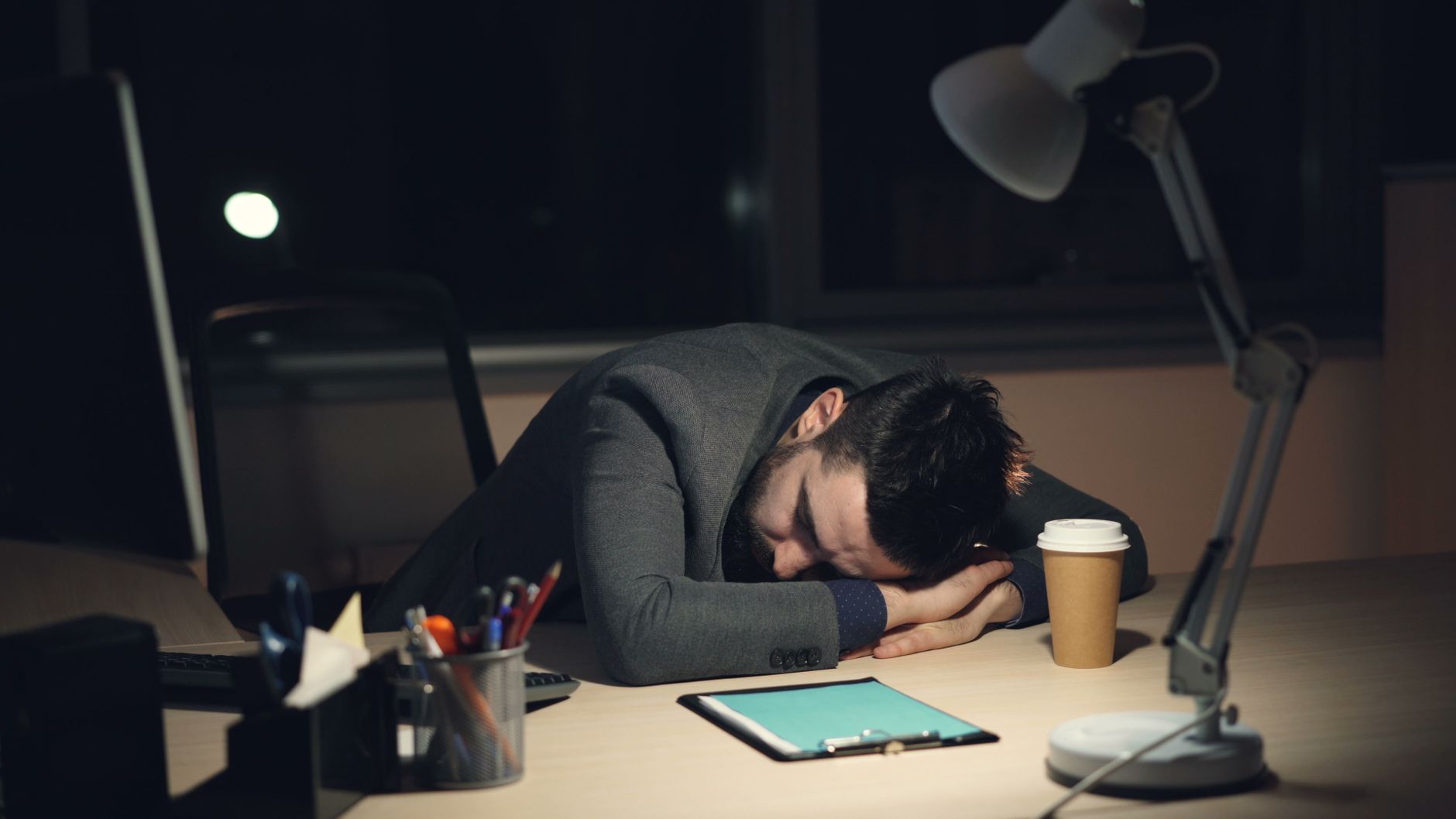
Sleep is not passive rest. During non-rapid eye movement (NREM) slow-wave sleep — the deepest stage — the brain consolidates memories formed during the day and restores the neural resources that underpin executive function (the capacity for planning, reasoning, and inhibition). When slow-wave sleep is compressed by an early alarm or a late bedtime, three systems are disproportionately affected.
Working memory is the mental workspace that holds and manipulates information in real time. It governs how well you follow multi-step reasoning, track a conversation in a fast-moving meeting, or review a complex contract. Its capacity degrades measurably with even a single shortened night.
Sustained attention is measured in research settings using the Psychomotor Vigilance Task (PVT), a validated test that detects lapses in vigilance as reaction-time delays exceeding 500 milliseconds. The research confirms, across multiple controlled experimental studies, that PVT lapse frequency rises steeply and consistently as sleep duration falls below seven hours, and continues rising with each additional night of restriction.
Reaction time — the raw speed of cognitive response — slows in a dose-dependent relationship with lost sleep, and the impairment compounds across consecutive nights. The critical and counterintuitive finding is that individuals' subjective sense of sleepiness stabilises after the first few nights even as their objective performance continues to deteriorate. People do not feel as impaired as they are.
The underlying biochemical mechanism centres on adenosine, a molecule that accumulates in the brain during wakefulness and creates the sensation of sleep pressure. Caffeine works by blocking adenosine receptors — it does not clear the accumulated adenosine itself. A kopi-O (traditional Singaporean black coffee) consumed in the afternoon can suppress the sensation of tiredness while leaving the underlying cognitive deficit fully intact. [INTERNAL LINK NEEDED: same-pillar article on caffeine and cognitive performance]
Sleep Duration: Clinical Standard, HPB Guideline, and Longevity-Optimised Range Side by Side
Three thresholds are in common use, and they are not identical. The gap between them is where this article lives.
| Reference point | Duration | What it means in practice |
|---|---|---|
| Standard clinical minimum | ≥6 hours | The threshold below which clinical impairment is consistently documented. Sleeping at precisely six hours will not prompt a clinician referral but sits at the floor of acceptable function, not a target. |
| HPB guideline for working adults | 7–9 hours | Singapore's national recommendation, aligned with international clinical consensus from the American Academy of Sleep Medicine. Reflects the minimum needed to avoid measurable cognitive and metabolic impairment across the week. |
| Longevity-optimised range | 7.5–9 hours | The range associated in large prospective cohort data — including Framingham Heart Study analyses — with best-preserved cognitive function, lowest inflammatory markers, and most favourable metabolic profiles into later decades. The upper end (8.5–9 hours) carries the largest observed benefit for cognitive ageing. |
The gap that matters: Singapore's 6.3-hour average sits 0.7 hours below the HPB minimum guideline and between 1.2 and 2.7 hours below the longevity-optimised range. Across a standard working year of 48 weeks, five nights per week, that compounds to between 168 and 648 hours of missing sleep annually — before accounting for the cumulative debt effect described in the next section.
How Five Nights at Six Hours Builds a Cognitive Debt That Does Not Resolve Over the Weekend

The most consequential finding in sleep restriction research is not that six hours is suboptimal. It is that the deficit compounds invisibly and does not clear with two nights of extended recovery sleep.
The research confirms, based on Van Dongen et al. (2003) published in Sleep — a landmark controlled experiment tracking participants across 14 days of restricted sleep — that individuals restricted to six hours per night accumulated sustained attention and working memory deficits equivalent to those seen after two full nights without sleep. The critical nuance documented by Van Dongen and colleagues is that subjects' self-reported sleepiness plateaued after the first few nights, even as their objective PVT performance continued to deteriorate. They were, in the researchers' framing, unaware of the true extent of their own impairment. They believed they had adapted. They had not.
Scaled to a five-day Singapore work week at 6.3 hours per night, the degradation trajectory follows a predictable shape:
- Monday: Performance close to baseline if the weekend included adequate sleep opportunity.
- Tuesday–Wednesday: First measurable lapses in sustained attention; subjective tiredness begins to rise, then stabilises — the point at which self-assessment diverges from objective function.
- Thursday–Friday: Reaction time and working memory at their weekly nadir. The performance gap relative to a fully rested individual is, in standardised impairment tests, comparable to mild alcohol intoxication.
The research suggests, based on experimental recovery studies, that two nights of extended sleep — the typical Saturday–Sunday pattern — partially restores reaction time and basic alertness scores, but does not fully restore working memory capacity or the accuracy of self-assessed impairment. The debt carries forward into Monday, compressing the window before the next degradation cycle begins. A short weekend is not sufficient for a long debt. [INTERNAL LINK NEEDED: same-pillar article on recovery and cognitive restoration]
Singapore's Climate, Bedroom Temperature, and the Sleep Hours That Get Displaced
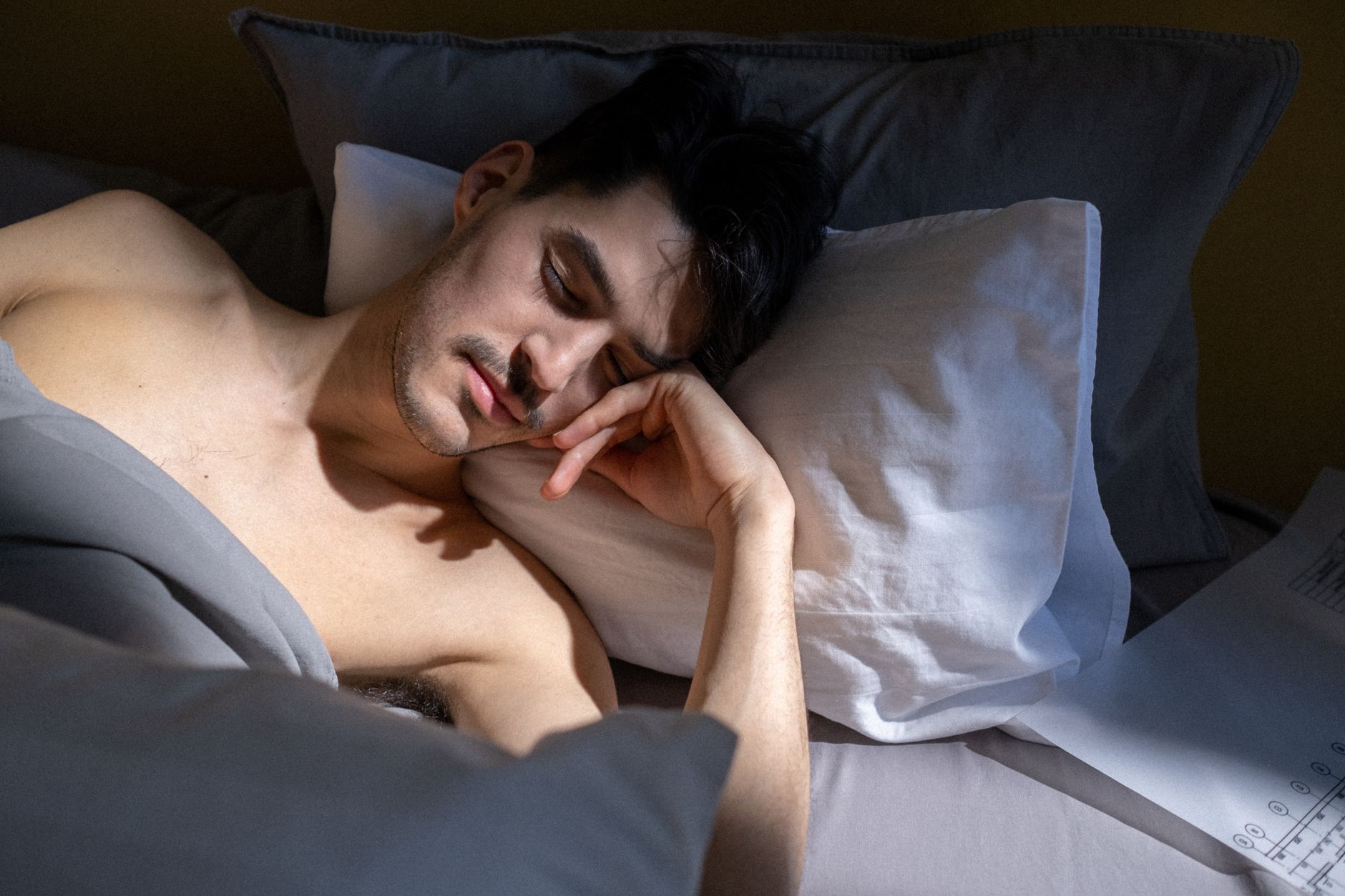
Singapore's ambient temperature averages 26–30°C year-round, with relative humidity consistently above 75%. This matters for sleep because core body temperature must drop by approximately 1–1.5°C for sleep onset to occur reliably and for the deepest NREM stages to be sustained.
The research confirms, as detailed by Kräuchi et al. (1999) in The Lancet, that distal vasodilation — the widening of blood vessels at the skin's surface to radiate stored heat outward — is the primary route by which the body initiates this core temperature drop. In a bedroom at 28°C with high humidity suppressing evaporative cooling through perspiration, this mechanism is partially blocked. Sleep onset is delayed, and the proportion of slow-wave sleep within the available window is compressed.
The practical consequence is that a Singaporean who goes to bed at 11 pm and wakes at 6 am is not necessarily banking seven hours of equivalent sleep quality to someone sleeping the same hours in a 20°C bedroom. Temperature and humidity displace the effective yield of each hour available.
Evidence-informed environmental targets for Singapore bedrooms:
- Air-conditioner setting: 20–22°C for the main sleep window. If the unit has a timer function, allowing temperature to rise to 23–25°C from 5 am onwards aligns with the natural rise in core body temperature before waking, supporting more gradual arousal.
- Humidity: Below 60% relative humidity. A dehumidifier set to 55% reduces sweat-driven sleep fragmentation in the second half of the night.
- Radiant heat management: Blackout curtains reduce afternoon solar heat gain into the room, lowering the ambient baseline before bedtime without additional electricity cost.
Evidence-Tiered Strategies to Recover the Missing Hour
The goal is not willpower. It is removing the structural barriers that keep sleep short in Singapore. The following strategies are ordered by evidence strength.
1. Extend sleep opportunity before optimising anything else
The research confirms, based on clinical sleep medicine consensus including American Academy of Sleep Medicine guidelines (Watson et al., 2015, Journal of Clinical Sleep Medicine), that sleep opportunity — the time scheduled for sleep — is the primary determinant of actual sleep duration in habitual short sleepers. Shortening wind-down screen time by 30 minutes and shifting the alarm 30 minutes later where work permits yields a net gain that exceeds the impact of any single environmental or pharmacological intervention. Adjust the schedule before the sleep environment.
2. Control bedroom temperature
As detailed above, the evidence-informed target is 20–22°C and below 60% humidity. Running air-conditioning at this level typically costs an additional $30–60 SGD (2026) per month in electricity relative to a 25°C overnight setting — a figure worth comparing against the measurable reduction in cognitive output documented across a full work week of impaired sleep.
3. Reposition afternoon caffeine intake
Caffeine has a half-life of five to seven hours in most adults. A kopi-O consumed at 3 pm retains approximately half its adenosine-blocking activity at 8–10 pm, suppressing the sleep pressure signal that would otherwise facilitate sleep onset and increase slow-wave sleep proportion. The research suggests that moving caffeine cut-off to 2 pm produces measurable improvements in sleep onset latency (the time taken to fall asleep) in habitual coffee drinkers. If the afternoon kopi-O is a fixed workplace habit, shifting it to 1 pm is a lower-friction adjustment than eliminating it. [INTERNAL LINK NEEDED: same-pillar article on caffeine timing protocols]
4. Use Singapore's consistent sunrise to anchor your circadian clock
The circadian clock — the internal 24-hour biological timer regulated by the suprachiasmatic nucleus in the hypothalamus — is set primarily by light. Morning light exposure before 9 am advances the clock, making earlier sleep onset easier in the evening. Evening blue-light exposure from screens delays it. Singapore's sunrise falls consistently between 6:50 and 7:10 am year-round, making morning outdoor light exposure accessible and reliable regardless of season — an advantage over temperate climates where seasonal variation requires ongoing adjustment.
5. Consider a polyclinic referral if the problem persists
If a consistent sleep opportunity of seven or more hours still does not produce restorative sleep, the underlying cause may not be behavioural. Sleep-disordered breathing (including obstructive sleep apnoea), anxiety, and circadian rhythm disruption from shift work all warrant clinical assessment. These conditions are common, underdiagnosed, and treatable — but require a clinician to evaluate. Singaporeans can raise sleep concerns at their nearest polyclinic; specialist referral through the public healthcare system is available under the appropriate subsidy tiers. Under the Community Health Assist Scheme (CHAS), subsidised consultations at CHAS-registered GP clinics start from $0–$10.50 SGD (2026) for eligible cardholders, making an initial clinical conversation low-cost. Do not use any sleep-related supplement or medication without discussing it with your clinician first.
The 30-Day Biohacking Starter Guide: Your Next Step

This article covers one piece of the system. The 30-Day Biohacking Starter Guide covers all of it, with a day-by-day protocol built specifically for Singapore — including how sleep, nutrition timing, light exposure, and exercise interact across a five-day work week. Download the guide at wholeliving.com/longevity-guide.
Frequently Asked Questions
How much sleep do Singapore working adults actually need?
HPB recommends seven to nine hours per night for working adults. The longevity-optimised range supported by large prospective cohort data sits at 7.5 to nine hours, with the strongest associations between cognitive preservation and the upper end of that range. Consistently sleeping six hours or fewer is associated with measurable deficits in working memory and reaction time within the same week, compounding across each subsequent night.
Does sleeping in on the weekend clear a week of sleep debt?
Partially. Two nights of extended recovery sleep can restore basic alertness and reaction time scores, but the research suggests that working memory capacity and the accuracy of self-assessed impairment do not fully recover. Habitual short sleepers who rely on weekend catch-up enter Monday at a cumulative deficit that resets only incompletely — and the shortfall compounds further into the following week.
Why does my kopi-O feel less effective as the week goes on?
Caffeine blocks adenosine receptors but does not clear accumulated adenosine from the brain. As the work week progresses and sleep debt compounds, the adenosine load increases beyond what a standard dose of caffeine can adequately mask. Separately, the brain responds to chronic adenosine-receptor blockade by increasing receptor density — meaning the same dose of caffeine produces a diminishing effect over time, while the underlying sleep pressure continues to build.
What is the best air-conditioner setting for sleep in Singapore?
The evidence-informed target is 20–22°C, with relative humidity below 60%. If your unit supports timer programming, allowing the temperature to rise to 23–25°C from approximately 5 am supports the natural increase in core body temperature before waking, which can make arousal more gradual and less abrupt. Humidity management — via a dehumidifier at 55% if budget allows — addresses the secondary sleep fragmentation caused by sweating in Singapore's ambient humidity.
When should I see a clinician about sleep problems rather than adjusting my environment?
If you consistently schedule seven or more hours of sleep and still wake unrefreshed, experience daytime sleepiness that affects your work performance, or a bed partner reports loud snoring or pauses in your breathing during the night, raise it with a GP at your nearest polyclinic rather than addressing it through environmental or behavioural changes alone. These may indicate obstructive sleep apnoea or another sleep disorder requiring clinical diagnosis. Consult your clinician before trialling any supplement or medication for sleep.
The content on WholeLiving is produced for educational purposes only and does not constitute medical advice, diagnosis, or treatment. It is not a substitute for advice from a qualified healthcare professional. Always consult your clinician before making changes to your health protocols, particularly if you have an existing medical condition or are taking prescribed medication. Supplement and medication decisions should be made in consultation with a clinician, not on the basis of editorial content.