
Micronutrient insufficiency during the preconception and prenatal periods produces measurable consequences that extend well beyond delivery — including accelerated maternal biological aging, elevated systemic inflammation, and increased risk of long-term cardiovascular and metabolic dysfunction in both mother and child. For high-performing professional women navigating pregnancy alongside demanding careers, the stakes of suboptimal prenatal nutrition are compounded by chronic cortisol elevation, disrupted sleep architecture, and the physiological depletion that sustained cognitive output demands. Vitamin and micronutrient status in this context is not a standard antenatal checkbox. It is a modifiable longevity variable with quantifiable downstream effects on biological age trajectory, cognitive recovery, and maternal health resilience.
Vitamin for Prenatal Health: Why Micronutrient Status Is a Longevity Variable
Pregnancy places extraordinary demands on micronutrient reserves. It accelerates cellular turnover and subjects maternal tissue to sustained oxidative stress. For professional women entering pregnancy with the physiological load of high-output careers — elevated cortisol, disrupted sleep, and chronic low-grade inflammation — the depletion risk runs substantially higher than population averages suggest. The body prioritizes fetal development above maternal reserve maintenance. Deficiencies that develop during pregnancy do not simply resolve at delivery.
The long-term maternal consequences of inadequate prenatal vitamin and micronutrient intake are well documented. Research from the National Institutes of Health links inadequate prenatal nutrition to elevated postpartum inflammatory markers, impaired mitochondrial function, and accelerated telomere shortening — a direct marker of biological age acceleration. These outcomes are not confined to populations with severe dietary deficiency. They also appear in women with subclinical insufficiencies — the kind that standard dietary intake alone frequently fails to prevent.
The fetal consequences carry their own long-term significance. Maternal vitamin for prenatal adequacy during gestation directly programs the child's metabolic, cardiovascular, and neurodevelopmental trajectory through epigenetic modification — the alteration of gene expression without changes to the underlying DNA sequence. This means the nutritional environment of the womb shapes biological outcomes that persist across the child's lifespan. For high-performing professionals who apply long-term thinking to every other domain, prenatal micronutrient optimization represents the same class of high-leverage decision.
Prenatal Vitamins and Folate: The Foundation of Neural Development
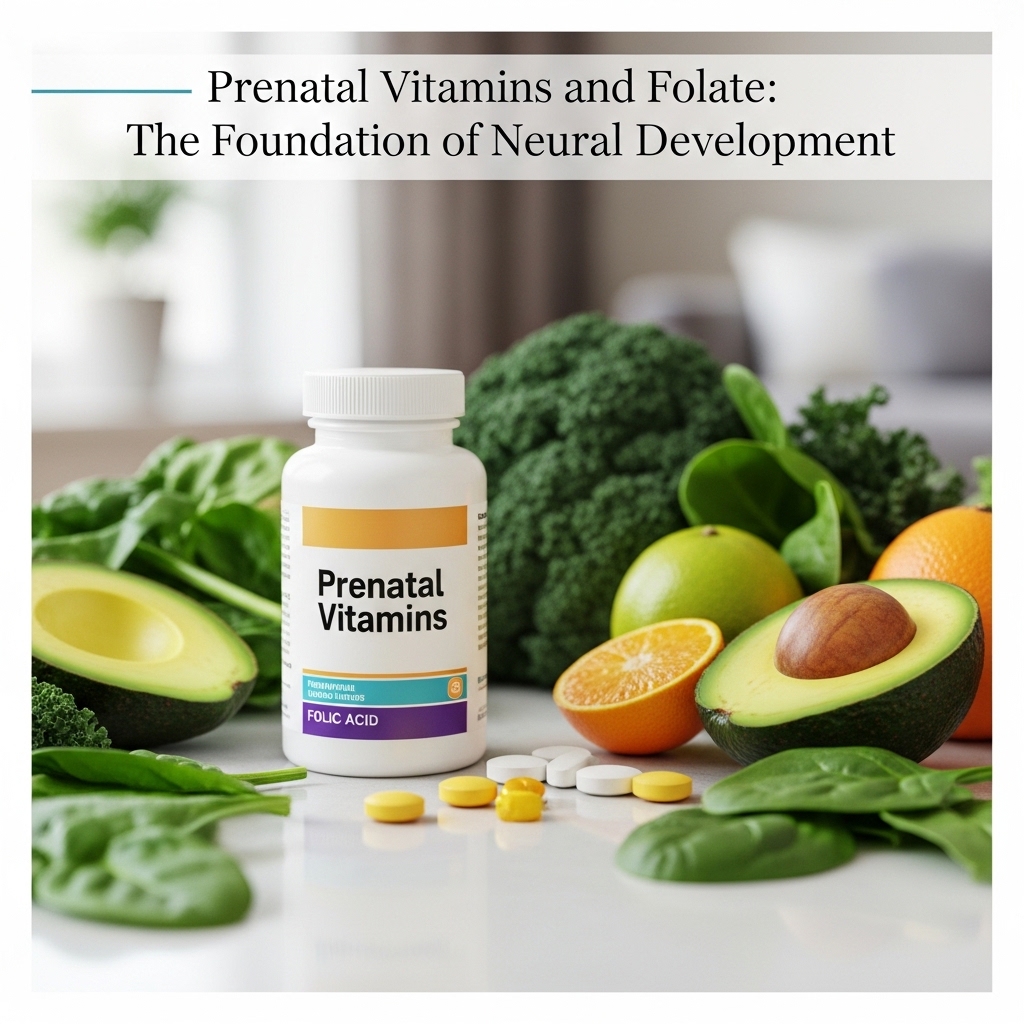
Folate — the naturally occurring form of vitamin B9 — is the most clinically established vitamin for prenatal neural development. Its role in neural tube closure occurs within the first twenty-eight days of gestation. The neural tube develops into the brain and spinal cord. Insufficient folate during this critical window raises the risk of neural tube defects including spina bifida and anencephaly — conditions that adequate preconception folate status largely prevents.
Standard guidance frequently omits a key clinical nuance. A significant proportion of the population carries genetic variants in the MTHFR gene — the gene encoding the enzyme that converts folic acid into its active, usable form. Women with MTHFR variants have reduced conversion capacity. This means standard folic acid supplements may not produce adequate active folate levels. The active form, methylfolate (5-MTHF), bypasses this conversion step entirely. It remains directly usable by the body regardless of genetic variant status.
Research published in the American Journal of Clinical Nutrition documents the superior absorption of methylfolate compared to standard folic acid in women with MTHFR variants. For professional women who have not undergone genetic screening, this represents a meaningful evidence-based consideration in prenatal vitamin selection. Folate status assessment through blood testing provides a more reliable picture of actual folate adequacy than dietary intake estimates alone.
Vitamin for Prenatal Brain Development: Choline
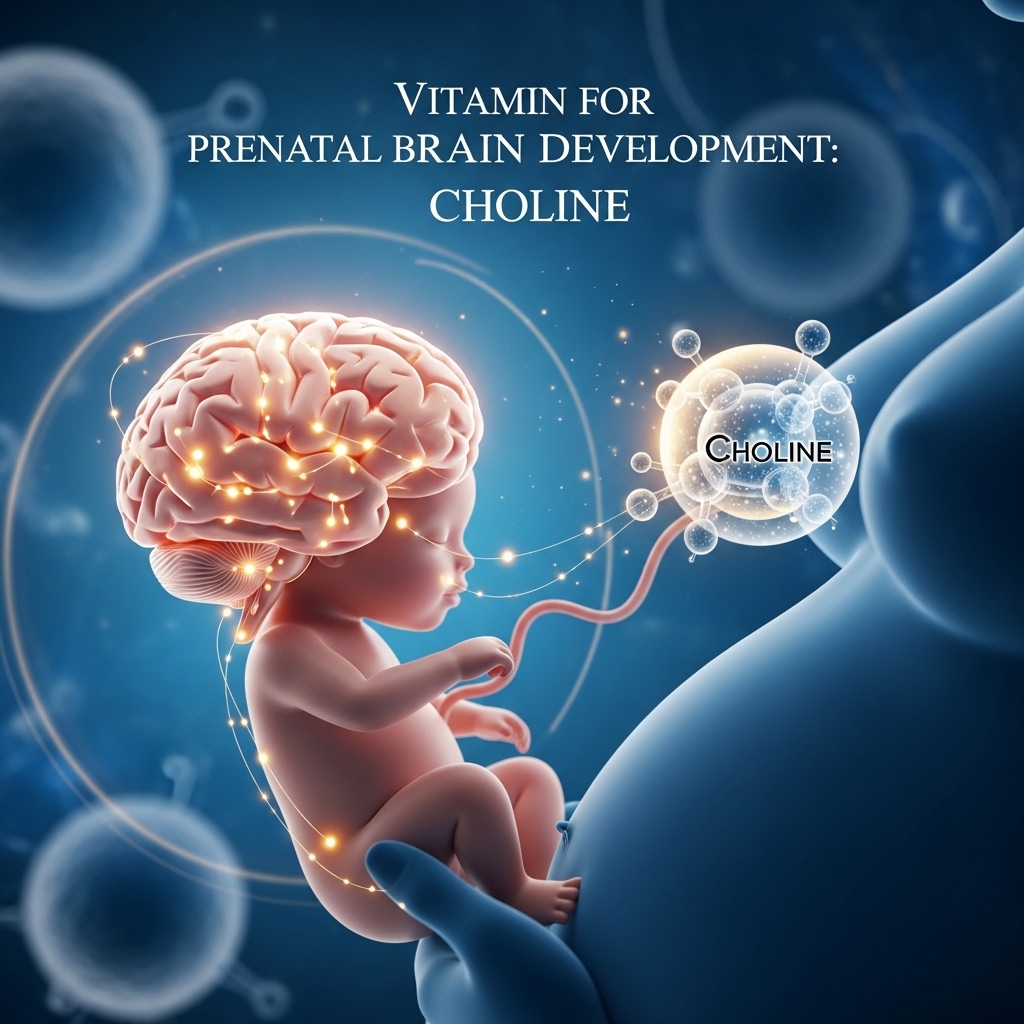
Choline is among the most under-recognized prenatal vitamins. Despite this, it plays a central role in fetal brain development. It serves as a precursor to acetylcholine — a key neurotransmitter governing memory, attention, and learning. It also contributes directly to the structural integrity of cell membranes throughout the developing nervous system. Furthermore, choline plays a critical role in epigenetic programming, influencing gene expression patterns in fetal brain tissue that persist into adult cognitive function.
Most pregnant women do not meet recommended choline intake levels through diet alone. Research published in Nutrients documents that dietary choline intake in pregnant women falls consistently below established adequate intake levels, even in populations with otherwise adequate overall nutrition. This gap is particularly relevant for professional women who follow low-animal-protein diets. The primary dietary sources of choline include eggs, liver, and meat. Plant-based diets provide substantially lower choline levels.
The cognitive implications extend to the child's long-term performance trajectory. Studies examining offspring of mothers with higher choline intake during pregnancy consistently show advantages in memory processing speed, sustained attention, and information processing in childhood and adolescence. For high-performing professionals who invest significantly in their children's cognitive development, optimizing maternal choline status during pregnancy represents a direct and evidence-supported early intervention. Many standard prenatal vitamins contain inadequate choline levels, making this a critical gap to assess independently.
Omega-3 Vitamins for Prenatal Neurological Architecture

Omega-3 fatty acids — specifically DHA (docosahexaenoic acid) and EPA (eicosapentaenoic acid) — are structural components of brain tissue and the retina. DHA accumulates rapidly in the fetal brain during the third trimester and early postnatal period. Adequate maternal DHA status directly supports the development of neuronal membrane fluidity, synaptic density, and visual acuity. Insufficient maternal DHA during this window produces measurable deficits in fetal neurological architecture. Postnatal correction does not fully reverse these deficits.
Beyond fetal development, omega-3 status has direct relevance to maternal cognitive performance and inflammatory load. DHA and EPA are potent modulators of the arachidonic acid pathway — the biochemical cascade that governs pro-inflammatory cytokine production. Adequate omega-3 intake suppresses excessive inflammatory signaling. This supports a reduction in the systemic inflammatory load that pregnancy itself elevates. For professional women managing cognitive-intensive work alongside pregnancy, the maternal benefits of adequate DHA and EPA carry direct operational significance.
Research from the Harvard T.H. Chan School of Public Health documents the relationship between maternal omega-3 status and both reduced preterm birth risk and improved infant neurodevelopmental outcomes. Plant-based omega-3 sources such as flaxseed provide ALA (alpha-linolenic acid), which requires enzymatic conversion to DHA. This conversion process runs metabolically inefficient in humans. Marine-sourced or algae-derived DHA provides the preformed DHA that fetal neurological development requires directly. Many standard prenatal vitamins for prenatal use contain insufficient DHA levels to meet third-trimester fetal demand.
Iron and Ferritin: Prenatal Vitamins for Maternal Energy

Iron is the micronutrient most commonly deficient in pregnant women globally. Its consequences extend well beyond the anaemia that standard clinical monitoring targets. Ferritin — the protein that stores iron in tissues — is the more sensitive marker of iron adequacy. Ferritin levels can deplete for months before haemoglobin drops into the anaemic range. During this subclinical depletion phase, maternal mitochondrial function, oxygen transport efficiency, and cognitive performance are already measurably compromised.
For professional women who depend on sustained cognitive output, suboptimal iron status during pregnancy represents a direct performance variable. Iron is central to dopamine synthesis — the neurotransmitter governing motivation, working memory, and executive function. Iron insufficiency disrupts dopaminergic signaling before producing detectable anaemia. This contributes to cognitive fog, motivational deficit, and working memory impairment. Many professional women attribute these symptoms to pregnancy itself rather than to a correctable nutritional variable.
Research published in The American Journal of Clinical Nutrition documents the relationship between maternal ferritin levels and infant brain development, particularly in the hippocampus — the brain region most critical to memory formation and spatial cognition. Low maternal ferritin during the third trimester associates with measurable reductions in infant hippocampal development that persist into childhood. Monitoring ferritin levels — rather than relying solely on haemoglobin — provides a more sensitive and clinically actionable picture of iron status throughout pregnancy.
Vitamin D for Prenatal Immune Regulation

Vitamin D functions less as a vitamin and more as a steroid hormone. It regulates gene expression across more than two hundred biological processes. During pregnancy, its roles include modulating immune function, supporting placental development, regulating maternal blood pressure, and contributing to fetal skeletal and neurological development. Vitamin D deficiency is prevalent across all geographic regions, including among health-conscious professionals who spend most of their working hours indoors.
The immune modulation role of this prenatal vitamin is particularly relevant to maternal health outcomes. Adequate vitamin D status supports the immune tolerance mechanisms that prevent the maternal immune system from rejecting fetal tissue. Deficiency associates with elevated risk of pre-eclampsia — a serious pregnancy complication characterized by high blood pressure and organ dysfunction. It also associates with increased rates of gestational diabetes and preterm birth. These outcomes carry significant long-term maternal cardiovascular and metabolic consequences.
For professionals who track vitamin D levels as part of a longevity panel, pregnancy represents a period of substantially increased demand. The growing fetal skeletal system draws heavily on maternal vitamin D reserves. Anti-inflammatory demands of pregnancy further increase utilization. Research from the National Institutes of Health consistently documents that standard prenatal vitamin doses may prove insufficient to maintain optimal vitamin D status in women who enter pregnancy with low baseline levels. Blood testing provides the only reliable basis for assessing whether current intake meets these elevated demands.
Magnesium: A Prenatal Vitamin for Sleep and Stress Physiology

Magnesium plays a role in more than three hundred enzymatic reactions in the body. These include processes governing muscle and nerve function, blood sugar regulation, and protein synthesis. During pregnancy, magnesium demand increases significantly as the developing fetus draws on maternal reserves for skeletal and neurological development. Despite this increased demand, magnesium ranks among the most commonly insufficient minerals in the diets of high-performing professionals. High stress loads accelerate magnesium excretion, and modern agricultural practices further reduce dietary magnesium density.
The relevance to maternal sleep architecture is direct. Magnesium plays a central role in regulating the hypothalamic-pituitary-adrenal (HPA) axis — the hormonal system that governs cortisol production. Insufficient magnesium associates with elevated baseline cortisol, increased HPA axis reactivity, and impaired GABA activity — the primary inhibitory neurotransmitter that supports sleep onset and maintenance. For professional women already managing elevated cortisol from occupational stress, magnesium insufficiency compounds the sleep disruption that pregnancy introduces. Addressing this prenatal vitamin gap therefore simultaneously targets cortisol regulation and sleep quality.
Research published in the European Journal of Obstetrics and Gynecology and Reproductive Biology documents significant reductions in pregnancy-related leg cramps in women who supplemented with magnesium compared to placebo groups. Leg cramps and muscular tension are among the most common and disruptive pregnancy symptoms for active professionals. They directly affect both sleep quality and daily physical function. Addressing magnesium status as a prenatal vitamin priority represents a simultaneous intervention for sleep quality, cortisol regulation, and neuromuscular comfort.
READ ALSO: Vegan Vitamin B12 Supplements for Mindful Nourishment
Iodine: A Critical Prenatal Vitamin for Thyroid Function
Iodine is essential for the synthesis of thyroid hormones — the primary regulators of metabolic rate, energy production, and neurological development. During pregnancy, maternal thyroid hormone production increases by approximately fifty percent. The fetal thyroid does not become functional until approximately eighteen to twenty weeks of gestation. Until that point, the fetus depends entirely on maternal thyroid hormone for neurological development. Maternal iodine insufficiency during this window produces irreversible deficits in fetal brain development.
The clinical relevance of this prenatal vitamin extends to maternal metabolic function throughout pregnancy. Thyroid hormone governs the rate at which cells produce energy. Even mild maternal hypothyroidism — which iodine insufficiency can produce or worsen — associates with cognitive slowing, fatigue, weight gain, and mood changes. For professional women who depend on sustained cognitive output, subclinical thyroid dysfunction during pregnancy carries direct performance consequences. These consequences frequently receive attribution to pregnancy itself rather than to a correctable nutritional variable.
Iodine insufficiency runs more prevalent than commonly recognized, including in developed countries with iodized salt programs. The shift toward specialty salts — sea salt, Himalayan salt, and others — which are not typically iodized, combined with reduced processed food consumption among health-conscious professionals, creates an elevated insufficiency risk. Many standard prenatal vitamins contain insufficient iodine to meet the elevated demands of pregnancy. Thyroid function testing and iodine status assessment provide the clinical baseline necessary to identify and address this variable before and during pregnancy.
READ ALSO: Motherhood Nutrition Center: Fueling Your Health at Any Age
Zinc: A Prenatal Vitamin for Immune Function and Cellular Repair
Zinc is a trace mineral central to immune function, DNA synthesis, and cellular repair. It also drives the activity of more than three hundred enzymes. During pregnancy, zinc demand increases substantially as fetal cell division accelerates. Zinc insufficiency during gestation associates with impaired fetal growth, increased risk of preterm birth, and compromised neonatal immune development. For the mother, insufficient zinc impairs immune function already under increased demand. It also slows the cellular repair processes that sustain tissue integrity under the oxidative stress of gestation.
The relevance to maternal performance is also biochemical. Zinc is a cofactor for superoxide dismutase — one of the body's primary antioxidant enzymes. It plays a direct role in regulating the inflammatory response. Insufficient zinc status amplifies inflammatory signaling, adding to the systemic inflammatory load that pregnancy elevates and that chronic professional stress compounds further. Adequate zinc as a vitamin for prenatal inflammatory control therefore carries performance significance beyond its developmental role.
Zinc absorption from dietary sources varies significantly. Phytates — compounds found in legumes, whole grains, and nuts — bind zinc and reduce its absorption. Plant-heavy diets, while otherwise nutritionally advantageous, can produce functional zinc insufficiency even when total dietary zinc intake appears adequate. This is a particularly relevant consideration for professional women who follow plant-based dietary patterns. Standard prenatal vitamins vary considerably in their zinc content and the form of zinc used, with some forms offering substantially better absorption than others.
READ ALSO: Vitamin Supplement Strategies for Men to Support Testosterone, Mitochondrial Function, and Healthy Biological Aging
Evidence-Based Application for High-Performing Professionals

The evidence across prenatal vitamin and micronutrient research consistently supports a proactive, individualized approach to nutritional status assessment rather than reliance on standard prenatal supplements alone. Professionals navigating pregnancy alongside high-output careers carry a compounded depletion risk that standard vitamin for prenatal formulations are not designed to address. Blood-based assessment of key markers — including ferritin, vitamin D, folate, zinc, iodine, and omega-3 index — conducted preconception and at regular intervals during pregnancy, provides the clinical data necessary to identify and correct specific insufficiencies early. Working with a functional medicine practitioner or maternal health specialist who applies this level of nutritional specificity represents the same evidence-based, outcomes-oriented approach that high-performing professionals apply to every other domain of their health and performance optimization.
UP NEXT: Best Vitamin D Supplement for Preserving Bone Density, Testosterone Balance, and Healthy Aging
How This Affects Your Biological Age
Suboptimal prenatal vitamin status — particularly insufficiencies in vitamin D, folate, iron, and omega-3 fatty acids — is directly associated with accelerated maternal biological aging, with research linking chronic micronutrient depletion during pregnancy to measurable telomere shortening, elevated inflammatory markers, and an estimated two to five additional years of biological age in the postpartum period. WholeLiving's Biological Age Estimation Model incorporates this factor directly — your assessment takes under five minutes.
Ready to understand how these factors are influencing your biological age right now? [Take the Biological Age Assessment →]