The quality and depth of interpersonal dialogue that high-performing professionals engage in daily is not a social variable — it is a physiological one. Research consistently links the nature of social communication to measurable shifts in cortisol output, cardiovascular risk markers, and cognitive decline trajectory. Shallow, transactional conversation patterns — the default mode of professionally isolated executives — correlate with elevated inflammatory cytokine levels, reduced heart rate variability, and accelerated hippocampal volume loss over time. Conversation topics that generate genuine psychological safety and social connection activate distinct neurobiological pathways that buffer stress physiology, support autonomic regulation, and measurably extend healthspan.
Why Conversation Topics Are a Health Variable
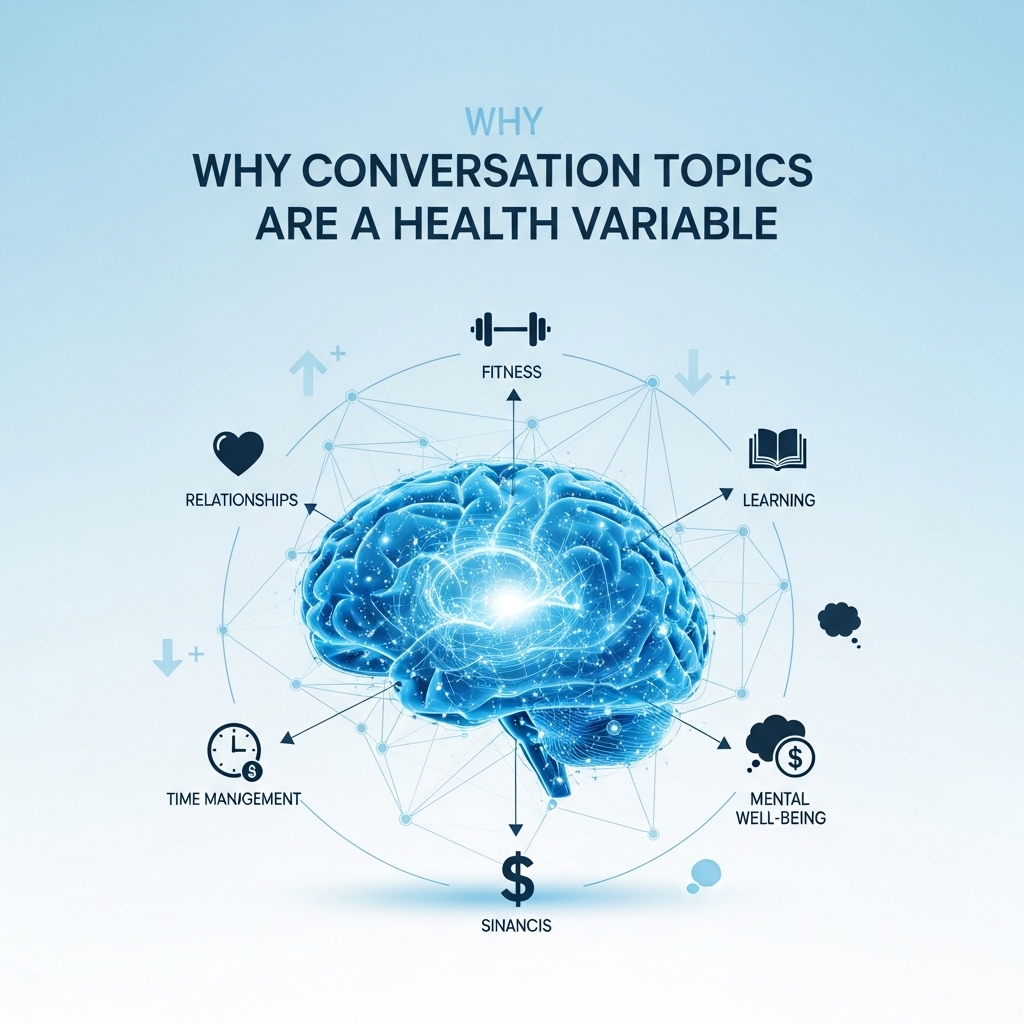
Conversation topics shape physiology more than most professionals realize. Surface-level exchanges such as status updates, logistics, and routine check-ins create little neural engagement. As a result, they do not meaningfully shift autonomic tone.
By contrast, deeper conversation topics can trigger the brain’s social reward circuitry. Discussions built around self-disclosure, shared values, and intellectual depth can support oxytocin release and lower cortisol in measurable ways. Over time, that difference can influence stress load, inflammatory status, and cognitive trajectory.
The mechanism is partly neurological. Meaningful conversation topics engage the default mode network, increase prefrontal cortex activity, and reduce amygdala reactivity. That pattern supports emotional regulation and improves cognitive recovery between demanding work periods.
The Physiology of Social Connection

The quality of conversation topics affects the body through distinct biological pathways. One of the clearest involves oxytocin, a neuropeptide released during positive interaction. It can suppress HPA axis activity, lower cortisol output, and reduce blood pressure.
However, presence alone does not create this effect. The body responds to the quality of interaction, not simply to the fact that other people are nearby. Trust, warmth, and psychological safety matter far more than transactional conversation topics.
The vagus nerve also plays a central role. Face-to-face interaction with emotional tone, eye contact, and meaningful conversation topics can activate the ventral vagal complex and improve heart rate variability. That response supports metabolic, cardiovascular, and nervous system recovery.
Conversation Topics That Activate Stress-Buffering Pathways

Not all conversation topics create the same physiological response. Research in social neuroscience points to a few categories that consistently support stress buffering. These include values-based dialogue, shared vulnerability, personal meaning, and future goals.
Self-disclosure is especially powerful. When people share personal experiences, uncertainty, or inner values, they strengthen trust and often engage dopamine pathways linked to reward. For high-performing professionals, these conversation topics can directly affect stress physiology.
Meaning-making conversation topics may create the strongest autonomic benefit. Discussions about purpose, legacy, mortality, and aspiration can reduce amygdala reactivity and support a more stable parasympathetic state. Yet these are often the very topics professional life pushes aside.
Loneliness, Isolation, and Inflammatory Load

Professional success often coexists with relational isolation. A packed schedule can still leave a person without trust-based dialogue or genuine connection. That creates a form of physiological isolation even when social contact looks abundant.
This matters because the absence of meaningful conversation topics can elevate inflammatory burden. Research tied to C-reactive protein, interleukin-6, and fibrinogen shows that the body reacts strongly to the perceived absence of quality connection. In that setting, the HPA axis and sympathetic system can stay active for too long.
The biological age implications are significant. Low-quality engagement and shallow conversation topics have been associated with poorer resilience over time. For professionals focused on longevity, this is not a soft variable. It is a measurable input into aging and recovery.
Social Dialogue and Cognitive Performance

Meaningful conversation topics support more than emotional wellbeing. They also train the neural functions behind executive performance, including perspective-taking, emotional regulation, narrative reasoning, and the integration of complex information. In that sense, substantive dialogue acts as a form of cognitive exercise.
Regular engagement in stronger conversation topics activates brain regions linked to higher-order thinking. These include the prefrontal cortex and temporal areas that are especially vulnerable to age-related decline. Therefore, conversation quality becomes part of a credible cognitive maintenance strategy.
For executives, this connection is direct. The brain systems used in strategic thinking, creative problem-solving, and leadership overlap with those used in meaningful social exchange. Investing in better conversation topics is, neurologically, an investment in cognitive longevity.
READ ALSO: Mindfulness Practices for Couples: Strengthen Your Bond
Psychological Safety and Conversational Depth

Psychological safety determines whether deeper conversation topics can happen at all. When people fear judgment, rejection, or social cost, they stay at the surface. As a result, the interaction produces few of the physiological benefits linked to genuine connection.
This is especially relevant for high-performing professionals. Many spend their workdays in environments that reward vigilance, emotional restraint, and impression management. Because of that, personal relationships often need to function as the nervous system’s counterbalance.
The neuroscience aligns with polyvagal theory. The body constantly scans for cues of safety or threat, and those cues shape whether conversation topics open up or contract. When safety is present, vulnerability, meaning, uncertainty, and aspiration become accessible topics with real biological benefit.
Sleep Quality and the Social Recovery Pathway
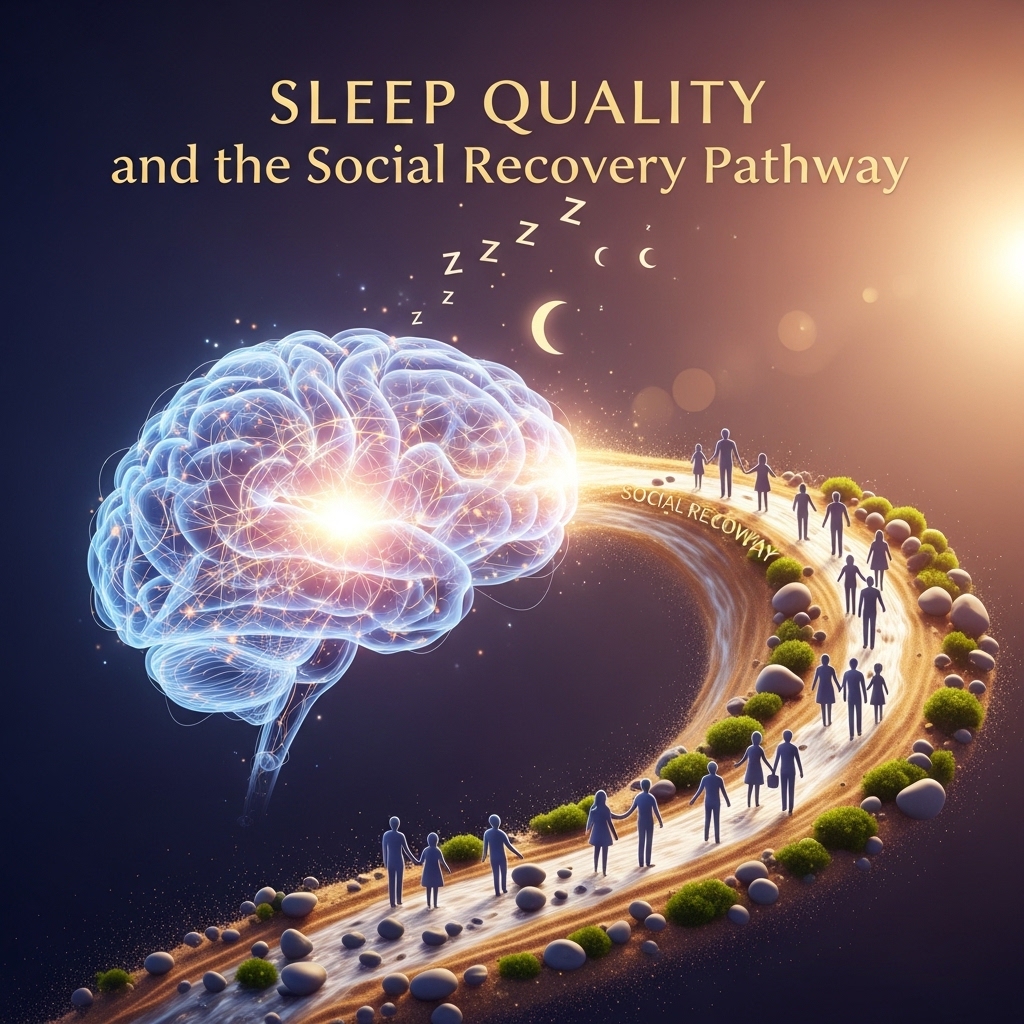
Sleep quality depends heavily on autonomic state. When professionals spend the day in competitive, transactional, or relationally unsafe environments, they often carry that activation into the evening. Consequently, the body may struggle to shift into restorative recovery.
That shift affects sleep architecture. Elevated arousal can delay sleep onset, reduce slow-wave sleep, compress REM duration, and weaken overnight repair. The next day then begins with lower cognitive recovery and reduced emotional regulation.
Meaningful evening conversation topics can interrupt that cycle. Genuine connection can lower cortisol, suppress HPA axis activity, and support the transition toward parasympathetic dominance. Therefore, the quality of social interaction at the end of the day becomes a real sleep variable.
READ ALSO: Conversation with a Friend: How Small Talks Can Refill Your Energy
Relationship Depth as a Cardiovascular Variable

Relationship quality also matters for cardiovascular health. People in close, high-quality relationships often show better blood pressure regulation, more favorable lipid patterns, and lower rates of cardiovascular events. These effects remain relevant even alongside more familiar health variables.
Part of the mechanism runs through oxytocin. Its receptors appear throughout the cardiovascular system, including the heart, and positive social interaction can support better vascular function. It may also reduce inflammation and offset some of the damage associated with chronic cortisol elevation.
That makes deeper conversation topics more than an emotional preference. Honest, trusting, and substantial dialogue can influence measurable cardiovascular outcomes. For professionals already optimizing exercise and nutrition, the relational domain deserves the same clinical attention.
READ ALSO: Conversation Starters and Social Fluency as Predictors of Stress Load and Cognitive Performance
Evidence-Based Application of Conversation Topics for High-Performing Professionals

The most useful goal is not simply more social activity. It is higher-quality interaction built around meaningful conversation topics with a small number of psychologically safe people. In practice, two or three close relationships can provide more biological benefit than a wide network built on shallow exchanges.
A practical starting point is to identify which conversation topics are missing. Some professionals rarely discuss values, vulnerability, uncertainty, future vision, or meaning. Once those gaps become clear, they can begin to protect time for dialogue that supports deeper regulation and recovery.
For some, outside structure helps. A therapist, executive coach, or peer group centered on substantive conversation topics can provide a credible entry point when professional life has crowded out relational depth. In performance and longevity terms, that is not extra. It is health infrastructure.
UP NEXT: Mindfulness Practices for Mental Well-Being You Need
How This Affects Your Biological Age
Low-quality conversation topics marked by chronic surface-level, high-stress, or socially unsafe interaction can raise cortisol, reduce heart rate variability, and sustain inflammatory load, all of which are linked to faster biological aging over time. To see how your conversation topics may be affecting stress physiology and biological age, WholeLiving's Biological Age Estimation Model incorporates this factor directly — your assessment takes under five minutes.
Ready to understand how these factors are influencing your biological age right now? [Take the Biological Age Assessment →]