Hypertension is one of the most prevalent and most silently progressing cardiovascular conditions among working-age Singaporeans. The reading you receive during a Screen for Life appointment at a polyclinic is frequently the first moment it surfaces — and, for many people, the first accurate measurement they have ever had. Home blood pressure monitors have become cheaper and more widely available, and a reasonable assumption has taken hold: that daily readings at home, taken in a relaxed environment, must be at least as reliable as an occasional clinic visit. The research does not support that assumption — but it does give home monitors a specific, important role.
The precision at stake is finer than most people realise. A blood pressure of 118/76 mmHg and one of 134/86 mmHg occupy meaningfully different risk categories, yet either number can be produced by the same arm on the same day depending on measurement conditions. Singapore's MOH (Ministry of Health) recommends clinical measurement protocols specifically designed to eliminate that variability. Understanding what those protocols control for — and what home monitoring cannot — changes how you should interpret every reading you receive.
How Polyclinics Measure Blood Pressure: The MOH Standard
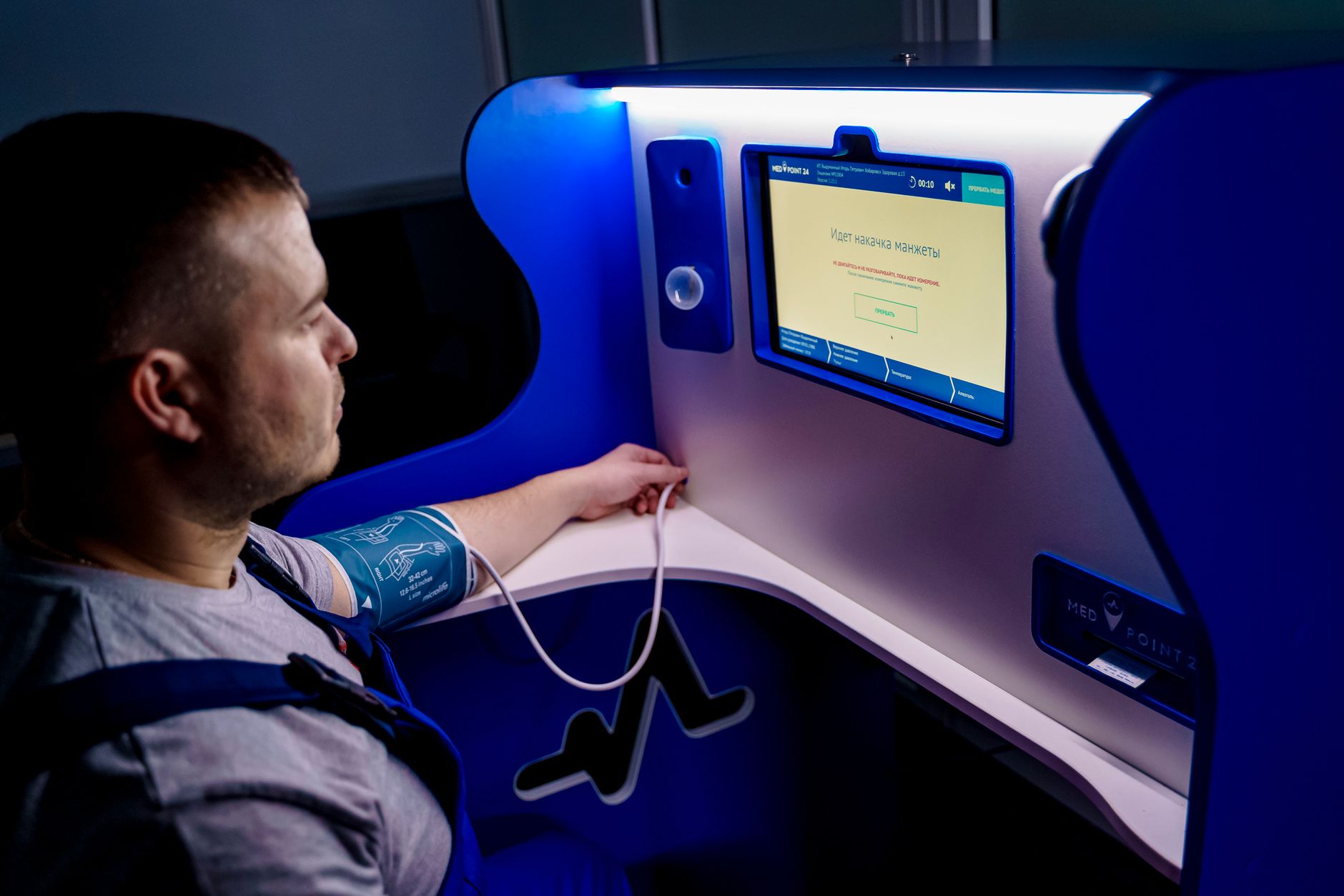
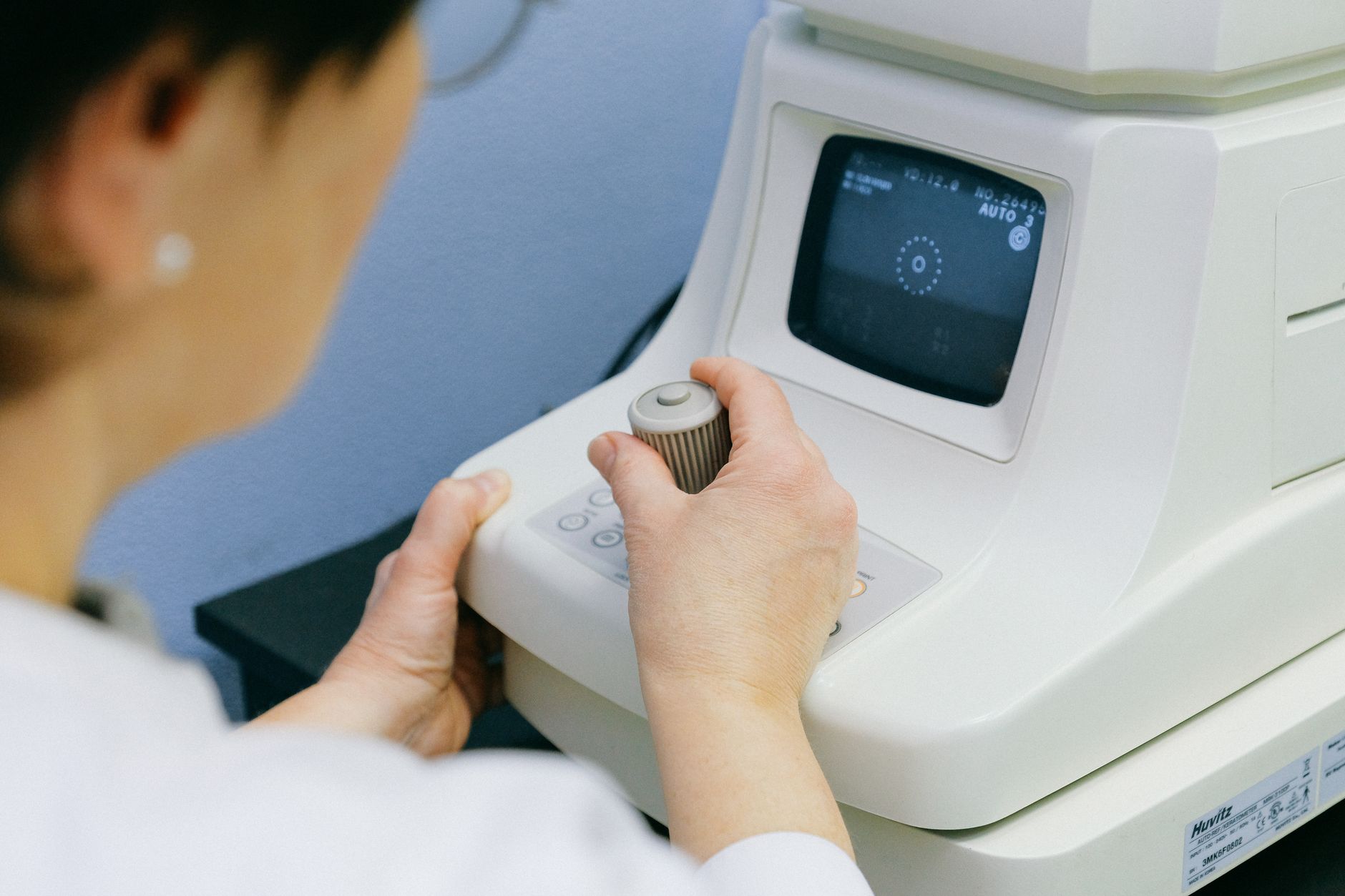
Singapore polyclinics measure blood pressure using validated, regularly serviced devices under a standardised clinical protocol. That protocol follows international best practice, which the research confirms requires: a minimum five minutes of quiet seated rest before measurement; feet flat on the floor; the arm supported at heart level; the cuff placed on bare skin; no talking during the measurement; and at least two readings averaged (Whelton PK et al., Hypertension, 2018). The clinician managing your appointment is trained to identify disqualifying conditions — recent physical activity, caffeine, an elevated emotional state — and to repeat the measurement rather than record a distorted result.
Each of these steps eliminates a specific source of error. Together, they produce a reading that is reproducible: measured again under identical conditions the following morning, the number would be close. That reproducibility is what makes a polyclinic reading useful as a baseline — a fixed reference against which future readings are meaningfully compared.
| Blood Pressure | Standard Clinical Normal (ACC/AHA) | Longevity-Optimised Target | The Gap |
|---|---|---|---|
| Systolic (mmHg) | <120 | 110–119 | ~10 mmHg — a difference only accurate measurement can track |
| Diastolic (mmHg) | <80 | 70–79 | ~10 mmHg — lost entirely within typical home monitor variability |
The longevity-optimised targets draw from the SPRINT trial, which the research suggests — in a population at elevated cardiovascular risk — that targeting systolic pressure below 120 mmHg reduced major adverse cardiovascular events by approximately 25% compared with a standard target below 140 mmHg (SPRINT Research Group, NEJM, 2015). The 10-mmHg gap between “clinically normal” and “longevity-optimised” is precisely the range in which home monitor measurement error operates.
READ ALSO: Cardiovascular Risk Biomarkers: What Your Singapore Blood Panel Should Include
Why Home Devices Introduce Variability
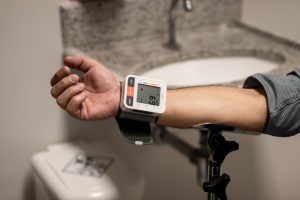
The research confirms that home blood pressure monitors are a clinically legitimate supplement to polyclinic measurement — but their accuracy is conditional on factors most users do not consistently meet. The British and Irish Hypertension Society maintains an independently validated device list based on the International Protocol for blood pressure measurement device assessment. Most consumer monitors sold in Singapore pharmacies have not been assessed under this protocol. Of those that have, the validation was conducted under ideal conditions that home use rarely replicates.
Three sources of variability account for the majority of home monitor error. First, cuff placement: a cuff positioned over a sleeve rather than on bare skin, or placed at the wrong height on the upper arm, can shift a reading by 5–10 mmHg. Second, body position: an arm held unsupported, or a reading taken immediately after climbing the stairs to your flat without a rest period, introduces comparable error. The Cleveland Clinic notes that a single unaveraged home reading taken without five minutes of prior seated rest can vary by as much as 10 mmHg from a reading taken under standardised conditions. Third, cuff size: the standard adult cuff fits arm circumferences of roughly 22–32 cm. A larger arm — common in individuals who train regularly — requires a large-adult cuff. An incorrectly sized cuff produces systematic error that persists across every reading, masking real changes over time.
READ ALSO: Resting Heart Rate and Cardiovascular Age: What the Numbers Actually Mean
The White-Coat Effect: When Should You Trust Which Reading?

White-coat hypertension — a consistent pattern of elevated blood pressure in a clinical setting that normalises at home — is a well-characterised and clinically significant phenomenon. The research confirms it affects an estimated 15–30% of individuals who receive an initial hypertension diagnosis in clinic, and that in this subgroup, home readings provide data a single clinical measurement cannot (Mayo Clinic, reviewed 2023). For this group, home monitoring is not merely convenient — it is diagnostically necessary.
The American Heart Association also recognises the converse: masked hypertension, where clinic readings appear normal but consistent home readings are elevated. Masked hypertension carries higher cardiovascular risk than white-coat hypertension precisely because it goes undetected at the very point where detection should occur. Both conditions require home monitoring to identify — but only after a clinician-confirmed baseline establishes what “normal” looks like for you under controlled conditions.
The practical implication: polyclinic readings and home readings answer different questions. The polyclinic reading answers “what is your blood pressure when measured correctly?” The home reading answers “what does your blood pressure do across different contexts?” Both are legitimate. Neither alone is always sufficient.
READ ALSO: HDL, ApoB, and LDL: Reading Your Cholesterol Panel Beyond the Basics
What the Research Confirms About Measurement Accuracy
The research confirms that standardised automated office measurement — the approach used in polyclinics — produces higher reproducibility than conventional manual measurement and significantly higher reproducibility than unguided home monitoring in general populations. The SPRINT trial adopted standardised unattended automated measurement as its primary methodology specifically to eliminate inter-observer variability and produce consistent results across multiple sites (SPRINT Research Group, NEJM, 2015).
The NIH National Heart, Lung, and Blood Institute recommends that home monitoring, when clinician-indicated, follow a specific structure: two to three readings taken at the same time each morning, before medication and before eating, recorded in a log shared with your clinician at the next appointment. The signal from home monitoring is the trend across weeks — not any single number. Acting on one elevated home reading without a corresponding clinical assessment is one of the more common ways home monitors mislead rather than inform.
READ ALSO: HbA1c and Blood Sugar: Optimising Your Metabolic Baseline in Singapore
Building Your Blood Pressure Strategy: Baseline and Ongoing Monitoring

A sound blood pressure strategy has two distinct phases, and they are not interchangeable.
Phase one: baseline. Your baseline reading must come from a polyclinic or a clinically validated setting. This is the reference number against which everything else is compared. If you have never had a formal reading, or your most recent clinical reading is more than 12 months old, that gap is the first thing to address. A home monitor cannot substitute for this step regardless of device quality or price.
Phase two: ongoing monitoring. If your clinician recommends home monitoring — to investigate possible white-coat effects, to track a medication adjustment, or to build a longitudinal record between annual appointments — select a device from a validated list, confirm the cuff fits your arm circumference correctly, and follow the same protocol each time: five minutes of seated rest, no caffeine or vigorous activity in the preceding 30 minutes, two averaged readings recorded in a written log. Any sustained change — not a single reading — is what warrants bringing to your clinician's attention, not self-adjustment.
Your Free Screening in Singapore: CHAS and Screen for Life
Two subsidised pathways give Singaporeans access to a clinically valid blood pressure reading at no or minimal cost.
Screen for Life is a national screening programme administered by HPB (Health Promotion Board). Singaporean citizens and permanent residents aged 18 and above are eligible for subsidised health screenings at polyclinics and participating GP clinics. Blood pressure measurement is a standard component, and the co-payment — where applicable — is modest. Recommended frequency depends on age and existing health status.
CHAS (the Community Health Assist Scheme, administered by MOH) provides additional subsidies at CHAS-enrolled GP clinics for Singaporeans from lower- and middle-income households. CHAS Blue and Orange cardholders receive higher subsidy tiers for chronic condition management, which includes hypertension monitoring and follow-up. If you hold a CHAS card and have not used it for a blood pressure check in the past 12 months, that is the most cost-effective clinical measurement available to you — and it is the measurement that meets the standard a home monitor cannot replicate at any price point.
Apply This Framework: Your 30-Day Biohacking Starter Guide

Now you know what the standard approach misses. The guide shows you what to do instead, starting tomorrow. The 30-Day Biohacking Starter Guide gives you a sequenced protocol built specifically for Singapore — covering your baseline polyclinic appointment, how to set up home monitoring correctly if your clinician recommends it, and how blood pressure fits into the broader cardiovascular and metabolic picture.