
Skipping or poorly timing the first meal of the day produces measurable consequences for high-performing professionals — including blunted glucose regulation, elevated cortisol persistence through the mid-morning window, and degraded prefrontal cognitive performance during the hours most demanding of executive function. For professionals operating under chronic schedule pressure, morning nutritional consistency is not a lifestyle preference. It is a modifiable input with direct implications for metabolic stability, decision-making capacity, and long-term biological age trajectory.
The Metabolic Cost of Morning Nutritional Inconsistency

Glucose regulation follows a circadian rhythm. Specifically, the body's insulin sensitivity peaks in the morning and declines through the afternoon. The National Institutes of Health has documented this pattern extensively. Professionals who miss or delay their first meal disrupt this window. They force the body to manage blood glucose without adequate nutritional substrate.
The consequence is not simply hunger. Cortisol — already elevated in the early morning — remains elevated longer when caloric intake is absent. As a result, that sustained cortisol persistence suppresses prefrontal function and heightens amygdala reactivity. The professional who skips breakfast is not just hungry. They are operating with a measurably degraded cognitive profile.
Furthermore, sustained morning cortisol elevation promotes visceral adiposity over time. This is not a minor aesthetic concern. Visceral fat is metabolically active tissue. It produces inflammatory cytokines, including interleukin-6 and tumor necrosis factor-alpha. Both markers associate with accelerated biological aging and elevated cardiovascular risk.
Nutritional inconsistency compounds these effects across weeks and months. A single missed morning meal produces transient dysregulation. However, a pattern of missed meals produces structural metabolic disruption. That disruption modifies inflammatory baseline, alters insulin sensitivity trajectories, and contributes to biological age acceleration.
Why Preparation Removes the Execution Barrier
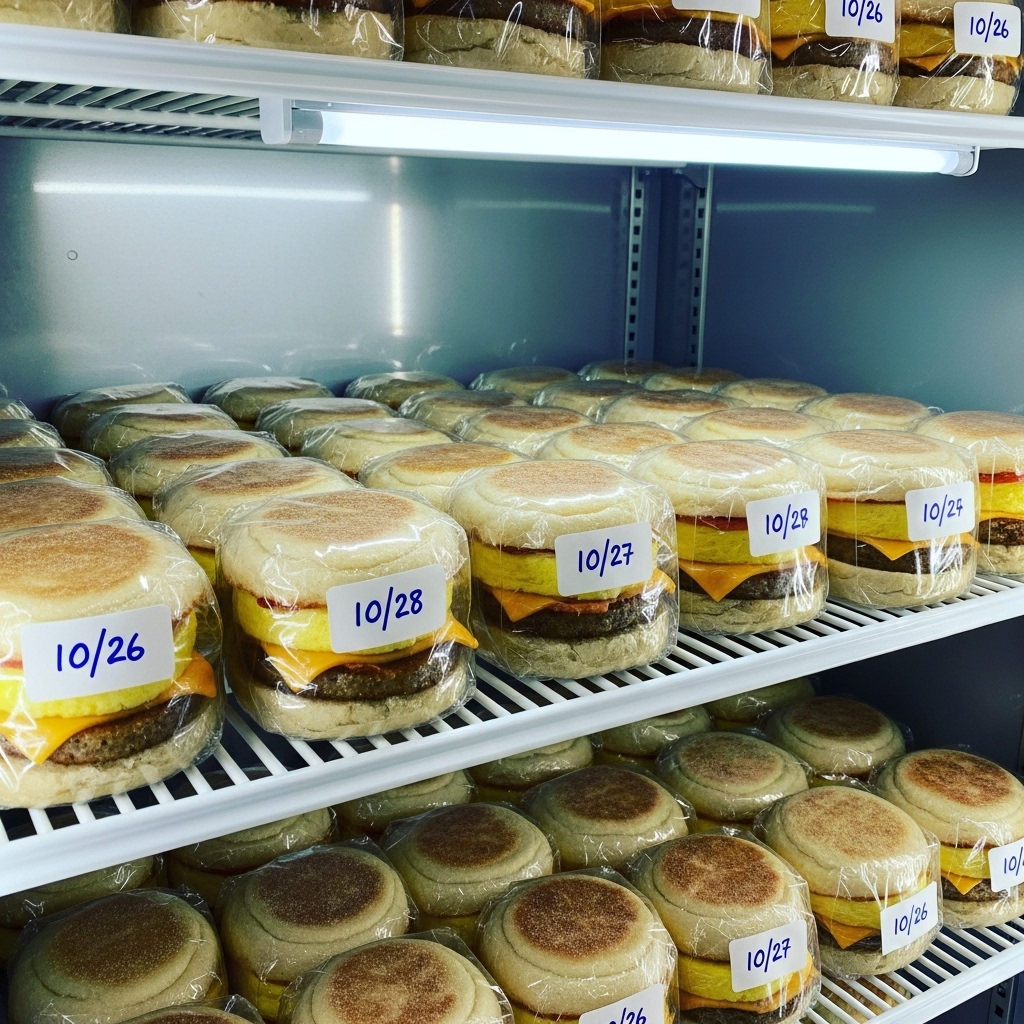
The primary obstacle to consistent morning nutrition is not motivation. Rather, it is execution under time pressure. Research from the Harvard T.H. Chan School of Public Health consistently identifies time scarcity as the leading behavioral barrier to nutritional adherence in professional populations. Removing the preparation burden from the morning directly addresses this barrier.
Make-ahead meal preparation shifts the cognitive and physical load to a lower-pressure window — typically a weekend session. That shift eliminates the point at which nutritional decisions are most vulnerable to schedule override. Consequently, when a prepared meal requires only reheating, the probability of consistent consumption increases substantially.
Behavioral adherence research supports this framework. Specifically, the fewer steps required to execute a health behavior, the higher the adherence rate. This principle applies directly to breakfast consumption. A sandwich requiring thirty seconds of reheating presents a lower execution threshold than one requiring ten minutes of active preparation.
Therefore, batch preparation is not a convenience preference. It is an adherence strategy with measurable downstream effects on nutritional consistency. Through that consistency, it directly influences the metabolic and cognitive performance variables that nutritional timing shapes.
Macronutrient Composition and Cognitive Fuel Availability

A well-constructed breakfast sandwich delivers a macronutrient profile that supports morning cognitive performance. Protein from eggs and lean meat stimulates amino acid availability. This, in turn, supports neurotransmitter synthesis — including dopamine and norepinephrine. Both underpin sustained attention and executive function.
Complex carbohydrates from whole grain bread provide a controlled glucose release. That release sustains blood glucose stability through the mid-morning window. Consequently, it avoids the spike-and-crash dynamic associated with refined carbohydrate consumption. Stable glucose directly correlates with sustained prefrontal availability.
Additionally, dietary fat from eggs and cheese supports satiety signaling through cholecystokinin release. That signaling delays hunger onset. It reduces the mid-morning appetite disruption that competes with focused cognitive work. Together, protein, complex carbohydrate, and fat create a macronutrient architecture that supports performance well beyond the meal itself.
Research published in the American Journal of Clinical Nutrition documents that breakfasts combining protein and complex carbohydrate produce superior cognitive performance outcomes. They outperform high-sugar or carbohydrate-only morning meals consistently. The breakfast sandwich format, when constructed with quality ingredients, naturally achieves this combination.
READ ALSO: Baked Eggs in Whole Roasted Tomatoes
Protein Intake and Muscle Protein Synthesis in the Morning Window

Skeletal muscle mass is a primary longevity variable. Sarcopenia — the progressive loss of muscle mass accelerating after age 35 — increases all-cause mortality risk. It also reduces metabolic rate and degrades physical resilience. Protein distribution across the day directly influences muscle protein synthesis rates.
Research from the American Journal of Clinical Nutrition demonstrates a clear finding. Distributing protein intake across three meals produces superior muscle protein synthesis outcomes. This outperforms concentrating protein at dinner. The morning meal represents one of three critical windows. Professionals who skip breakfast consistently underload this window.
Eggs deliver high biological value protein. Two large eggs provide approximately 12 grams of complete protein. Adding lean protein from turkey or Canadian bacon increases that load further. As a result, a well-constructed breakfast sandwich can deliver 20 to 30 grams of protein within this critical morning window.
For professionals in their forties and fifties, this matters considerably. Sarcopenia risk accelerates most meaningfully during this decade. Consequently, consistent morning protein intake is not optional nutrition optimization. It is a direct intervention in the muscle mass preservation trajectory that determines functional capacity across the following decades.
Glycemic Stability and Inflammatory Marker Suppression

Postprandial glucose spikes drive inflammatory signaling. Specifically, when blood glucose rises rapidly, the resulting oxidative stress activates NF-κB pathways. These pathways are primary mediators of inflammatory cytokine production. Repeated glucose spikes produce cumulative inflammatory load that elevates C-reactive protein and interleukin-6 over time.
A breakfast sandwich built on a whole grain base moderates this response. The fiber content of whole grain bread slows gastric emptying. It also reduces the rate of glucose absorption. That moderated absorption curve directly reduces the magnitude of the postprandial glucose spike.
Moreover, protein and fat components of the sandwich further blunt this response. Both macronutrients slow gastric emptying independently of fiber. This produces an additive moderating effect on glucose absorption rate. The combined macronutrient profile therefore generates a substantially more favorable glycemic curve than carbohydrate-dominant breakfast options.
For professionals tracking inflammatory markers as biological age inputs, this distinction carries direct relevance. Consistent glycemic moderation at the morning meal — repeated daily over months — produces measurable reductions in CRP and IL-6. Epigenetic clock research associates those reductions with decelerated biological aging.
READ ALSO: Sardine and Hard-Boiled Egg Sandwich
The Role of Choline in Cognitive Longevity

Eggs are among the most concentrated dietary sources of choline. This micronutrient is essential for acetylcholine synthesis, cell membrane integrity, and cognitive function. Research from the Framingham Heart Study documents that higher dietary choline intake associates with better cognitive performance and reduced dementia risk in longitudinal follow-up data.
Acetylcholine is the primary neurotransmitter supporting memory encoding and sustained attention. Its synthesis depends directly on dietary choline availability. Consequently, professionals who consistently consume eggs at breakfast maintain higher choline intake. They therefore sustain better substrate availability for acetylcholine production than those who skip breakfast entirely.
Two eggs deliver approximately 250 to 300 milligrams of choline. The adequate intake level for adult men is 550 milligrams daily. Therefore, a two-egg breakfast sandwich provides approximately half the daily choline requirement in a single meal. That contribution is meaningful for the cognitive longevity variable that dietary choline directly influences.
This micronutrient dimension is frequently absent from breakfast optimization discussions. Most focus defaults to macronutrients. However, for professionals whose career demands place sustained cognitive performance at a premium, choline intake represents a modifiable nutritional input with direct implications for long-term cognitive health.
Saturated Fat, Cardiovascular Risk, and Ingredient Selection

Cardiovascular disease remains the leading cause of mortality in the professional demographic WholeLiving serves. Dietary saturated fat — concentrated in processed meats and full-fat cheese — influences LDL cholesterol levels when consumed in excess. Ingredient selection within the breakfast sandwich format therefore carries direct cardiovascular relevance.
The research on dietary fat and cardiovascular risk has evolved considerably. Nevertheless, the American Heart Association maintains that replacing saturated fat with unsaturated fat sources reduces LDL cholesterol and cardiovascular event risk. Within the breakfast sandwich format, this supports using leaner protein sources — turkey sausage, Canadian bacon, or egg whites.
Additionally, avocado delivers monounsaturated fat that actively supports favorable lipid profiles. Research documents that monounsaturated fat consumption reduces LDL without lowering HDL. That is a cardiovascular-protective outcome that saturated fat does not produce. Avocado also contributes potassium, which supports blood pressure regulation through sodium-potassium balance.
Thoughtful ingredient selection allows professionals to achieve the macronutrient and micronutrient benefits of the format simultaneously. The construction choices determine the cardiovascular profile. The format itself is nutritionally flexible enough to accommodate both performance and cardiovascular risk management goals.
Sodium Management in Make-Ahead Meal Construction

Processed breakfast meats carry substantial sodium loads. Excessive sodium intake elevates blood pressure through increased plasma volume and vascular resistance. The American Heart Association identifies hypertension as a primary modifiable cardiovascular risk factor. Dietary sodium is one of its key dietary drivers.
Make-ahead preparation offers direct control over sodium content. That control is an advantage commercial breakfast options do not provide. Selecting low-sodium turkey bacon, fresh-ground sausage, or unprocessed egg preparations reduces sodium load substantially. This compares favorably to restaurant or packaged alternatives consumed under time pressure.
Cheese contributes additional sodium. A single slice of processed American cheese delivers approximately 300 milligrams. Substituting lower-sodium alternatives — fresh mozzarella, Swiss, or small portions of feta — reduces this contribution meaningfully. Importantly, that substitution does not eliminate the macronutrient value cheese provides.
For professionals monitoring blood pressure or cardiovascular biomarkers, home-prepared sandwiches allow precise sodium management. Fast food and convenience breakfast options cannot match that control. Over weeks and months of consistent consumption, that difference translates into a more favorable cardiovascular risk profile.
READ ALSO: Sunny-Side-Up Egg and Baby-Spinach Flatbread
Storage, Food Safety, and Nutritional Retention

Batch-prepared breakfast sandwiches retain their nutritional profile when stored correctly. Refrigeration at or below 40°F preserves protein integrity, fat stability, and micronutrient content for three to four days. Freezing extends that window to four to six weeks without meaningful nutritional degradation.
Egg proteins are heat-stable across reheating temperature ranges. Scrambled eggs reheated from refrigerated or frozen storage retain their amino acid profile and digestibility. The primary quality variable affected by storage is texture, not nutritional content. Consequently, moisture management during storage — wrapping sandwiches individually — maintains structural integrity through reheating.
The USDA documents that properly stored cooked egg dishes retain safety and nutritional value within these parameters. This evidence supports a Sunday preparation session covering the full five-day workweek. For professionals constructing a weekly protocol, that single session eliminates five consecutive morning preparation decisions.
Reheating in a toaster oven preserves bread texture more effectively than a microwave. However, from a nutritional standpoint, neither method meaningfully alters macronutrient or micronutrient content. The choice is therefore a quality preference, not a nutritional variable.
Constructing a Preparation Protocol That Sustains Adherence

Consistency is the mechanism through which nutritional strategy produces measurable health outcomes. A preparation protocol that professionals sustain across months outperforms a nutritionally superior protocol they abandon within weeks. Batch preparation succeeds as an adherence strategy because it front-loads effort and eliminates morning decision fatigue.
A sustainable protocol involves one weekly preparation session of thirty to forty-five minutes. That session produces five to seven sandwiches — enough to cover the full workweek. Furthermore, wrapping each sandwich individually and labeling by date supports both food safety and consumption sequencing throughout the week.
Ingredient variation across the week prevents the habituation that erodes adherence over time. Rotating protein sources, cheese types, and bread formats changes the sensory experience while the macronutrient framework remains consistent. That balance supports both nutritional consistency and behavioral sustainability simultaneously.
Evidence-Based Options for Implementation

The research outlined in this article points toward several practical directions. Batch preparation of protein- and complex carbohydrate-containing breakfast sandwiches directly addresses the time-scarcity barrier driving morning nutritional compromise. Hence, selecting whole grain bread, eggs, and lean protein constructs a macronutrient profile supporting glycemic stability, muscle protein synthesis, and cognitive fuel availability simultaneously. Managing sodium through ingredient selection influences cardiovascular biomarker outcomes directly. For professionals tracking biological age, inflammatory markers, or cognitive performance metrics, morning nutritional consistency represents a modifiable daily input. Sustained across months, it compounds into measurable physiological outcomes.
UP NEXT: Charred Eggplant Dip | Whole Living Eat Well
Consistent morning protein intake and glycemic stability — both directly supported by structured make-ahead breakfast preparation — are modifiable inputs linked to reduced inflammatory marker load, including lower circulating CRP and IL-6 levels that epigenetic clock research associates with measurable deceleration in biological aging rate. WholeLiving's Biological Age Estimation Model incorporates this factor directly — your assessment takes under five minutes.
Ready to understand how these factors are influencing your biological age right now? [Take the Biological Age Assessment →]